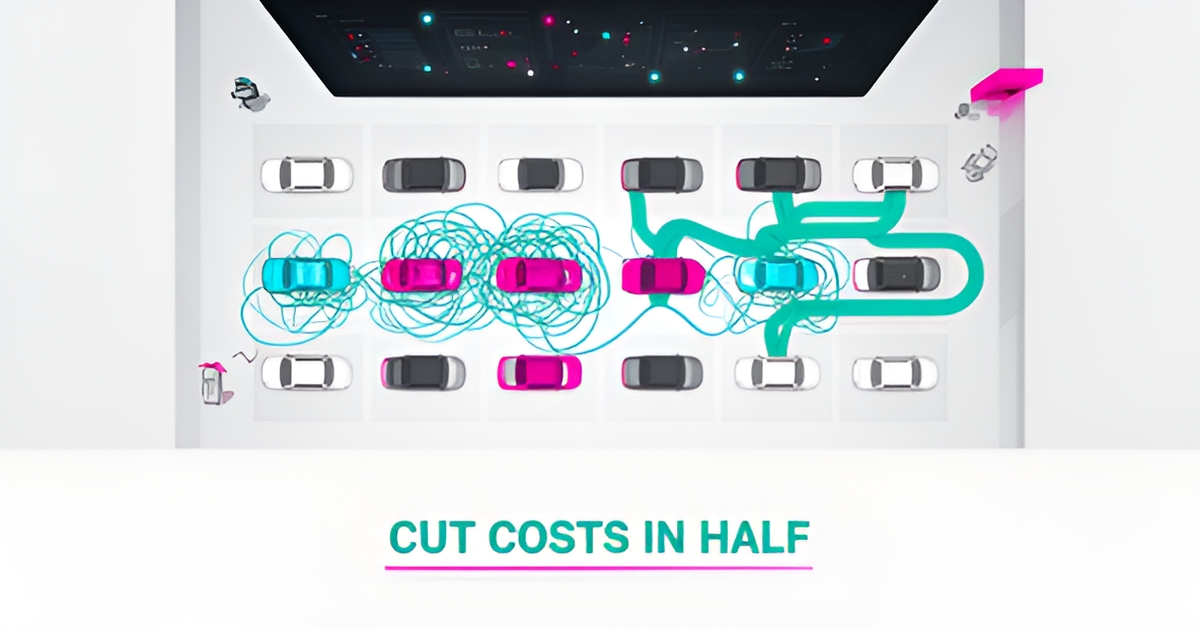
The Real Cost of Manual Service Tracking in Auto Shops (And How AI Cuts It in Half)
Key Facts
- Industry fleet analyses suggest manual dispatching drives roughly 25% higher total operating expenses than AI-optimized alternatives.
- A 25-vehicle operation can lose tens of thousands of dollars annually to fuel inefficiency, overtime, and administrative overhead.
- Reported annual savings from AI-optimized dispatch typically land in the $54,000–$120,000 range for medium-sized service fleets.
- Fleet operators commonly report break-even within the first few months of implementation, with strong first-year returns.
- One dispatcher typically manages 35–50 vehicles with AI versus only 10–12 manually.
- Manual routing is often associated with 15–30% higher fuel consumption from suboptimal paths and poor stop sequencing.
Hire a team member that works 24/7 — for less than a part-time wage.
AI receptionists, SDRs, dispatchers and 99+ roles. Trained on your business, fully managed.
Not sure where to start? Ask our AI planner
The Hidden Financial Drain of Manual Service Tracking
The paper job board on your shop wall is quietly costing you more than your best technician's salary. Industry fleet analyses suggest manual dispatching drives roughly 25% higher total operating expenses than AI-optimized alternatives—and for a 25-vehicle operation, that can translate to tens of thousands of dollars in annual losses from fuel inefficiency, overtime, and administrative overhead.
Auto shops running service vehicles face the same math. When routes are planned from memory and experience rather than data, the result is often 15–30% higher fuel consumption from unnecessary mileage, poor stop sequencing, and excessive idle time. Every inefficient route is money burned at the pump before a single wrench turns.
The labor bottleneck is just as damaging. A human dispatcher can effectively manage only 10–12 vehicles, which means every few trucks added to your fleet forces another hire. That staffing ceiling quietly caps how much business your shop can take on, no matter how skilled your technicians are.
Then there's compliance—the risk that never shows up on a profit-and-loss statement. Manual hours-of-service tracking and paper logs expose operations to violations that can carry fines in the tens of thousands of dollars per incident, plus the operational disruption of failed inspections and sidelined drivers. One audit can wipe out months of careful margin management.
The hidden drain compounds across four areas:
- Fuel waste from suboptimal routing and idle time, often inflating costs 15–30% above optimized operations
- Overtime triggered by poor scheduling and mid-day rerouting that takes 15–45 minutes to sort out manually
- Compliance exposure from paper logs, with violation fines that can reach five figures
- Labor bottlenecks that force proportional hiring every time the fleet grows
The contrast becomes stark when you look at what AI-driven tracking delivers. Route planning that consumed 60–120 minutes daily can drop to under five minutes, and compliance reporting that ate 3–5 hours per week becomes automatic. One dispatcher can manage 35–50 vehicles instead of a dozen, which is why medium-sized operations commonly report annual savings in the $54,000–$120,000 range after switching.
This is precisely where AIQ Labs focuses: rebuilding the one workflow that costs you the most—dispatch and service tracking—so KPIs like job completion rates and customer satisfaction are visible in real time, replacing the whiteboard-and-spreadsheet workflow. The pattern is consistent across service businesses: lost time, billing errors, and missed follow-ups don't announce themselves, but they accumulate into serious annual costs.
For many fleets of 20+ vehicles, operators report recovering their entire annual software cost within the first month of implementation. The real barrier isn't financial—it's recognizing that the biggest expense in your shop is the one you've stopped noticing.
How AI Cuts Service Tracking Costs in Half (With Proof)
Manual service tracking bleeds money in ways auto shops rarely see until the numbers stack up. The shift to AI is not incremental efficiency; it is a measurable cost reversal backed by fleet operations data.
AI-optimized dispatch is widely reported to cut total operating expenses by roughly 25% compared with manual dispatching. That reduction comes from fewer overtime hours, less fuel waste, and reduced administrative overhead across daily operations. For medium-sized service fleets, reported annual savings typically fall in the $54,000–$120,000 range versus manual dispatch.
The financial impact compounds quickly. Operators commonly see break-even within 1–3 months, and fleets of 20+ vehicles often recover their entire annual software cost within the first month of implementation. That speed changes how shops budget for technology.
AI also redefines capacity. One dispatcher can manage 35–50 vehicles with AI versus the manual ratio of 1:10–12. Route planning drops from 60–120 minutes daily to under five minutes, and mid-day rerouting shrinks from 15–45 minutes to 30–90 seconds. Compliance reporting moves from 3–5 hours per week to automatic.
These gains mirror what auto shops need for service tracking: real-time visibility, fewer billing errors, and no missed follow-ups. Systems that track KPIs like job completion rates and customer satisfaction in real time turn reactive tracking into proactive service.
AI cuts service tracking costs in half by automating the tasks that drain hours:
- Route and dispatch optimization that eliminates unnecessary mileage and idle time
- Automated compliance and Hours of Service tracking that reduces violation risk and fines
- 24/7 customer updates and follow-ups that improve retention without added staff
- Real-time performance dashboards for job completion and satisfaction metrics
AIQ Labs builds these systems—200+ multi-agent deployments to date—giving owners the data to act before problems cost money. The result is not just efficiency; it is profit-generating operations that scale without proportional headcount increases.
Manual tracking creates hidden losses. AI makes them visible and reversible.
From Manual to AI: A Practical Implementation Roadmap for Auto Shops
Manual service tracking creates hidden costs that compound daily in auto shops—lost time on route planning, fuel waste from inefficient routes, and compliance risks from paper logs. For a typical 25-vehicle operation, those losses can reach the tens of thousands annually. AI fleet management eliminates these drains by optimizing routes and automating reporting, with reported savings commonly in the $54,000–$120,000 range per year, while enabling one dispatcher to manage 35–50 vehicles instead of the traditional 10–12 limit.
Begin by mapping your current workflow: track how many minutes dispatchers spend daily on route planning (typically 60–120 minutes), mid-day rerouting (15–45 minutes), and weekly compliance reporting (3–5 hours). Calculate potential savings using your fleet size—many operations with 20+ vehicles recover their entire AI software cost within the first month of implementation. Select an approach that integrates with your existing shop management software for seamless data flow, then plan rollout, which is often as quick as 30–60 minutes per vehicle.
- Assess current workflows to identify time sinks in dispatch and compliance
- Choose AI tooling with proven integration capabilities for auto shop systems
- Train staff by emphasizing how AI reduces administrative burden and improves daily efficiency
- Monitor KPIs like fuel savings and time reduction to validate ROI and optimize continuously
- Implement change management by framing AI as a tool that enhances, not replaces, team capabilities
AIQ Labs supports this transition through three entry points: an AI dispatcher that handles routing, follow-ups, and customer updates at a fraction of the cost of a human hire; a fixed-price Workflow Build that rebuilds the single workflow costing you the most; or a full AI Operating System that connects dispatch, tracking, and reporting into one layer you own outright. Deploy the system, train dispatchers and drivers on how AI enables 24/7 availability and instant support, then track performance metrics to ensure sustained gains. Most shops see break-even within the first few months, with AI handling routine optimization while experienced staff focus on exception handling and customer relationships—turning manual tracking from a cost center into a scalable competitive advantage.
Still paying for 10+ subscriptions that don’t talk to each other?
We build custom AI systems you own outright. No vendor lock-in. Full control.
Not sure where to start? Ask our AI planner
Frequently Asked Questions
How much money is my auto shop actually losing by using manual service tracking instead of AI?
How quickly can I expect to see a return on investment after implementing AI for service tracking?
Will AI really save me time on daily tasks like route planning and compliance reporting?
Is AI service tracking only for large fleets, or can smaller auto shops benefit too?
What are the biggest risks of sticking with manual service tracking in my shop?
How does AIQ Labs help auto shops implement AI without disrupting daily operations?
Stop Paying for Invisible Waste
The paper job board on your wall isn't just inefficient — it's a serious leak. Manual service tracking drives roughly 25% higher operating expenses through fuel waste, overtime from 15–45 minute reroutes, compliance fines that can reach five figures per incident, and a hard staffing ceiling of 10–12 vehicles per dispatcher. For a 25-vehicle shop, that can mean tens of thousands of dollars a year lost before any work starts. AI reverses that math by making the hidden visible. Route planning falls from 60–120 minutes to under five, compliance reporting becomes automatic, and one dispatcher can manage 35–50 vehicles. Fleet operators commonly report savings in the $54,000–$120,000 range annually with AI-optimized dispatch, with many recovering software costs within the first month. Map your current dispatch and compliance minutes, calculate the cost of idle time and missed follow-ups, then test automation on one workflow. AIQ Labs builds systems that track KPIs like job completion and customer satisfaction in real time, turning reactive tracking into proactive service. Start the Fit Check at https://aiqlabs.ai/apply, then book your free 30-minute strategy call to map your biggest bottleneck and see if there's a clear win.
Make AI your competitive advantage — not just another tool.
Strategy, implementation and ongoing optimization. One partner, end to end.
Not sure where to start? Ask our AI planner