The Real Cost of Manual Service Tracking in Sprinkler Installation
Key Facts
- Manual bookkeeping typically consumes 8-12 hours monthly for small service business owners; modern software can cut that to 2-4 hours
- Equipment theft is a persistent problem in the trades, and stolen tools are rarely recovered without real-time asset visibility
- Contractors who respond to leads within minutes book jobs far more often than those who wait half an hour
- AI-driven tracking centralizes scheduling, dispatch, and customer history, reducing friction across the operation
- AI Employees can handle dispatch and after-hours lead capture 24/7, typically at roughly 80% less cost than a human hire
Hire a team member that works 24/7 — for less than a part-time wage.
AI receptionists, SDRs, dispatchers and 99+ roles. Trained on your business, fully managed.
Not sure where to start? Ask our AI planner
The Hidden Cost of Manual Tracking in Sprinkler Installation
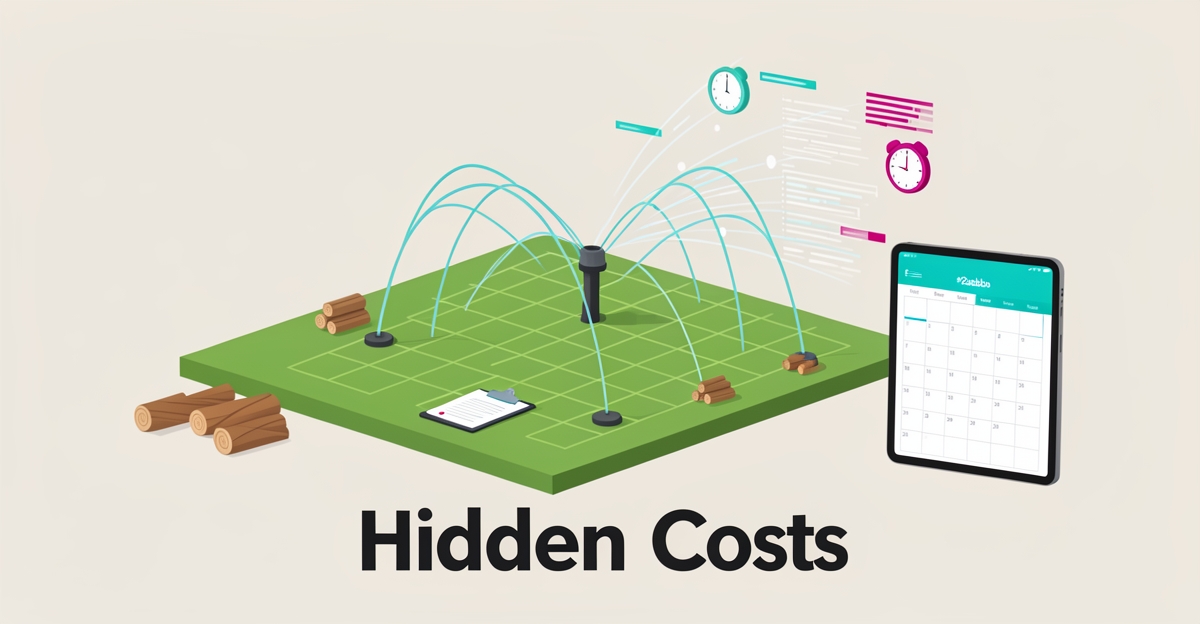
Paper logs and clipboards feel cheap until you add up the hours, the lost tools, and the jobs that never come back. Manual service tracking in sprinkler installation quietly erodes margin every week.
Manual bookkeeping alone is a persistent drain. Small business owners in the trades commonly spend 8 to 12 hours a month on manual bookkeeping, time that could be spent on sales or project management. Decent software cuts that to 2 to 4 hours, but many crews remain stuck with spreadsheets and clipboards.
Asset visibility is another hidden cost. Equipment theft is a chronic problem across the construction trades, and without real-time tracking, stolen tools are rarely recovered. Sprinkler heads, valves, and specialty tools disappear from job sites and reappear as replacement invoices.
Lead response is where manual systems lose revenue fastest. Contractors who reply to a lead within five minutes book the job far more often than those who wait half an hour. After-hours calls captured on paper or missed in a spreadsheet rarely get routed quickly enough, turning potential installs into competitor wins.
The impact compounds across the operation:
- Administrative overhead from 8-12 hours monthly of manual bookkeeping that software can reduce to 2-4 hours
- Lost tools and replacement costs due to poor asset visibility on job sites
- Missed job opportunities from slow lead response times when manual routing delays after-hours inquiries
For irrigation businesses, the value shift is from logging to interpreting. AI-driven tracking reduces these friction points by centralizing scheduling, dispatch, and customer history. AIQ Labs' AI Employees handle dispatch, lead capture, and customer follow-up around the clock, turning service data into actionable intelligence rather than filing.
The cost of manual tracking isn't just time. It's lost tools, lost jobs, and lost growth.
How AI-Driven Tracking Eliminates Waste and Boosts Accuracy
Imagine a sprinkler installation business that runs with precision, where every asset is tracked in real time and administrative burdens shrink dramatically. This isn't a distant dream; it's the tangible reality AI-driven service tracking offers, transforming operations from reactive guesswork to proactive, data-informed efficiency.
The shift from manual processes to AI-powered systems yields immediate, measurable benefits. Crews that automate job logging and dispatch consistently report fewer errors, faster scheduling, and less time chasing paperwork. This isn't about minor improvements; it's about fundamentally reshaping how work gets done.
One of the most significant impacts is on administrative overhead. Manual bookkeeping commonly consumes 8 to 12 hours monthly for the average small business owner. AI-driven systems can slash this to just 2 to 4 hours, effectively reducing administrative time by up to 75%. This frees up valuable hours, allowing teams to focus on core service delivery rather than paperwork.
AI also brings clarity to asset management. With real-time tracking through QR codes and GPS tags, businesses gain full visibility into their equipment. That visibility improves maintenance planning, reduces loss, and combats the costly problem of equipment theft that plagues the trades.
Key benefits of AI-driven tracking include:
- Automated job logging and scheduling, eliminating manual errors.
- Real-time asset visibility, reducing loss and improving utilization.
- Predictive maintenance capabilities, flagging issues before they become costly breakdowns.
- Faster lead response and booking, capturing opportunities that manual systems often miss.
Beyond internal operations, AI enhances customer interactions. AI receptionists and dispatchers answer every call, capture after-hours inquiries, and book appointments without human delay, which is crucial for retention and growth. Because managed AI staff typically run at roughly 80% less cost than a human hire, the economics work even for small crews.
For sprinkler installation businesses, the value extends further still. Precision and data-driven insights compound across scheduling, asset tracking, and customer communication. AIQ Labs' Workflow Builds rebuild the one workflow that costs you the most, at a fixed price, in phases, so you see returns before committing to a full system.
Embracing AI-driven tracking isn't just about adopting new software; it's about fundamentally rethinking operational efficiency. It moves businesses from reactive problem-solving to proactive strategic management, ensuring every job is executed with optimal resource allocation and maximum profitability.
Implementing AI Tracking: From Manual Logs to Real-Time Dashboards
Manual logs and spreadsheets quietly drain sprinkler businesses every week. The shift to real-time tracking starts with understanding where the leaks are before automating them.
A practical implementation begins with a workflow assessment. Map how jobs move from lead capture to dispatch, service notes, invoicing, and asset check-in. Identify manual handoffs that create delays, duplicate entry, and lost information. This assessment creates the blueprint for integration and prevents automating broken processes.
Integration follows assessment. Connect AI tracking with existing CRM, scheduling software, and field service tools so data flows in one direction. Unified systems eliminate clipboard methods and provide real-time job notes with photo syncing.
AI Employees handle the repetitive touchpoints that slow response. An AI Dispatcher routes calls, checks technician availability, and books appointments without human delay. An AI Lead Qualifier captures after-hours inquiries and books jobs before a missed-call notification appears. Contractors who reply to a lead within five minutes book the job far more often than those who wait half an hour. AI also reduces manual bookkeeping from 8 to 12 hours per month to 2 to 4 hours with software support.
Governance ensures adoption sticks. Define roles, escalation paths, and data standards before go-live. Train crews with coaching rather than documentation dumps, because techs used to clipboards need real coaching before software earns its keep. Set metrics for response time, first-time fix rate, and asset visibility and review them weekly.
A phased path that mirrors proven trades implementation looks like this:
- Assess and map current workflows, pain points, and tool stack
- Integrate AI with CRM and scheduling for single source of truth
- Deploy AI Employees for dispatch and lead capture with 24/7 coverage
- Establish governance, training, and adoption metrics for continuous improvement
This approach aligns with AIQ Labs' three entry points: AI Employees for managed AI staff, AI Workflow Builds for the single costliest workflow, and AI Operating Systems for one connected operating layer you own outright. It moves sprinkler businesses from reactive logging to real-time dashboards that support better decision-making. The result is fewer missed jobs, less rework, and crews focused on installation rather than paperwork.
Still paying for 10+ subscriptions that don’t talk to each other?
We build custom AI systems you own outright. No vendor lock-in. Full control.
Not sure where to start? Ask our AI planner
Frequently Asked Questions
How much time does manual bookkeeping really cost a sprinkler installation business each month?
Can poor asset tracking actually lead to lost tools and theft?
Why do leads slip through when we use paper logs and clipboards?
What productivity gains do businesses see after switching from manual tracking?
Does AI-driven tracking really reduce administrative work?
Is it hard to move from spreadsheets to real-time dashboards?
From Paper Logs to Profit: Your Next Move
Manual service tracking in sprinkler installation silently siphons time, tools, and opportunities, costing businesses hours each month on bookkeeping, fueling tool loss with poor recovery rates, and letting leads slip away due to slow response times. AI-driven tracking doesn't just digitize logs, it transforms reactive guesswork into proactive precision, cutting administrative time by up to 75% and enabling faster lead capture that turns inquiries into jobs. For sprinkler businesses ready to stop losing margin to clipboards and spreadsheets, the path forward starts with understanding where the leaks are. Take the first step with AIQ Labs' free 2-minute Fit Check, then book a free 30-minute strategy call to map your biggest bottleneck and see where AI can deliver real, measurable returns, no obligation, just clarity on your opportunity to grow smarter.
Make AI your competitive advantage — not just another tool.
Strategy, implementation and ongoing optimization. One partner, end to end.
Not sure where to start? Ask our AI planner