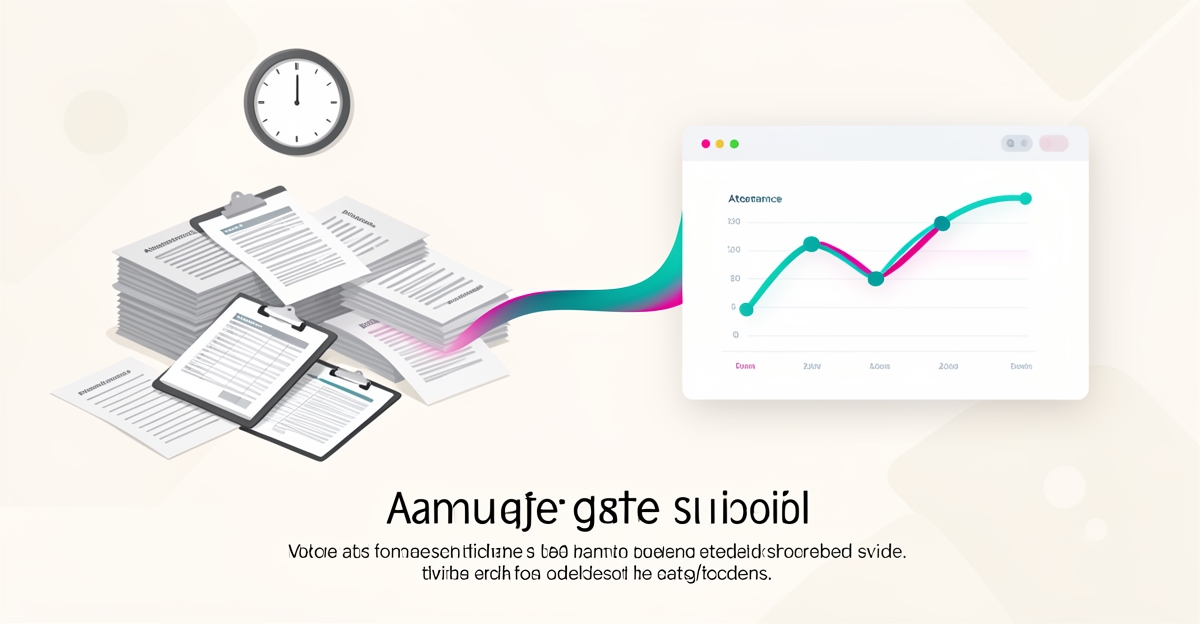
The Real Cost of Manual Student Tracking in Language Schools, And How AI Fixes It
Key Facts
- Manual tracking typically consumes a large share of administrative capacity in language schools, time that scales with enrollment
- Administrative staff commonly spend 10–15 hours weekly on attendance, progress, and engagement tracking
- Manual data entry is error-prone: typos, delayed entries, and misfiled records create a cycle of verification and rework
- A single connected AI system can remove most repetitive tracking work without replacing teachers
- AIQ Labs has deployed 200+ multi-agent systems and runs 4 live SaaS products daily
Hire a team member that works 24/7 — for less than a part-time wage.
AI receptionists, SDRs, dispatchers and 99+ roles. Trained on your business, fully managed.
Not sure where to start? Ask our AI planner
The Hidden Administrative Burden of Manual Student Tracking
Manual student tracking in language schools consumes staff time that could go toward teaching and student engagement. Administrative teams spend hours each week updating spreadsheets, chasing attendance records, and compiling progress reports, a process that is repetitive and error-prone. The burden scales with enrollment, which means growth makes the problem worse unless you hire more administrators.
In practice, language school staff commonly dedicate 10–15 hours per week to manual tracking tasks: logging attendance, updating skill levels, and monitoring engagement. These efforts are frequently disrupted by data inconsistencies, typos, delayed entries, or misfiled records. Correcting those mistakes drains further resources, turning simple tracking into a cycle of verification and rework.
- Time spent compiling weekly progress reports for instructors
- Manual reconciliation of attendance sheets across multiple class schedules
- Tracking individual student milestones without automated alerts
- Generating engagement reports for parent-teacher meetings
- Updating proficiency levels in disconnected spreadsheets or paper files
The cumulative effect is real operational drag: manual tracking can consume a significant share of administrative capacity, directly limiting a school's ability to scale programs or improve instructional quality. Automating these workflows removes the repetitive data entry, freeing staff for higher-value work like curriculum development and student support, and improving data accuracy and responsiveness in competitive language education markets.
How a Single AI System Cuts Tracking Costs
Manual tracking quietly drains language schools through duplicated admin work, late reporting, and staff time spent chasing attendance sheets instead of teaching.
A single AI system removes those hidden costs. The saving comes not from replacing teachers, but from eliminating repetitive data entry and fragmented visibility across progress, attendance, and engagement.
AI automation eliminates manual data entry by ingesting attendance scans, assignment submissions, and interaction logs in real time. Staff no longer re-key paper registers or reconcile spreadsheets at week's end. The system builds a unified student record automatically, reducing errors and freeing administrative hours for higher-value work.
Real-time progress insights replace weekly batch reports. Educators see attendance drops, engagement dips, and learning gaps as they happen, not after the month closes. That immediacy supports data-driven decisions on interventions, staffing, and curriculum adjustments.
Integration is the cost driver. When progress, attendance, and engagement live in one system, schools stop paying for duplicate tools and manual handoffs. A single connected system lets schools scale without hiring more staff.
The shift also aligns with how schools should approach AI: start with business needs, reducing cost, improving experience, scaling without headcount, rather than chasing every idea. Focusing on the one workflow that costs the most keeps implementation tight and measurable.
A unified AI tracking system typically delivers:
- Automated capture of attendance, assignment completion, and platform engagement without manual entry
- Live dashboards for progress, risk flags, and cohort trends accessible to teachers and administrators
- Unified data model that connects classroom, online, and administrative systems into one source of truth
- Continuous feedback loops that adapt reporting to actual teaching workflows
This is where performance metrics and monitoring apply directly to education operations. Hidden time and administrative costs of manually tracking student progress, attendance, and engagement become measurable, and the savings compound as enrollment grows.
The result is a leaner operating model. Schools maintain quality and personalization while administrative overhead shrinks, and staff spend time on instruction rather than reconciliation. If you want to see how this maps to your own operations, AIQ Labs' AI Workflow Builds rebuild exactly this kind of broken workflow at a fixed price.
Implementation Steps for Language Schools to Deploy AI Tracking
Starting with a targeted workflow fix lets language schools address immediate pain points in student tracking without overhauling entire operations. AIQ Labs' AI Workflow Builds service targets broken processes like manual attendance logging or progress reporting, rebuilding them as custom, integrated systems that eliminate redundant data entry, at a fixed price, delivered in phases. This approach keeps resources focused on high-impact, solvable problems first, which is the most reliable path to adoption success and clear ROI.
Integrating the AI system with existing tools like CRMs and scheduling platforms ensures seamless data flow and minimizes disruption to current operations. AIQ Labs connects with platforms such as HubSpot, Google Calendar, and Twilio, enabling real-time synchronization of student attendance, engagement metrics, and progress updates across departments. This eliminates manual transfers between systems, a key source of error and inefficiency in language schools, and creates a single source of truth, freeing staff to focus on teaching and student support rather than administrative overhead.
Scaling follows a phased approach through AIQ Labs' payment models: Start Monthly, Build in Milestones, or Own It Outright. Start Monthly covers setup, training, tool integrations, monitoring, and continuous improvements for less than the cost of a part-time hire, with flexibility to pause or adjust anytime. Build in Milestones breaks deployment into approvable phases, automating attendance tracking first, then progress reporting, then engagement analytics, so schools pay only for completed work and keep everything built. Own It Outright hands schools the full system with no ongoing dependency. This structure supports the AI maturity curve, helping schools move from pilots to scaling by establishing governance, tracking progress, and adapting based on performance data. You can review the full breakdown on the pricing page.
Still paying for 10+ subscriptions that don’t talk to each other?
We build custom AI systems you own outright. No vendor lock-in. Full control.
Not sure where to start? Ask our AI planner
Frequently Asked Questions
How much time do language school staff actually spend on manual student tracking each week?
Why is manual student tracking so error-prone, and how does that impact operations?
How does an AI system reduce administrative costs for language schools?
What specific tasks can an AI system automate in a language school setting?
Is implementing AI tracking disruptive to existing language school operations?
How do language schools know if AI tracking is the right investment for their specific needs?
From Admin Drag to Teaching Focus
Manual student tracking quietly drains language schools through duplicated admin work, error-prone spreadsheets, and hours spent chasing attendance instead of supporting learners. Staff spend 10–15 hours weekly on repetitive updates, errors compound through typos and delayed entries, and the burden scales with every new enrollment. AI changes the equation by automating capture of attendance, assignments and engagement, unifying progress in one source of truth, and surfacing real-time risk flags so interventions happen now, not after month-end. Start small with a targeted workflow build, integrate with the tools you already use, and scale through phased milestones as results prove out. AIQ Labs can map your biggest bottleneck in a working session and show a focused path to reduce cost and scale without adding headcount. Take the 2-minute Fit Check at https://aiqlabs.ai/apply, then book your free 30-minute strategy call at https://aiqlabs.ai/book, or reach the team at [email protected].
Make AI your competitive advantage — not just another tool.
Strategy, implementation and ongoing optimization. One partner, end to end.
Not sure where to start? Ask our AI planner