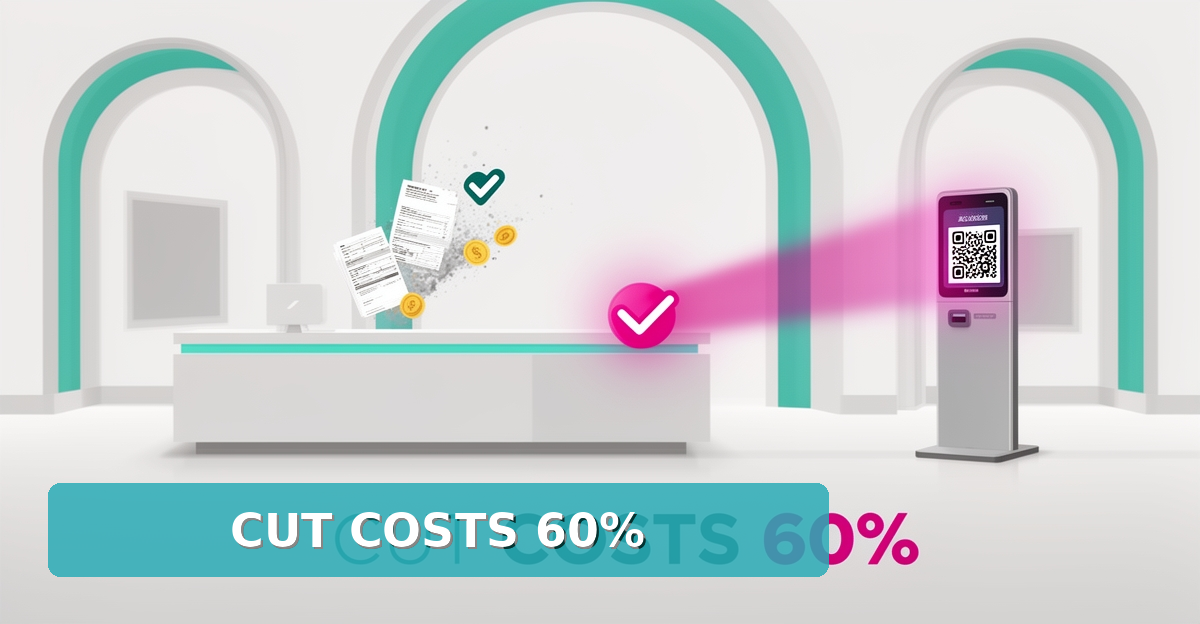
The Real Cost of Manual Visitor Management in Museums — And How AI Cuts It by 60%
Key Facts
- Industry modeling suggests a multi-location institution can spend thousands of dollars monthly on manual check-in labor alone—costs that scale directly with visitor volume.
- Automated QR-code check-ins, typically completed in about 10 seconds, can recover the large majority of manual front-desk costs according to visitor management modeling.
- Manual paper logs commonly require dozens of hours of evidence gathering per compliance audit, per compliance industry reporting.
- Manual visitor management creates queues and security vulnerabilities through error-prone paper logs, as documented in industry research.
- The visitor management system market has grown steadily since the early 2020s, with continued double-digit annual growth projected as of late 2026.
Hire a team member that works 24/7 — for less than a part-time wage.
AI receptionists, SDRs, dispatchers and 99+ roles. Trained on your business, fully managed.
Not sure where to start? Ask our AI planner
The Hidden Financial Drain of Manual Visitor Management
Manual visitor management quietly drains museum budgets through repetitive, low-value work that scales with every guest. Paper logs, clipboards, and manual ID checks create bottlenecks at entry points and hide costs across staffing, scheduling, and communication.
Industry modeling of multi-location operations suggests that a five-site institution handling steady walk-in traffic can spend roughly $11,000 a month on manual check-in time at a $35/hr fully loaded front-desk cost. Treat that as an illustrative estimate rather than a guarantee—your numbers depend on visitor volume and wage structure—but the pattern holds: direct check-in labor is a recurring, structural expense, before counting the downstream friction that erodes operations.
Staffing time is the most visible drain. Front-desk teams spend considerable time managing check-ins, verifying IDs manually, and handling paperwork, as documented in visitor management research. Manual processes create queues and congestion, leading to poor visitor experiences and wasted time for hosts waiting for visitors to arrive. The result is higher labor hours for the same visitor volume.
Scheduling inefficiencies compound the cost. Paper logs are error-prone and lack real-time data analytics. Without live visibility into arrivals, staff over-allocate reception coverage during lulls and understaff during peaks. Host notifications, badge printing, and data entry are done by hand, adding coordination delays that ripple through daily operations.
Communication overhead adds a third, often hidden layer. Manual logs are difficult to audit and require significant manual effort in compliance assessments. Organizations relying on paper commonly spend 60 to 80 hours per audit cycle on data collection alone, per compliance industry reporting. Security teams also face risk, as paper logs allow anyone to flip back through entries, exposing visitor data and failing to provide real-time threat detection.
The hidden financial drain shows up as:
- Front-desk labor tied to slow, minutes-per-visitor check-ins
- Scheduling waste from unpredictable queues and manual host coordination
- Communication delays from paper handoffs, illegible entries, and manual notifications
- Compliance burden from dozens of hours of evidence gathering per audit
These costs are structural, not one-off. As regulatory frameworks increasingly treat physical access as auditable scope, manual systems become both a budget and a risk liability. AIQ Labs approaches this as an expense management challenge, where AI Workflow Builds can replace repetitive visitor operations with systems you own outright rather than subscription tools.
The productivity math is straightforward. Drop manual check-in to a roughly 10-second QR scan and you recover the large majority of that cost—visitor management modeling suggests figures as high as 90%+—with automated, contactless check-in. For museums balancing visitor experience with tight operational budgets, that shift turns front-desk time from a cost center into capacity for engagement.
How AI-Powered Visitor Management Delivers 60%+ Cost Savings
Manual visitor management creates hidden costs that drain museum resources—staffing bottlenecks, manual data entry, and delayed host notifications all compound inefficiency. In a typical multi-location setup, front-desk staff spend significant time processing walk-ins, and illustrative modeling puts that cost in the thousands per month for a five-site institution. This operational drag diverts skilled personnel from higher-value engagement tasks, turning reception into a cost center rather than a hospitality touchpoint.
AI-powered visitor management eliminates this friction by automating check-in to roughly 10 seconds per visitor through QR code scanning or facial recognition, directly cutting the time-intensive manual process. By reducing check-in duration from minutes to seconds, organizations can recover the large majority of the costs tied to manual front-desk operations—transforming what was once a labor-heavy bottleneck into a near-instantaneous, self-service flow. This shift isn't just about speed; it's about reallocating human attention where it matters most: guiding visitors, not logging them.
Beyond check-in, AI streamlines downstream workflows that traditionally required manual coordination. Host notifications, badge printing, and data entry are triggered automatically upon visitor arrival, eliminating the need for staff to chase down hosts or re-enter information into separate systems. These automations reduce administrative overhead and minimize errors from manual transcription, ensuring visitor data is accurate, timestamped, and immediately actionable. The result is a seamless handoff from arrival to engagement, with zero lag between check-in and host awareness.
For larger institutions, the financial impact scales significantly. Multi-site organizations switching from manual to automated check-in can realize six-figure annual savings in modeled scenarios, before counting additional benefits from compliance efficiency or incident prevention. Even modest time savings per visitor compound into substantial operational relief across scaled operations. AIQ Labs supports this transformation through AI Workflow Builds and managed AI Employees, enabling museums to own their visitor intelligence infrastructure while reducing reliance on fragmented, subscription-based tools. By embedding automation at the front desk, museums turn a traditional cost center into a streamlined, secure, and insight-driven gateway to the visitor experience.
Beyond Savings: Security, Compliance, and Visitor Experience Gains
Beyond financial savings, AI-powered visitor management transforms security, compliance, and visitor experience in ways that manual systems cannot match. Tamper-evident audit logs cut compliance evidence-gathering from dozens of hours per audit to minutes, freeing staff from tedious manual record retrieval and enabling faster, more confident compliance reporting. Real-time watchlist screening can cross-reference visitors against sanctions lists, offender registries, and custom blocklists, automatically denying access or escalating alerts when a match is found—turning the front desk into an active security layer rather than a passive checkpoint. Touchless, personalized experiences—such as QR-code check-ins completed in seconds and AI-driven greetings based on visitor history—improve satisfaction without increasing overhead, creating a seamless flow that feels both secure and welcoming. For museums navigating complex frameworks like NIST, ISO 27001, or SOC 2, these capabilities shift visitor management from a liability to a strategic asset. AIQ Labs integrates these enterprise-grade security and compliance features into AI Operating Systems that museums own outright, ensuring long-term control and adaptability as threats and requirements evolve. By combining automation with intelligent oversight, AI delivers not just cost efficiency, but a fundamentally safer, smoother, and more trustworthy visitor journey.
Implementing AI Visitor Management: A Phased, Low-Risk Approach for Museums
A successful rollout of AI visitor management isn't about flipping a switch; it's about orchestrating a deliberate, phased transition that minimizes disruption while maximizing early wins. Institutions that attempt to scale too quickly often stall at the pilot stage, while those that follow a structured wave model see sustainable results.
The most effective approach begins with a tightly scoped pilot. Rather than automating every entrance at once, launch a 4 to 6-week pilot in a single flagship lobby. This controlled environment allows security teams to refine branded check-in flows, calibrate host notification preferences, and stress-test badge templates before expanding. A focused pilot surfaces integration challenges early, ensuring the AI models correctly handle your specific visitor demographics and security protocols.
Once the flagship location stabilizes, run parallel deployments at 2 to 3 additional sites with contrasting visitor patterns. For example, test the system simultaneously at a high-traffic main entrance and a staffed back-of-house access point. This parallel testing surfaces edge cases—such as varying lighting conditions for liveness detection or different compliance requirements—that a single-site pilot might miss. By identifying these variables early, you avoid costly retrofits during full-scale deployment.
Standardization accelerates the final rollout. Create a comprehensive "site kit" that includes pre-configured kiosk hardware, label printers, network specifications, signage, and a one-page operations runbook. This kit ensures consistency across locations and reduces the technical burden on local staff. With standardized components, you can deploy remaining sites in waves of 5 to 10, allowing a two-week stabilization window between each wave to address unforeseen issues.
The final phase involves centralizing security operations onto a single live monitoring dashboard. Whether a flagged visitor appears at a satellite entrance or the main museum lobby, the system escalates alerts to the same Security Operations Center (SOC). This unified visibility is crucial for institutions managing complex compliance frameworks like GDPR or ISO 27001, as it consolidates audit trails and ensures consistent policy enforcement across all locations.
Partnering with AIQ Labs keeps this phased approach low-risk and cost-effective. Rather than locking you into a rigid subscription, the Build in Milestones model allows you to approve and pay for each phase as it ships, keeping everything built so far if you need to pause. Alternatively, the Own It Outright option delivers full ownership of the code, agents, and data upon completion—eliminating vendor lock-in while providing a custom system tailored to your institution's unique workflows. You can review all payment models at aiqlabs.ai/pricing.
By following this pilot-to-wave methodology, museums and cultural institutions can transition from manual logbooks to AI-driven efficiency without operational chaos. The result is a scalable, secure visitor management ecosystem that cuts front-desk costs substantially—often by 60% or more in modeled scenarios—while enhancing the guest experience through frictionless, personalized check-ins.
Ready to map your institution's path to automated visitor management? Start the 2-minute Fit Check to identify your highest-ROI automation opportunities, or book a free 30-minute strategy call to discuss a phased implementation tailored to your operational reality.
Still paying for 10+ subscriptions that don’t talk to each other?
We build custom AI systems you own outright. No vendor lock-in. Full control.
Not sure where to start? Ask our AI planner
Frequently Asked Questions
How much does manual visitor check-in actually cost a museum?
Can AI really cut visitor management costs by 60% or more?
What's the biggest hidden cost of paper logs besides staff time?
Is AI visitor management secure enough for museums?
How long does it take to roll out AI visitor management without disrupting operations?
Do we have to buy a subscription, or can we own the system?
Turn the Front Desk From Cost Center to Experience Gateway
Manual visitor management is a structural expense, not a one-off inconvenience. Paper logs and minutes-long check-ins drive front-desk labor, scheduling waste, and dozens of hours of manual evidence gathering per audit, while exposing visitor data and delaying host coordination. AI collapses that friction: a roughly 10-second QR scan can recover the large majority of manual check-in cost, automates host notifications and badge printing, and adds real-time watchlist screening and tamper-evident audit logs for compliance. The result is lower labor, faster throughput, and a safer, more welcoming arrival experience. For museums balancing budgets with guest experience, the shift turns reception into capacity for engagement rather than a bottleneck. AIQ Labs helps institutions make that shift with custom, owned AI workflows rather than subscription tools, delivered through phased pilots you can approve and pause. Start the Fit Check at aiqlabs.ai/apply, then book a free 30-minute strategy call to map your highest-ROI automation opportunities and a low-risk rollout plan tailored to your sites.
Make AI your competitive advantage — not just another tool.
Strategy, implementation and ongoing optimization. One partner, end to end.
Not sure where to start? Ask our AI planner