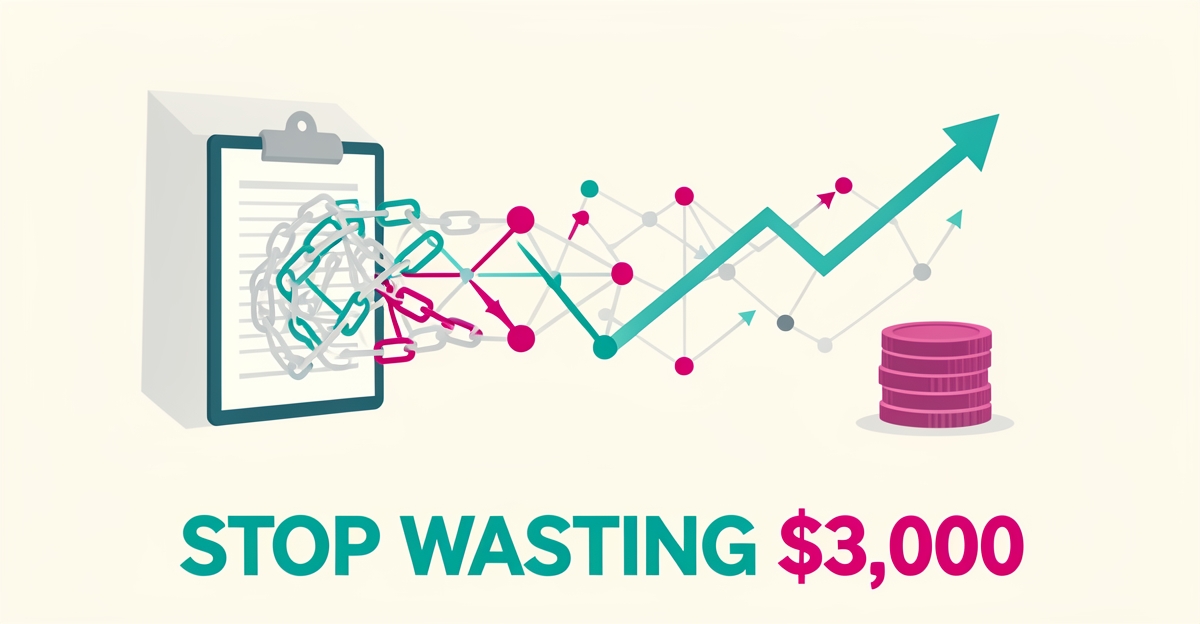
The Real Cost of Manual Workflows in Insulation: Why AI Saves $3,000+ Per Month
Key Facts
- Insulation contractors typically save $3,000+ per month with AI automation, based on AIQ Labs workflow assessments
- AI-driven automation in similar field-service operations is commonly associated with double-digit productivity gains and meaningful operating-cost reductions
- [AI Employees](/ai-employees) in equivalent roles typically cost around 80% less than a human hire while working 24/7/365
- AIQ Labs has deployed 200+ multi-agent systems and runs 4 live SaaS products daily
- Quote turnaround typically drops from hours to minutes once quoting is automated
- Payment models: Start Monthly, Build in Milestones, or Own It Outright, no lock-in to a single path
Hire a team member that works 24/7 — for less than a part-time wage.
AI receptionists, SDRs, dispatchers and 99+ roles. Trained on your business, fully managed.
Not sure where to start? Ask our AI planner
The Hidden Cost of Manual Workflows in Insulation Operations
The real cost of manual workflows in insulation often goes unnoticed until it starts eroding profit margins. Contractors spend countless hours on administrative tasks like scheduling, quote generation, and reporting, work that could be redirected toward client acquisition or project execution.
These processes are not just time-consuming; they are error-prone and inefficient. Manual data entry increases the risk of mistakes in invoices or material estimates, leading to rework, delayed payments, or dissatisfied customers. Administrative tasks like these are frequently undervalued despite being critical to operational success, which is exactly why their cost goes unmeasured.
Beyond labor costs, manual workflows create hidden financial drains. Time spent chasing approvals, reconciling schedules, or correcting reporting errors translates directly into lost productivity. Field-service operations that automate these back-office functions typically see meaningful productivity gains and lower operating costs, gains insulation contractors cannot afford to ignore when competing on tight margins. Streamlining these functions frees up capacity for higher-value activities like estimating complex jobs or nurturing referral networks.
- Administrative bottlenecks delay quote turnaround, causing lost bids
- Manual scheduling leads to crew idle time or double-booked jobs
- Error-prone reporting increases month-end close time and financial inaccuracies
- Repetitive data entry diverts skilled staff from client-facing work
- Lack of real-time insights prevents proactive decision-making on material use or labor allocation
These inefficiencies accumulate silently, often mistaken for “just the way things are done.” Yet for insulation businesses aiming to scale, relying on manual processes is no longer sustainable. AIQ Labs helps contractors uncover these hidden costs through workflow assessments that pinpoint where automation delivers the fastest payback, turning administrative overhead into measurable savings.
Why AI Automation Is a Game-Changer for Insulation Contractors
AI automation transforms insulation operations by eliminating the hidden costs of manual workflows. Contractors lose significant time to repetitive tasks like quote generation, scheduling, and reporting, activities that drain productivity and increase error rates. These inefficiencies directly impact profitability, with manual processes creating avoidable overhead that scales with business growth.
AI-driven automation delivers measurable improvements in both accuracy and output. For insulation contractors specifically, AIQ Labs workflow assessments typically surface $3,000+ per month in savings through reduced labor hours, fewer scheduling conflicts, and minimized quoting errors. These gains free up teams to focus on higher-value work like client relationships and project execution.
- Automated quote generation reduces turnaround time from hours to minutes
- AI-powered scheduling eliminates double-bookings and optimizes crew routes
- Real-time reporting provides instant visibility into job costs and material usage
- Automated follow-ups increase lead conversion without adding sales headcount
- Error reduction in measurements and material estimates cuts waste and rework
Beyond direct cost savings, AI automation strengthens operational resilience. Manual workflows create single points of failure, when a key employee is absent, processes stall. AI systems maintain consistent performance 24/7, ensuring quotes go out, schedules update, and clients receive timely updates regardless of staff availability. This reliability improves customer satisfaction while protecting revenue streams from avoidable delays.
AIQ Labs helps insulation contractors implement these changes in three ways: managed [AI Employees](/ai-employees) that handle intake, scheduling, and follow-up alongside your team; a fixed-price [Workflow Build](/workflow-builds) that rebuilds the one workflow costing you the most; or a phased [AI Operating System](/ai-operating-systems) that connects quoting, scheduling, and reporting into one layer you own outright. By replacing manual bottlenecks with intelligent automation, businesses gain immediate efficiency improvements while building a foundation for scalable growth.
From Manual to Automated: How AI Streamlines Reporting, Scheduling, and Quotes
The shift from manual to automated workflows in insulation operations isn’t just about saving time, it’s about fundamentally reshaping how businesses operate. With AI-driven tools, contractors can streamline reporting, scheduling, and quote generation, unlocking significant cost savings and operational efficiency.
Take reporting, for example. Manual data entry and report generation are not only time-consuming but also prone to errors. AI-powered systems can automate these processes, ensuring accuracy while freeing up valuable hours. Businesses that adopt AI-driven automation in comparable field operations typically see double-digit productivity improvements and meaningful reductions in operating costs. These gains translate directly to the bottom line, allowing contractors to focus on higher-value tasks.
Scheduling is another area where AI shines. Traditional scheduling methods often involve back-and-forth communication, leading to delays and missed opportunities. AI tools can optimize scheduling in real-time, considering factors like crew availability, job complexity, and customer preferences. This not only improves efficiency but also enhances customer satisfaction, administrative tasks like scheduling are often undervalued but are critical to smooth operations.
Quote generation is perhaps the most impactful workflow to automate. Manual quoting is slow and often inconsistent, leading to lost revenue and frustrated customers. AI-powered systems can generate accurate, professional quotes in minutes, using historical data and real-time inputs. This not only speeds up the sales cycle but also ensures consistency and reduces errors. Based on AIQ Labs workflow assessments, insulation contractors automating these processes typically save $3,000+ per month.
The key to successful automation lies in careful workflow design and orchestration. Effective AI systems aren’t just clever instructions, they’re structured, tested, and customized for real-world needs, with approvals enforced and tasks assigned automatically. That discipline is what turns AI outputs into reliable, actionable results.
For insulation contractors, the message is clear: automating reporting, scheduling, and quote generation isn’t just a luxury, it’s a necessity. By leveraging AI tools and [AI employees](/ai-employees), businesses can reduce overhead, improve accuracy, and focus on growth. The result? A more efficient, profitable operation ready to compete in today’s fast-paced market.
Implementing AI in Your Insulation Business: Practical Steps and Considerations
Manual reporting, scheduling and quote generation quietly drain insulation crews every week. Contractors who map those workflows first see where AI can replace repetitive admin and protect margin.
Start with a clear workflow audit. Document how quotes are built, how jobs move from estimate to dispatch, and where approvals stall. Manual processes are prone to errors, inefficiencies, and missed opportunities, and they often rely on outdated habits rather than structure. A focused review shows which steps are truly value-add and which are administrative overhead.
Assessing current workflows reveals the ROI case. Based on AIQ Labs workflow assessments, AI automation typically saves insulation contractors $3,000+ per month. Comparable field-service operations commonly report double-digit productivity gains and lower operating costs from AI-driven automation. Those gains come from freeing staff for installation and sales instead of data entry.
Choosing the right approach matters more than choosing a tool. Contractors should evaluate whether they need a custom-built system they own, a managed AI employee that works alongside the team, or a phased operating layer that connects everything. AIQ Labs works across these models, [AI Employees](/ai-employees), [Workflow Builds](/workflow-builds), and [AI Operating Systems](/ai-operating-systems), under one roof, with three payment paths: Start Monthly, Build in Milestones, or Own It Outright.
Integration concerns are common and manageable. Practical adoption typically includes:
- Workflow mapping and data readiness check for CRM, scheduling and quoting systems
- Pilot on one high-friction process such as quote generation or job dispatch
- Role definition and prompt design so AI outputs match real-world needs
- Governance for compliance, audit trails and human-in-the-loop controls
- Training and change management to ensure adoption across estimators and crews
Prompt design is crucial for effective AI agent implementation. It is not just about crafting clever instructions; it is about structuring, testing, and customizing prompts for real-world needs. Well-designed prompts dramatically improve output quality and keep compliance and legal coordination built in.
Training should be role-specific and short. Show estimators how AI drafts quotes from measurements, show office staff how approvals route automatically, and show dispatchers how jobs update without re-keying. Continuous feedback loops improve accuracy and trust.
ROI becomes visible quickly when the right workflow is automated first. Start small, prove value, then scale. A single AI employee handling intake and scheduling can run 24/7/365, reduce missed calls, and keep crews booked, typically at around 80% less cost than an equivalent human hire. From there, expand to financial automation and reporting.
The shift from manual to AI-assisted operations is less about technology and more about disciplined implementation. With clear workflow assessment, owned systems, and managed support, insulation contractors can cut overhead and protect profitability without adding headcount.
The Future of Insulation Operations: AI as a Competitive Advantage
Insulation contractors who wait on AI are paying for manual work with margin. The industry is shifting from reactive admin to predictive operations, and early adopters are locking in efficiency that latecomers will struggle to match.
AI is moving insulation operations from cost center to competitive engine. Predictive analytics can flag scheduling conflicts, material shortages, and quote bottlenecks before they impact jobs. That shift supports long-term strategic advantage rather than short-term fixes.
Field-service leaders already report significant productivity gains through AI-driven automation, with meaningful operating-cost reductions possible in automated environments. Those gains translate directly to insulation workflows where reporting, scheduling, and quote generation consume hours each week.
Manual processes create hidden drag. Administrative tasks are often undervalued yet drive business operations. For contractors, that cost shows up as missed quotes, delayed crews, and overtime.
AI automation changes the economics. AIQ Labs workflow assessments show insulation contractors typically save $3,000+ per month by automating manual workflows. The savings come from reduced labor hours, fewer errors, and faster close rates on estimates.
Early adoption compounds over time. Contractors who build AI capability now gain:
- Predictive scheduling that reduces idle crew time and improves job density
- Automated quote generation with consistent pricing and faster turnaround
- AI-powered customer interactions that qualify leads and book appointments 24/7
- Real-time dashboards for KPI visibility across sales, operations, and finance
These capabilities align with the financial automation priorities built into an [AI Operating System](/ai-operating-systems), where reducing overhead and improving profitability are core outcomes.
AI agents also help identify and address issues before they become major problems, supporting proactive operations rather than reactive firefighting. As workflows become AI-native, the gap between manual and automated firms widens.
Contractors who treat AI as a strategic asset rather than a tool are building scalable operations. The future belongs to teams that own their systems, integrate them across departments, and continuously optimize performance.
Still paying for 10+ subscriptions that don’t talk to each other?
We build custom AI systems you own outright. No vendor lock-in. Full control.
Not sure where to start? Ask our AI planner
Frequently Asked Questions
How much money can AI automation actually save insulation contractors each month?
Is AI automation really worth the investment for small insulation businesses?
What specific tasks in insulation operations benefit most from AI automation?
Do I need to be tech-savvy to implement AI in my insulation business?
How does prompt design affect the success of AI automation in workflows?
What’s the first step to see if AI automation will work for my insulation company?
Stop Paying the Manual Tax: Your Next Step Toward $3,000+ Monthly Savings
The evidence is clear: manual workflows in insulation operations aren't just inefficient, they're expensive. From error-prone quoting and scheduling conflicts to reporting bottlenecks that delay invoicing, these hidden costs compound monthly, eroding margins that contractors work hard to protect. The transition to AI-driven automation represents more than technological upgrades; it's a fundamental shift toward predictable profitability. By automating reporting, scheduling, and quote generation, contractors typically reclaim $3,000+ per month while building systems that scale without adding headcount. The gap between manual operations and AI-enhanced competitors widens daily, making early adoption a strategic imperative rather than a luxury. If you're ready to identify exactly where automation delivers the fastest ROI in your specific operation, start with a two-minute [Fit Check](/apply) at AIQ Labs. This no-obligation assessment maps your biggest bottlenecks and identifies high-impact opportunities, if there's no clear win, we'll tell you. Stop paying the manual tax and start building your competitive advantage today.
Make AI your competitive advantage — not just another tool.
Strategy, implementation and ongoing optimization. One partner, end to end.
Not sure where to start? Ask our AI planner