The Real Cost of Missed Solar Panel Cleanings: A Data-Driven ROI for AI Adoption
Key Facts
- Soiling on solar panels can cause energy losses of up to 30% in dusty or high-pollution environments, with typical losses ranging from 5–25% depending on conditions
- Regular, condition-based cleaning typically reduces soiling-related energy losses significantly compared to calendar-based schedules
- AI-powered monitoring tracks soiling, shading, inverter drift, and degradation in real time, flagging underperforming strings before monthly reports
- Predictive cleaning schedules prioritized by revenue impact help operators clean the right panels at the right time, not just the nearest ones
- AI-driven monitoring turns maintenance from a cost center into a revenue protection engine by aligning field operations with financial outcomes
Hire a team member that works 24/7 — for less than a part-time wage.
AI receptionists, SDRs, dispatchers and 99+ roles. Trained on your business, fully managed.
Not sure where to start? Ask our AI planner
The Hidden Revenue Drain: How Soiling Erodes Solar ROI
Solar panel efficiency doesn’t just fade, it leaks revenue silently. When soiling builds up, energy output drops, directly impacting the financial returns system owners expect. This hidden drain compounds over time, turning routine maintenance gaps into significant profit erosion.
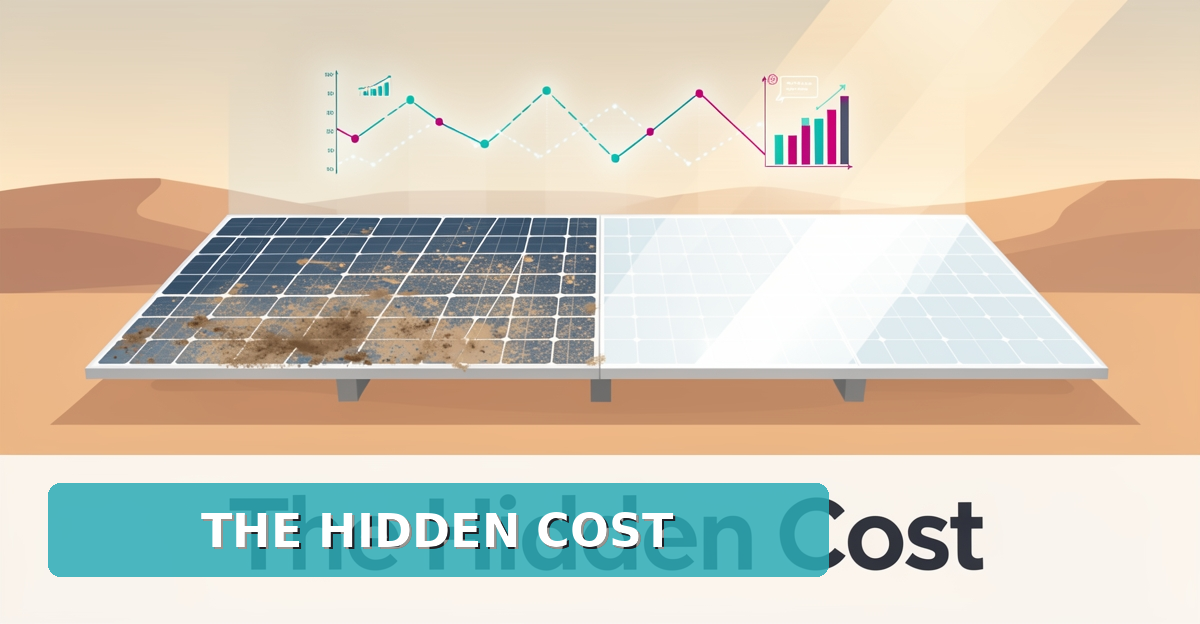
Soiling on solar panels can cause energy losses of up to 30% in severe conditions, with typical losses ranging from 5–25% depending on climate, dust, pollen, and rainfall. These losses aren’t theoretical, they reflect real-world performance degradation that accumulates daily when panels aren’t cleaned. For commercial and residential installations alike, this means thousands in avoidable income slipping away each year, and the exact dollar figure scales with your fleet size, irradiance, and local soiling rates.
- Energy losses from soiling typically range from 5–25% depending on environmental conditions
- Regular cleaning can recover a substantial share of these losses, often the majority in high-soiling sites
- Consistent maintenance schedules build customer confidence and reduce churn risk
Beyond lost kilowatt-hours, missed cleanings affect long-term system health and user trust. When performance dips unpredictably, customers question the value of their investment, even if the technology itself is sound. This erosion of confidence can lead to churn, negative referrals, and diminished brand loyalty in a competitive market where reliability is paramount.
AIQ Labs supports solar service providers with AI-driven monitoring systems that detect soiling patterns and predict optimal cleaning intervals. By turning reactive maintenance into proactive insight, these systems help close the performance gap, protecting both energy yield and customer trust. The result isn’t just cleaner panels, it’s a more predictable, profitable solar operation.
AI-Powered Monitoring: Turning Reactive Maintenance into Predictive Savings
Missed cleanings don’t just leave dust on glass, they compound into measurable revenue leakage across a portfolio. Soiling alone can drive energy losses of up to 30% in the worst conditions, and without proactive intervention those losses become permanent margin erosion.
AI-powered monitoring converts that reactive cycle into predictive savings by watching performance continuously instead of waiting for scheduled visits. Systems track soiling, shading, inverter drift and degradation patterns in real time, then flag the sites where cleaning will deliver the highest return. This shift from calendar-based to condition-based maintenance means crews clean when the data says it pays, not when the calendar says it’s due.
Forecasting accuracy is the lever that makes the economics work. When AI models can reliably predict output and soiling impact, crews get dispatched before revenue is lost rather than after. The financial case compounds quickly: every avoided week of heavy soiling on a commercial array is recovered energy that flows straight to the bottom line, and operators typically see payback measured in months, not years, once monitoring is live.
For solar service providers, this is where AIQ Labs’ [AI Workflow Builds](/workflow-builds) approach fits. Rather than a vague “AI transformation,” we rebuild the one workflow that costs you the most, whether that’s dispatch scheduling, performance reporting, or soiling detection, at a fixed price, in phases. Dashboards track service performance across sites, predict future gaps, and quantify the cost of delay in dollars per megawatt, so operations teams intervene proactively rather than explain churn after the fact.
The monitoring layer delivers value in three practical ways:
- Real-time anomaly detection that spots soiling and faults before they cascade into lost production
- Predictive cleaning schedules prioritized by revenue impact, not just geography
- Performance attribution that separates weather, soiling, and equipment degradation for accurate ROI reporting
When monitoring is paired with predictive maintenance, the financial impact compounds. Preventable soiling losses scale quickly across commercial fleets, and AI-powered inspection accelerates anomaly detection while reducing the lag between issue onset and resolution, protecting both energy yield and customer satisfaction.
The move from reactive to predictive is also a retention play. Customers stay when they see transparent, data-backed proof of performance. Monitoring makes that proof continuous and auditable, which is exactly what commercial clients increasingly demand in their service agreements.
In practice, AI-driven monitoring turns maintenance from a cost center into a revenue protection engine. It aligns field operations with financial outcomes, gives leadership clear visibility into service quality, and creates a feedback loop where every cleaning event improves the model’s accuracy.
From Insight to Action: Implementing AI for Solar Performance Optimization
The gap between knowing panels need cleaning and actually deploying crews efficiently has always been the operational bottleneck. AI-powered monitoring closes that gap by turning raw performance data into prioritized work orders before energy losses compound. Operators using these systems shift from reactive scheduling to predictive maintenance, protecting revenue across every site in the portfolio.
Integration starts with connecting existing SCADA and inverter data streams into a unified analytics layer. AIQ Labs builds this connective tissue using multi-agent architectures, part of the broader [AI Operating Systems](/ai-operating-systems) we build in phases and clients own outright, that normalize disparate data formats, apply degradation models, and surface anomalies in real time. The result is a single dashboard where asset managers see soiling impact, inverter health, and shading losses side by side, without logging into five different platforms.
- Real-time anomaly detection that flags underperforming strings before they hit monthly reports
- Automated cleaning ROI calculations tied to site-specific irradiance and soiling rates
- Predictive scheduling that aligns crew dispatch with weather windows and energy pricing peaks
- Degradation trend analysis separating normal aging from preventable losses
Field teams receive mobile alerts with exact string locations, expected recovery yield, and optimal cleaning windows. Office teams track portfolio-wide KPIs, preventable revenue loss per MW, cleaning cost per kWh recovered, and customer satisfaction trends, all rolling up into the same AI-driven monitoring platform. Where routine coordination work overloads your office staff, managed [AI Employees](/ai-employees) can handle dispatch follow-ups, customer status updates, and reporting around the clock at a fraction of a human hire’s cost. When the data-to-action loop closes this tightly, missed cleanings stop being a cost center and start becoming a managed variable.
Still paying for 10+ subscriptions that don’t talk to each other?
We build custom AI systems you own outright. No vendor lock-in. Full control.
Not sure where to start? Ask our AI planner
Frequently Asked Questions
How much money do I actually lose by not cleaning my solar panels?
Does regular cleaning really make a measurable difference in solar output?
Is AI-powered solar monitoring worth the investment?
How does AI monitoring actually work with my existing solar systems?
Isn't soiling the same as normal panel degradation?
How do I get started with AI-driven monitoring for my solar fleet?
Turn Solar Maintenance into a Predictable Profit Engine
The data is clear: missed solar panel cleanings aren’t just a maintenance oversight, they’re a silent revenue leak, with soiling capable of draining up to 30% of energy output in severe conditions. Beyond lost kilowatt-hours, inconsistent performance erodes customer trust and fuels churn in a competitive market where reliability is everything. AI-powered monitoring flips the script, transforming reactive cleaning into predictive, condition-based action that protects yield, strengthens client relationships, and stabilizes energy capture. For solar service providers ready to move from guesswork to precision, the path forward starts with understanding where the biggest gaps lie in your portfolio. Take the first step with a free, no-obligation strategy session to uncover your highest-impact AI automation opportunities, because the best maintenance isn’t just scheduled, it’s intelligent.
Make AI your competitive advantage — not just another tool.
Strategy, implementation and ongoing optimization. One partner, end to end.
Not sure where to start? Ask our AI planner