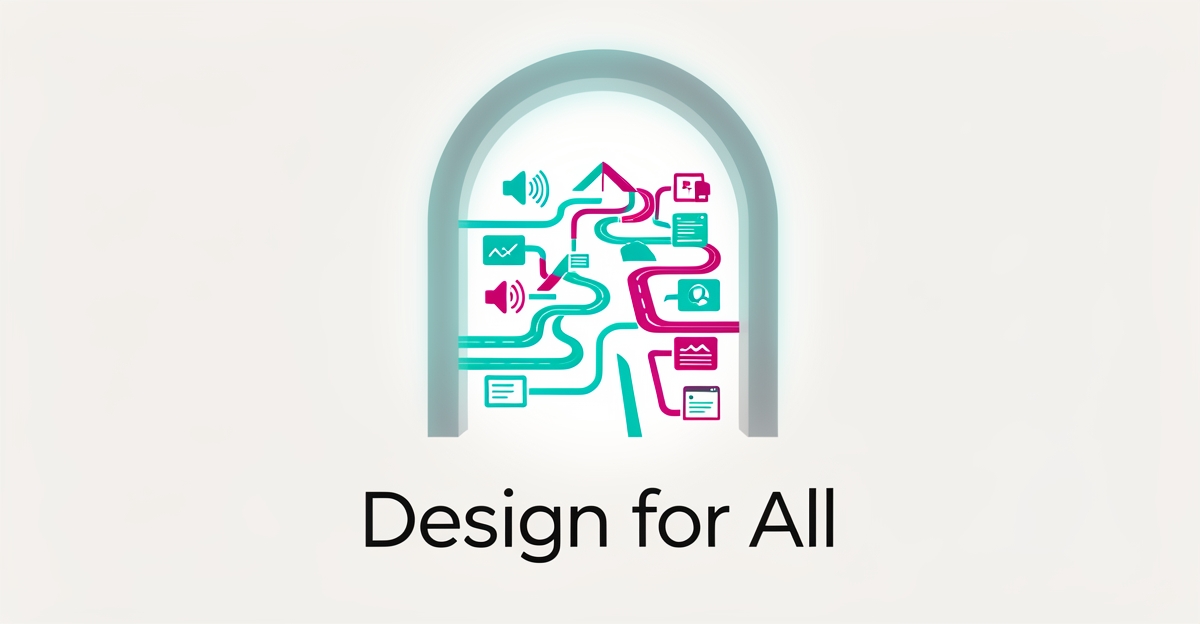
Universal Design for All: How AI Can Help Small Businesses Reach a Broader Audience
Key Facts
- AI has surpassed human performance on benchmarks in image classification, visual reasoning, and English understanding according to the Stanford AI Index
- Industry produced 51 notable machine learning models in 2023 while academia contributed only 15 per the Stanford AI Index
- The number of AI-related regulations in the U.S. rose to 25 in 2023 from just one in 2016 per the Stanford AI Index
- 52% of Americans report feeling more concerned than excited about AI, up from 38% in 2022 per the Stanford AI Index
- Universal design makes products accessible to all people regardless of age, disability, or other factors as defined by Wikipedia
- AI can automate repetitive tasks, experiment faster, work smarter, and amplify outcomes per LinkedIn industry content
- AI Employees typically cost around 80% less than an equivalent human hire and work around the clock per AIQ Labs business context
Hire a team member that works 24/7 — for less than a part-time wage.
AI receptionists, SDRs, dispatchers and 99+ roles. Trained on your business, fully managed.
Not sure where to start? Ask our AI planner
The Accessibility Gap Small Businesses Can't Ignore
Small businesses lose customers every day not because of price or product, but because the way they work excludes people. Documentation, onboarding and service delivery are still built around manual steps that assume a narrow set of abilities and preferences.
Universal design is the design of buildings, products, or environments to make them accessible to all people, regardless of age, disability, or other factors. The Wikipedia definition captures the principle architect Ronald Mace coined to make products aesthetic and usable to the greatest extent possible by everyone. The original concept was never about compliance add-ons, it was about designing for the full range of human experience from the start.
Manual workflows make that impossible to scale. Forms are PDFs, onboarding is a phone call, service updates are email threads. Each step creates friction for customers with limited time, low literacy, visual or motor impairments, or non-native language use. The result is slower adoption, higher support load, and invisible churn.
Public sentiment is shifting at the same time. Stanford AI Index research shows 52% of Americans report feeling more concerned than excited about AI, rising from 38% in 2022. Concern rises when people encounter opaque, one-size-fits-all systems. Exclusion becomes a reputational risk, not just an operational one.
Regulatory attention is also accelerating. The same AI Index report notes the number of AI-related regulations in the U.S. has risen significantly, with 25 AI-related regulations in 2023, up from just one in 2016, and that trajectory has continued since. Small businesses that embed accessibility by design reduce future retrofitting costs and build trust earlier.
AI can be used to automate repetitive tasks, experiment faster, work smarter, and amplify outcomes. LinkedIn industry content frames this as a practical lever for delivery, not hype. Applied to universal design, automation means creating one workflow that adapts to many users instead of building separate paths.
The accessibility gap shows up most clearly in three places:
- Documentation that is static, text-heavy, and not searchable
- Onboarding that requires phone calls, forms, and synchronous steps
- Service delivery that relies on single-channel communication
When those steps remain manual, reach stays limited. Automating documentation, customer onboarding, and service delivery through universal design principles lets a small business serve a broader audience without adding headcount.
AIQ Labs embeds accessibility into daily operations through AI Workflow Builds—rebuilding the one workflow that costs the most, at a fixed price, in phases. The focus is on automating the repetitive, high-friction parts of documentation and onboarding so every interaction is accessible by design, not as an afterthought. Accessibility becomes an operational habit, not a project.
Businesses that wait for customers to ask for accommodations will already be behind. Designing inclusive workflows now protects revenue, reputation, and future readiness.
How AI Embeds Universal Design Into Daily Operations
Small businesses often build accessibility as an afterthought, which creates friction at every customer touchpoint. Universal design flips that model by making accessibility the default, and AI makes it operational at scale.
AI embeds universal design into daily operations by automating the repetitive work that creates barriers. Industry guidance notes AI can be used to automate repetitive tasks, experiment faster, work smarter, and amplify outcomes. When those tasks are documentation, onboarding, and service delivery, the outcome is broader reach.
Documentation becomes accessible by design when AI generates and maintains it continuously. Instead of static PDFs, systems produce multiple formats from one source — plain language summaries, alt-text for images, and structured data for assistive tools. This aligns with universal design, which is the design of buildings, products, or environments to make them accessible to all people, regardless of age, disability, or other factors as defined in the field.
Customer onboarding is where friction is most visible. AI automates repetitive tasks while applying universal design principles across channels. Forms adapt in real time to reading level and language preference, help content is surfaced contextually, and confirmation steps are offered via voice, chat, or email. The term universal design was coined by architect Ronald Mace to describe the concept of designing all products and the built environment to be aesthetic and usable to the greatest extent possible by everyone in his original framing.
Service delivery benefits from the same automation layer. AI agents handle intake, scheduling, and follow-up with consistent accessible language and multi-modal options. This is where AI-enabled universal design diverges from traditional universal design. Traditional universal design makes products and environments accessible to all people, regardless of age, disability, or other factors, but requires significant investment in infrastructure and training. AI in universal design automates documentation, customer onboarding, and service delivery through universal design principles, while requiring careful consideration of potential risks and limitations, including the need for human oversight and the potential for bias.
The shift matters because AI capability is accelerating. The Stanford AI Index reports AI has surpassed human performance on several benchmarks, including some in image classification, visual reasoning, and English understanding. Industry produced 51 notable machine learning models in 2023, while academia contributed only 15 according to the same report.
For SMBs, embedding this into workflows means:
- Automating documentation generation with built-in accessibility checks and format variants
- Designing onboarding flows that adapt to ability, device, and preference without manual branching
- Delivering service through AI Employees—managed AI staff in roles from receptionist to dispatcher—that communicate naturally across voice, chat, and email
- Keeping humans in the loop to review outputs and ensure context-specific accuracy
AIQ Labs builds custom AI systems that embed accessibility into daily operations, ensuring every interaction is accessible by design. The result is not a one-time retrofit but a continuous, measurable improvement in inclusivity across workflows.
From Principles to Practice: Automating Inclusive Workflows
Translating universal design into practical workflows means building systems where accessibility isn't an afterthought but a foundational layer. AIQ Labs embeds these principles directly into custom AI systems, ensuring that documentation, onboarding, and service delivery are accessible by design for users of all abilities. This approach transforms inclusive intent into repeatable, automated actions that scale with the business.
Reusable prompts and templates are critical for consistency. For example, AI can generate alt-text for images, simplify complex language in customer communications, or structure forms for screen reader compatibility—all triggered by standardized inputs. These templates reduce variability and ensure that every output meets baseline accessibility standards without requiring manual rework each time. Industry data shows that AI can automate repetitive tasks, experiment faster, work smarter, and amplify outcomes, making it ideal for institutionalizing these inclusive practices across high-volume workflows.
Human-in-the-loop oversight remains essential to catch nuances that automated systems might miss. While AI handles the bulk of content generation or data processing, human reviewers validate outputs for clarity, tone, and accessibility—especially for users with cognitive, visual, or hearing differences. This collaborative model leverages AI's speed while preserving human judgment, aligning with the how-to step of using AI as a collaborator rather than a replacement. It also supports bias risk management, as humans can identify unintended exclusions in AI-generated content before it reaches customers.
Bias in AI poses a real threat to inclusivity, particularly when training data underrepresents certain demographics. To mitigate this, AIQ Labs implements validation layers and guardrails within its multi-agent architectures, with transparent reasoning and iterative improvement built into every deployment—over 200 multi-agent systems to date. Regular audits of AI outputs—especially in customer-facing roles like AI Employees handling intake or support—help detect and correct patterns that could marginalize users. These practices reflect the growing need for oversight, as the number of AI-related regulations in the U.S. has risen significantly, with 25 AI-related regulations in 2023, up from just one in 2016.
By combining reusable assets, human oversight, and proactive bias management, small businesses can operationalize universal design without overwhelming their teams. AI doesn't just automate tasks—it redefines how inclusivity is built into the DNA of daily operations, ensuring every customer interaction starts from a place of access and dignity. This is how AI doesn't just serve a broader audience—it welcomes them by design.
Build an Owned, Accessible AI System That Scales
Small businesses can't afford to rent accessibility. When automation is built on subscriptions and black-box tools, inclusive workflows break the moment a vendor changes pricing or features.
Owning the system changes the equation. A custom-built AI that embeds universal design principles makes documentation, customer onboarding and service delivery accessible by design, not as an add-on. Universal design is the design of buildings, products, or environments to make them accessible to all people, regardless of age, disability, or other factors. That principle scales when it is coded into daily operations.
AIQ Labs architects owned systems through three entry points — AI Employees for managed AI staff, AI Workflow Builds for rebuilding your costliest workflow at a fixed price, and AI Operating Systems for one connected operating layer built in phases — so automation stays under business control. The approach replaces costly subscription chaos with a unified digital asset the client owns outright, with no vendor lock-in.
Building owned and accessible means starting with workflows that touch people most. Teams map manual steps in documentation, onboarding and service delivery, then replace them with agents trained on the business's language, tools and accessibility standards. AI can be used to automate repetitive tasks, experiment faster, work smarter, and amplify outcomes, which frees staff to review and refine outputs for tone, clarity and inclusive access.
A scalable owned system is built in stages that match risk and budget:
- Start Monthly — begin with one AI employee on a flat monthly plan that typically costs around 80% less than an equivalent human hire, including build, training, integrations, monitoring and improvements.
- Build in Milestones — rebuild one workflow or department system, split into phases you approve and pay for as they ship, at a fixed price.
- Own It Outright — a full AI operating system built in phases, with full ownership of code, agents and data when complete.
This ownership model matters as AI capability accelerates. AI has surpassed human performance on several benchmarks, including some in image classification, visual reasoning, and English understanding, while industry produced 51 notable machine learning models in 2023, while academia contributed only 15. With 52% of Americans report feeling more concerned than excited about AI, rising from 38% in 2022, businesses that control their own systems can demonstrate transparency, human oversight and consistent accessibility.
The result is an accessible AI system that scales with the business, not against it. Workflows remain inclusive by design, data stays inside the company, and improvements compound over time without renegotiating vendor contracts.
Still paying for 10+ subscriptions that don’t talk to each other?
We build custom AI systems you own outright. No vendor lock-in. Full control.
Not sure where to start? Ask our AI planner
Frequently Asked Questions
What is universal design and how does it differ from traditional accessibility approaches?
How can AI help small businesses implement universal design in their daily operations?
What are the main areas where small businesses typically create accessibility barriers in their workflows?
Why is it important for small businesses to own their AI systems rather than rely on subscription-based tools for accessibility?
What safeguards does AIQ Labs recommend to address bias and ensure accuracy in AI-powered inclusive workflows?
What does the Stanford AI Index report say about public sentiment toward AI and its relevance to small businesses?
Design Access In, Not On
Universal design stops being a retrofit when accessibility is built into the workflows that customers actually use. Automating documentation, onboarding and service delivery with adaptable formats, multi-modal options and human-in-the-loop oversight lets small businesses serve a broader audience without adding headcount, while reducing friction, support load and invisible churn. The shift from manual, one-size-fits-all steps to AI-enabled universal design turns inclusivity into an operational habit that protects revenue and reputation as regulatory attention rises. With 52% of Americans reporting more concern than excitement about AI, rising from 38% in 2022, businesses that control their own systems can demonstrate transparency and consistent access by design. AIQ Labs helps SMBs embed this approach through owned AI systems that automate the repetitive, high-friction parts of documentation and onboarding. Start with the 2-minute Fit Check at https://aiqlabs.ai/apply, then book a free 30-minute strategy call at https://aiqlabs.ai/book to map your biggest bottleneck and identify high-ROI automation opportunities. Prefer email? Reach the team at [email protected].
Make AI your competitive advantage — not just another tool.
Strategy, implementation and ongoing optimization. One partner, end to end.
Not sure where to start? Ask our AI planner