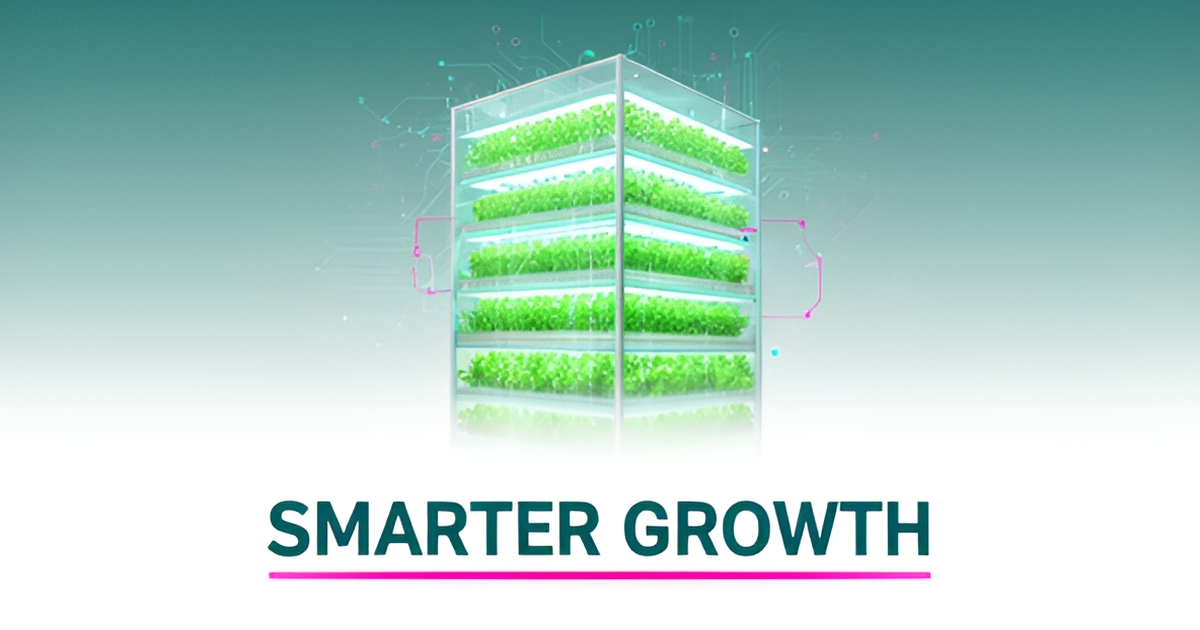
Vertical Farms vs. AI: Which Is Better for Sustainable Growth?
Key Facts
- Energy for climate control and lighting typically consumes a large share—often the majority—of vertical farm operating budgets according to Omdena
- Manual intervention still accounts for a substantial share of workflow time in under-automated vertical farms reports Omdena
- A large share of AI proofs-of-concept fail, often due to monolithic designs that don't integrate with real workflows
- AI-powered crop monitoring can detect stress indicators days before they're visible to the human eye per Omdena research
- The 2024 Global CEA Census surveyed 450 professionals across 75 countries on tech adoption CEAg World reports
- AI acts as the central nervous system transforming static farms into adaptive, self-optimizing operations Taylor Amarel explains
Hire a team member that works 24/7 — for less than a part-time wage.
AI receptionists, SDRs, dispatchers and 99+ roles. Trained on your business, fully managed.
Not sure where to start? Ask our AI planner
The Sustainability Challenge: Why Vertical Farming Alone Isn't Enough
Vertical farming promises efficient, year-round production, but its operational realities reveal growing pressures that limit sustainable scaling. Energy costs remain a dominant expense, with climate control and lighting consuming a large share of operating budgets in many facilities. Labor intensity persists despite automation efforts, particularly in seeding, harvesting, and post-harvest handling, where manual intervention still accounts for a substantial portion of workflow time in under-automated farms. These bottlenecks create decision fatigue, as growers struggle to balance real-time adjustments across interconnected systems without overwhelming cognitive load.
Traditional controlled-environment agriculture often relies on static operating procedures that evolve slowly, making it difficult to respond dynamically to fluctuations in energy pricing, plant stress signals, or supply chain disruptions. As farms expand, small inefficiencies compound rapidly—especially in energy use and labor allocation—undermining both economic viability and sustainability goals. Without intelligent systems to continuously optimize these variables, vertical farms risk trading one set of constraints for another, exchanging land and water efficiency for high energy dependency and operational fragility.
This is where AI integration becomes not just beneficial, but essential for long-term resilience. AI enables continuous, data-driven adjustments to lighting schedules, nutrient delivery, and environmental controls based on real-time sensor inputs and predictive analytics. Farms that implement AI for energy management, for example, tend to see more stable monthly margins by aligning lighting cycles with off-peak pricing and predictive load forecasting. Similarly, AI-powered crop monitoring reduces yield variability by detecting stress indicators days before they become visible to the human eye, allowing for preemptive intervention that preserves both quality and resource efficiency.
Yet, adopting AI in vertical farming is not without its own hurdles. A large share of AI proofs-of-concept fail, often due to monolithic designs that lack scalability or fail to integrate with existing operational workflows. This failure pattern underscores the need for a strategic, phased approach—one that prioritizes domain-specific solutions over generic automation tools. In labor-intensive agricultural operations, the cost imbalance is often stark: software spend is typically a fraction of what facilities pay for manual labor performing the same functions, revealing a significant opportunity for AI to redirect spend from labor-intensive processes to intelligent automation.
For vertical farms aiming to scale sustainably, the path forward lies not in choosing between infrastructure and intelligence, but in uniting them. AI acts as the central nervous system that transforms static growing environments into adaptive, self-optimizing operations—reducing waste, stabilizing costs, and extending the benefits of vertical farming beyond resource efficiency into true operational resilience. AIQ Labs supports this transition by rebuilding the one workflow that costs the most—fixed price, phased—so automation serves both ecological and economic goals without adding complexity.
AI as the Central Nervous System: Five High-Impact Applications
AI is becoming the central nervous system of modern vertical farms, transforming operations from reactive fixes to proactive, data-driven control. As Taylor Amarel explains, AI orchestrates everything from climate control and nutrient delivery to pest detection and harvest timing, enabling farms to maintain stability even as they scale. This shift from production control to decision control is critical, because small inefficiencies in energy, climate, and labor compound quickly across layered growing systems. AI addresses this by enabling faster, more consistent decisions that keep costs and variability in check, turning controlled environments into truly resilient operations.
The five core AI applications driving this transformation are well-documented in current research. First, AI-powered climate and environmental control systems use sensor networks to continuously monitor temperature, humidity, light intensity, CO2 levels, and air circulation, with machine learning models optimizing lighting durations and intensities based on plant growth stage and species to improve photosynthesis and reduce energy waste. Second, computer vision crop monitoring analyzes images from cameras to track plant development and detect early signs of stress or disease—often before they're visible to the human eye—allowing for earlier intervention and reduced yield loss. Third, AI-driven energy optimization forecasts demand and adjusts lighting and climate systems based on real-time cost patterns and operational priorities, a crucial advantage given that energy is often the largest ongoing expense in vertical farming. Fourth, yield prediction models estimate crop growth and harvest timing, helping farms align production with market demand and reduce variability across growing cycles. Finally, AI-enhanced nutrient and irrigation management monitors root-zone conditions in real time, automatically adjusting delivery to maintain optimal plant health while minimizing water and fertilizer waste.
These applications are not theoretical; they reflect where the industry is already investing. The 2024 Global CEA Census, which surveyed 450 professionals across 75 countries, found that technology adoption is currently strongest in climate control, lighting, and irrigation—precisely the areas where AI delivers the most immediate impact. However, significant opportunities remain in seeding, harvesting, crop monitoring, and pest management, suggesting that AI's role will only deepen as farms seek to automate more complex workflows. For vertical farms evaluating their sustainability goals, AI integration offers measurable benefits in cost stability, yield consistency, waste reduction, labor efficiency, and environmental performance—outcomes that align directly with long-term objectives like carbon reduction and water conservation. AIQ Labs builds the custom multi-agent systems that serve as the intelligent core of operations like these—200+ deployments deep—helping farms shift from manual oversight to continuous, real-time optimization. Omdena's research confirms that acting a day earlier—enabled by AI—often delivers more value than acting perfectly a day too late, directly influencing operational economics and resilience. The 2024 Global CEA Census underscores that while foundational systems like climate control are widely adopted, the next wave of innovation lies in expanding AI into underutilized areas such as crop monitoring and harvesting. Taylor Amarel's analysis reinforces that AI is no longer a supplementary tool but the central orchestrator of modern farm operations, essential for scaling sustainably in resource-constrained environments. By grounding decisions in real-time data rather than fixed schedules or reactive fixes, AI enables vertical farms to achieve the consistency and efficiency needed to meet growing urban food demands without compromising environmental goals. This approach transforms vertical farming from a high-tech greenhouse into a truly adaptive, intelligent agricultural system.
The 2024 CEA Census: Where Technology Adoption Stands (and Where It's Missing)
The 2024 Global CEA Census reveals a clear pattern in technology adoption across vertical farming operations: climate control, lighting, and irrigation systems are widely implemented, but critical gaps persist in seeding, harvesting, pest management, and crop monitoring. Surveying 450 industry professionals across 75 countries, the census confirms that while foundational environmental controls are mature, operational workflows remain heavily reliant on manual labor—creating inefficiencies that scale with farm size. According to the census, technology usage is "heavily concentrated in a few key areas," leaving significant opportunities for automation elsewhere.
These gaps represent high-ROI targets for AI integration, particularly in labor-intensive processes where small delays compound into major losses. For example, manual seeding and planting limit scalability despite vertical farming's inherent space efficiency, while delayed pest detection can trigger cascading crop losses in closed-loop systems. Harvesting and post-harvest handling similarly suffer from inconsistent manual handling, increasing variability in yield quality and waste. AI-driven solutions in these areas directly address the shift from production control to decision control—where real-time adjustments prevent small inefficiencies from eroding margins at scale.
- Seeding and planting remain predominantly manual, despite high-density growing systems
- Pest and disease management lacks real-time monitoring, increasing vulnerability to outbreaks
- Crop monitoring technology is underutilized, delaying early intervention opportunities
- Harvesting processes rely heavily on labor, creating bottlenecks during peak cycles
By embedding AI into these underserved workflows—such as computer vision for pest detection or predictive models for harvest timing—farms can transform reactive processes into proactive, data-driven operations. This aligns with AIQ Labs' approach to AI workflow builds, where identifying the single highest-cost workflow and rebuilding it in phases precedes any broader system design. The result is not just incremental improvement, but a fundamental shift toward resilient, scalable vertical farming that reduces waste, stabilizes yields, and lowers operational risk—turning current limitations into competitive advantages.
Vertical AI vs. Generic Tools: Why Domain-Specific Solutions Win
The AI landscape has shifted from broad, one-size-fits-all tools to deeply specialized solutions, especially in agriculture. Horizontal AI platforms, while accessible, often lack the nuanced understanding required for complex farming operations and struggle to deliver consistent ROI at scale. This gap continues to drive investment toward vertical AI built for specific industries.
The pattern is consistent: generic horizontal tools compete on the same APIs and features everyone else uses, while vertical AI startups that own proprietary data and workflows consistently attract serious capital. In agriculture, this matters because AI models trained on years of farm-specific sensor readings, yield outcomes, and environmental adjustments develop a defensible data moat. These systems outperform generic tools because they understand the subtle interdependencies between lighting schedules, nutrient uptake, and pest thresholds unique to each facility.
The defensibility of vertical AI extends beyond algorithms to operational impact. In labor-intensive niche operations, annual software spend is typically a small fraction of what the same functions cost in staff time—a multiplier that well-targeted AI can address with precision. By automating high-touch, expertise-driven tasks like climate optimization or disease scouting, vertical AI turns cost centers into scalable advantages. This is where AIQ Labs' approach to custom AI development creates lasting value—building systems that learn from a farm's own data to drive continuous improvement, and that the farm owns outright rather than rents.
Ultimately, vertical AI doesn't just process information; it cultivates operational wisdom. While horizontal tools offer generic prompts and API calls, domain-specific AI encodes institutional knowledge—transforming raw data into anticipatory decisions that stabilize yields, reduce waste, and strengthen sustainability. For farms aiming to scale responsibly, the choice isn't between AI and no AI, but between generic automation and intelligent systems built to thrive in the complexity of real-world agriculture.
Building Your AI Transformation Roadmap: From Pilot to Production
The gap between running an AI pilot and operating AI-driven workflows at scale is where most vertical farms stall. The 2024 Global CEA Census, surveying 450 industry professionals across 75 countries, shows technology adoption concentrated in climate control, lighting, and irrigation — while seeding, harvesting, crop monitoring, and pest management remain largely manual. Meanwhile, a large share of AI proofs-of-concept fail because they're built as monolithic solutions that can't hold up at production scale.
A practical roadmap starts with a readiness assessment that maps your current data infrastructure, sensor coverage, and workflow bottlenecks. From there, phased implementation targets high-impact, low-risk workflows first — typically energy scheduling or yield prediction — before expanding to climate orchestration and automated harvesting. Each phase needs clear success metrics tied to sustainability goals: water use per kilogram produced, energy cost per harvest cycle, or waste reduction targets.
- Assess data readiness and sensor coverage across all growing zones
- Prioritize one workflow where AI decisions can be validated against human benchmarks
- Deploy with human-in-the-loop controls and measurable KPIs
- Iterate based on production data before scaling to adjacent workflows
- Establish governance for model retraining, compliance, and audit trails
This approach mirrors how AIQ Labs structures AI roadmaps — whether that's a single workflow rebuild at a fixed price or a full AI operating system built in phases and owned outright. The goal isn't perfect automation on day one; it's building a decision-making nervous system that gets steadier and more valuable with every growing cycle.
Still paying for 10+ subscriptions that don’t talk to each other?
We build custom AI systems you own outright. No vendor lock-in. Full control.
Not sure where to start? Ask our AI planner
Frequently Asked Questions
Is vertical farming or AI better for sustainable agriculture?
Why do so many AI proofs-of-concept fail in vertical farming?
What specific tasks can AI actually automate in a vertical farm today?
How does the cost of AI compare to manual labor in vertical farming?
Should I choose generic AI tools or agriculture-specific AI solutions?
Where should a vertical farm start when implementing AI for the first time?
From Controlled Rooms to Intelligent Operations
Vertical farming gives you the infrastructure for efficient, year-round production, but infrastructure alone can't solve the compounding pressures of energy costs, labor bottlenecks, and real-time decision fatigue. AI doesn't replace vertical farming; it completes it by acting as the central nervous system that turns static environments into adaptive, self-optimizing operations. From climate and energy scheduling to early stress detection and yield prediction, domain-specific AI delivers the cost stability, yield consistency, and waste reduction farms need to scale sustainably. The 2024 Global CEA Census of 450 industry professionals across 75 countries shows adoption is strong in climate control and lighting, yet seeding, harvesting, crop monitoring and pest management remain high-ROI gaps. A phased roadmap — assess data readiness, validate one workflow with human-in-the-loop controls, then expand — avoids the failure pattern most AI pilots face. AIQ Labs helps agricultural businesses rebuild their costliest workflow or connect their entire operation through phased, owned-outright AI systems. Start the 2-minute Fit Check at https://aiqlabs.ai/apply for a free 30-minute strategy call to map your biggest bottleneck and identify high-ROI automation opportunities.
Make AI your competitive advantage — not just another tool.
Strategy, implementation and ongoing optimization. One partner, end to end.
Not sure where to start? Ask our AI planner