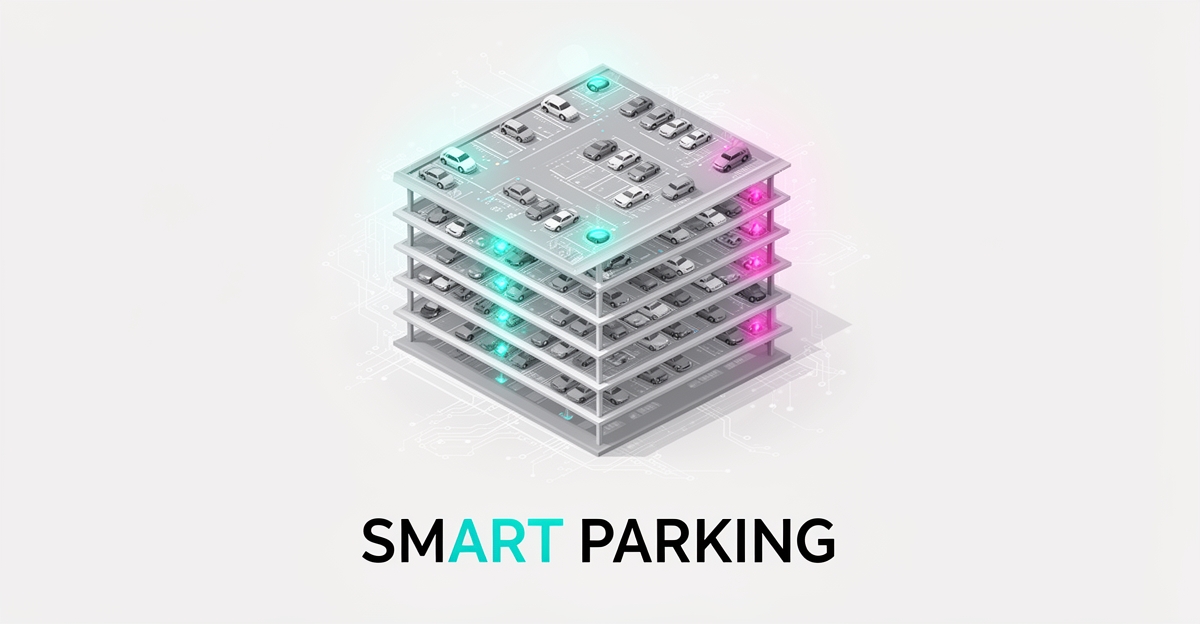
What to Look for in an AI Partner for Parking Garage Operations
Key Facts
- Industry analyses suggest AI-powered parking systems can cut driver search times meaningfully compared with traditional signage-based guidance according to vendor cost-benefit comparisons
- AI-based parking systems reportedly improve space utilization to roughly 85-95% versus 60-70% for traditional setups per cost-benefit analysis
- Automated revenue collection in AI parking systems is cited at up to 99.9% accuracy versus error-prone manual collection in industry analysis
- The global automated parking garage integration market is projected to grow from USD 3.4 billion in 2024 to USD 10.2 billion by 2033 per Growth Market Reports
- AI-powered systems enable predictive maintenance, reducing downtime and emergency repair costs versus reactive traditional maintenance based on industry comparisons
- AIQ Labs transfers full IP and code on completion of an Own It Outright engagement—true ownership, no vendor lock-in as stated in their payment models
- AIQ Labs AI Employees typically cost around 80% less than an equivalent human hire while operating 24/7 per their cost comparison
Hire a team member that works 24/7 — for less than a part-time wage.
AI receptionists, SDRs, dispatchers and 99+ roles. Trained on your business, fully managed.
Not sure where to start? Ask our AI planner
Why Parking Operators Are Replacing Manual Systems with AI
For parking garage operators, the daily grind of manual systems is no longer just an inconvenience—it is a measurable drain on revenue and customer patience. The gap between traditional processes and modern AI-powered parking systems has widened to the point where sticking with the status quo often costs more than upgrading.
Consider the driver experience first. In traditional garages, customers can spend several minutes hunting for a spot, while AI-guided facilities reportedly cut that search time substantially—vendor cost-benefit analysis from ECO Parking Technologies cites reductions of up to 30%. That lost time translates directly into congestion, frustration, and lost repeat business.
The operational inefficiencies run deeper than search times. Traditional setups reportedly utilize only 60-70% of available space, leaving revenue on the table during peak hours, while AI-based systems are cited at 85-95% utilization. Manual revenue collection is similarly error-prone, whereas automated systems are cited at up to 99.9% accuracy. Operators relying on manual processes face a compounding set of challenges:
- Reactive maintenance that leads to unexpected downtime and emergency repair costs
- Higher labor expenses for ticketing, monitoring, and cash handling
- Underutilized inventory during off-peak and peak periods alike
- Limited visibility into occupancy patterns and customer behavior
These pain points explain why the market is shifting rapidly. The global automated parking garage integration market, valued at USD 3.4 billion in 2024, is projected to reach USD 10.2 billion by 2033, growing at a CAGR of 13.2%, according to Growth Market Reports. This reflects a structural change in how facilities operate, not speculative hype.
While traditional systems offer lower upfront costs, they demand more maintenance and manual labor over time, resulting in higher long-term expenses. AI systems reverse that equation: the initial investment is higher, but predictive maintenance, automated revenue collection, and optimized space management drive the total cost of ownership down over time.
For garage owners evaluating this transition, the question is no longer whether to adopt AI, but how to choose a partner that understands both the technology and the operational realities of parking management. Firms like AIQ Labs, which build custom AI systems and rebuild the workflows that cost operators the most, emphasize that the right system must integrate with existing infrastructure while delivering measurable ROI from day one. The shift away from manual processes is already underway; the only variable is how quickly individual operators adapt to capture the efficiency gains.
Core Capabilities That Separate Industry-Ready AI from Generic Vendors
Parking garage operators feel the pressure as demand grows and manual processes cost time and money. Choosing an AI partner without parking-specific criteria risks generic tools that fail in real-world lots.
Space detection accuracy separates viable systems from demos. Industry comparisons suggest AI-powered parking systems can improve space usage to roughly 85-95%, compared with 60-70% for traditional systems. Accurate detection enables real-time availability and meaningfully reduces driver search time.
Real-time availability and mobile integration define customer experience. AI systems automate tasks, reduce manual labor, and optimize space usage while providing real-time updates and mobile app integration. A cost-benefit analysis notes features like highly accurate space detection and smart LED integration improve user experience. License plate recognition for vehicle tracking is cited as a critical automated process in parking management systems.
Predictive maintenance and revenue accuracy protect margins. Comparisons show AI-based systems deliver automated revenue collection cited at up to 99.9% accuracy versus manual, error-prone collection, and shift maintenance from reactive to predictive. Analysis of AI versus traditional parking systems indicates AI can minimize maintenance costs and reduce energy consumption.
Data security and integration readiness determine long-term success. AI-based systems rely on data collection and analysis, which raises legitimate concerns about data security and privacy. Integration can be complex and time-consuming when connecting to existing infrastructure. Higher upfront costs are real, though the global Automated Parking Garage Integration market is valued at USD 3.4 billion in 2024 and expected to reach USD 10.2 billion by 2033, growing at a CAGR of 13.2% according to market reporting.
Evaluate partners against parking-specific proof points:
- Demonstrated space detection accuracy and real-world availability uptime, not lab benchmarks
- Native license plate recognition and mobile integration with existing access control
- Predictive maintenance workflows and integration ease with current garage infrastructure
- Data security, privacy controls, and true ownership of models and data
Vendor selection benefits from hands-on development and post-deployment support. AIQ Labs brings 200+ multi-agent systems deployed across industries, plus four live SaaS products it runs daily—evidence the team builds and maintains systems that survive real-world use, not just pilots. Its AI Employees can also staff parking operations roles like reception, dispatch, and customer service at roughly 80% less cost than a human hire.
Integration, Ownership and Support: The Deal Breakers for Garage Owners
Many garage owners hesitate to adopt AI due to concerns about high upfront costs, complex integration, and data security risks. These challenges often stem from vendors offering generic solutions that lack industry-specific experience or fail to provide true ownership, leaving operators locked into costly subscriptions or dependent on third-party platforms. Addressing these pain points requires a partner who understands the nuances of parking and access management while delivering systems that are built to integrate smoothly, remain fully owned, and come with ongoing support.
AIQ Labs differentiates itself through hands-on development rooted in real-world operations, ensuring that every solution is designed for integration with existing infrastructure like access control, payment systems, and surveillance. Rather than reselling white-labeled platforms, AIQ Labs builds custom systems from the ground up, enabling deep two-way API integrations that eliminate manual workarounds and data silos. This approach reduces integration complexity and minimizes disruption during deployment—a critical factor for garages operating 24/7.
True ownership is another cornerstone of the model. Under the Own It Outright payment path, clients receive full IP and code transfer on completion, with no vendor lock-in or platform dependencies. That means garage owners retain complete control over customization, future upgrades, and data governance, directly addressing long-term cost concerns and security risks. Post-deployment support includes monitoring, performance optimization, and retraining based on real-world usage, so the system evolves with the facility's needs. For operators who prefer to start smaller, the Start Monthly option covers managed AI staff, while AI Workflow Builds rebuild the single workflow that costs the most at a fixed price, in phases. Industry comparisons suggest AI-powered parking systems can improve space usage to 85-95% and reduce search times, but these benefits are only achievable with a partner who prioritizes integration, ownership, and support from day one. Market projections indicating growth to USD 10.2 billion by 2033 underscore the importance of choosing a provider equipped to handle both current complexities and future scaling needs.
How to Evaluate and Select an AI Partner Without Getting Stuck in Pilots
Avoiding pilot purgatory starts with a clear evaluation workflow grounded in your garage's operational reality. Begin by assessing your current infrastructure—entry/exit systems, payment platforms, and data flows—to pinpoint where AI can deliver immediate value without requiring a full rip-and-replace. This step ensures you're not building on shaky ground or overlooking integration hurdles that stall progress later.
Next, model the cost-benefit trajectory over 12–24 months, factoring in not just subscription or build costs, but also labor savings, reduced revenue leakage, and improved space utilization. Traditional systems may have lower upfront costs, but they drive higher long-term expenses through manual labor and reactive maintenance. AI-based systems, by contrast, enable predictive maintenance and automated revenue collection, shifting spend from ongoing ops to strategic investment. Use this analysis to rule out vendors whose pricing models lock you into escalating fees without clear ownership or scalability paths.
Finally, validate the partner's ability to scale and integrate—look for proven deployments in parking or adjacent industries, API-first architecture, and an engagement approach that includes governance, training, and ongoing optimization. Avoid partners who treat pilots as endpoints; instead, choose those who structure engagements in milestones, allowing you to stop, keep what's built, and scale only when ROI is proven. This workflow turns evaluation into action, keeping you out of pilot loops and on a path to measurable operational transformation.
Still paying for 10+ subscriptions that don’t talk to each other?
We build custom AI systems you own outright. No vendor lock-in. Full control.
Not sure where to start? Ask our AI planner
Frequently Asked Questions
How much time does AI actually save drivers looking for a parking spot?
Is the higher upfront cost of AI parking systems worth it compared to manual systems?
What space utilization can I realistically expect with AI?
Will an AI parking system integrate with my existing access control and payment systems?
How do I avoid getting stuck in pilot purgatory with an AI vendor?
What does true ownership mean when choosing an AI partner for parking?
The Right Partner Turns Parking AI from Expense into Advantage
Choosing an AI partner for your parking garage comes down to three things: proven parking-specific capabilities like space detection accuracy and license plate recognition, seamless integration with your existing infrastructure, and true ownership of the system you pay for. As the market heads toward USD 10.2 billion by 2033, the operators who win will be those who avoid pilot purgatory and partner with builders—not resellers. That's where AIQ Labs stands apart: custom-built systems, full IP and code transfer with zero vendor lock-in, and post-deployment support that evolves with your facility. Flexible payment models—Start Monthly, Build in Milestones, or Own It Outright—mean you can prove ROI before scaling. Your next step is simple: start with the two-minute Fit Check at aiqlabs.ai/apply, then book a free 30-minute strategy call. It's a working session, not a sales pitch—and if there isn't a clear win for your garage, we'll tell you exactly that.
Make AI your competitive advantage — not just another tool.
Strategy, implementation and ongoing optimization. One partner, end to end.
Not sure where to start? Ask our AI planner