What to Look for in an AI Partner for Utility Construction Management
Key Facts
- A large share of utility infrastructure in North America is decades old, which off-the-shelf AI tools are rarely built to handle
- Industry analyses consistently point to a multi-trillion-dollar infrastructure investment gap in the U.S., raising the cost of failed technology pilots
- Data-driven capital planning is widely associated with meaningful reductions in lifecycle costs, though exact figures vary by utility and study
- AI-powered predictive maintenance is frequently credited with extending asset life, but results depend on data quality and workflow fit
- AI agents must be discoverable and governed so organizations know what they access and who is accountable for their actions
- AI readiness assessments help identify high-value automation targets before capital is committed
Hire a team member that works 24/7 — for less than a part-time wage.
AI receptionists, SDRs, dispatchers and 99+ roles. Trained on your business, fully managed.
Not sure where to start? Ask our AI planner
The Hidden Cost of Generic AI in Utility Construction
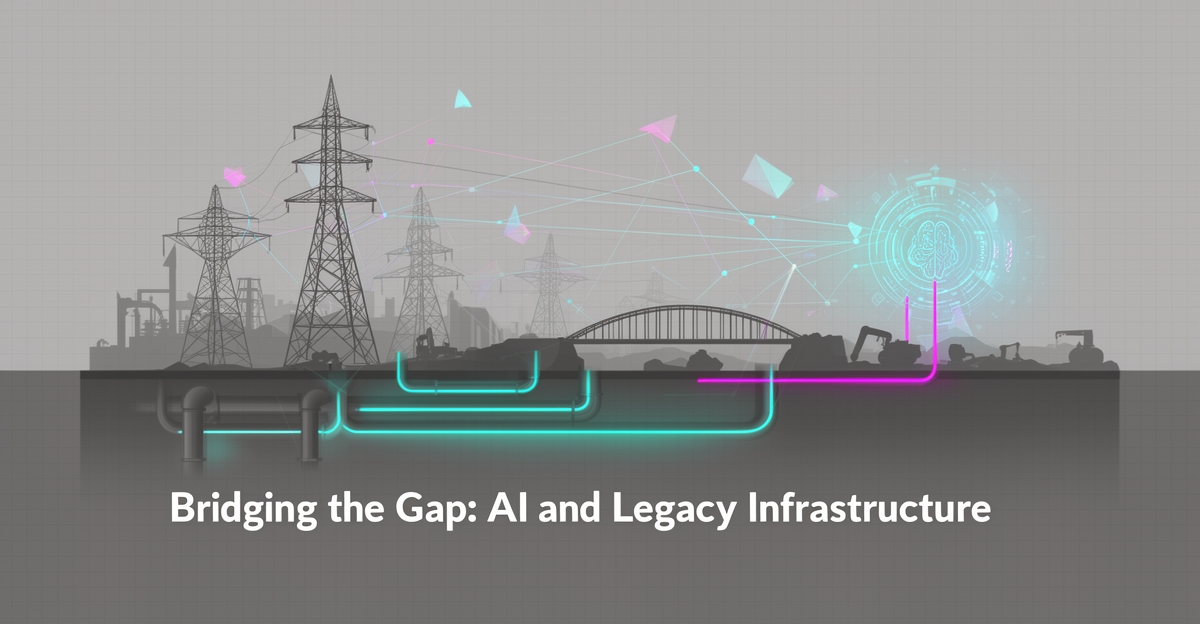
Generic AI tools often fail in utility construction because they don't account for the industry's deeply entrenched legacy systems and aging infrastructure. With a large share of utility assets now past the 40-year mark, off-the-shelf solutions struggle to interface with outdated data formats, manual workflows, and siloed asset records common in utility networks. These tools assume modern, API-friendly environments, yet many utilities still rely on paper-based inspections, localized spreadsheets, or proprietary SCADA systems that resist seamless integration.
Regulatory complexity further widens the gap between generic AI and real-world utility needs. Utility construction operates under strict federal, state, and local compliance frameworks governing everything from excavation permits to environmental impact reporting. AI models trained on broad construction datasets lack the contextual understanding to navigate these nuances, increasing the risk of non-compliance, project delays, or costly rework. Without domain-specific training, AI cannot reliably interpret jurisdictional variations in safety codes or asset management standards.
Field-specific workflows also expose the limitations of one-size-fits-all AI. Utility crews follow precise sequences for trenching, conduit installation, and pressure testing, processes that vary by asset type (water, gas, electric) and soil conditions. Generic AI fails to capture these procedural intricacies, leading to recommendations that are technically sound but operationally impractical. As a result, field teams often override or ignore AI outputs, undermining trust and adoption.
This mismatch drives up hidden costs: wasted licensing fees, failed pilots, and extended timelines as companies attempt to retrofit unsuitable tools. The widely reported multi-trillion-dollar U.S. infrastructure investment gap underscores the urgency of getting AI right, utilities can't afford solutions that add friction instead of removing it. Success requires partners who understand that utility construction isn't just about building new assets, it's about maintaining, upgrading, and integrating them within decades-old systems under constant regulatory scrutiny. AIQ Labs addresses this through a scoped workflow build approach that evaluates operational, compliance, and workflow alignment before any development begins.
What Industry Experience Really Means for AI Partners
Utility construction runs on aging assets and thin margins, so generic AI rarely survives first contact with the field. Deep utility construction experience separates tools that look good in a demo from systems that deliver predictive maintenance, longer asset life, and audit-ready operations.
Industry experience means the partner understands capital planning cycles, field data capture, and regulatory reporting, not just models. Aging asset bases and funding pressure demand solutions built around lifecycle decisions, not generic automation.
When AI is trained on utility workflows, it can move beyond alerts to asset strategy. Industry research on data-driven capital planning is frequently associated with meaningful lifecycle cost reductions, and AI-powered predictive maintenance is often credited with extending asset life. Those benchmarks reflect experience with inspection data, condition scoring, and maintenance histories specific to water, wastewater, and transportation networks. Exact figures vary by utility, so treat vendor-quoted percentages as directional rather than guaranteed.
Experience also shows up in audit readiness. Purpose-built infrastructure software is typically designed with reporting, lineage, and compliance controls built in from the start rather than bolted on, something you should demand of any AI system touching regulated utility data.
A partner with utility construction experience will evaluate opportunities through the lens of operational reality:
- Predictive maintenance models trained on asset age, material, and environmental exposure
- Lifecycle extension planning tied to capital budgets and risk prioritization
- Audit-ready documentation and traceability for regulators and stakeholders
That context is why a readiness conversation matters before any build. AIQ Labs starts every engagement by identifying the one workflow that costs you the most and rebuilding it for a fixed price, in phases, avoiding generic off-the-shelf tools and vague enterprise AI pitches.
System ownership, integration capability, and onboarding support complete the picture, but they only create value when the underlying use cases reflect how utilities actually operate. Experience turns AI from an experiment into a reliable operational layer.
Ownership, Integration, and Onboarding: The Non-Negotiables
Choosing an AI partner for utility construction management requires more than evaluating features, it demands assessing foundational elements that determine long-term success. System ownership prevents vendor lock-in and ensures utilities retain full control over their AI assets, allowing for customization and future development without dependency on a third-party platform. Integration capability, particularly with GIS systems like Esri ArcGIS and MapBox, is non-negotiable for maintaining spatial accuracy in asset tracking, condition monitoring, and infrastructure planning. Without seamless data flow between AI tools and geographic information systems, insights lose critical context, undermining decision-making in field operations and capital projects.
Structured onboarding support drives adoption by equipping teams with the training and resources needed to transition smoothly from legacy processes to AI-enhanced workflows. A partner that provides comprehensive onboarding reduces resistance, accelerates proficiency, and ensures the technology delivers measurable value from day one. This is especially vital in utility construction, where operational continuity and safety cannot be compromised during technology transitions.
Not all vendors structure ownership the same way. Some infrastructure software providers offer strong GIS compatibility and audit controls within their platform; AIQ Labs takes a different route with client-owned systems, when you build with AIQ Labs, you own the system outright, with no recurring dependency on the builder. The AI Operating Systems approach builds one connected operating layer in phases, owned outright by you, while AI Employees can handle roles like dispatchers and field coordinators at a fraction of the cost of a human hire. Industry research on AI governance reinforces the same principle: AI agents must be discoverable and managed so organizations understand what systems and data they can access and who is responsible for their actions. Utilities seeking AI partners should prioritize vendors who transfer intellectual property, support deep system integrations, and invest in change management, as these factors directly impact ROI and operational resilience. Ultimately, the right partner doesn't just deploy technology, they build capability, ensuring AI becomes a durable asset in the utility's long-term strategy.
How to Evaluate and Partner with the Right AI Provider
Utility construction teams face aging networks and mounting capital pressure, so choosing an AI partner is a decision about operational risk, not just technology. Solutions must be built for real field conditions, not demo environments.
Start with readiness and industry fit. A proper assessment maps your technology stack, data infrastructure, and team capabilities against utility-specific workflows. Industry experience matters because generic models fail on asset-specific logic, permitting, and safety protocols. AIQ Labs begins with a 2-minute Fit Check, followed by a free 30-minute strategy call, so both sides can confirm alignment before any development begins.
Evaluate system ownership and integration capability next. Ownership ensures you control customization, data, and future development without vendor lock-in. Integration capability is critical to communicate effectively with existing systems, GIS platforms like Esri ArcGIS and MapBox, ERP, and field management tools should all be within scope.
Pilot scoping protects capital and proves value. Define one high-impact workflow, set success metrics, and require transparent access to data and agents. Expert analysis on AI governance makes the same point: autonomous agents must be discoverable and managed so organizations understand what systems and data they can access and who is responsible for their actions.
Test integration and onboarding in parallel. A realistic pilot validates API connectivity, data quality, and user adoption before scale. AIQ Labs' payment models support this: Start Monthly to prove value, Build in Milestones as trust grows, or Own It Outright when the system becomes core infrastructure. Current pricing models are laid out plainly, with no invented numbers.
A practical evaluation checklist includes:
- Readiness assessment depth covering data, systems, and field processes
- System ownership model with full code and data transfer to the client
- Proven integration capability with GIS, ERP, and field management tools
- Comprehensive onboarding support with training and change management
- Transparent, phased payment models that scale with demonstrated value
The financial context is stark. Industry reporting consistently points to a multi-trillion-dollar investment gap in America's infrastructure, while data-driven capital planning and AI-powered predictive maintenance are repeatedly associated with lower lifecycle costs and longer asset life. Treat any vendor's specific percentages as directional, partner selection is the real lever on long-term value.
Choose partners who commit to lifecycle partnership, not point solutions. The right AI provider aligns assessment, custom build, integration, governance, and adoption into one accountable relationship, so AI delivers sustainable impact in utility construction. AIQ Labs has deployed 200+ multi-agent systems and runs four live SaaS products daily, proof comes from working systems, not slideware.
Still paying for 10+ subscriptions that don’t talk to each other?
We build custom AI systems you own outright. No vendor lock-in. Full control.
Not sure where to start? Ask our AI planner
Frequently Asked Questions
Why do generic AI tools often fail in utility construction?
How does industry experience improve AI effectiveness in utility construction?
What does system ownership mean when choosing an AI partner for utility construction?
Why is integration capability with GIS systems critical for AI in utility construction?
How does onboarding support impact AI adoption in utility construction teams?
What should a utility look for in an AI readiness assessment before partnering with a provider?
Building AI That Works Where It Matters Most
Choosing the right AI partner for utility construction isn't about chasing the latest technology, it's about finding a collaborator who understands the realities of aging infrastructure, complex regulations, and field-tested workflows. Generic AI fails where utility construction demands precision: in predictive maintenance that extends asset life, data-driven planning that cuts lifecycle costs, and audit-ready systems built for decades-old networks. Success hinges on industry experience, true system ownership, seamless GIS integration, and structured onboarding that respects operational continuity. AIQ Labs delivers this through phased builds that align AI with your actual processes, with payment models, Start Monthly, Build in Milestones, Own It Outright, that scale with demonstrated value. The path forward starts with clarity: take the 2-minute Fit Check, then book a free 30-minute strategy call to see where AI can deliver real, measurable value in your utility construction operations.
Make AI your competitive advantage — not just another tool.
Strategy, implementation and ongoing optimization. One partner, end to end.
Not sure where to start? Ask our AI planner