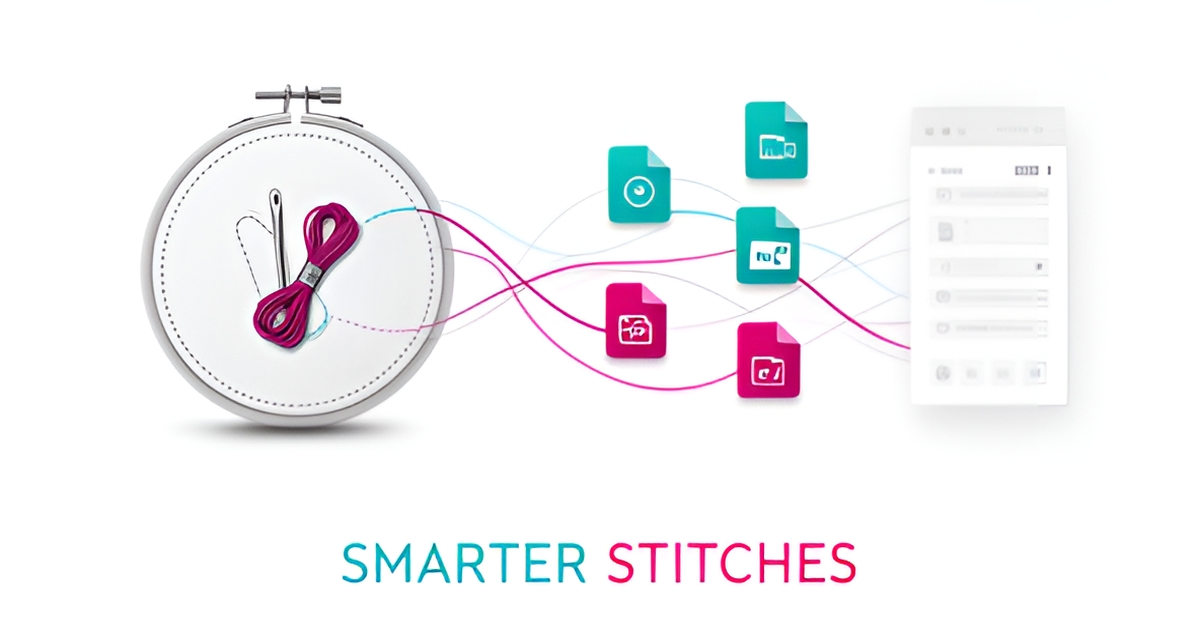
What to Look for in an AI Solution for a Custom Embroidery Business
Key Facts
- Industry estimates suggest a typical custom embroidery shop fields roughly 25 quote requests weekly, consuming several hours in email management.
- AI integration can reportedly reduce prepress time substantially through automated background removal and predictive stitch mapping.
- Embroidery software such as Richpeace V6.0 supports DST, PES, JEF, and EXP formats for compatibility across embroidery machines.
- Auto-digitizing AI tools typically produce visually inferior stitch programs compared to professional manual digitizing for premium orders.
- Pairing a field-service CRM with AI-assisted follow-up templates can reportedly cut weekly email management from several hours to under two.
- Designs for DTF and embroidery generally require a minimum of 300 DPI to prevent pixelation during production.
- AI-enhanced printing is a growing market, offering expansion opportunities for small shops.
Hire a team member that works 24/7 — for less than a part-time wage.
AI receptionists, SDRs, dispatchers and 99+ roles. Trained on your business, fully managed.
Not sure where to start? Ask our AI planner
The Embroidery Workflow Bottleneck AI Is Meant to Fix
Custom embroidery shops face a silent time drain that erodes profitability before a single stitch is made. The real bottleneck isn't the embroidery machine—it's the administrative workflow that precedes it, consuming hours that could be spent on production or customer engagement.
According to industry research, a typical shop handles roughly 25 quote requests per week, with each requiring about 15 minutes for email management, follow-up, and preliminary design review. That adds up to several hours weekly—potentially 300+ hours annually—spent on repetitive communication tasks that don't directly generate revenue. These administrative burdens create a hidden capacity constraint, limiting how many jobs a shop can realistically take on regardless of machine availability.
Beyond quote management, the prepress phase presents another significant opportunity for AI-driven efficiency gains. Research indicates that integrating AI into design workflows can reduce prepress time substantially through automation of background removal, predictive stitch mapping, and intelligent nesting. For shops handling complex or high-volume orders, this translates to faster turnaround times and reduced material waste—directly impacting both customer satisfaction and profit margins.
The cumulative effect of these bottlenecks creates a compounding challenge: time spent on administrative tasks reduces availability for actual embroidery work, while inefficient prepress processes increase the risk of errors that require costly rework. Shops that remain reliant on manual processes for quote handling and design preparation are essentially leaving capacity on the table—capacity that could be redirected toward taking on more complex orders, improving design quality, or investing in business growth initiatives.
At AIQ Labs, addressing these workflow inefficiencies is exactly what our AI Workflow Builds are designed for: we identify the single workflow that costs your shop the most—often quote handling or prepress—and rebuild it at a fixed price, in phases. By focusing on the specific pain points in quote management and prepress, custom embroidery businesses can begin to reclaim valuable time currently lost to non-value-added activities. This foundational step creates the capacity needed to implement more advanced AI solutions that enhance rather than disrupt the core craft of embroidery.
Core Evaluation Criteria for AI Embroidery Tools
The difference between an AI tool that transforms your embroidery operation and one that collects digital dust often comes down to four evaluation criteria. Before you commit to any platform, assess how it handles design compatibility, customization flexibility, software integration, and small-scale operational support.
Start with file format compatibility—the foundation of any functional embroidery workflow. Your AI solution must speak the language of your machines, whether that means DST, PES, JEF, or EXP formats. According to Richpeace V6.0 specifications, comprehensive format support ensures compatibility across different embroidery machines, preventing the production bottlenecks that occur when design files won't transfer between systems. Without this baseline compatibility, even the most advanced AI features become useless when your equipment can't read the output.
Customization flexibility separates basic automation from true creative partnership. Today's embroidery landscape demands more than flat, standardized designs—industry analysis shows 3D embroidery technology and personalized customization increasingly define competitive work. Evaluate whether the AI handles complex stitch types (satin, fill, running) with adjustable density and texture settings, and whether it supports the tactile, dimensional designs that premium clients request. However, maintain realistic expectations: research on AI digitizing tools indicates that while auto-digitizing works for basic applications, professional manual digitizing still typically delivers superior quality for premium garment orders where clients pay premium prices for large runs.
Integration capabilities determine whether the AI becomes a seamless team member or another siloed subscription. Look for solutions that connect with your existing design software and production management systems rather than forcing complete workflow overhauls. The most effective implementations reduce prepress time through automated background removal and predictive stitch mapping, but only when they integrate cleanly with your current tech stack. At AIQ Labs, we've found that small and mid-sized businesses see the fastest return when AI tools enhance rather than replace their established design ecosystems.
Finally, prioritize small-scale operation support. Enterprise-grade features mean little if the pricing model assumes corporate volume. Look for:
- Batch processing capabilities that handle multiple design conversions simultaneously
- Intuitive interfaces requiring minimal technical staff training
- Error-correction automation that prevents costly stitch mistakes
- Pricing structures aligned with shops processing 200–2,000 pieces per order rather than mass manufacturers
The right AI solution scales to your actual volume—not the vendor's ideal customer profile.
Buy vs Build vs Hybrid: Choosing the Right AI Approach
The right AI approach depends less on the technology itself and more on where your shop actually loses time. For most custom embroidery businesses, the answer falls into three paths: buying off-the-shelf SaaS, building custom, or blending both.
According to industry analysis, the typical embroidery shop fields roughly 25 quote requests weekly, consuming several hours in email back-and-forth. A SaaS stack combining a field-service CRM with AI-assisted follow-up templates can reportedly cut that to under two hours, recovering hundreds of hours annually. This buy-first approach works best for smaller shops that need immediate relief without upfront development costs.
Custom builds make sense at higher volumes, where implementation data suggests payback periods of roughly 12–18 months on mid-five-figure investments. These systems integrate directly with your accounting, inventory, and production scheduling rather than forcing your workflow into generic field-service software designed for plumbers and HVAC technicians.
The hybrid path often wins for growing shops: buy commodity tools for email and scheduling, but build custom logic for complex quoting or customer-specific pricing rules. This is where a structured evaluation proves valuable—mapping which workflows actually need custom intelligence versus which simply need automation. AIQ Labs' AI Employees fit the first bucket: managed AI staff (receptionists, SDRs, dispatchers, and 99+ other roles) that handle repetitive communication at a fraction of the cost of a human hire, starting on a monthly plan. For the workflows that need custom logic, an AI Workflow Build rebuilds the one process that costs you the most, at a fixed price, delivered in phases.
However, one critical anti-pattern emerges regardless of approach: AI auto-digitizing should never replace manual digitizing for premium orders. While industry reports indicate AI can reduce prepress time through automated background removal and predictive stitch mapping, quality comparisons suggest auto-digitizing tools produce visually inferior stitch programs compared to professional manual work. Customers paying premium prices for large polo orders can detect the difference in finished stitch quality.
Human oversight remains non-negotiable for three specific areas:
- Trademark and copyright review of customer-supplied artwork—AI cannot assess IP risk or infringement liability
- Digitizing complexity estimation—no AI tool currently evaluates stitch count, underlay requirements, or fabric-specific adjustments automatically
- Final quality control on premium garments where brand reputation justifies manual digitizing costs
When evaluating vendors, prioritize design compatibility with your existing file formats (DST, PES, JEF) and integration depth with your current design software. Embroidery software solutions like Richpeace V6.0 demonstrate why format flexibility matters—supporting DST, PES, JEF, and EXP files ensures your AI tools communicate with your actual machines, not just your computer.
Whether you buy, build, or hybridize, the goal remains the same: machine learning algorithms should handle repetitive data entry and email tagging, while your skilled digitizers retain control over stitch quality and creative decisions. AIQ Labs typically recommends starting with the two-minute Fit Check to identify which specific bottlenecks—quoting, customer communication, or production scheduling—justify custom development versus off-the-shelf fixes.
Implementation Checklist for Small Embroidery Shops
Testing an AI embroidery tool on a single logo is not enough. Small shops need a controlled pilot that proves quality, speed, and fit with existing workflows before committing.
Start with file quality and production standards. Validate that the solution preserves a minimum of 300 DPI for DTF and embroidery designs to prevent pixelation during production. Check format compatibility across DST, PES, JEF, EXP and other machine files, and confirm auto-digitizing outputs can be edited without rebuilding from scratch.
Stitch accuracy and layout efficiency determine real savings. Run the same artwork through predictive stitch mapping and smart nesting and measure material waste and prepress time. Integrating AI into workflows can meaningfully reduce prepress time through automated background removal, predictive stitch mapping, and smart gang sheet nesting. Compare the AI output to manual digitizing on premium orders, because auto-digitizing tools can produce visually inferior stitch programs for high-value garments.
Small-shop operations rely on batch handling and visual confidence. Confirm batch processing for converting multiple design files simultaneously, and use 3D preview to visualize the final product in three dimensions before embroidery begins. The preview function is a significant upgrade that helps users visualize the final product before production.
A practical pilot checklist for a shop:
- Resolution and format validation: 300 DPI minimum and multi-format import/export
- Stitch mapping and nesting accuracy: measure waste reduction and time per job
- Batch processing and 3D preview: test multi-file conversion and visual approval workflow
- Ownership and integration: confirm data ownership, CRM and design tool connections, and no vendor lock-in
Ownership and integration matter as much as features. A custom embroidery shop handles roughly 25 quote requests per week, consuming several hours weekly in email management, so the AI should connect to existing CRM and design tools rather than create another silo. For shops ready to go further, AIQ Labs' AI Operating Systems connect quoting, communication, and production into one operating layer—built in phases and owned outright, with no subscription lock-in. Payment models are straightforward: start monthly, build in milestones, or own it outright.
Pilot with real jobs, real files, and real customers. Track prepress hours, rework rates, and quote turnaround. If the tool cannot demonstrate measurable time savings and quality retention, it is not ready for shop floor deployment.
Still paying for 10+ subscriptions that don’t talk to each other?
We build custom AI systems you own outright. No vendor lock-in. Full control.
Not sure where to start? Ask our AI planner
Frequently Asked Questions
How much time does a typical embroidery shop waste on quote management each year?
Can AI auto-digitizing replace manual digitizing for premium embroidery orders?
What file formats should an AI embroidery solution support to work with my machines?
How much can AI reduce prepress time in embroidery workflows?
What's the recommended AI approach for a smaller embroidery shop?
What human oversight is still required even with AI embroidery tools?
Reclaim Your Stitch Time: Turning AI Insights into Embroidery Profit
The path forward for custom embroidery businesses isn't about chasing the latest AI trend—it's about strategically applying technology to eliminate the hidden time drains that quietly erode profitability. As we've explored, the real opportunity lies in targeting administrative bottlenecks like quote management and prepress workflows, where AI can recover hundreds of hours annually without compromising the craftsmanship that defines your work. By focusing on solutions with strong file format compatibility, thoughtful customization, seamless integration, and support for your actual order volumes, you create space to take on more complex orders, improve design quality, or invest in growth. The most successful implementations start small: pilot AI tools on real jobs, measure time savings and quality retention, and scale only what delivers measurable value. Remember, AI should handle the repetitive tasks—email tagging, background removal, basic digitizing—while your skilled digitizers retain creative control over premium work where clients can truly see the difference. Ready to identify which specific workflow in your shop holds the greatest untapped capacity? Start with AIQ Labs' two-minute Fit Check, then book a free 30-minute strategy call to map your biggest bottlenecks and uncover high-ROI automation opportunities tailored to your embroidery business. No obligation—just clarity on where AI can actually help you reclaim time and grow profitably.
Make AI your competitive advantage — not just another tool.
Strategy, implementation and ongoing optimization. One partner, end to end.
Not sure where to start? Ask our AI planner