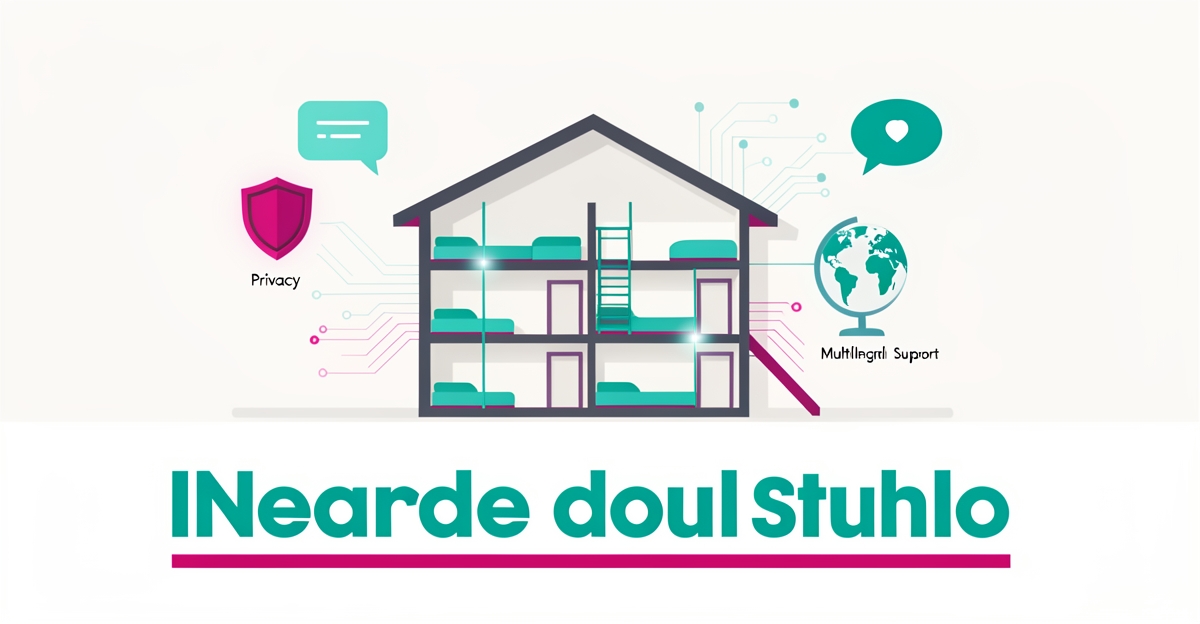
What to Look for in an AI Solution for Hostels: A Practical Guide for Owners
Key Facts
- A large share of AI investment underperforms when tools lack business-process expertise, industry-specific design matters
- Multilingual AI support is essential for hostels serving global travelers
- AI solutions must prioritize guest data handling and compliance with privacy laws like GDPR
- Integrating AI with booking systems typically reduces errors and improves guest information accuracy
- AI becomes a commerce layer, not just a conversational interface, when deeply integrated into operations
- Transparent data usage policies build guest trust and improve the overall experience
Hire a team member that works 24/7 — for less than a part-time wage.
AI receptionists, SDRs, dispatchers and 99+ roles. Trained on your business, fully managed.
Not sure where to start? Ask our AI planner
Why Hostels Can't Afford Generic AI Tools
Every hostel owner knows that running a successful property isn't just about filling beds, it's about managing a complex ecosystem of shared spaces, international travelers, and razor-thin margins. Yet most AI solutions on the market aren't designed with these realities in mind, leading to wasted resources and missed opportunities.
Industry research has consistently shown that a substantial share of AI investment underperforms when tools lack the business-process expertise to address specific industry needs. For hostels, this gap is especially costly. A generic AI might handle a standard hotel booking, but it won't understand the nuances of dormitory-style accommodations, last-minute group reservations, or the multilingual demands of a global guest base.
The hospitality industry is at a turning point. As of late 2026, AI is becoming a key differentiator, with forward-thinking properties using it to personalize guest experiences and streamline operations. Hostels that adopt generic tools risk falling behind, while those investing in tailored solutions gain a competitive edge.
So what makes hostels unique? Here are the critical gaps generic AI tools often miss:
- Shared-space dynamics: Managing dorm beds, communal areas, and group bookings requires AI that understands hostel-specific workflows.
- Multilingual guest support: With travelers from around the world, AI must seamlessly communicate in multiple languages to avoid friction.
- Thin-margin operations: Hostels can't afford inefficiencies, AI must optimize staffing, energy use, and turnover processes to protect profitability.
- Compliance complexity: Hostels handle sensitive guest data across borders, requiring AI that prioritizes privacy laws like GDPR.
The stakes are high. Operators who report measurable benefits from AI tend to be the ones whose systems align with their business model. For hostels, that means solutions built for their unique challenges, not repurposed hotel software.
At AIQ Labs, we build AI for hospitality businesses in three ways: managed AI Employees that handle guest communication and front-desk tasks around the clock, targeted Workflow Builds that rebuild the one workflow costing you the most, and full AI Operating Systems that connect your entire operation in phases. Every solution is designed with your industry's specific needs in mind, so you can focus on what matters: delivering exceptional guest experiences.
Guest Data Handling and Privacy Compliance: The Non-Negotiables
Before you evaluate a single feature, you must scrutinize the foundation of any AI solution: its approach to guest data. In an industry built on trust and personal experience, how a system handles sensitive information is not just a technical detail, it is the bedrock of your relationship with every guest.
A data breach or compliance failure can shatter your hostel's reputation overnight. AI solutions must prioritize guest data handling, ensuring personal information is secure and compliant with privacy laws. This goes beyond simple storage; it's about creating a secure, organized digital environment. When data is structured logically, the AI can access and understand it effectively, leading to better personalization and smoother operations.
This structured approach is what allows an AI to move from being a simple tool to a true operational asset. It enables the system to automate and personalize the entire guest journey, from booking to check-out, based on reliable information. The organization of guest data is as critical as its security.
When vetting a potential AI solution, your evaluation of its data governance must be non-negotiable. Look for clear evidence of a robust framework designed to protect guest privacy and ensure fair, transparent operations. This includes several key pillars that should be clearly documented by the vendor.
- Data Security and Encryption: The system must use industry-standard encryption for data both in transit and at rest, with strict access controls.
- Compliance with Privacy Laws: The solution must be designed to comply with relevant regulations like GDPR, ensuring guest data is protected by law.
- Transparent Data Usage Policies: The vendor should provide clear documentation on how guest data is collected, used, and stored, leaving no room for ambiguity.
- Fairness in AI Decision-Making: The system's logic should be vetted for biases to ensure all guests are treated equitably, a critical component of building trust.
A commitment to these principles does more than just mitigate risk; it actively builds your brand. A strong compliance posture helps build trust with guests and improves their overall experience, especially vital as AI becomes more integrated into hospitality.
Ultimately, a vendor's approach to data reveals their understanding of the hospitality industry itself. A generic AI tool may process data, but a solution built for hostels understands that this data represents real people who have placed their trust in you. At AIQ Labs, this principle guides our development process, ensuring that every AI system is architected with the specific data governance and compliance needs of businesses like yours in mind from day one.
Multilingual Support: Serving Guests Who Speak Dozens of Languages
Hostels welcome a constant flow of travelers from around the world, often speaking dozens of different languages under one roof. When a guest can't understand check-in instructions or get answers in their own language, even a well-run hostel can feel confusing and unwelcoming.
This is why multilingual AI support is essential rather than optional. Research on AI-powered guest experience management highlights that multilingual support helps hostels serve a diverse guest base by providing information and services in each guest's preferred language, improving both satisfaction and efficiency.
AI systems that support multiple languages can answer common questions, explain house rules, and guide guests through check-in without waiting for a staff member who speaks the right language. When combined with broader guest experience automation, multilingual AI helps personalize communication across the entire stay, not just at the front desk.
At the same time, not all "multilingual" claims are equal. Some tools rely on surface-level translation, while more advanced systems maintain context, tone, and intent across languages. As AI becomes a core part of hospitality operations, it is evolving into a broader service and commerce layer rather than just a chat feature.
When evaluating a vendor's language capabilities, hostel owners should test how the AI performs in real conversations rather than relying on feature checklists. Key things to look for include:
- Accuracy and fluency across the languages your guests actually speak
- Ability to maintain context and meaning, not just word-for-word translation
- Consistent tone that matches your hostel's brand voice
- Smooth handoff to staff when the AI reaches its limits
It's also important to consider how multilingual support fits into your wider operations. AI works best when it connects with booking systems and guest data, ensuring responses are not only in the right language but also relevant to each reservation. This is where solutions designed specifically for hospitality workflows stand out from generic tools.
At AIQ Labs, this principle guides how AI systems are designed, focusing on real operational needs like multilingual guest communication rather than isolated features. The result is AI that doesn't just translate words, but helps deliver a smoother, more inclusive guest experience from booking to check-out.
Booking System Integration: Where AI Value Is Won or Lost
The true value of AI in hostels isn't found in standalone chat widgets, it's realized when the technology plugs directly into the operational heartbeat of the property. As hospitality leaders have noted, the booking journey increasingly starts with a single prompt rather than a website visit. That shift demands AI that acts as a commerce layer, not just a conversational interface, seamlessly executing tasks like booking modifications, room assignments, and payment processing within existing workflows.
When AI integrates deeply with booking and property management systems, it eliminates the manual data transfer that introduces errors and delays. Integrating AI with booking systems typically reduces errors and improves the accuracy of guest information, directly impacting satisfaction and operational trust. For hostels managing high volumes of last-minute bookings and diverse guest profiles, this precision isn't optional, it's foundational to delivering reliable service at scale.
Consider the ripple effect: when an AI agent can check real-time availability, apply pricing rules, and confirm a reservation, all within the hostel's PMS, it transforms from a novelty into a core operational asset. This level of integration ensures that guest data remains synchronized across touchpoints, reducing discrepancies that lead to overbookings or miscommunication. It also enables proactive service, such as automatically sending pre-arrival instructions in the guest's preferred language based on their booking details.
Ultimately, AI that sits outside the booking workflow creates friction; AI embedded within it creates flow. For hostel owners evaluating solutions, the litmus test is simple: does the AI reduce the workload on your team by handling end-to-end tasks in your existing systems, or does it merely add another layer to manage? The answer determines whether your investment drives efficiency or just adds complexity. To assess your readiness for this level of integration, book a free 30-minute strategy call to map your biggest bottleneck.
A Practical Evaluation Checklist for Hostel Owners
Evaluating AI solutions for your hostel shouldn't feel like guesswork. A structured checklist turns abstract criteria into a repeatable process that protects your guests, your operations, and your bottom line.
Start by mapping your hostel-specific needs before you talk to a single vendor. Document your peak-season pain points: multilingual check-ins at 2 a.m., group-booking modifications across three channels, or the manual data entry that eats 20 hours a week. AI investment tends to underperform when organizations lack business-process expertise, so clarity here prevents costly mismatches. Next, verify booking integration depth. Ask for a live demo showing a reservation created in Cloudbeds or Hostelworld flowing into the AI system without human intervention, integration with booking systems streamlines the process and improves guest satisfaction.
- Test multilingual support with real guest scenarios: a Portuguese speaker modifying a dorm assignment, a Japanese traveler asking about luggage storage, a Spanish group requesting late checkout.
- Audit data handling and compliance: confirm GDPR-ready encryption, data-minimization practices, and clear retention policies, compliance with privacy laws builds trust and protects your reputation.
- Demand transparency: request the logic behind every automated decision, from upsell suggestions to room assignments, so you can explain outcomes to guests and regulators alike.
AIQ Labs applies this same rigor when building custom AI systems that hostels own outright, no vendor lock-in, no black-box models, just infrastructure tailored to your workflows. The result is an AI layer that speaks your guests' languages, respects their data, and plugs directly into the tools you already run. Ready to see where the gaps are? Start the two-minute Fit Check at aiqlabs.ai/apply and book a free 30-minute strategy call to walk through your specific operation with an AI engineer.
Still paying for 10+ subscriptions that don’t talk to each other?
We build custom AI systems you own outright. No vendor lock-in. Full control.
Not sure where to start? Ask our AI planner
Frequently Asked Questions
Why can't I just use a generic AI tool like ChatGPT or a standard hotel chatbot for my hostel?
How important is multilingual support really? My front desk staff already speaks a few languages.
What should I look for to ensure an AI solution actually integrates with my booking system (like Cloudbeds or Hostelworld) rather than just sitting on top of it?
I'm worried about guest data privacy and GDPR. What specific compliance features are non-negotiable?
How do I evaluate AI vendors without getting locked into a black-box system I can't control or customize later?
What's the fastest way to know if AI is worth it for my specific hostel without committing to a big project?
From Complexity to Clarity: Your Next Step Toward Smarter Hostel Operations
Running a hostel means navigating shared spaces, multilingual guests, and tight margins, all while delivering memorable experiences. As we've explored, generic AI tools fall short because they miss the nuances that define your business: dormitory workflows, real-time booking changes, GDPR compliance, and the need for AI that speaks your guests' languages fluently and contextually. The real advantage comes not from adding another tool, but from integrating AI deeply into your existing systems, so it reduces workload, prevents errors, and enhances trust at every touchpoint. When AI understands your operations as well as your guests do, it stops being a cost center and starts driving efficiency, satisfaction, and sustainable growth. If you're ready to see where AI can make the biggest impact in your hostel, without guesswork or vendor lock-in, start with a free, two-minute Fit Check to map your biggest bottleneck. Then, book a no-obligation 30-minute strategy call with an AI engineer to walk through your specific operation and discover where tailored AI can deliver real, measurable value. Begin your Fit Check today and take the first step toward an AI solution built for hostels, not just adapted to them.
Make AI your competitive advantage — not just another tool.
Strategy, implementation and ongoing optimization. One partner, end to end.
Not sure where to start? Ask our AI planner