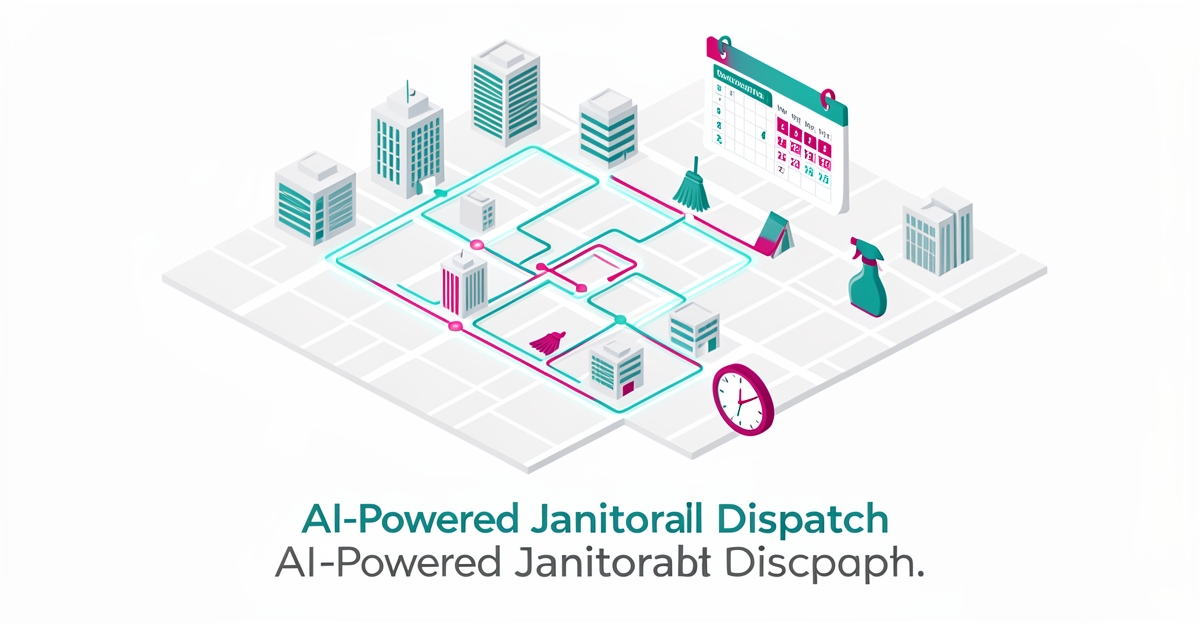
# What to Look for in an AI Solution for Janitorial Scheduling and Dispatch
**Quick Answer:** Manual janitorial scheduling burns hours every day and quietly erodes margins. The right AI solution combines demand forecasting, real-time routing, mobile crew access, and built-in labor compliance, deployed as a system you own, not another subscription. Start with the [Fit Check](/apply) to see if there's a clear win.
## Key Facts
- Predictive scheduling platforms typically forecast workload demand in short intervals using machine learning, enabling tighter staffing alignment
- Dynamic routing algorithms can reduce travel time and costs, increase technician utilization, and improve customer satisfaction
- Built-in compliance features automate rule-checking for fair workweek laws, overtime caps, and rest periods, protections manual tracking often misses
- Mobile access with real-time updates, job reminders, and checklists is essential for crew adoption
- Self-service scheduling (shift swaps, availability submission) cuts dispatcher workload and improves retention
## Table of Contents
1. [The Scheduling and Dispatch Bottlenecks Costing Janitorial Firms](#the-scheduling-and-dispatch-bottlenecks-costing-janitorial-firms)
2. [Core AI Capabilities That Drive Efficiency and Compliance](#core-ai-capabilities-that-drive-efficiency-and-compliance)
3. [Implementation Risks and Adoption Factors to Vet Before Buying](#implementation-risks-and-adoption-factors-to-vet-before-buying)
4. [A Practical Roadmap for Selecting and Deploying AI Dispatch](#a-practical-roadmap-for-selecting-and-deploying-ai-dispatch)
## The Scheduling and Dispatch Bottlenecks Costing Janitorial Firms
The operational bottlenecks in janitorial scheduling are more than minor inconveniences, they directly erode profitability and service quality. Manual dispatch processes consume hours each day as coordinators juggle spreadsheets, phone calls, and last-minute changes, leading to delayed responses and frustrated clients. Without real-time visibility, companies routinely overstaff slow periods and scramble during peak demand, wasting labor budgets while risking service gaps. Travel inefficiencies compound these issues, with crews driving unnecessary miles due to static routes that ignore traffic, weather, or urgent reassignments.
These pain points create a cascade of avoidable costs. Dynamic routing algorithms can reduce travel time and costs while increasing technician utilization and productivity, directly addressing the fuel waste and idle time that plague manual dispatch. Predictive scheduling, meanwhile, aligns staffing to forecasted demand, preventing both understaffing penalties and overstaffing expenses. And when dispatchers lack live visibility into crew locations and job status, immediate task assignment becomes impossible; delayed communication disrupts every workflow downstream.
Compliance risks add another layer of vulnerability, particularly for firms operating across multiple jurisdictions with varying labor laws. Modern scheduling platforms include built-in compliance features that automate rule-checking for fair workweek laws, overtime caps, and adequate rest periods, critical protections that manual tracking often misses. Without such safeguards, companies face fines, legal exposure, and eroded trust from both employees and clients. Poor visibility into schedules and performance metrics also hinders accountability, making it impossible to identify bottlenecks or reward top performers objectively.
**The true cost of inaction** manifests as reactive firefighting instead of proactive operations, where dispatchers spend more time apologizing for delays than preventing them. Technicians arrive late or unprepared due to poor route planning, clients receive inconsistent service quality, and managers lack the data to forecast labor needs accurately. Over time, this cycle damages reputation, increases turnover, and caps growth potential as resources remain trapped in inefficient processes. AI isn't just an upgrade here, it's the shift from surviving daily chaos to building a resilient, scalable service model.
## Core AI Capabilities That Drive Efficiency and Compliance
Selecting the right AI platform means looking past flashy dashboards to the capabilities that actually move the needle on efficiency and compliance. The difference between a tool that optimizes and one that merely digitizes comes down to how deeply it understands your operational constraints, labor laws, traffic patterns, crew preferences, and real-time demand signals.
**Demand forecasting with auto-assignment.** Leading scheduling engines predict workload demand in short intervals using machine learning, then assign shifts based on worker skills, preferences, and availability. This granularity prevents both understaffing during peak windows and costly overstaffing during lulls. The same
AI Employees
Hire a team member that works 24/7 — for less than a part-time wage.
AI receptionists, SDRs, dispatchers and 99+ roles. Trained on your business, fully managed.
See If You’re a Fit — AI Employees from $700/mo
Not sure where to start? Ask our AI planner
platforms typically deliver **real-time compliance alerts** for fair workweek laws, fatigue rules, and overtime caps, stopping violations before they trigger penalties.
**Dynamic routing.** Algorithms that adjust for traffic, weather, cancellations, and urgent requests can **reduce travel time and costs** while increasing technician utilization and customer satisfaction. The key is continuous optimization fed by live GPS and job data, not static routes generated once each morning.
**Mobile access.** This is what turns the above into daily reality. Crews need real-time updates, job reminders, and cleaning checklists on their phones, plus self-service features that let employees pick up open shifts, swap schedules, and submit availability without dispatcher intervention. That autonomy cuts administrative overhead and improves retention, when employees work preferred schedules, satisfaction follows.
The capability checklist to hold vendors against:
- Short-interval demand forecasting with auto-shift assignment
- Dynamic routing that recalculates in real time for traffic and weather
- Mobile crew access with checklists, updates, and self-service scheduling
- Built-in labor law compliance with proactive violation alerts
- Client-facing portals for service requests and progress tracking
When forecasting, routing, and compliance work as a unified system rather than disconnected features, the efficiency gains compound. [AIQ Labs' AI Workflow Builds](/workflow-builds) approach rebuilds the one dispatch workflow that costs you the most, at a fixed price, in phases, so you see value before committing to a broader rollout. The right solution doesn't just schedule work; it changes how work gets done.
## Implementation Risks and Adoption Factors to Vet Before Buying
AI scheduling looks transformative on a demo, but the risk shows up after go-live when data, people, and systems collide.
**Data quality is the foundation.** Poor or outdated data leads to suboptimal routing decisions, scheduling conflicts, and compliance violations. Invest in data governance before integration to ensure accuracy and reliability.
**Technician adoption determines whether the system delivers value.** Frequent changes in routes and schedules can cause resistance among field crews. Successful implementation requires clear communication of benefits, comprehensive training, and incentives to encourage adoption.
**Customer communication protocols need explicit design.** Dynamic scheduling can result in frequent changes to arrival times, requiring proactive customer communication to maintain satisfaction. Establish protocols for managing expectations and collecting feedback.
**Integration complexity is often underestimated.** Connecting new AI solutions with existing CRM, ERP, and GPS systems presents technical challenges that require significant planning and resources. Dynamic routing in particular needs continuous feeds from the systems you already run.
**Change management is not optional.** Implementing AI represents a significant organizational transformation. Success depends on balancing process redesign, data governance, and a meaningful vision shared with dispatchers and crews alike.
Vetting questions to ask vendors before buying:
- How does the system handle real-time data feeds for technician locations, job details, and traffic conditions to enable continuous optimization?
- What built-in compliance and governance features exist for labor laws, fair workweek rules, certifications, and fatigue limits?
- What mobile self-service capabilities allow employees to submit availability, request time off, pick up open shifts, and swap with coworkers?
- How are schedule changes automatically communicated to technicians and customers?
- Who owns the system and the data after implementation, you, or the vendor?
That last question matters more every year. Stacking another subscription on top of your existing stack creates subscription chaos and long-term dependency. AIQ Labs approaches janitorial scheduling as part of a connected [AI Operating System](/ai-operating-systems), one layer you own outright, rather than a point-tool purchase. **True ownership and integration** with existing software protects long-term operations.
## A Practical Roadmap for Selecting and Deploying AI Dispatch
Choosing the right AI dispatch system is less about features and more about how it will run day-to-day with your crews, customers, and compliance obligations.
**Start by documenting the rules that govern dispatch today.** Define service level agreements, technician skills, customer preferences, priority levels, and labor constraints. Clear parameters let algorithms optimize without creating violations or surprises in the field.
**Vet integration and real-time data feeds early.** Dynamic routing algorithms calculate best routes and schedules based on real-time data and
AI Development
Still paying for 10+ subscriptions that don’t talk to each other?
We build custom AI systems you own outright. No vendor lock-in. Full control.
See If You’re a Fit — AI Employees from $700/mo
Not sure where to start? Ask our AI planner
constraints, adjusting automatically to traffic, weather, cancellations, or urgent requests. The system must connect to CRM, ERP, and GPS platforms and ingest technician locations, job details, and traffic conditions continuously.
**Pilot with dispatchers and key users before wide rollout.** Involve dispatchers from the project start to ensure buy-in and proper configuration. A single-branch pilot with selected key users surfaces data quality issues and adoption friction before full deployment.
**Establish communication protocols for schedule changes.** Dynamic scheduling creates frequent arrival-time shifts, so proactive customer communication protects satisfaction. Client-facing portals that let customers request services, monitor progress, and provide feedback are worth requiring in any shortlist. Mobile access is equally essential for adoption: crews should be able to access checklists, prioritize tasks, and update clients in real time from their phones.
**Track metrics and refine iteratively.** Measure efficiency gains, technician utilization, travel time and costs, and customer satisfaction. Retrain or re-tune the system on performance data as conditions change.
A practical rollout plan typically includes:
- Define rules, SLAs, and compliance guardrails with dispatchers and operations
- Validate data quality and connect real-time feeds for locations, jobs, and traffic
- Pilot with a small crew, train on mobile workflows, and collect feedback
- Set automated notifications for technicians and customers on changes
- Monitor KPIs and refine the model on performance data
This step-by-step approach mirrors how AIQ Labs guides janitorial and field-service deployments, aligning technology selection with operational needs and avoiding costly missteps. Whether you need a managed [AI Employee dispatcher](/ai-employees) handling after-hours calls and scheduling at a fraction of a hire's cost, a focused workflow rebuild, or a full connected operating layer, the discipline is the same: define, integrate, pilot, communicate, measure, refine.
## Frequently Asked Questions
**How much can dynamic routing algorithms reduce travel time and costs for janitorial dispatch?**
Dynamic routing can meaningfully reduce travel time and costs while increasing technician utilization and productivity, directly addressing the fuel waste and idle time that plague manual dispatch. Exact gains depend on route density, data quality, and how often schedules change.
**What specific compliance features should I look for in an AI scheduling solution for janitorial services?**
Look for built-in compliance with fair workweek laws, overtime caps, and adequate rest periods, including real-time alerts that flag violations before they trigger penalties.
**How does predictive scheduling improve staffing accuracy for janitorial companies?**
Machine-learning forecasts of workload demand, often at granular intervals, enable staffing alignment that prevents both understaffing penalties and overstaffing expenses.
**What mobile capabilities are essential for technician adoption of AI dispatch systems?**
Real-time updates, job reminders, cleaning checklists, and self-service features like shift swapping and availability submission, which improve retention and reduce administrative overhead.
**What is the most common implementation risk when adopting AI for janitorial scheduling, and how can it be mitigated?**
Poor data quality leading to suboptimal routing and scheduling conflicts. Mitigate it by investing in data governance and preparing data thoroughly before system integration.
**Can AI scheduling reduce reliance on contract staff?**
When forecasting, routing, and compliance work as a unified system, many operators find they can cover demand with a smaller core crew and less contract labor. Results vary by operation, model your own staffing mix before committing.
## From Firefighting to Forecasting: Your Next Move in Janitorial Dispatch
The cost of manual scheduling isn't just lost hours, it's eroded margins, inconsistent service, and a team stuck in reactive mode. The firms gaining ground are those moving from spreadsheets to systems that combine demand forecasting, real-time dynamic routing, mobile crew access, and built-in labor compliance. Those capabilities reduce travel waste, improve utilization, and protect you from violations, but only when data is clean, dispatchers are involved early, and change is managed with technicians and customers in mind.
Selecting an AI solution is less about features than about fit with your rules, integrations, and adoption plan. If you're ready to map your biggest bottleneck to a high-ROI automation path, start the 2-minute [Fit Check](/apply) and book a free 30-minute strategy call. It's a no-obligation working session to pressure-test your dispatch process, and if there isn't a clear win, we'll tell you.
AI Transformation Partner
Make AI your competitive advantage — not just another tool.
Strategy, implementation and ongoing optimization. One partner, end to end.
See If You’re a Fit — AI Employees from $700/mo
Not sure where to start? Ask our AI planner