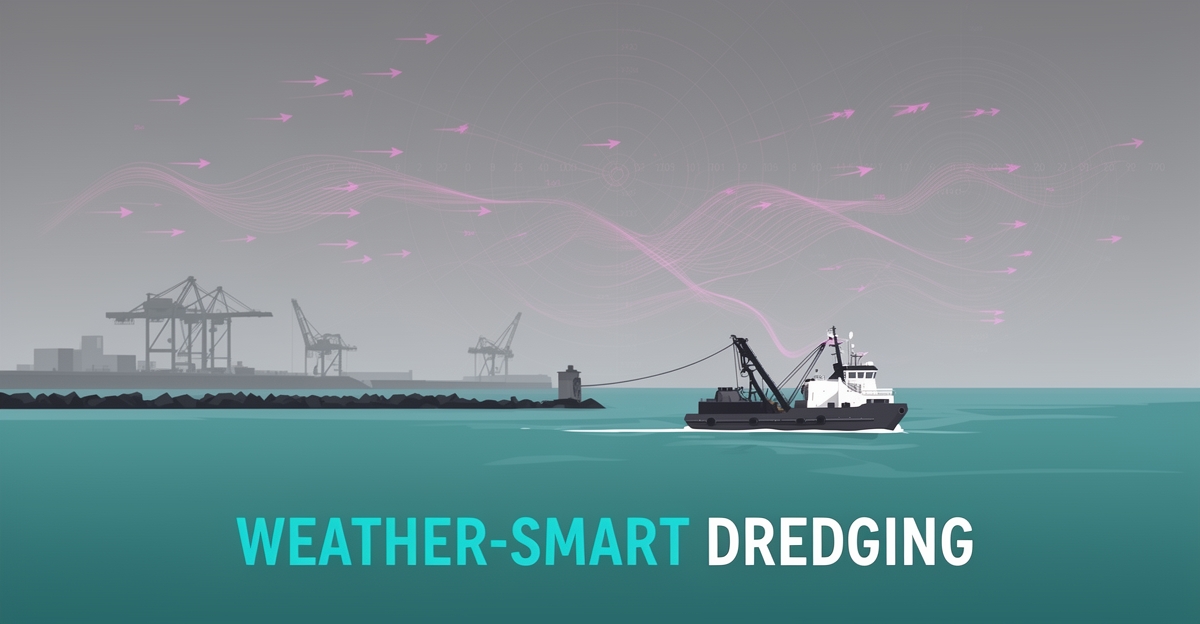
Why Dredging Companies Are Missing Out on AI for Weather-Driven Scheduling
Key Facts
- Traditional dredging scheduling relies on static calendars and manual judgment, leaving operations exposed when weather shifts
- Sea-level rise and storm volatility are increasing erosion and repair costs for coastal operators, with projections pointing to substantially higher expenses by 2050
- A large share of routine dredge operator tasks—GPS positioning, production logging, depth monitoring—are typically automatable with existing AI tools
- AI systems can adjust dredge removal rates within seconds to match sudden sediment influx from storms or tidal surges
- Pre-clearing sediment ahead of predicted high-storm months reduces unplanned shutdowns and overtime
- AIQ Labs has deployed 200+ multi-agent systems and runs 4 live SaaS products daily
Hire a team member that works 24/7 — for less than a part-time wage.
AI receptionists, SDRs, dispatchers and 99+ roles. Trained on your business, fully managed.
Not sure where to start? Ask our AI planner
The Cost of Weather Blindness in Dredging Operations
Weather blindness is expensive, and dredging companies are still paying the price for it. Traditional scheduling relies on manual judgment and static calendars, leaving operations exposed when conditions shift.
Rising seas are amplifying the cost. As of late 2026, coastal operators face steadily climbing erosion and repair expenses as sea levels rise and storm patterns grow more volatile—creating a financial squeeze that manual planning cannot absorb. Ports that fail to adapt face higher insurance premiums and reduced throughput over time.
The gap is not a lack of technology. It is a lack of real-time adaptation. Modern AI-driven systems can change removal rates within seconds to match sediment influx and preserve navigation depth. Without dynamic scheduling, crews work blind to incoming storm tracks and sediment pulses.
Manual judgment remains the default despite significant automation potential. Industry analyses consistently find that a majority of routine dredge operator tasks—maintaining position via GPS, recording production volumes, monitoring depth—are automatable with existing AI tools, yet complex operations still rely on reactive decisions and experience-based calls.
The result is a cycle of delays, overtime, and unplanned shutdowns. Operations continue on fixed windows while weather windows close, equipment sits idle during surges, and pre-clearing opportunities are missed before high-storm months.
Real-time business monitoring changes the equation. AI can monitor weather forecasts, adjust schedules dynamically, and prevent costly delays by feeding storm-track data into the scheduling engine. This is exactly the kind of system AIQ Labs rebuilds through its [AI Workflow Builds](/workflow-builds)—rebuilding the one workflow that costs you the most, at a fixed price, in phases.
Companies that adopt weather-driven scheduling see measurable resilience gains:
- Pre-clearing sediment ahead of predicted high-storm months to shave water levels before arrival
- Dynamic removal rate adjustments within seconds to match sediment influx
- Live sediment maps with color-coded overlays that auto-adjust cutter depth to target thresholds
- Predictive maintenance alerts that reduce unplanned downtime before weather events
The cost of inaction compounds. Ports face higher insurance premiums, reduced throughput, and mounting repair backlogs as conditions worsen. Weather blindness turns forecast data you already have into lost revenue.
AIQ Labs builds real-time AI monitoring systems that adapt to environmental changes and keep dredging operations on track. By integrating forecast feeds with operational data, teams move from reactive scheduling to proactive control.
Dynamic scheduling is no longer optional as sea-level rise and storm volatility increase. Companies that continue to rely on manual judgment leave money, time, and channel depth on the table.
How AI Enables Real-Time Weather-Driven Scheduling
Dredging operations face constant disruption from unpredictable weather, with traditional scheduling methods struggling to keep pace with rapid environmental shifts. AI-powered systems now enable real-time weather-driven adjustments that transform how dredging responds to changing conditions, moving beyond static plans to dynamic, forecast-informed operations.
By integrating live weather forecasts with operational controls, AI systems can modify dredge removal rates within seconds to match sudden sediment influx from storms or tidal surges. This rapid adjustment preserves navigation depth without waiting for manual intervention, reducing the risk of unplanned shutdowns during critical weather windows. Automated monitoring responds far faster than manual crews can, allowing dredging operations to maintain continuity even as conditions shift.
- Continuous monitoring of sediment deposition using sensor arrays and sonar data
- Pre-clearing channels ahead of predicted high-storm months based on forecast data
- Dynamic adjustment of cutter depth and pumping rates to maintain target thresholds
- Automated alerts for regulatory compliance during weather-induced operational changes
These capabilities allow dredging companies to shift from reactive damage control to proactive sediment management. AIQ Labs supports this transition through real-time monitoring systems that connect weather intelligence directly to operational dashboards and scheduling tools. The result is not just maintained channel depth during adverse weather, but optimized sediment removal that aligns with both environmental conditions and operational schedules—turning weather from a disruptive force into a predictable variable in dredging planning.
Implementing AI Weather Intelligence: From Assessment to ROI
Dredging companies can transform weather vulnerability into operational advantage by systematically adopting AI-driven scheduling. The process begins with a thorough assessment of current workflows to identify where manual judgment creates delays during shifting conditions. Routine tasks—GPS positioning, production volume logging, depth monitoring—are typically the first candidates for automation, freeing skilled personnel for complex judgment work like navigating active waterways or diagnosing equipment issues under pressure.
Next, companies should deploy sensor arrays and integrate real-time weather forecast systems to enable dynamic adaptation. High-resolution sonar and GPS tracking support precise sediment deposition monitoring, while feeding storm-track data into AI engines allows pre-emptive sediment clearing ahead of predicted high-storm months. This foresight reduces unplanned shutdowns and labor costs by adjusting cutter depth automatically as river mouths deliver new silt—preserving navigation depth without waiting for human orders, a critical capability as coastal water levels continue to rise.
Finally, aligning the investment with measurable outcomes unlocks value beyond operational savings. Predictable maintenance schedules tend to lower insurance premiums, and reduced overtime keeps operating expenses flat. By structuring investments around channel depth compliance and downtime reduction, dredging companies turn weather adaptation into a measurable financial advantage while building long-term resilience. For operators who want a single connected layer across scheduling, monitoring, and reporting rather than a one-off build, an [AI Operating System](/ai-operating-systems) approach—built in phases and owned outright—keeps costs predictable and control in your hands.
Still paying for 10+ subscriptions that don’t talk to each other?
We build custom AI systems you own outright. No vendor lock-in. Full control.
Not sure where to start? Ask our AI planner
Frequently Asked Questions
How much can AI-driven dredging reduce labor costs compared to traditional methods?
What specific weather-related adjustments can AI make in real time during dredging operations?
Is it true that most dredge operator tasks can already be automated with existing AI tools?
How does pre-clearing sediment ahead of storm seasons help dredging operations?
What financial upside can ports expect from adopting AI-powered weather-driven dredging?
How accurate are modern sensor systems in tracking sediment deposition for AI-driven dredging?
Turning Weather Data Into Operational Advantage
The direction is clear: dredging companies that continue to rely on manual scheduling are leaving significant value on the table as weather volatility and sea-level rise intensify. From pre-clearing sediment before storm seasons to adjusting removal rates in real time, AI-driven weather intelligence transforms unpredictability into a manageable variable—reducing delays, lowering operational costs, and protecting channel depth. For dredging operators ready to move from reactive fixes to proactive control, the path forward starts with a clear assessment of where automation can free skilled teams for higher-value work. Take the first step with AIQ Labs' 2-minute [Fit Check](/apply), then book a free 30-minute strategy call where we'll map your biggest bottlenecks and identify high-ROI automation paths tailored to your operations. Questions first? Reach us at [email protected].
Make AI your competitive advantage — not just another tool.
Strategy, implementation and ongoing optimization. One partner, end to end.
Not sure where to start? Ask our AI planner