# Why Most Adult Day Care Centers Fail at AI Implementation
**Quick Answer:** Adult day care AI fails on fragmented data and chatbot traps, not on the technology itself. Centers that treat AI as a connected operating layer, with staff approval and a phased rollout, see real, measurable results.
## Key Facts
- Facilities that rely primarily on manual processes typically report meaningfully higher medication administration error rates than those with integrated digital systems
- Care coordinators commonly spend several hours a day on documentation tasks that AI can now automate
- Directors of nursing often reclaim a substantial number of hours weekly once documentation and scheduling are automated
- Enterprise AI adoption continues to climb year over year, but senior care consistently lags other sectors in moving past pilots
- Successful AI implementations typically require a 90–180 day window of change management, training, and parallel manual backups
- Any credible platform for senior care must offer HIPAA-compliant handling, role-based access controls, SSO, and full audit trails
## Table of Contents
- [The Hidden Failure Points in Senior Care AI Projects](#the-hidden-failure-points-in-senior-care-ai-projects)
- [From Fragmented Tools to Staff-Approved AI Operating Systems](#from-fragmented-tools-to-staff-approved-ai-operating-systems)
- [A Realistic Roadmap for Implementation Without Disruption](#a-realistic-roadmap-for-implementation-without-disruption)
## The Hidden Failure Points in Senior Care AI Projects
The promise of AI in senior care is real, yet most adult day care centers remain trapped in perpetual pilot phases, unable to translate initial enthusiasm into operational reality. The gap isn't the technology, it's everything around it.
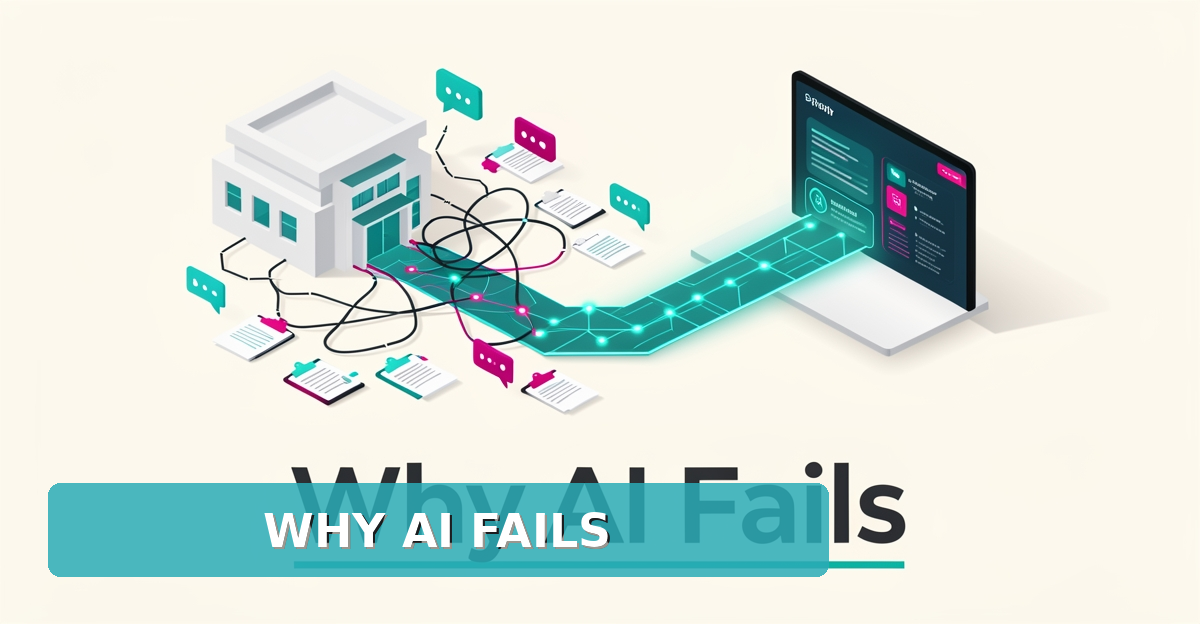
The primary culprit is fragmented data architecture. Centers often layer chatbots or point solutions atop disconnected silos: paper intake forms, Excel scheduling spreadsheets, and legacy care management software that refuse to communicate. This creates dangerous operational blind spots. Facilities that run on manual processes typically see meaningfully higher medication administration error rates than those with integrated digital systems, and care coordinators routinely lose hours each day to documentation that intelligent automation could handle.
Staff resistance compounds these technical hurdles. Long-term employees, particularly those comfortable with established manual workflows, often view AI as a threat rather than a tool. This resistance isn't stubbornness, it reflects legitimate concerns about system reliability and job security. Successful implementations typically require **90–180 days of intensive change management**, including training programs and parallel manual backup procedures to ease the transition.
The most common failure pattern, however, is the "chatbot trap." Centers deploy superficial conversational interfaces expecting transformation, only to discover that isolated chat tools cannot access care plans, update schedules, or coordinate with existing systems like MatrixCare or PointClickCare. These **point solutions create additional work** rather than reducing it, forcing staff to toggle between AI interfaces and legacy databases.
True transformation requires an operating system approach, not a collection of gadgets. Effective AI implementation for adult day care must address:
- Deep integration with existing care management and EHR platforms
- Automated intake documentation and care plan generation with role-based access controls
- Intelligent scheduling that syncs caregiver communications across departments
- Secure, HIPAA-compliant data handling with full audit trails
This is where strategic guidance becomes essential. Rather than purchasing isolated tools, centers benefit from mapping the entire operational workflow before writing a single line of code. AIQ Labs builds exactly these realistic, staff-approved roadmaps, through [AI Workflow Builds](/workflow-builds) that rebuild the one workflow costing you the most, or a full [AI Operating System](/ai-operating-systems) that connects everything, ensuring the technology serves the care team rather than burdening it.
## From Fragmented Tools to Staff-Approved AI Operating Systems
Walk into most adult day care centers today and you'll find the same frag
AI Employees
Hire a team member that works 24/7 — for less than a part-time wage.
AI receptionists, SDRs, dispatchers and 99+ roles. Trained on your business, fully managed.
See If You’re a Fit — AI Employees from $700/mo
Not sure where to start? Ask our AI planner
mented picture: paper intake forms, spreadsheets for scheduling, sticky notes for medication reminders, and a phone tree for family updates. Each tool works in isolation, and the cost of that isolation shows up in errors, delays, and exhausted staff.
The pattern is consistent: centers running primarily on manual processes report higher error rates and more time lost to paperwork than those with integrated digital systems. Care coordinators spend hours every day on documentation alone, time that should go to participants, not paperwork.
This is where the distinction between "AI tools" and an **AI operating system** becomes critical. Most failed implementations bolt a chatbot or a standalone app onto existing chaos. A true operating layer, by contrast, unifies the core workflows that define a center's daily operation:
- Automated intake forms, care plan notes, and daily reports, with AI agents that extract data, draft documentation, and route tasks to the right staff member
- Scheduling and caregiver communications handled proactively rather than through individual phone calls and emails
- Policies and client records converted into secure, AI-powered assistants with role-based access controls
- Integration with existing systems like MatrixCare and PointClickCare, so nothing has to be rebuilt from scratch
Security is non-negotiable in this model. Because adult day care handles sensitive health data, any credible platform needs enterprise-grade safeguards, **RBAC, SSO, and HIPAA compliance**, with full auditability of every AI action, and deployment options that let centers keep sensitive data under their own control.
The payoff for getting this right is measurable. Directors of nursing at well-implemented sites commonly report reclaiming a meaningful share of their week, time that previously disappeared into administrative tasks. That's the equivalent of adding administrative capacity without adding headcount. For roles like front-desk reception and follow-up calls, [AI Employees](/ai-employees) can handle the load at a fraction of the cost of a human hire.
The catch is that this transformation typically takes 90–180 days of deliberate change management, staff training, and workflow redesign. Centers that skip that groundwork, or hand the project to a vendor selling point solutions, end up back where they started, with another unused subscription. This is why centers increasingly work with end-to-end partners like AIQ Labs, which builds staff-approved roadmaps in phases and integrates new systems with existing infrastructure rather than replacing it wholesale.
The difference between fragmented tools and a unified operating system isn't technical sophistication. It's whether the AI actually fits how the staff works, and whether they were part of approving it.
## A Realistic Roadmap for Implementation Without Disruption
Most adult day care centers stall AI projects by skipping the change work that makes technology stick. A realistic rollout protects care quality while staff learn new workflows, and it starts with honest assessment, not vendor demos.
Plan for a 90–180 day change management window before operations stabilize. That horizon includes staff training, workflow redesign, and parallel manual backup procedures. Planning it up front prevents the disruption that drives teams back to paper.
Assess current state with workflow mapping, not assumptions. Document intake, care plan notes, daily reports, scheduling, and family communications as they run today. The goal is to find the single most expensive workflow, the one where errors and lost hours concentrate, and fix that first.
Identify integration points before selecting tools. Map MatrixCare, Excel, paper forms, and email handoffs that must connect or be replaced. Choose platforms with enterprise-grade security for healthcare data: HIPAA compliance, role-based access controls, SSO, and full audit trails.
Build staff-approved roadmaps with manual backups and clear milestones. **Staff-approved roadmaps** reduce resistance and ensure adoption. A practical framework typically includes:
- Current state audit of intake, documentation, scheduling, and caregiver communications
- Integration mapping for existing systems, with parallel manual backups during transition
- Role-based training and human-in-the-loop controls for c
AI Development
Still paying for 10+ subscriptions that don’t talk to each other?
We build custom AI systems you own outright. No vendor lock-in. Full control.
See If You’re a Fit — AI Employees from $700/mo
Not sure where to start? Ask our AI planner
ritical decisions
- Security validation for HIPAA and related standards, with audit trails
- Performance monitoring and iterative optimization with staff feedback loops
Select payment and delivery models that match your readiness. AIQ Labs offers three: **Start Monthly** for a flat monthly plan that costs far less than a part-time hire, **Build in Milestones** to split a workflow or department system into approved phases, and **Own It Outright** for a system you keep with no ongoing licensing games. All three keep ownership with the center, see [pricing details here](/pricing).
Monitor performance against operational metrics, not model accuracy. Track documentation time, error rates, family communication response times, and staff adoption. Enterprise AI adoption is accelerating across industries, but success in adult day care depends on disciplined change management, not speed.
## Frequently Asked Questions
**Why do so many adult day care centers fail when implementing AI?**
Most failures trace back to three issues: fragmented data (paper forms, spreadsheets, and legacy software that don't communicate), staff resistance without proper change management, and the "chatbot trap", deploying isolated chat tools that can't access care plans or update schedules. These point solutions often create more work instead of reducing it.
**How much time can AI actually save our care staff?**
It varies by center, but care coordinators commonly spend several hours daily on documentation that AI can automate, and directors of nursing frequently report reclaiming a substantial block of time weekly after implementation, administrative capacity added without adding headcount.
**Is AI safe for handling sensitive health data in a senior care setting?**
It can be, but only with enterprise-grade safeguards: HIPAA compliance, role-based access controls (RBAC), SSO, and full audit trails of every AI action, with deployment options that keep sensitive data under your control.
**How long does it take to implement AI in an adult day care center?**
Plan for a 90–180 day change management window before operations stabilize, including staff training, workflow redesign, and parallel manual backup procedures. Centers that skip this groundwork typically end up with another unused subscription.
**Won't our long-term staff resist AI replacing their manual workflows?**
Resistance is common and legitimate, it often reflects real concerns about system reliability and job security, not just stubbornness. The solution is involving staff in building a staff-approved roadmap with role-based training, human-in-the-loop controls for critical decisions, and manual backups so no one feels the technology is being forced on them.
**Should we start with a chatbot or go with a bigger AI system?**
Start with a standalone chatbot and you'll likely hit the most common failure pattern: isolated chat tools can't coordinate with systems like MatrixCare or PointClickCare, so they add work rather than removing it. An operating-system approach that integrates with your existing platforms, automates intake and scheduling, and fits how your staff actually works delivers measurably better results.
## The Difference Between Experimenting and Operating
The gap between AI pilots and production systems in adult day care isn't a technology problem, it's an architecture problem. Centers that layer chatbots onto paper forms and disconnected spreadsheets don't modernize; they add complexity. The facilities seeing real returns share one trait: they treated AI as an operating layer, not a gadget. That means deep integration with MatrixCare and PointClickCare, role-based access controls that satisfy HIPAA, and a 90-to-180-day change management plan that brings staff along instead of pushing them aside. AIQ Labs has deployed 200+ multi-agent systems and runs four live SaaS products daily, this is operational work, not theory. Every engagement maps workflows before writing code, with flexible models like Start Monthly, Build in Milestones, or Own It Outright. If your center is stuck in pilot purgatory, the next step isn't another demo, it's a working session to map the bottleneck. Start the two-minute Fit Check at [aiqlabs.ai/apply](/apply), or book a free 30-minute strategy call to see what a realistic roadmap looks like for your operation.
AI Transformation Partner
Make AI your competitive advantage — not just another tool.
Strategy, implementation and ongoing optimization. One partner, end to end.
See If You’re a Fit — AI Employees from $700/mo
Not sure where to start? Ask our AI planner