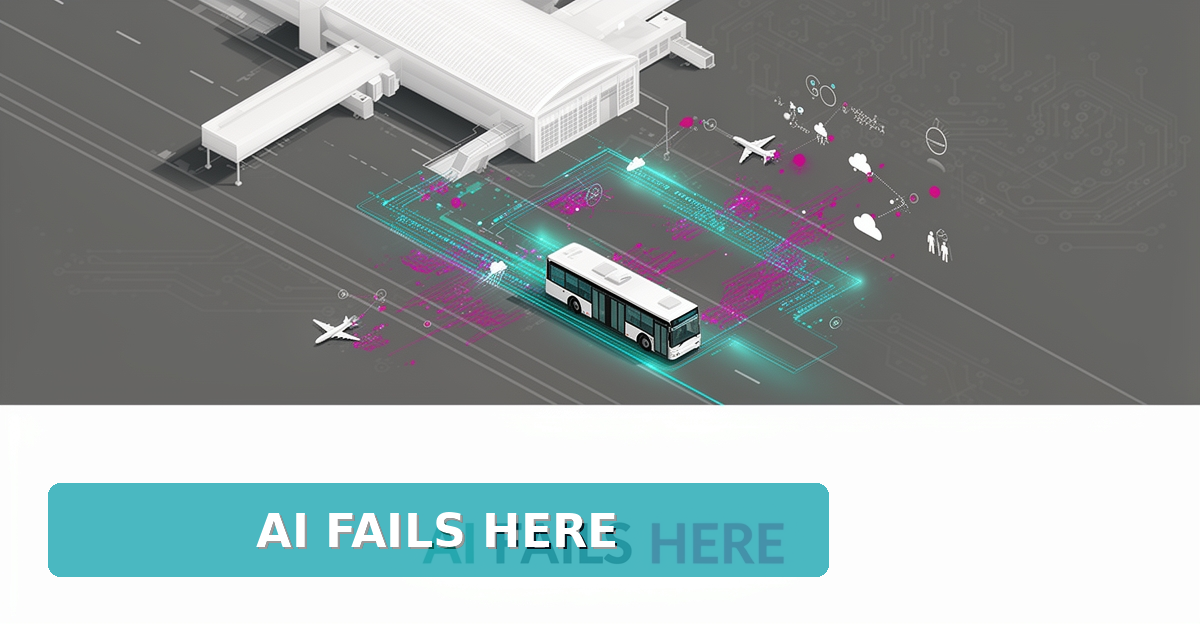
Why Most Airport Shuttle Services Fail at AI Implementation
Key Facts
- The airport shuttle market is projected to keep growing steadily through 2035, driven by tourism recovery and airport passenger volume.
- Manual dispatch typically costs fleets measurably more in total operating expenses than AI-optimized alternatives, per industry fleet analysis.
- A single dispatcher can typically manage around 10–12 vehicles manually versus 35–50 with AI support, based on operational benchmarks.
- Airports and airlines collect far more operational data than they use strategically—a long-running readiness gap in air transport IT surveys.
- AI-optimized routes typically reduce fuel costs by 10–15% for shuttle fleets in comparative research.
- AI-supported fleet management typically cuts overtime and idle time by 20–35% through real-time staging.
Hire a team member that works 24/7 — for less than a part-time wage.
AI receptionists, SDRs, dispatchers and 99+ roles. Trained on your business, fully managed.
Not sure where to start? Ask our AI planner
The Data Integration Gap: Why AI Needs Real-Time Flight and Passenger Data
AI models for airport shuttles are only as good as the data they can see in real time. Without live feeds from the airport ecosystem, predictions drift and dispatch decisions become guesses.
The core failure is a data integration gap. AI needs real-time connectivity to flight information systems, weather data, and passenger flows to generate accurate predictions and optimize routes effectively. When those feeds are missing, models cannot anticipate delays or demand spikes.
Industry surveys have shown for years that collection is outpacing use: airports and airlines gather data across systems, but only a small fraction put it to work for strategic decisions. That readiness problem directly blocks AI value—data sitting in silos does nothing for tomorrow's pickup schedule.
For shuttle operators, that gap translates into empty vehicles and wasted hours. AI requires a connected airport ecosystem to function, including:
- Flight information systems for actual landing times, not scheduled times
- Weather data to adjust pickup windows and routing
- Passenger flow systems to forecast demand by terminal and time
- Airport operations platforms, baggage handling systems, and IoT infrastructure
Without these integrations, AI tools cannot perform advanced functions like forecasting passenger traffic, predicting baggage handling issues, or optimizing staff allocation based on expected demand.
This is a classic AI readiness problem. Poor data integration, lack of pilot use cases, and resistance to change often derail AI adoption in transportation. Readiness work with operators typically starts by mapping data sources, integration points, and the ability to move from siloed collection to real-time decisioning.
At AIQ Labs, this is exactly the kind of gap a Workflow Build closes: we rebuild the one workflow that costs you the most—often dispatch—connecting flight tracking, weather, and passenger data to your dispatch and booking systems, at a fixed price and in phases you can verify.
Operational Waste from Manual Dispatch: Quantifying the Cost of Inaction
Manual dispatch quietly bleeds airport shuttle operators every day, and the leaks are measurable. Idle vehicles, missed consolidations, and driver overtime compound into a cost structure that AI-optimized routing is built to eliminate.
Operators running manual manifests face empty seats because they cannot dynamically consolidate passengers traveling to similar destinations at similar times. Fleet analysis consistently shows manual dispatch costs fleets meaningfully more in total operating expenses than AI-optimized alternatives—driven by fuel inefficiency, overtime, and administrative overhead.
Fuel waste is the most visible symptom. Manual routing leads to suboptimal paths and excessive dead time between runs. Comparative research finds AI-optimized routes typically deliver a 10–15% reduction in fuel costs. The same systems cut overtime and idle time by 20–35% by notifying drivers to stage rather than wait at gates for delayed flights.
The efficiency gap also shows up in dispatcher capacity. Manual dispatchers can effectively manage roughly 10–12 vehicles. With AI support, one dispatcher can manage 35–50 vehicles, enabling scale without proportional hiring.
Revenue leaks from manual operations typically cluster around:
- Empty seats from inability to dynamically consolidate passengers onto single vehicles
- Overtime costs as drivers wait at airports for delayed flights without real-time information
- Equipment idling from poor scheduling and dead time between runs
- Fuel waste from manual routing that ignores traffic, weather, and flight actuals
AI solutions address these through dynamic seat consolidation and real-time flight tracking integration. Every month a fleet runs on manual dispatch, those savings go unrealized—the cost of inaction compounds quietly.
These gains do not appear without readiness. Poor data integration, lack of pilot use cases, and resistance to change are common pitfalls that derail AI adoption in aviation logistics. Mapping data connectivity to flight information systems, weather data, and passenger flows should come before scaling anything.
At AIQ Labs, we focus on identifying high-value automation targets and building realistic implementation paths so shuttle operators capture the idle-time and fuel savings instead of funding them.
Breaking the Dispatcher Ceiling: How AI Enables Scalable Operations Without Linear Hiring
The traditional dispatch model hits a hard ceiling: a single dispatcher can effectively manage only 10 to 12 vehicles before coordination breaks down, creating a scalability bottleneck that forces linear hiring growth as fleets expand. This limitation becomes especially acute in airport shuttle operations, where dynamic flight schedules demand constant rerouting and real-time decision-making. Without intervention, operators face a choice between accepting operational chaos or incurring prohibitive labor costs to scale.
AI breaks this dispatcher ceiling by augmenting human oversight with intelligent automation. Systems equipped with real-time flight tracking, predictive delay modeling, and dynamic seat consolidation enable one dispatcher to oversee 35 to 50 vehicles simultaneously—a nearly fourfold increase in manageable capacity. This leap isn't about replacing judgment but offloading repetitive tasks like route recalculations, passenger consolidation, and status updates, freeing dispatchers to focus on exceptions and service quality.
- Route planning time typically drops from 60–120 minutes manually to under five minutes with AI.
- Mid-day rerouting accelerates from 15–45 minutes to roughly 30–90 seconds.
- Fleets using AI typically report 20–35% reductions in overtime and idle time.
These efficiency gains directly counteract the higher operating expenses typical of manual dispatch, turning scalability from a cost center into a competitive advantage. For airport shuttle operators aiming to expand across multiple terminals or serve fluctuating demand from OTAs, AI provides the leverage to grow routes and revenue without proportional headcount increases. By grounding implementation in workflow-specific use cases like dispatch augmentation, operators build confidence and readiness for broader adoption. Where the gap is a person rather than a process, an AI Employee—a managed dispatcher assistant that handles status updates, consolidation suggestions, and driver communications—can extend your existing team at a fraction of a human hire's cost.
From Pilot to Production: A Framework for Successful AI Implementation in Airport Shuttles
The path from AI pilot to production in airport shuttles requires a structured rollout that addresses the industry's core challenges. Many projects stall because they treat AI as a software install rather than an operational transformation, overlooking the need for deep data integration and workflow redesign. Success begins with understanding the specific volatility of aviation logistics, where flight delays and passenger flow shifts demand real-time adaptability that static systems cannot provide.
The first step is defining demand patterns by analyzing historical passenger data and flight schedules to establish baseline routes and peak travel windows. This foundation allows AI models to predict load factors and identify consolidation opportunities. Next, integrating real-time flight data sources is critical—systems must track actual landing times, not just scheduled ones, to dynamically adjust pickups and avoid empty vehicles waiting at gates. Without this connection, AI cannot optimize for the constant volatility that defines airport operations, leading to the same inefficiencies as manual dispatch.
Once flight data is flowing, operators should enable real-time online booking that provides instant seat availability and confirmation, followed by automating dispatch to consolidate passengers onto optimal routes based on vehicle capacity and destination proximity. Live tracking and communication tools then empower drivers with GPS-based rerouting instructions during delays, reducing idle time by 20–35% as shown in fleet management comparisons. Finally, establishing OTA distribution through a channel manager ensures inventory synchronizes across booking platforms, capturing demand that flows through those channels and preventing overbooking. Training staff over 1–2 weeks completes the cycle, framing AI as a tool to reduce manual workload rather than replace human judgment.
For operators who want this as a connected operating layer rather than a one-off tool, an AI Operating System ties dispatch, booking, and communications into one system built in phases—and you own it outright, with no vendor lock-in.
Still paying for 10+ subscriptions that don’t talk to each other?
We build custom AI systems you own outright. No vendor lock-in. Full control.
Not sure where to start? Ask our AI planner
Frequently Asked Questions
Why do airport shuttle AI projects fail even after we invest in software?
How much money is manual dispatch really costing my shuttle fleet?
Can AI actually reduce overtime and driver idle time at the airport?
Will AI replace my dispatchers or just make them obsolete?
What data do I need to connect before AI can work for airport shuttles?
How long does it take to see ROI from AI fleet management for shuttles?
Turning AI Readiness into Operational Advantage for Airport Shuttles
The path forward for airport shuttle operators isn't about chasing AI trends—it's about closing the data integration gap that turns potential into performance. Without real-time flight, weather, and passenger data flowing into dispatch systems, even the most sophisticated AI becomes guesswork, leaving money on the table through empty seats, wasted fuel, and overtime costs. But when operators build that foundation—starting by mapping their current tech stack and data flows—they unlock measurable gains: AI-optimized routing typically cuts fuel use by 10–15%, reduces idle time by 20–35%, and lets a single dispatcher manage up to 50 vehicles instead of just 12. The result isn't just efficiency—it's scalability without linear hiring costs. AIQ Labs helps operators do exactly that: assessing readiness, identifying high-value automation targets, and building owned solutions that scale with your operation. To see where your biggest bottleneck lies and what AI could unlock for your fleet, start with the free two-minute Fit Check, which leads to a free 30-minute strategy call with an AI engineer. Questions first? Reach us at [email protected].
Make AI your competitive advantage — not just another tool.
Strategy, implementation and ongoing optimization. One partner, end to end.
Not sure where to start? Ask our AI planner