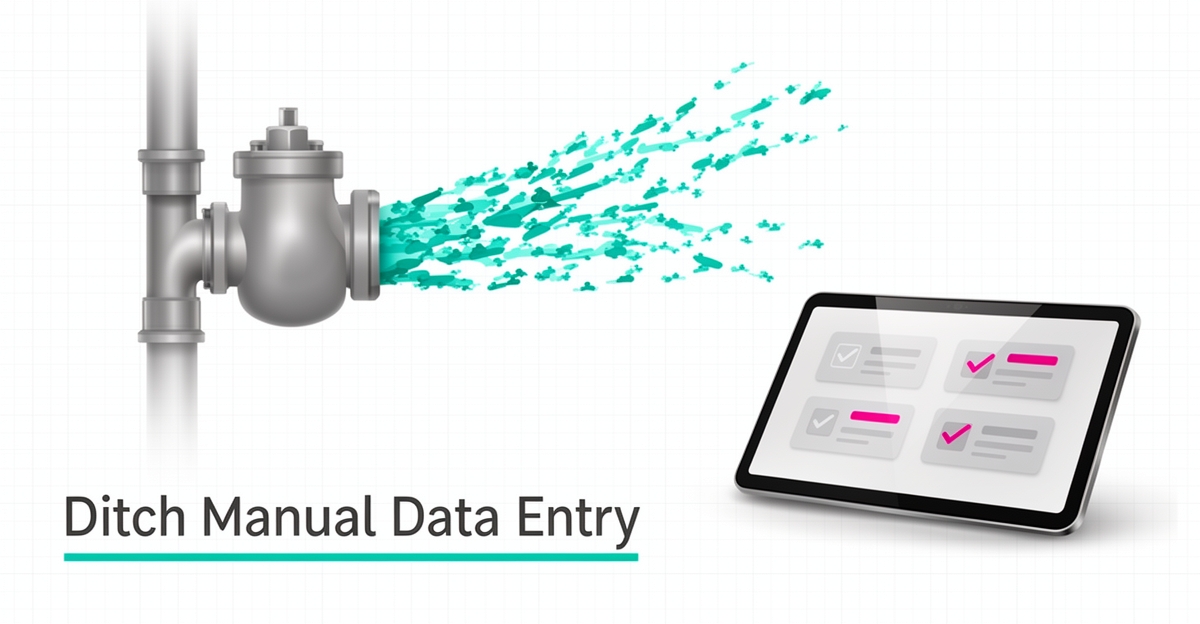
Why Most Backflow Testing Businesses Still Use Manual Data Entry (And How AI Fixes It)
Key Facts
- Roughly 20% of EU enterprises reported using AI technologies as of 2025 according to Eurostat
- Around 63% of enterprises in the information and communication sector used AI as of 2025 per Eurostat
- About 40% of enterprises in professional, scientific and technical service activities used AI as of 2025 Eurostat reports
- Roughly 71% of enterprises that considered AI cited lack of relevant expertise as a barrier Eurostat data shows
- AI workflow automation typically removes the transcription step between field reports and databases, cutting entry time substantially in enterprise implementations
- AIQ Labs has deployed 200+ multi-agent systems and runs 4 live SaaS products daily
Hire a team member that works 24/7 — for less than a part-time wage.
AI receptionists, SDRs, dispatchers and 99+ roles. Trained on your business, fully managed.
Not sure where to start? Ask our AI planner
The Hidden Cost of Manual Data Entry in Backflow Testing
Field reports arrive wet, handwritten, and time-stamped. Backflow testing crews finish the job on site, then the real work begins back at the office where someone re-types readings, valve IDs, and compliance notes into spreadsheets and inspection software. That handoff creates the bottleneck most owners feel but rarely measure.
Manual data entry slows operations and increases errors in backflow testing records. Technicians spend hours on administrative capture instead of billable site work, while offices chase missing fields, illegible notes, and duplicate entries. The result is delayed invoicing, missed compliance deadlines, and customer callbacks that erode trust.
Enterprise AI adoption shows the gap is widening. According to Eurostat data, roughly 20% of EU enterprises reported using AI technologies as of 2025, with large enterprises well ahead of that. Professional, scientific and technical service activities reached around 40% adoption, while the information and communication sector led at roughly 63%.
Backflow testing sits closer to those technical service models than it admits. Crews generate structured field data daily, yet most firms still rely on human-dependent processes for capture and storage. That reliance persists even as Eurostat's research shows a meaningful share of EU enterprises that had not adopted AI had considered it. The hold-up is not interest.
The primary barrier is expertise. A Eurostat analysis found roughly 71% of enterprises that had considered AI cited lack of relevant expertise as a reason for not using it. Lack of clarity about legal consequences and data protection concerns follow close behind.
Manual workflows magnify those risks in the field. Common cost drivers include:
- Re-keying of test results from paper forms into multiple systems
- Error propagation when readings are misread or transposed
- Delayed database updates that stall billing and regulatory reporting
- Technician downtime spent on admin instead of on-site inspections
Each error forces a rework loop: office staff chase the technician, the customer receives a corrected report, and compliance records lose integrity. Over time the business absorbs hidden labor cost and reputational risk that do not appear on a single invoice line.
AI workflow automation changes the capture point. AI can automate data capture from field reports, integrate with existing software, and populate databases instantly. That shift removes the transcription step, reduces input errors, and returns technician time to revenue work. AIQ Labs' AI Workflow Builds rebuild the one workflow that costs you the most, at a fixed price, in phases, freeing technicians for on-site work without changing how they operate in the field.
The cost of staying manual is not just speed. It is accuracy, compliance confidence, and capacity to scale without adding headcount.
How AI Automates Data Capture Without Disrupting Field Work
Field technicians in backflow testing businesses often spend valuable on-site time manually transcribing inspection results into digital systems, creating delays and increasing the risk of data errors. AI-powered workflow automation eliminates this bottleneck by capturing data directly from field reports, whether handwritten notes, voice memos, or scanned forms, and converting them into structured, database-ready information without requiring technicians to change their existing processes. This approach preserves the natural workflow of field work while removing the manual data entry step that slows operations and introduces inaccuracies.
According to Eurostat, roughly 20% of EU enterprises reported using AI technologies as of 2025, with adoption notably higher in sectors like professional, scientific and technical services at around 40%. These figures reflect a growing recognition that AI can streamline operational bottlenecks, particularly in data-intensive workflows like backflow testing, where manual entry remains a persistent pain point. AIQ Labs builds custom AI systems that integrate with existing field service software, enabling seamless data flow from inspection to record without disrupting how technicians perform their jobs.
The automation process works through intelligent document processing and natural language understanding, where AI agents interpret field inputs, such as pressure test readings, device locations, or technician observations, and map them directly into the correct fields of CRM, accounting, or compliance systems. This eliminates duplicate data handling while improving accuracy and turnaround on reporting. For backflow testing businesses, this means inspection results can be validated, stored, and triggered for follow-up actions (like customer notifications or regulatory submissions) in near real-time, all without the technician pausing to enter data manually.
- Captures data from handwritten forms, voice notes, and digital inspections using AI-powered recognition
- Maps extracted information directly into existing software systems via API integrations
- Removes the transcription step that dominates manual entry time in enterprise AI workflow implementations
- Maintains data integrity through validation layers and audit trails
- Enables instant synchronization across dispatch, billing, and compliance platforms
By embedding AI into the data capture layer of field operations, businesses gain the efficiency of automation without requiring technicians to learn new tools or alter their proven field procedures. This preserves the human expertise essential to accurate backflow testing while offloading the administrative burden that limits productivity. The result is a streamlined workflow where data moves instantly from inspection to action, supporting faster service delivery, fewer errors, and greater operational scalability. For backflow testing providers still reliant on manual processes, this represents a practical, low-disruption path to modernizing their data backbone using AI that works behind the scenes.
Implementation Path: From Pilot to Full Workflow Automation
Many backflow testing businesses hesitate to adopt AI due to perceived complexity and risk. However, a phased implementation approach minimizes disruption while delivering measurable gains from day one. With roughly 71% of enterprises citing lack of relevant expertise as a barrier to AI adoption, structured guidance is essential for successful transformation, industry research shows. AIQ Labs' payment models, Start Monthly, Build in Milestones, and Own It Outright, let businesses begin small, validate results, and scale confidently without overextending resources.
The journey begins with a targeted AI Workflow Build focused on the most painful manual data entry process, such as transcribing field test reports into compliance databases. In the discovery phase, AIQ Labs analyzes current workflows, identifies integration points with existing software like scheduling or accounting tools, and designs a custom AI agent to extract data from photos, PDFs, or voice notes. This phase typically takes 1–2 weeks and includes ROI projections tailored to the business's specific pain points. By starting with a single workflow at a fixed price, companies avoid the paralysis of over-analysis and gain early wins that build internal momentum.
In the build phase, the AI system is developed, tested, and connected to core tools. Technicians continue using familiar field tools while an AI Employee handles data capture, validation, and database updates in real time. Deployment and training ensure smooth adoption through role-specific user guides and hands-on support. Throughout, businesses can choose to own the system outright, no vendor lock-in, no hidden fees.
Once the pilot workflow delivers consistent results, such as faster report turnaround and fewer compliance flags, businesses can expand using the Build in Milestones model. Each additional workflow (e.g., invoice processing, technician scheduling) is developed, approved, and paid for phase by phase, with all prior work retained. Over time, this can grow into a full AI Operating System, one connected operating layer your business owns outright. For backflow testing firms ready to transform, the first step is a free strategy call to map bottlenecks and identify high-ROI opportunities, no obligation, just clarity on what's possible. Start the 2-minute Fit Check at aiqlabs.ai/apply, then book your free 30-minute strategy call at aiqlabs.ai/book.
Still paying for 10+ subscriptions that don’t talk to each other?
We build custom AI systems you own outright. No vendor lock-in. Full control.
Not sure where to start? Ask our AI planner
Frequently Asked Questions
Why do most backflow testing businesses still rely on manual data entry?
How much error and downtime does manual data entry actually cause?
Is AI adoption common in technical field service businesses like backflow testing?
Will AI force my technicians to change how they work in the field?
What does a realistic AI implementation look like for a small backflow testing company?
How do I know AI won't create compliance or data protection risks?
From Wet Forms to Instant Records: Your Next Move
Manual data entry in backflow testing isn't just slow, it's a compounding cost of re-keyed readings, delayed invoicing, and compliance records you can't fully trust. The good news is that AI now captures data directly from field reports and populates your existing systems instantly, without asking technicians to change how they work. And the barrier isn't interest, it's expertise: roughly 71% of enterprises that considered AI cited lack of relevant expertise as the reason they held back. That's exactly why a phased approach matters. Start with one painful workflow, transcribing field test reports into your compliance database, prove the ROI, then scale with everything you've built retained along the way. AIQ Labs begins every engagement with a free 30-minute strategy call: a real working session with an AI engineer to map your biggest bottleneck and identify high-ROI automation opportunities. If there isn't a clear win, we'll tell you that too. Start the 2-minute Fit Check at aiqlabs.ai/apply, then book your call at aiqlabs.ai/book, no obligation, just clarity on what's possible.
Make AI your competitive advantage — not just another tool.
Strategy, implementation and ongoing optimization. One partner, end to end.
Not sure where to start? Ask our AI planner