Why Most Barre Studios Fail at AI Implementation, And How to Avoid It
Key Facts
- Widespread AI adoption doesn't guarantee results, as of late 2026, many organizations using AI tools still report no measurable productivity gains.
- Higher output volume from AI tools often reflects inflated activity, not real value, more completed tasks can mean more errors to fix.
- Most AI interactions in small businesses involve automation rather than augmentation, adding work instead of reducing it.
- Staff understanding of AI's personal and business benefits predicts adoption better than technical training alone.
- Phased rollouts let studios test and refine AI systems before full deployment, reducing abandonment risk.
- Poor integration, weak training, and inadequate support, not weak technology, are why most barre studios fail at AI.
Hire a team member that works 24/7 — for less than a part-time wage.
AI receptionists, SDRs, dispatchers and 99+ roles. Trained on your business, fully managed.
Not sure where to start? Ask our AI planner
The Hidden Cost of Poor AI Integration in Barre Studios
The promise of AI often feels within reach, but barre studios frequently find themselves stuck in a cycle of activity without real progress. They deploy tools hoping for transformation, only to see disconnected systems and frustrated teams.
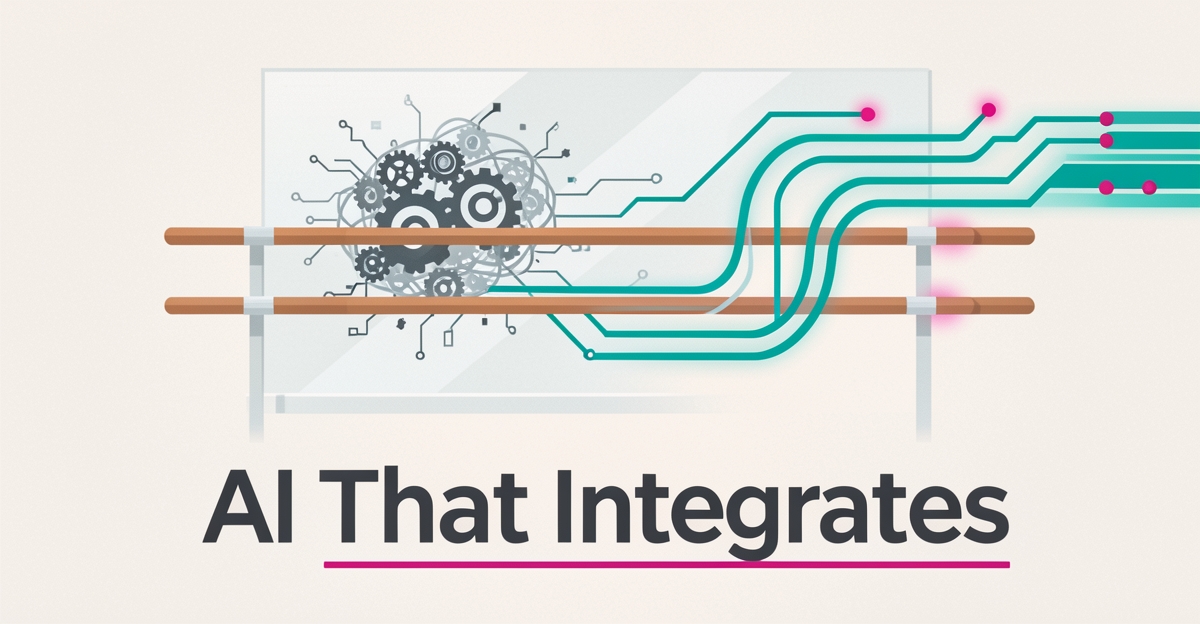
This disconnect stems from implementing AI without proper workflow integration. Studios might adopt scheduling bots or member engagement tools, but fail to connect them to existing CRM or payment systems. As a result, staff end up duplicating efforts, manually entering data that the AI was supposed to handle, creating more work, not less. In practice, most AI interactions in small businesses involve automation rather than augmentation: tools execute tasks without enhancing human decision-making or reducing cognitive load. When AI operates in isolation, it becomes another siloed system requiring constant oversight.
The illusion of productivity masks deeper inefficiencies. Studios may see more completed tasks, more messages sent, more reports generated, but these metrics often reflect noise, not value. For barre studios, this translates to AI-generated class schedules that conflict with instructor availability, automated follow-ups that feel robotic, or membership data that requires constant correction, all despite heightened system activity.
Without integration, AI becomes a source of friction. Instructors waste time reconciling AI-generated reports with manual spreadsheets. Front desk staff override automated messages because they lack context. Managers spend hours debugging workflows instead of refining class offerings or member experiences. The technology runs, but the business doesn’t move forward.
True AI value emerges only when tools are woven into the fabric of daily operations, when they augment human expertise, not just automate tasks. Barre studios that skip this step invest in activity, not outcomes. To avoid this trap, integration must be planned from the start, not bolted on as an afterthought. Only then does AI shift from a costly experiment to a sustainable advantage. For studios ready to build AI that works with their team, not against it, AIQ Labs rebuilds the one workflow that costs you the most through AI Workflow Builds, with fixed pricing and a phased approach. Start with a 2-minute Fit Check to map where AI can truly augment, not just automate.
Why Staff Training Alone Isn’t Enough: The Buy-In Gap
Many barre studios invest in technical AI training for their staff but overlook a critical factor: genuine buy-in. Training alone doesn’t guarantee adoption if instructors and front-desk teams don’t see how AI serves their personal goals or the studio’s mission. Without this connection, even well-trained staff may resist new tools or use them passively, undermining the investment.
Industry research consistently finds that understanding AI’s personal and business benefits is far more predictive of successful adoption than technical proficiency alone. Studios that fail to communicate how AI reduces administrative burden, improves client retention, or frees up time for higher-value teaching often see low engagement despite comprehensive training programs. As one industry source puts it: “We need to educate our staff on how to use AI and how it can benefit our business.”
This gap between training and buy-in creates a silent barrier to ROI. Staff may complete training sessions but revert to old workflows when unsupervised, especially if they perceive AI as a threat to their role or an unnecessary complication. True adoption requires framing AI not as a replacement, but as a tool that enhances their effectiveness, whether by automating class reminders, streamlining payment follow-ups, or personalizing client outreach. When staff understand these tangible benefits, they’re far more likely to embrace and advocate for the technology.
AIQ Labs addresses this challenge by building change management into every engagement, whether that’s deploying AI Employees that handle reception, follow-ups, and dispatch at a fraction of the cost of a human hire, or designing a full AI Operating System for the whole studio. The goal isn’t just to train teams, but to inspire them to lead the AI journey. By aligning AI implementation with staff aspirations and studio goals, barre studios transform resistance into ownership, turning a common pitfall into a competitive advantage.
Phased Rollouts and Ongoing Support: The AIQ Labs Framework for Success
Most barre studios don’t fail at AI because the technology is weak. They fail because the rollout assumes staff will adapt on their own.
Phased rollouts reduce abandonment by letting teams learn, test, and refine before full-scale adoption. A phased approach lets studios test and refine the AI system before rolling it out to the entire staff. That controlled exposure builds confidence and surfaces integration issues early, rather than after a costly launch.
The pattern of rushed AI adoption is sobering. As of late 2026, many organizations using AI tools widely still report no measurable productivity gains. Activity metrics climb, more tasks completed, more messages sent, yet the same pattern of inflated output without value repeats in studios that skip integration and strategy.
Without training and support, automation becomes frustration. Most staff experience AI as replacement rather than assistance when tools are dropped in without context. The biggest challenge is getting people to understand what AI can do and how it can help them.
AIQ Labs applies this lesson through its phased delivery model: every build starts with an assessment of where AI can genuinely help, then rolls out in milestones with adoption and change management built in. The framework treats rollout as a change management problem, not a tech install. With 200+ multi-agent systems deployed and four live SaaS products the company runs daily, the process is proven, not theoretical.
A proven phased approach for barre studios includes:
- Pilot with one workflow, such as class booking or member follow-up, with a small trained group
- Provide role-specific training and ongoing support so staff feel confident using AI
- Collect feedback, refine integrations, and expand to additional teams only after measurable adoption
- Maintain human-in-the-loop controls and clear escalation paths during each phase
Staff buy-in depends on perceived value and support. Studios need to provide ongoing support to staff to ensure they can effectively use AI and make them feel like it's a valuable tool. When teams understand how AI helps them and know help is available, resistance drops and usage stabilizes.
Continuous support is the difference between a pilot and a transformation. Phased deployment with continuous support lets studios test and refine before commitment, reducing the risk of abandonment that follows poor integration and inadequate training. AIQ Labs builds in milestones, so you pay as value is delivered, own what's built outright, and never carry the full risk of a big-bang launch.
Still paying for 10+ subscriptions that don’t talk to each other?
We build custom AI systems you own outright. No vendor lock-in. Full control.
Not sure where to start? Ask our AI planner
Frequently Asked Questions
Why do most barre studios fail at AI implementation?
What's the difference between AI automation and augmentation?
Why isn't staff training alone enough for AI adoption?
What is a phased rollout and why does it matter for barre studios?
How do I get my barre studio staff to actually use AI tools?
What happens if I rush AI implementation without proper integration?
Transform Your Barre Studio with AI That Actually Works
The journey to AI success in barre studios isn't about adopting every new tool, it's about implementing thoughtfully with integration, training, and support at the core. Studios that rush into AI without connecting systems to existing workflows end up with frustrated staff and abandoned technology. Those that prioritize phased rollouts, genuine staff buy-in, and continuous support see AI transform from a costly experiment into a competitive advantage. The pattern is clear: widespread AI use without strategy produces activity, not outcomes. AIQ Labs helps barre studios avoid these pitfalls with three entry points, AI Employees for managed staff roles, AI Workflow Builds to rebuild your costliest workflow at a fixed price, and AI Operating Systems for a connected layer you own outright. Ready to build AI that works with your team, not against it? Start with the 2-minute Fit Check, then book a free 30-minute strategy call to map your workflows and identify where AI can truly augment your studio's operations.
Make AI your competitive advantage — not just another tool.
Strategy, implementation and ongoing optimization. One partner, end to end.
Not sure where to start? Ask our AI planner