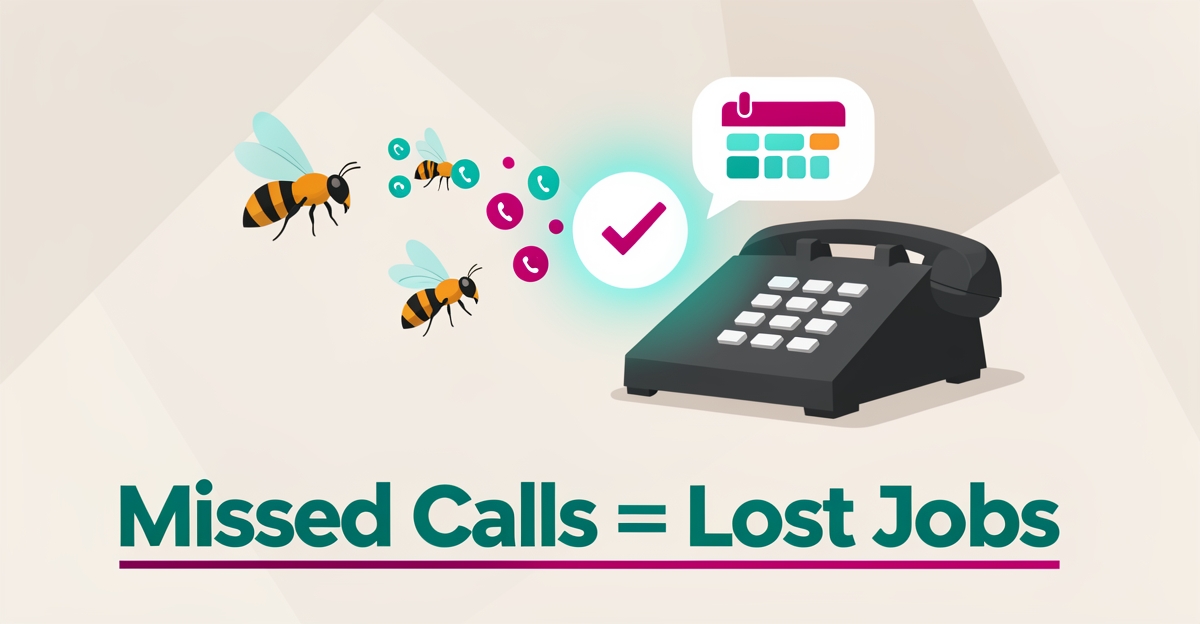
Why Most Bee & Wasp Removal Companies Miss Half of Service Requests
Key Facts
- Roughly 20% of EU enterprises reported using AI technologies in 2025 according to Eurostat data.
- Large EU enterprises used AI at about 55% versus roughly 17% of small enterprises in 2025 per Eurostat figures.
- EU enterprise AI adoption rose by several percentage points in a single year per Eurostat statistics.
- A 2023 study found generative AI increased contact center productivity by around 15% per Wikipedia's overview of AI applications.
- An MIT review widely cited in 2025 found most surveyed companies saw no revenue improvement from AI, usually because they bought tools instead of fixing workflows according to Wikipedia.
- Research from 2023 found generative AI boosted writing task productivity by up to 40% per Wikipedia's overview of AI applications.
- Small bee and wasp removal companies commonly lose a large share of service requests, often estimated at around half, to missed calls and slow follow-up.
Hire a team member that works 24/7 — for less than a part-time wage.
AI receptionists, SDRs, dispatchers and 99+ roles. Trained on your business, fully managed.
Not sure where to start? Ask our AI planner
The Hidden Cost of Missed Calls and Poor Follow-Up
A homeowner with wasps swarming their porch calls three removal companies. The first two ring through to voicemail during a job, and by the time anyone calls back, the customer has already booked with a competitor. Multiply that across a season, and the math gets ugly fast.
Bee and wasp removal is a timing business. A customer stung once or spotting an active hive will not wait 24 hours for a callback. Yet most small removal operations run on one phone, one technician, and no system for capturing requests that arrive while the crew is on a roof or inside a wall cavity. Those calls go unlogged, unreturned, and ultimately unfilled, industry estimates put the loss at around half of all inbound requests.
The revenue impact is compounded by a trust deficit. When follow-up is inconsistent, customers do not just take that one job elsewhere, they never call again, and they never refer neighbors. In a trade built almost entirely on urgency and local reputation, a single dropped request can cost the original booking plus every future referral behind it.
Operational gaps show up in predictable patterns:
- Calls answered only between jobs, leaving peak-season inquiries to voicemail
- Job details captured on paper or memory instead of a shared system, so nothing gets logged
- No confirmation or status updates, forcing customers to chase the company for arrival times
- Quotes sent hours or days late, after a faster competitor has already closed the job
The broader market is moving past this. Roughly 20% of EU enterprises reported using AI technologies in 2025, according to Eurostat data, with large firms at about 55% and small businesses at roughly 17%, which means local service companies that close the gap first gain a real edge. Research on AI applications in business also found generative AI boosted contact center productivity by around 15% in a 2023 study, evidence that automated call handling and follow-up directly improve responsiveness.
This is where AI workflow automation changes the equation. An AI receptionist answers every call 24/7, books appointments, and logs each request automatically, while automated updates keep customers informed without anyone lifting a finger. At AIQ Labs, these systems are built as owned assets, so a two-person removal crew can operate with the reliability of a company ten times its size. Learn more at AIQ Labs AI Employees.
How AI-Powered Workflow Automation Eliminates Service Gaps
AI-powered workflow automation eliminates the service gaps that cause bee and wasp removal companies to lose so many service requests by ensuring every inquiry is captured, tracked, and resolved without human error. Traditional workflows often fail due to missed calls, inconsistent follow-ups, or fragmented communication channels, issues that AI systems prevent through intelligent call logging, automated response triggers, and 24/7 availability. These tools work together to create a seamless customer journey from first contact to job completion, reducing response delays and increasing operational reliability.
AI receptionists and virtual assistants handle inbound inquiries around the clock, logging each interaction into a centralized system that triggers immediate follow-ups and assigns tasks to the appropriate team member. This eliminates the risk of calls going unanswered or inquiries falling through the cracks during off-hours or peak demand periods. Automated workflows ensure that every lead receives timely updates, appointment confirmations, and service reminders, improving customer satisfaction and reducing no-shows. By integrating with scheduling, CRM, and dispatch tools, AI systems maintain a single source of truth across departments, preventing miscommunication and duplicate efforts.
- AI-driven call logging captures every inbound inquiry, preventing the request losses common in manual systems
- Automated follow-ups increase response rates by ensuring no lead is left unattended after initial contact
- 24/7 AI receptionists provide continuous coverage, eliminating missed calls during nights, weekends, and holidays
According to enterprise AI adoption data, organizations using AI for workflow automation report meaningful improvements in process efficiency and decision-making accuracy. AIQ Labs implements these capabilities through managed AI Employees, such as AI Receptionists and AI Dispatchers, that integrate directly with existing tools to automate end-to-end service workflows. This approach ensures that every customer inquiry is not only received but actively progressed toward resolution, transforming unreliable service delivery into a consistent, trustworthy experience.
Implementation: Building a Reliable, Owned AI System for Field Service Teams
The gap between knowing your bee and wasp removal business loses calls and actually fixing it comes down to implementation, and most owners overthink it. You don't need a full AI overhaul on day one. You need one broken workflow rebuilt properly, then proof it works before expanding.
The right starting point is usually call capture and dispatch. When a homeowner with an active hive in their eaves calls at 7 p.m. and nobody answers, that job goes to whoever picks up next. An AI dispatcher answers 24/7, qualifies the urgency, books the appointment, and logs the job, no missed calls, no sticky notes, no "I'll call them back tomorrow." It's the same model AIQ Labs delivers through its AI Employee roles for trades and field services, including dedicated dispatchers and service schedulers that integrate directly with your existing calendar and CRM tools.
Adoption is worth grounding in real numbers. Eurostat data shows roughly 20% of EU enterprises used AI technologies in 2025, and only about 17% of small enterprises, while roughly 55% of large enterprises did. Smaller firms cite cost and implementation complexity as the barriers, which is exactly why phased deployment matters. You prove value on one workflow before committing to more.
That phased approach is the core of the Build in Milestones model: the system is split into phases, you approve and pay for each phase as it ships, and you can stop anytime while keeping everything built so far. For owners who prefer predictable costs, the Start Monthly option bundles the build, training on your business, tool integrations, monitoring, and improvements into one flat monthly plan you can pause or adjust. Either way, the outcome is true ownership, the code, agents, and data belong to you, with no vendor lock-in or platform dependencies.
A practical rollout looks like this:
- Map the leak: identify where requests die, missed calls, unlogged jobs, slow follow-ups.
- Fix one workflow first, typically call answering and job logging.
- Integrate with tools you already use, CRM, calendar, scheduling software, via API connections.
- Track measurable outcomes: calls answered, jobs booked, response times.
- Scale to the next workflow only after the first one proves ROI.
The results justify the discipline. Research on generative AI found it increased contact center productivity by around 15%, and a separate study showed gains of up to 40% on writing tasks. For a field service business, that translates to faster quote follow-ups, cleaner job records, and customers who actually get called back.
The widely cited MIT finding that most surveyed companies saw no revenue improvement from AI is the cautionary tale, it's what happens when businesses buy tools instead of fixing workflows. Build around the bottleneck, own what you build, and measure everything.
Not sure which workflow is costing you the most? Take the two-minute Fit Check at aiqlabs.ai/apply, then book a free 30-minute strategy call at aiqlabs.ai/book, a working session with an AI engineer, not a sales pitch. If there isn't a clear win, they'll tell you that too.
Still paying for 10+ subscriptions that don’t talk to each other?
We build custom AI systems you own outright. No vendor lock-in. Full control.
Not sure where to start? Ask our AI planner
Frequently Asked Questions
Why do bee and wasp removal companies miss so many service requests?
Can an AI receptionist really handle calls 24/7 for a two-person crew?
Is AI adoption common enough for small service businesses to benefit?
What kind of productivity gains do AI call systems actually deliver?
Won’t AI be a waste of money if most companies see no revenue improvement?
How do I start without overhauling everything at once?
Stop Losing Jobs While You're On The Roof
Bee and wasp removal is won or lost on speed and follow-through, yet many crews lose a large share of their service requests, often close to half, to voicemail, unlogged details, and slow callbacks. The cost isn’t just one missed booking, it’s the lost referrals and trust that follow. AI-powered workflow automation closes those gaps by capturing every inquiry 24/7, logging jobs automatically, and keeping customers updated without anyone lifting a finger. For small field service teams, that means operating with the reliability of a much larger company without adding headcount. The market is already shifting, roughly 20% of EU enterprises used AI technologies in 2025, with smaller firms at just 17% according to Eurostat data, creating a clear first-mover edge. Start by mapping where requests die, then rebuild one workflow, usually call answering and job logging, with an owned system you control. If you’re unsure where the biggest leak is, start the two-minute Fit Check at aiqlabs.ai/apply and book a free 30-minute strategy call at aiqlabs.ai/book for a working session with an AI engineer, not a sales pitch.
Make AI your competitive advantage — not just another tool.
Strategy, implementation and ongoing optimization. One partner, end to end.
Not sure where to start? Ask our AI planner