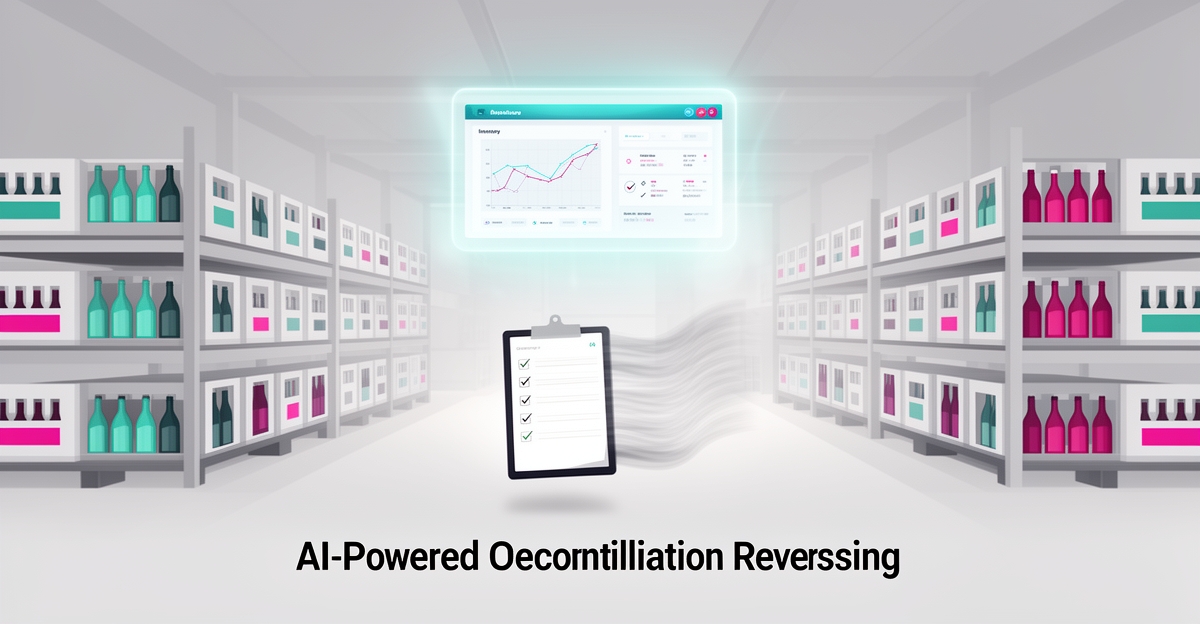
Why Most Beverage Distributors Still Use Manual Inventory Reconciliation (And How to Fix It)
Key Facts
- Only 10% to 30% of distributor workflows will use AI forecasting in 2026 according to industry research.
- 21% of organizations reported AI as a top investment priority for 2024 in drinks industry statistics.
- Global AI in supply chain market size was $19.2 billion in 2023 per beverage industry data.
- AI in beverages market is projected to grow at 30%+ CAGR through 2030 according to market analysis.
- AI-powered demand forecasting can reduce stockouts by up to 70% in a recent study.
- AI demand forecasting can decrease excess inventory by 40% according to beverage distributor research.
Hire a team member that works 24/7 — for less than a part-time wage.
AI receptionists, SDRs, dispatchers and 99+ roles. Trained on your business, fully managed.
Not sure where to start? Ask our AI planner
The Manual Reconciliation Trap in Beverage Distribution
Manual counts and spreadsheet reconciliations still dominate beverage distribution because the operational reality is unforgiving. Distributors juggle thousands of SKUs across multiple warehouses while demand swings with season, weather, and local events. That complexity creates a manual reconciliation trap that rewards speed over accuracy.
The industry is still heavily manual. Only 10% to 30% of distributor workflows use AI forecasting in 2026, leaving the majority reliant on people checking shelves, transcribing counts, and updating systems by hand. The work is repetitive, error-prone, and difficult to scale.
Thousands of SKUs multiply the problem. A single distributor may manage beer, wine, spirits, and non-alcoholic lines with different pack sizes, vintages, and expiration dates. Seasonal spikes for holidays and summer, plus perishability concerns, mean inventory changes daily. Manual checks cannot keep pace, so teams reconcile late and react late.
Regulatory constraints add another layer. Beverage distribution involves strict tracking, age verification, and compliance reporting that vary by region. Paper logs and manual entries increase risk of misreporting, fines, and lost licenses when audits find discrepancies.
The consequences show up as operational drag:
- Stockouts on high-velocity SKUs during peak demand, forcing lost sales and customer churn
- Overordering of slow-moving or perishable products, tying up cash and creating waste
- Inefficient labor spent on counting instead of selling, with reduced efficiency across warehouses
- Delayed visibility into true on-hand inventory, making replenishment reactive not predictive
These patterns persist because manual reconciliation feels low cost upfront. It requires no new software and no process change. Yet the hidden cost is high: missed deliveries, emergency orders, and teams working overtime to fix errors.
The market is shifting as investment grows. 21% of organizations reported AI as a top investment priority for 2024, and the global AI in supply chain market was $19.2 billion in 2023. Distributors who stay manual risk being outpaced by competitors who move from reactive to predictive operations.
AIQ Labs sees this pattern across SMB supply chains, where AI Inventory & Supply Chain Management can automatically reconcile inventory levels across distribution centers using real-time sales and delivery data. The goal is not to replace experienced reps, but to remove the manual work that slows them down and creates error.
When reconciliation is automated, teams gain accurate, up-to-date inventory tracking without relying on human error, freeing capacity for growth without adding headcount.
How AI Reconciles Inventory in Real Time Across Distribution Centers
Modern inventory reconciliation no longer relies on periodic counts and spreadsheets. Instead, AI systems continuously ingest real-time sales data from point-of-sale terminals, delivery confirmations from logistics partners, and inventory levels across all distribution centers to create a single, accurate view of stock availability. This automated reconciliation eliminates the lag between physical movement and system updates, ensuring that inventory counts reflect actual conditions at any moment. According to industry research, AI-powered inventory management optimizes stock levels, reduces stockouts and overordering, and improves operational efficiency by replacing error-prone manual processes with continuous data synchronization.
AI enhances this real-time visibility by layering predictive intelligence onto current inventory data. By analyzing historical sales patterns alongside external factors such as weather forecasts, local events, social media trends, and competitor pricing, AI models generate highly accurate demand forecasts for each SKU at every distribution center. These forecasts enable proactive replenishment decisions that prevent both stockouts during peak demand and overordering during lulls. A recent study found that AI-powered demand forecasting can reduce stockouts by up to 70% and decrease excess inventory by 40%, directly improving cash flow and service levels.
- Continuous ingestion of POS, sales, and delivery data for real-time inventory accuracy
- Demand forecasting that incorporates weather, events, trends, and competitor pricing
- Automated reorder triggers based on predictive stock levels across all DCs
- Prevention of stockouts and overordering through proactive inventory balancing
- Elimination of manual counting errors and reconciliation delays
With this integrated approach, beverage distributors gain end-to-end visibility and control over their supply chain. AI doesn’t just report what happened—it anticipates what will happen and acts accordingly, ensuring that the right products are in the right place at the right time. For businesses seeking to move beyond manual reconciliation, AIQ Labs offers custom AI systems that unify real-time data streams with intelligent forecasting to deliver accurate, self-correcting inventory management across complex distribution networks.
From Reactive Counting to Predictive Inventory Control
The shift from reactive counting to predictive inventory control isn't just a technological upgrade—it's becoming the difference between distributors who grow and distributors who get left behind. Manual reconciliation methods, while low-cost upfront, create blind spots that lead to stockouts, overordering, and wasted labor hours across thousands of SKUs. AI-powered systems transform this by analyzing real-time sales, delivery, and external data to forecast demand with precision, turning inventory from a cost center into a strategic advantage.
AI-driven demand forecasting reduces stockouts and overordering by leveraging historical patterns, weather, local events, and competitor pricing to predict what will sell, when, and in what quantities. This predictive capability allows distributors to optimize reorder points and safety stock levels dynamically, improving cash flow through better inventory turnover. Route optimization further enhances efficiency by streamlining last-mile delivery, cutting fuel costs and delivery times while ensuring timely replenishment—critical for perishable beverage goods. Pricing intelligence and personalized engagement layer on top, using AI to adjust prices based on elasticity and competitor moves, and to tailor promotions to individual customer behaviors, increasing conversion and loyalty.
None of this works without clean, reliable data. Data quality is the critical enabler for AI adoption in inventory management—garbage in, garbage out applies doubly when forecasting demand across complex distribution networks. AIQ Labs helps beverage distributors build the foundation for this transformation, ensuring POS and operational data are accurate, integrated, and ready to power predictive models that scale with the business. The result is a self-improving system where every delivery, sale, and customer interaction makes the next forecast smarter.
A Practical Path to Automated Reconciliation for Distributors
The gap between manual reconciliation and automated inventory intelligence isn't a leap—it's a sequence. Distributors who break the transition into four practical phases can move from clipboard counts to continuous, real-time reconciliation without disrupting daily operations.
Start with a clean POS data foundation. Data quality is the single most critical factor in AI inventory adoption, and clean POS data is essential for any downstream forecasting or optimization to work. Before layering on intelligence, distributors need to audit their point-of-sale feeds, standardize SKU naming across locations, and eliminate the duplicate records and manual entry errors that quietly corrupt every report built on top of them. This is unglamorous work, but skipping it is the most common reason AI projects stall.
Deploy AI-powered demand forecasting second. Once the data foundation is solid, forecasting models can analyze historical sales patterns, seasonality, weather, local events, and competitor pricing to predict what will sell, when, and in what quantities. The payoff is measurable: custom AI forecasting models can reduce stockouts by 70% and cut excess inventory by 40%, directly improving cash flow through optimized ordering. As industry analysts note, the shift from reactive to predictive is becoming the difference between distributors who grow and those who get left behind.
Integrate route and pricing intelligence third. With forecasting in place, AI-driven route optimization reduces last-mile delivery costs and streamlines delivery schedules, while pricing intelligence continuously monitors competitor prices and analyzes price elasticity to recommend optimal strategies. Running these on the same reconciled data layer means delivery, pricing, and inventory decisions all reflect the same real-time picture of your business.
Build a custom owned system for continuous reconciliation. The final step replaces periodic manual checks entirely: an AI system that reconciles inventory levels across distribution centers automatically, using real-time sales and delivery data, without human error in the loop. This is where the ownership model matters. Off-the-shelf subscription tools create vendor lock-in and rarely fit the complexity of beverage distribution—thousands of SKUs, seasonal demand, regulatory constraints, and perishability. AIQ Labs builds custom AI systems that clients own outright, with deep two-way integrations into existing inventory, accounting, and delivery tools so reconciliation happens continuously in the background. The firm's own operations demonstrate the approach at scale, with 70+ production AI agents running daily across its platforms.
The market context makes the timing clear. Only 10% to 30% of distributor workflows are projected to use AI forecasting by 2026, while the global market for AI in beverages is growing at a 30%+ CAGR through 2030. Early movers gain a durable advantage; laggards inherit the costs of manual error. As one industry source puts it, AI is not a replacement for experienced reps—it's a tool to remove the manual work that slows them down.
For distributors ready to map this path against their own operation, a free 30-minute strategy call with AIQ Labs (book here) identifies the highest-ROI starting point—and if there isn't a clear win, they'll say so.
Still paying for 10+ subscriptions that don’t talk to each other?
We build custom AI systems you own outright. No vendor lock-in. Full control.
Not sure where to start? Ask our AI planner
Frequently Asked Questions
Why do most beverage distributors still use manual inventory reconciliation despite its drawbacks?
How much can AI-powered demand forecasting reduce stockouts and excess inventory for beverage distributors?
What is the first step distributors should take when moving from manual to AI-powered inventory reconciliation?
Is AI in inventory management meant to replace experienced warehouse or sales staff?
What percentage of beverage distributor workflows are expected to use AI forecasting by 2026?
How does AIQ Labs help beverage distributors implement AI inventory systems without vendor lock-in?
From Manual Counts to Predictive Control: Your Next Move
Most beverage distributors remain trapped in manual reconciliation not because they want to, but because the path forward feels uncertain. The article showed how thousands of SKUs, seasonal spikes, and regulatory demands make spreadsheets and clipboard counts a growing liability—leading to stockouts, overordering, and wasted labor. The shift isn’t about replacing experienced teams; it’s about freeing them from error-prone work so they can focus on growth. AI-powered inventory reconciliation, built on clean POS data and real-time feeds, delivers accurate, self-correcting tracking across distribution centers—turning reactive counting into predictive control. For distributors ready to assess their specific opportunity, the first step is a free 30-minute strategy call with AIQ Labs to map the highest-ROI starting point—no obligation, just clarity on where automation will move the needle.
Make AI your competitive advantage — not just another tool.
Strategy, implementation and ongoing optimization. One partner, end to end.
Not sure where to start? Ask our AI planner