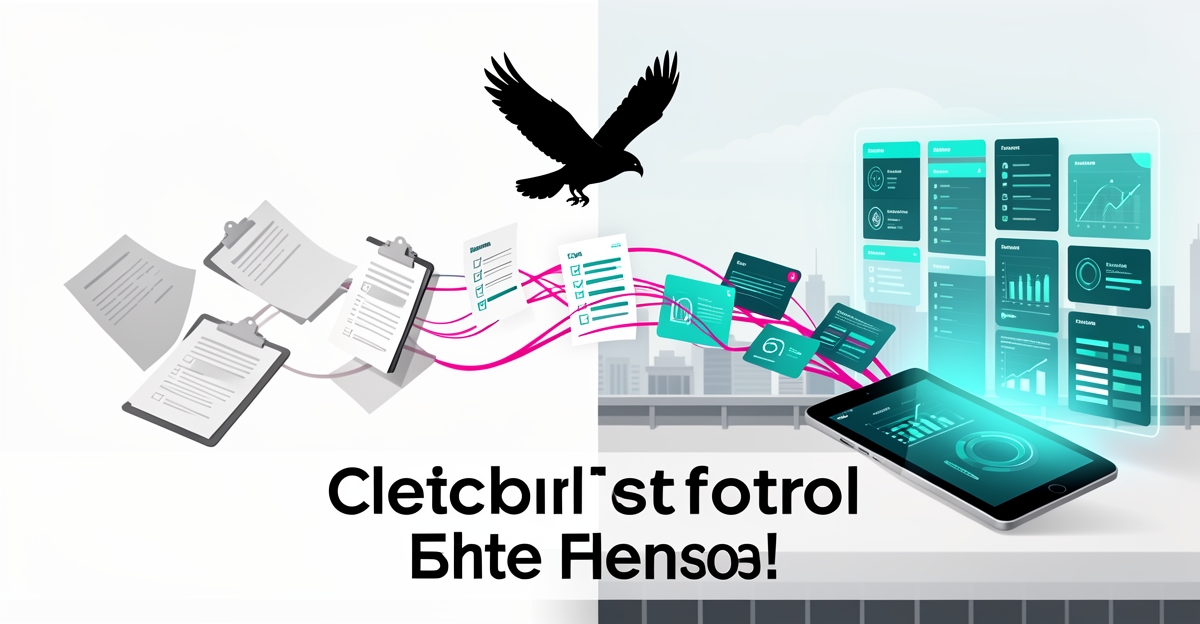
Why Most Bird Control Firms Still Rely on Manual Reporting, And How AI Fixes It
Hire a team member that works 24/7 — for less than a part-time wage.
AI receptionists, SDRs, dispatchers and 99+ roles. Trained on your business, fully managed.
Not sure where to start? Ask our AI planner
The Hidden Cost of Manual Bird Control Reporting
A technician finishes a bird removal job, scribbles notes on a clipboard or in a spreadsheet, and moves to the next site. By the time that report reaches the office, if it ever does, critical details are missing, timestamps are wrong, and the opportunity to act on the data has already passed. This is the daily reality for most bird control operations, and the cost compounds quietly with every job.
The pattern shows up in broader AI adoption data too. Surveys such as the European Central Bank's SAFE research have found that a large majority of firms report some AI use, while only a small fraction qualify as intensive users. That gap between casual adoption and deep integration is exactly where most bird control firms sit as of late 2026: aware of the technology, perhaps experimenting with a chatbot or scheduling tool, but still running core field reporting through manual, error-prone processes.
Here's what that gap actually costs in practice:
- Data errors multiply downstream, a mislogged nest location or incorrect species tag corrupts billing, compliance records, and follow-up scheduling simultaneously.
- Response windows close, bird infestations escalate quickly, and a 48-hour reporting delay can mean the difference between a routine treatment and a structural remediation job.
- Revenue leaks go untracked, without real-time incident logging, firms miss recurring infestation patterns that would justify service contracts or upsell opportunities.
- Compliance exposure grows, wildlife control often involves protected species and local regulations, and incomplete documentation creates audit risk that manual systems cannot reliably catch.
The trust barrier makes this worse. Industry analyses, including this TechRadar piece on AI transparency, have found that a large share of organizations cite explainability as a blocker to trusting AI. For bird control operators, this translates to a familiar hesitation: "I don't trust a system I can't verify." But the irony is that manual reporting is far less transparent, there's no audit trail, no version history, and no way to confirm whether a technician's notes match what actually happened on-site.
Meanwhile, regulatory frameworks are struggling to keep pace with AI adoption, which means the compliance burden is shifting toward operators to demonstrate diligence proactively. Firms that wait for regulation to force their hand will find themselves scrambling to retrofit accountability into processes that were never designed for it.
The firms pulling ahead are the ones treating reporting not as paperwork but as operational intelligence. The ECB's analysis of intensive AI users found that the vast majority of firms using AI intensively have invested real money in the technology and plan to increase that investment. These aren't tech companies, they're businesses across sectors that recognized manual data workflows as a competitive liability and rebuilt them with automation at the core.
For bird control specifically, that means replacing the clipboard-and-spreadsheet model with AI-driven systems that capture incident data in real time, flag anomalies automatically, and route follow-ups without human intervention. AIQ Labs builds exactly these kinds of systems, with 200+ multi-agent deployments behind it, integrating field reports with scheduling, billing, and compliance tracking so that nothing falls through the cracks and every data point becomes actionable the moment it's recorded. If reporting is the workflow costing you the most, AI Workflow Builds rebuild it at a fixed price, in phases.
How AI Automates Field Reporting and Follow-Up Tracking
Picture a technician finishing a complex bird removal job, only to spend the next twenty minutes hunched over a clipboard or spreadsheet, manually logging details that will inevitably contain gaps or errors. This administrative bottleneck plagues field service operations, but intelligent automation is rewriting the script.
Modern AI workflow systems capture field data the moment work happens. Technicians snap photos of nesting sites or entry points, and computer vision tags the species, documents structural damage, and geotags the location. This eliminates the end-of-day data entry marathon that traditionally consumes hours of productive time. As European Central Bank research shows, most firms now use AI in some capacity but only a small minority use it intensively, meaning early adopters of deep automation gain significant operational advantages over competitors still stuck in manual workflows.
The transformation extends far beyond simple data entry. AI-powered systems validate service completion in real time, cross-referencing photos against job requirements to ensure nothing is missed before the technician leaves the site. They automatically generate compliance documentation, create audit trails for regulatory purposes, and trigger follow-up scheduling based on treatment protocols. Key capabilities include:
- Real-time incident logging with voice-to-text field notes
- Automated image recognition for species identification and damage assessment
- Instant service validation and quality assurance checks
- Dynamic follow-up scheduling based on treatment type and property risk factors
Transparency remains crucial when implementing these systems. Industry analysis consistently identifies explainability as a primary barrier to AI trust, which is why leading solutions provide clear audit trails showing exactly how each automated decision was made. This visibility proves essential for regulatory compliance in wildlife management, where documentation standards are stringent and liability concerns run high.
AIQ Labs builds custom workflow systems that integrate directly with existing field service operations, creating end-to-end automation from initial sighting to final follow-up. These platforms don't just store data, they actively track treatment efficacy, flag properties requiring callback visits, and maintain comprehensive service histories without manual intervention. The result is a dramatic reduction in administrative overhead, with operations typically eliminating the bulk of manual reporting tasks while simultaneously improving accuracy. You can see the engagement models and what's included at each level on the pricing page, no invented numbers, just clear options.
As regulatory frameworks struggle to keep pace with technological advancement, businesses that establish robust, automated compliance trails now position themselves ahead of evolving requirements. The shift from reactive paperwork to proactive, intelligent field reporting isn't just an efficiency upgrade, it's becoming the operational standard that separates market leaders from those still buried in clipboards.
From Manual Logs to Real-Time Ops: A Practical Implementation Path
Most bird control firms still rely on paper logs and manual forms for incident reporting, creating delays, errors, and blind spots in daily operations. This approach slows response times and makes it nearly impossible to track trends or prove service value to clients. Transitioning to AI-integrated systems starts with assessing current workflows to identify where manual reporting creates the most friction, such as duplicate data entry, lost paperwork, or inconsistent follow-ups. AIQ Labs' Workflow Builds model replaces these pain points with a custom system that captures field reports via mobile devices, automatically logs incidents, and triggers real-time alerts for technicians and managers. According to the ECB, most firms now report some AI use, yet many still struggle with integration, making a phased, tool-compatible approach essential for success.
The implementation path begins with integrating the AI system into existing tools like scheduling software, CRM platforms, or GPS tracking already used by field teams. Rather than replacing familiar tools, AIQ Labs builds seamless connections that synchronize data across platforms, ensuring, for example, that a bird sighting logged in the field instantly updates the job schedule and generates a follow-up task. This eliminates the need for manual transfers between systems and removes the transcription errors that come with them. Teams retain access to their preferred interfaces while gaining behind-the-scenes automation that keeps data accurate and up to date without extra effort.
Training focuses on role-specific, hands-on sessions that build confidence in using the new system without overwhelming staff. Technicians learn to submit reports via voice-to-text or quick-tap mobile forms, while supervisors receive dashboards showing real-time coverage, incident hotspots, and service completion rates. Transparency in AI is prioritized, every automated action is logged and explainable, so teams trust the system and understand how decisions are made. Over time, the system learns from historical data to predict high-risk zones and optimize patrol routes, turning reactive reporting into proactive prevention. With clear milestones and ongoing support, firms can scale from a single workflow fix to a full AI Operating System, one connected layer, built in phases, and owned outright, so you can adapt it as your business grows.
Still paying for 10+ subscriptions that don’t talk to each other?
We build custom AI systems you own outright. No vendor lock-in. Full control.
Not sure where to start? Ask our AI planner
Frequently Asked Questions
Why is manual reporting such a problem for bird control companies?
How does AI actually automate field reporting for bird removal jobs?
Do I have to replace my existing scheduling and CRM software to use AI?
Can I trust AI decisions I can't see or verify?
How widespread is AI adoption in field service industries right now?
What's the best way to get started without a huge upfront commitment?
Make AI your competitive advantage — not just another tool.
Strategy, implementation and ongoing optimization. One partner, end to end.
Not sure where to start? Ask our AI planner