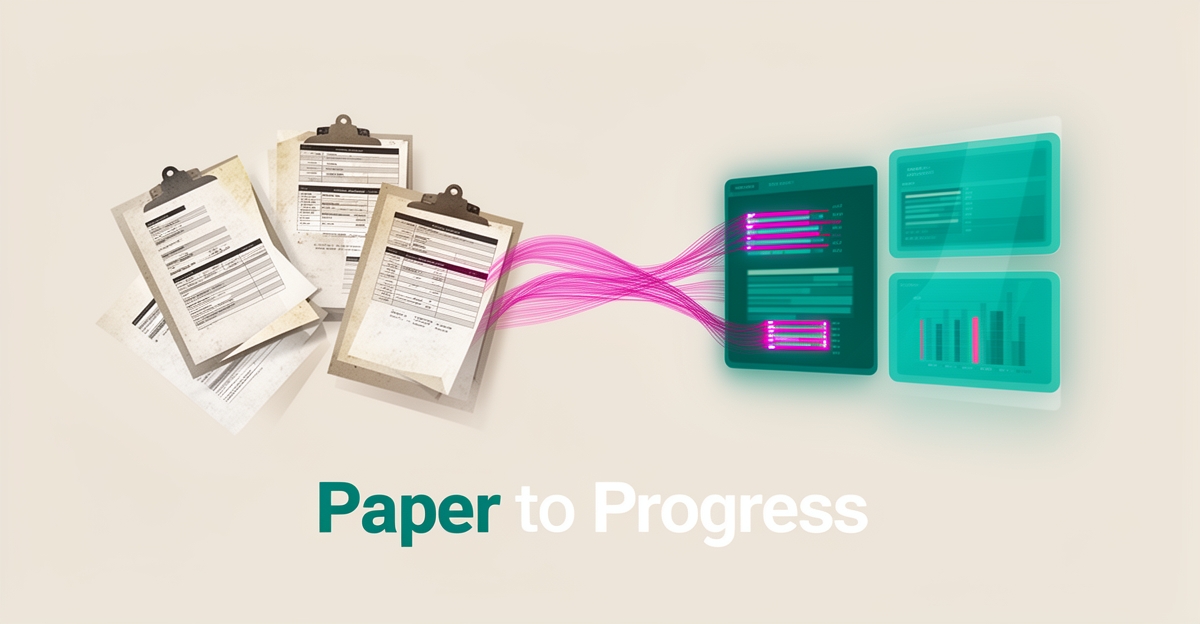
Why Most Bridge Construction Firms Still Use Paper-Based Progress Reports (and How to Fix It)
Key Facts
- A majority of contractors still rely on paper-based daily reports according to industry research
- Most construction leaders plan to invest in digital technology as reported in industry surveys
- Writing a handwritten daily report typically takes 20-30 minutes versus 3-5 minutes with voice-to-text input per field analyses
- Office staff can spend many hours per week on manual data entry from paper reports based on administrative tracking
- Paper-based tracking is estimated to add roughly 5% to total project costs according to construction management technology research
- AI-powered reporting can save superintendents several hours per week in documentation time as demonstrated in pilot programs
- AI progress tracking correlates with faster project completion times per industry productivity analysis
Hire a team member that works 24/7 — for less than a part-time wage.
AI receptionists, SDRs, dispatchers and 99+ roles. Trained on your business, fully managed.
Not sure where to start? Ask our AI planner
The Paper Paradox in Bridge Construction
The construction industry faces a striking contradiction: while most leaders plan to invest in digital technology, a majority of contractors still rely on paper-based daily reports. This gap reveals a deeper issue than resistance to change—it reflects fundamental operational realities that have undermined digitization efforts for over 15 years.
McKinsey identified four structural barriers unique to construction that explain this persistence. First, fragmentation means a single project involves multiple stakeholders—general contractors, subcontractors, architects, and inspectors—each using different reporting formats and systems, making integration difficult. Second, lack of replication occurs because every project is unique in site layout, weather, and requirements, preventing standardized digital tools from transferring across jobs. Third, transience describes how project teams form and disband, eroding institutional knowledge about digital tools between projects. Finally, decentralization places work in remote locations with limited connectivity, where tools requiring constant internet or cloud syncing fail in basements, rural sites, or areas with poor coverage.
Traditional digitization approaches have consistently failed because they demanded behavioral change from field crews rather than adapting to existing workflows. As one industry analysis noted, the obstacle isn't Luddism or budget—it's that every platform sold to the industry asked field crews to change their behavior when they barely had time to document the day. Workers wearing gloves in the mud need tools that match how they actually operate: voice input, automatic photo attachment, and offline functionality are non-negotiable requirements for adoption.
AI-powered field reporting solves this by eliminating the need for behavioral change. Instead of requiring crews to learn new systems, AI reads handwritten reports through natural language processing and computer vision, converting what superintendents already write into structured digital data. This approach directly addresses the core failure point identified in studies where digital tools took longer than paper, triggered double entry, and led to silent reversion to paper methods.
The benefits of this shift are measurable and immediate. Writing a detailed daily log by hand typically takes 20-30 minutes, while voice-to-text input reduces this to 3-5 minutes—a 6-10x improvement in documentation speed. Digital reports sync to the cloud instantly, eliminating the 30-minute round trip for physical transportation and ensuring data integrity through GPS tagging and consistent formatting. Office staff reclaim hours previously lost to manual data entry, and reports become instantly searchable by site and date rather than requiring binder searches.
For bridge construction firms specifically, this transition creates operational advantages beyond time savings. AI-assisted analysis can proactively identify safety concerns, documentation gaps, and project patterns hidden in paper systems. Reports generate professional PDF exports suitable for regulatory submissions, and automatic photo integration with GPS tagging provides verifiable field evidence. The most successful implementations start small—testing with one crew on an active project using parallel paper and digital methods—then expand based on proven results rather than company-wide mandates that ignore field realities.
The Cost of Paper-Based Progress Tracking
Every handwritten daily log on a bridge project carries a price tag that never appears on a budget line. Writing a detailed report by hand takes 20–30 minutes, and across a 12-month road project with four crews producing roughly 1,000 logs, that adds up to over 400 hours of pure writing time — before a single page reaches the office.
The administrative burden compounds once paper arrives at headquarters. Staff can spend many hours per week on manual data entry, transcribing field notes into systems anyone can actually search, and on linear projects, a superintendent may drive 30 minutes each way just to transport physical logs. As one analysis of infrastructure reporting puts it, paper logs create an information gap between field and office that delays decisions, hides risks, and weakens your position in disputes.
That gap translates directly into money. Research on construction management technology estimates that paper-based tracking adds roughly 5% to total project costs, a figure that on a mid-size bridge contract can dwarf any software investment many times over (DataForest). Project managers feel it too: manual data entry can consume roughly a third of their work week, leaving less time for the schedule and risk decisions they're actually paid to make.
The hidden costs run deeper than hours and dollars:
- Documentation gaps — lost or illegible paper records create serious exposure during audits and legal disputes, when the burden of proof falls on incomplete notebooks.
- Audit risk — infrastructure projects demand specific documentation formats, and inconsistent handwritten entries rarely meet those standards without office rework.
- Missed safety patterns — trends buried across weeks of handwriting stay invisible, while AI-assisted analysis of digital reports can flag safety concerns and documentation gaps before they escalate.
- Delayed decisions — when reports arrive a day or more after the work, problems discovered in the field are already old news by the time management sees them.
Bridge and other linear projects amplify every one of these failures because work is spread across miles, crews rotate constantly, and connectivity is unreliable — exactly the conditions where paper's fragility costs the most. The industry's long-running productivity stagnation reflects this accumulated friction (Cumberland Labs).
The fix doesn't require crews to change how they work. AI document processing can read existing handwritten logs — extracting crew counts, hours, and safety notes from photos of notebook pages — and turn them into structured, searchable records automatically. It's the kind of rebuild AIQ Labs delivers through AI Workflow Builds: field teams keep writing as they always have, while the office receives same-day digital reports with deviations flagged in real time. The paper isn't the problem; letting it stay paper is.
AI-Powered Reporting That Matches Field Reality
The most successful digital reporting tools share one design principle: they never ask the superintendent to change how they work. Instead of replacing the notebook, AI reads it. Using natural language processing and computer vision, these systems understand what handwritten text actually means—not just matching character shapes—and extract crew counts, hours by trade, and safety notes directly from photos of notebook pages.
This is the breakthrough that 15 years of failed digitization efforts kept missing. The obstacle was never budget or stubbornness; it was that every platform sold to the industry demanded behavior change from field crews who barely had time to document the day at all. AI flips the equation by making existing paper processes become digital data automatically, with zero change required from the person in the mud wearing gloves.
The field-first capabilities that make this work are straightforward:
- Voice-to-text input — speaking a daily report takes 3-5 minutes versus 20-30 minutes writing it by hand, a 6-10x improvement in documentation speed
- Offline capture — reports work fully without connectivity and sync when a signal returns, eliminating the "no coverage" excuse on rural or basement-level sites
- Automatic photo GPS tagging — images attach without a separate step and arrive location-stamped and timestamped, removing ambiguity from the record
- Same-day cloud delivery — no more 30-minute drives each way to transport paper logs on linear projects
The downstream impact compounds quickly. Superintendents can save several hours per week when reporting goes digital, and office staff reclaim the hours previously lost to manual data entry (DataForest). Across whole projects, firms using AI progress tracking report faster completion times (Cumberland Labs), partly because AI analysis can flag safety concerns and documentation gaps that stay buried in paper binders.
For bridge firms, the practical path is deliberately small: pilot one crew on one active project, run a one-week parallel test against paper, and let the side-by-side comparison convince the skeptics. Peer results move superintendents faster than mandates ever will. When firms decide to scale beyond reporting—connecting field data to scheduling, cost tracking, and owner deliverables—AIQ Labs builds custom AI systems the firm owns outright, designed around existing workflows rather than against them.
The lesson from a decade and a half of stalled rollouts is clear: the winning tool is the one that meets the field where it already is.
The 5-Step Pilot-to-Scale Playbook
Transitioning from paper-based progress reports to digital solutions requires a practical, low-risk approach that respects field crews' existing workflows. The most effective strategy starts small, proves value through direct comparison, and scales based on peer validation rather than top-down mandates. This method addresses the core reason most contractors still use paper despite widespread plans for digital investment: traditional tools fail because they demand behavioral change in environments where workers wear gloves, face spotty connectivity, and move frequently between projects. Industry research confirms that successful adoption hinges on making digital reporting faster and simpler than pen and paper, not on forcing crews to learn new systems.
The pilot-to-scale playbook consists of five actionable steps designed for bridge construction firms seeking measurable gains without disruption. First, select one crew on an active project—ideally led by a superintendent willing to test new tools—where daily logs are required and regularly accessed by the office. Second, choose a digital tool that is genuinely faster than paper: voice-to-text input (cutting report creation from 20-30 minutes to 3-5 minutes), automatic photo attachment with GPS tagging, and full offline functionality. Third, run a one-week parallel test where crews complete both paper and digital reports; side-by-side comparison consistently shows digital versions arrive sooner, include richer detail, and eliminate the 30-minute round-trip delay for physical log transport. Field analyses reveal this step converts skeptics by proving immediate time savings and improved data integrity.
After the test, drop paper for the pilot crew and monitor results for two to four weeks, addressing minor usability questions like photo attachment methods. Verify that office staff receive timely, structured reports suitable for regulatory submissions and that manual data entry drops. Finally, expand to other crews using the pilot team's results as evidence: show superintendents the standardized format, photo integration, and speed of creation. Peer validation drives adoption far more effectively than mandates, especially when tied to measurable outcomes like reduced administrative burden and faster decision-making. AIQ Labs supports this transition through AI Workflow Builds that rebuild the reporting workflow at a fixed price, AI Employees that handle report processing around the clock, and flexible payment models—Start Monthly, Build in Milestones, or Own It Outright—so firms retain full control of their digital transformation. This approach turns paper's persistence into a stepping stone toward AI-powered progress tracking that flags deviations in real time and eliminates documentation gaps.
Still paying for 10+ subscriptions that don’t talk to each other?
We build custom AI systems you own outright. No vendor lock-in. Full control.
Not sure where to start? Ask our AI planner
Frequently Asked Questions
Why do so many construction contractors still use paper daily reports when digital tools are available?
How much time can AI-powered reporting actually save compared to handwritten logs?
What is the real cost of sticking with paper-based progress reports on bridge projects?
Do field crews need special training or behavior changes to use AI reporting tools?
How should a bridge construction firm start transitioning from paper to digital reports?
What features are essential for digital reporting tools to work on remote bridge sites?
From Paper to Progress: How Bridge Builders Can Finally Close the Digital Gap
The persistence of paper-based progress reports in bridge construction isn't about resistance to change—it's about tools that ignore how field crews actually work. As we've seen, voice-to-text input, offline functionality, and automatic photo tagging aren't just conveniences; they're necessities for crews wearing gloves in the mud, working in remote locations, and moving between projects. AI-powered reporting that reads existing handwritten logs eliminates the need for behavioral change while delivering measurable gains: superintendents save hours each week, office staff reclaim time lost to manual data entry, and projects move faster with fewer documentation gaps. The path forward is clear—start small with a one-week parallel test on a single crew, let the side-by-side comparison prove the value, and scale based on peer validation rather than mandates. For bridge firms ready to turn paper's persistence into a stepping stone toward real-time visibility and risk reduction, the first step is a focused conversation. Take the 2-minute Fit Check, then schedule a free 30-minute strategy call to map your biggest bottleneck and see where AI-powered progress tracking fits into your workflow.
Make AI your competitive advantage — not just another tool.
Strategy, implementation and ongoing optimization. One partner, end to end.
Not sure where to start? Ask our AI planner