Why Most Commercial Architecture Firms Skip AI for Client Onboarding — and How to Fix It
Key Facts
- Roughly half of architecture professionals report using AI tools as of late 2026, with adoption still concentrated in visualization rather than practice operations
- A large share of architects use AI mainly for concept images, a narrow slice that delivers no practice leverage
- Buying ten AI tools creates ten logins and no leverage, not a functional system
- Professional services firms typically see measurable ROI within 60–90 days when prioritizing high-impact use cases like inquiry routing and proposal drafting
- A majority of professionals use AI, but only a small fraction of firms have enforced policies, creating shadow AI data risks
- AI receptionists qualify leads and book discovery calls 24/7, so firms never lose opportunities to slow replies
- Connected stacks generate personalized project plans in minutes rather than days by linking practice management, lead gen, and AI receptionists
Hire a team member that works 24/7 — for less than a part-time wage.
AI receptionists, SDRs, dispatchers and 99+ roles. Trained on your business, fully managed.
Not sure where to start? Ask our AI planner
The Tool Trap: Visualization First, Onboarding Last
Most firms don't skip AI because they don't care. They skip it for onboarding because they're busy buying the wrong kind of AI.
Industry research as of late 2026 suggests roughly half of architecture professionals already use AI tools, with more planning to adopt soon. The problem is where that adoption lands. Surveys consistently find that the largest share of architects use AI specifically for concept images—a narrow visualization slice that delivers pretty pictures but no practice leverage.
This is the tool trap. Firms collect isolated subscriptions for rendering, feasibility and site planning, then wonder why client intake still leaks time and money. Buying ten tools does not create a system, it creates ten logins and no leverage. Each login adds friction, duplicates data entry, and leaves onboarding manual.
Fragmented buying also fuels shadow AI. Without a formal policy, staff reach for unapproved consumer tools to draft emails or research proposals on personal devices. Implementation guidance for professional services shows a majority of professionals use AI but only a small fraction of firms have enforced policies, creating data security risks and compliance exposure in client-facing workflows.
The result is a practice management gap. Lead generation, inquiry qualification and proposal drafting remain disconnected. Firms lose opportunities to slow replies while principals are on site, and small studios cannot scale responsiveness without adding headcount.
An integrated approach flips the focus from visualization first to onboarding first. The competitive advantage is not the tool, it is the integration.
Key symptoms of the tool trap include:
- Multiple visualization subscriptions with no connection to CRM or project intake
- Unapproved AI use for proposals and emails, exposing client data
- Manual handoffs between lead capture, qualification and proposal drafting
- ROI measured by renders produced instead of hours returned and fit conversations
Firms that move beyond novelty apps build a connected stack centered on practice management. Lead generation feeds a central hub, an AI receptionist catches every inquiry 24/7, and automated drafting turns intake into personalized project plans in minutes rather than days. That is the shift from AI for design to AI for practice management.
For SMB studios, this matters more. They lack administrative headcount, so a lean connected system lets them respond and produce like a larger office without adding staff. AIQ Labs works with firms in this category through AI Employees that handle intake and reception around the clock, and Workflow Builds that rebuild the single onboarding workflow costing the most—capturing client needs early and keeping the system owned and connected.
When onboarding is systematized, principals protect craft time for design judgment while the practice feels steady to high-caliber clients.
The Connected Stack: From Inquiry to Proposal in Minutes
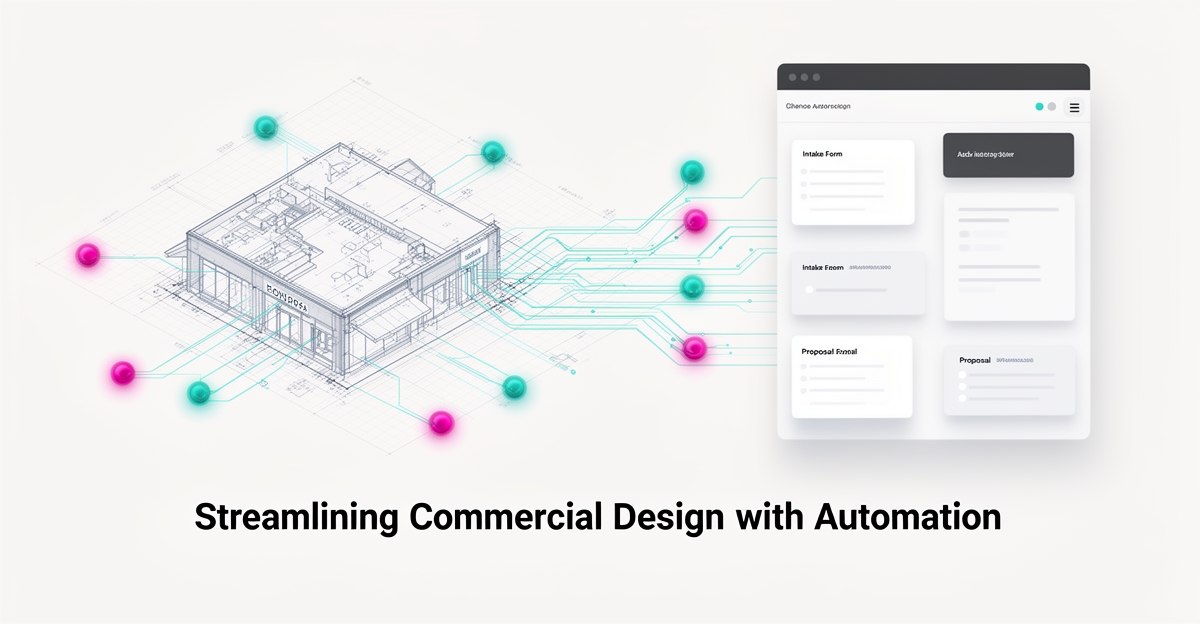
Most commercial architecture firms treat AI as a collection of isolated tools for generating pretty images, missing the opportunity to automate the critical early stages of client engagement. The most successful firms move beyond novelty apps to build a connected stack where practice management serves as the central hub, with AI-driven lead generation feeding into an AI receptionist that qualifies inquiries and books discovery calls 24/7. This integration transforms client onboarding from a days-long manual process into a streamlined system that captures needs and generates personalized project plans in minutes.
Firms using an integrated approach report instant qualification of leads and the ability to generate initial proposals within their practice management platform—saving significant time previously lost to manual data entry and fragmented communication. An AI receptionist ensures no inquiry goes unanswered, routing qualified leads directly into the workflow while filtering out low-fit opportunities. Meanwhile, AI-powered lead generation tools identify and nurture prospects aligned with the firm's target commissions, geography, and fee bands, creating a steady stream of qualified opportunities.
- Practice management platforms like Monograph, BQE Core, and ProjectMark begin drafting proposals and summarizing meetings when fed qualified leads
- AI receptionists answer inquiries instantly, qualify by project type and budget, and book discovery calls around the clock
- Lead generation tools personalize outreach at scale, reducing reliance on referrals and filling the pipeline with ideal clients
This connected approach delivers measurable ROI by focusing on hours returned and the quality of client conversations rather than tool novelty. Firms that prioritize high-impact use cases like inquiry routing and automated proposal drafting typically see measurable returns within 60–90 days, as they reclaim administrative time for design judgment and high-value client relationships. For small and medium-sized studios, this system enables responsiveness and output that rivals larger offices—without adding headcount. AIQ Labs helps architecture firms build and own this integrated stack, transforming client onboarding from a bottleneck into a competitive advantage.
Governance and Strategy Before Software
Before investing in any AI tool, commercial architecture firms must first address the non-technical barriers that silently derail adoption. The most common obstacle isn't budget or technical complexity—it's the absence of a formal AI policy. Without clear guidelines, firms fall into "shadow AI" patterns where staff use unapproved consumer tools like free versions of ChatGPT on personal devices to draft emails or research proposals, exposing sensitive client data and creating compliance risks, according to professional services governance research. This ad hoc usage not only jeopardizes data security but also prevents firms from measuring true ROI, as outputs cannot be audited or integrated into centralized workflows.
A second critical gap lies in undefined business targets. Many firms purchase AI tools without first clarifying the specific commissions they aim to win, their ideal geography, or target fee bands over the next 12 months. This leads to acquiring tools that generate impressive visuals but fail to align with profitable project types—such as investing in multifamily feasibility software when the firm specializes in boutique retail interiors. Without this strategic clarity, AI becomes a costly distraction rather than a lever for growth, especially for small studios where every hour spent on misaligned tools is time stolen from design judgment and client relationships.
To overcome these barriers, firms should establish whitelisted tools, strict data handling rules, and mandatory verification protocols before deploying any AI in client onboarding. Approved tools must be vetted for data residency, encryption standards, and compliance with recognized security standards like SOC 2, while policies should explicitly prohibit uploading privileged strategy documents or client identifiers into public models. Equally important is requiring human review of all AI-generated content—whether proposals, meeting summaries, or lead qualification notes—to catch hallucinations or inaccuracies before they reach clients. Only by grounding AI adoption in governance and strategy can firms transform isolated experiments into a scalable, trustworthy system that protects both their reputation and their bottom line.
- Maintain a whitelist of legal-grade or architecture-specific tools with known data-handling practices
- Redact client names and never upload privileged strategy into AI tools
- Require human verification of all AI-generated proposals and research before client delivery
This foundation ensures that when AI is introduced—whether for inquiry routing, proposal drafting, or lead enrichment—it serves the firm's goals rather than undermining them. For architecture practices seeking to move beyond tool chaos, this governance-first approach is the essential first step toward sustainable AI integration in client onboarding. AIQ Labs supports this transition through AI Operating Systems engagements that begin with policy development and workflow alignment before any technical implementation begins.
90-Day Implementation Plan for SMB Studios
Small studios lose commissions not to bigger firms, but to slow replies and scattered intake. A focused 90-day rollout replaces that friction with a connected onboarding system that works while principals are on site.
Days 1–30 are for clarity and cleanup. Define the commissions you want in the next 12 months, target geography, and fee band before buying anything. Audit every page, profile, and tool that touches clients and remove contradictions in naming, services, and contact paths. Identify the single workflow costing the most time or losing the most work. This audit prevents the "ten logins and no leverage" trap that stalls most firms.
Days 31–60 build the backbone. Select a central practice management hub to serve as the system of record for proposals, projects, and billing. Connect it to lead generation and intake so data flows without manual re-entry. Deploy an AI receptionist or website chat assistant to answer inquiries instantly, qualify by project type and budget, and book discovery calls 24/7. An AI receptionist ensures firms never lose an opportunity to a slow reply, a critical factor in competing for commissions.
Days 61–90 prove value and prune. Begin tracking hours returned and the quality of conversations rather than tool novelty. Keep what produces fit conversations and pause what produces noise. Rewrite weak pages instead of launching new ones. Implementation guides note that professional service firms typically see measurable ROI in 60–90 days when high-impact use cases are prioritized and outcomes are measured per project.
The rollout is guided by measurable signals:
- Hours returned from automated intake, proposal drafting, and meeting summarization
- Number of fit conversations booked by the AI receptionist versus manual follow-up
- Proposal turnaround time from inquiry to personalized project plan
- Lead source quality and conversion rate into discovery calls
With roughly half of architecture professionals already using AI tools and more planning to adopt soon, the advantage is no longer access but integration. Surveys as of late 2026 indicate adoption remains concentrated in visualization, with the largest share of architects using AI for concept images rather than practice management.
For SMB studios with limited headcount, the connected stack of practice management, lead gen, and AI receptionist allows a lean team to respond and produce like a larger office without adding staff. AIQ Labs supports this approach with AI-driven onboarding systems that capture client needs and generate personalized project plans in minutes, letting principals protect craft time while automating the administrative burden of early engagement.
The goal is not more tools. It is integration as the advantage, measured by steady process, consistent proof, and communication that respects client time.
Still paying for 10+ subscriptions that don’t talk to each other?
We build custom AI systems you own outright. No vendor lock-in. Full control.
Not sure where to start? Ask our AI planner
Frequently Asked Questions
Why do most architecture firms use AI for renderings but not for client onboarding?
What is the biggest risk of using unapproved AI tools like free ChatGPT for client proposals or emails?
How can small architecture firms compete with larger offices without hiring more staff?
What should firms measure to know if their AI onboarding system is working?
Is it true that AI will replace architects' design judgment in client onboarding?
What's the first step a firm should take before buying any AI tool for onboarding?
From Tool Chaos to Client Confidence
The firms that win the next decade won't be the ones with the most subscriptions—they'll be the ones that stopped buying fragments and started building systems. While most architects still use AI primarily for concept images, the real leverage lies in connecting practice management, lead generation, and AI receptionists into a single onboarding engine that captures needs and drafts proposals in minutes, not days. For small studios, this integration means responding like a large firm without adding headcount, protecting craft time while ensuring no inquiry goes unanswered. AIQ Labs specializes in building these owned, connected systems for architecture practices—whether you start monthly with an AI Employee, rebuild one costly workflow at a fixed price, or build a full AI Operating System in phases you own outright. If you're ready to identify which workflow is costing you the most commissions, start with a two-minute Fit Check and book a free 30-minute strategy call. We'll map your biggest bottleneck and show you exactly where AI can return hours to your week—no obligation, just clarity on your next move.
Make AI your competitive advantage — not just another tool.
Strategy, implementation and ongoing optimization. One partner, end to end.
Not sure where to start? Ask our AI planner