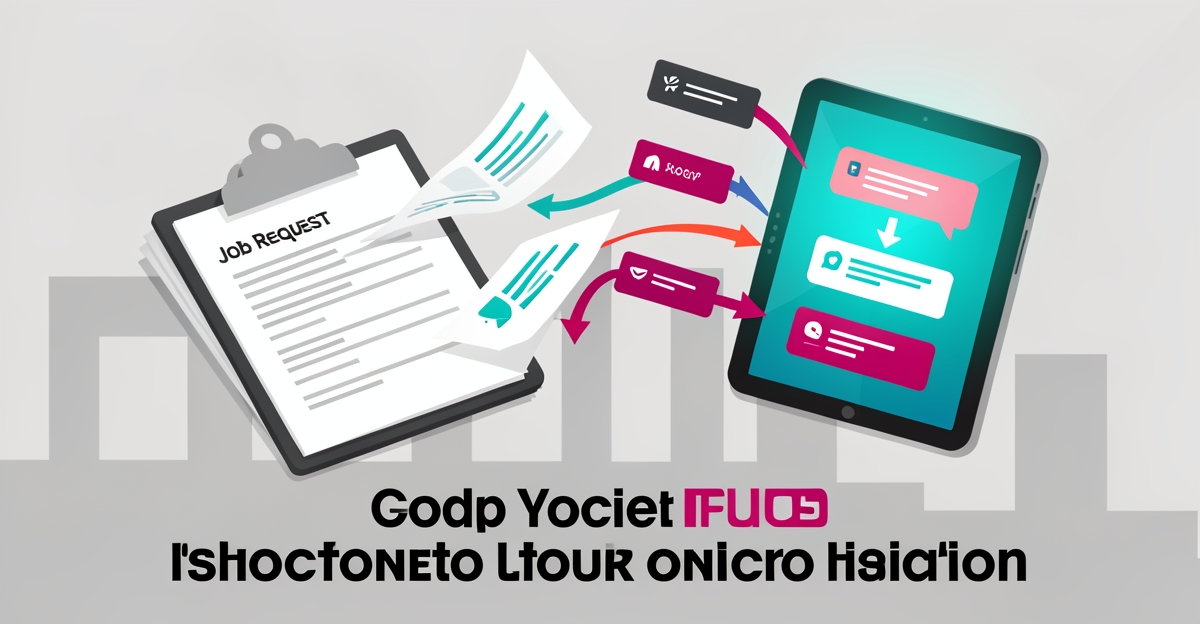
Why Most Concrete Contractors Still Use Paper-Based Job Requests (And How AI Fixes It)
Key Facts
- Handwritten job slips are routinely misread, filed late or lost entirely, creating missed calls, lost leads and crews sent to the wrong address
- Manual intake requires re-keying the same information into scheduling and dispatch tools, duplicating effort and introducing errors
- Delayed responses let competitors win the same job while a paper request sits on a desk
- AI intake captures every inquiry by phone, text, email or web form and converts it to structured data in real time
- AIQ Labs has deployed 200+ multi-agent systems and runs 4 live SaaS products daily, this is proven infrastructure, not theory
Hire a team member that works 24/7 — for less than a part-time wage.
AI receptionists, SDRs, dispatchers and 99+ roles. Trained on your business, fully managed.
Not sure where to start? Ask our AI planner
The Hidden Cost of Paper-Based Job Requests in Concrete Contracting
Paper slips through the cracks the moment it leaves a truck cab or job site trailer. For concrete contractors still running on paper-based job requests, that slip becomes a missed call, a lost lead, and a crew sent to the wrong address.
Manual intake creates a bottleneck at the first touchpoint. Handwritten notes get filed late, misread, or lost entirely, and the information that does survive requires re-entry into scheduling and dispatch tools. That duplication introduces errors and delays the confirmation customers expect. AIQ Labs sees this pattern repeatedly in trades businesses where intake is still analog.
The cost shows up as operational risk, not just inconvenience. Missed leads never enter the pipeline, so revenue disappears before it can be tracked. Data entry errors cascade into scheduling conflicts, material overruns, and crew downtime. Delayed responses allow competitors to win the same job while the paper request sits on a desk.
AI changes the intake flow by digitizing, routing, and tracking every step from inquiry to confirmation. Instead of paper, requests are captured instantly, parsed for key details, and pushed to the right system without re-keying. That continuity reduces manual labor and keeps the whole job lifecycle moving.
As AI becomes standard for process automation across trades and construction, paper-dependent intake becomes a competitive liability. Contractors who digitize intake respond faster, quote faster, and win more of the jobs they actually want.
Concrete contractors can reduce these hidden costs with an AI workflow that:
- Captures every inquiry by phone, text, email, or web form and converts it to structured data in real time
- Routes requests instantly to sales, estimating, and dispatch with automated confirmations
- Tracks status from first contact to on-site completion with a single source of truth
- Flags incomplete or conflicting information before it reaches the crew
When intake is automated, no job is missed and every lead moves efficiently through the pipeline. AI workflow and task automation ensures requests are digitized at capture, not after the fact, and that follow-up is consistent rather than dependent on memory.
The result is fewer errors, faster response times, and higher customer satisfaction. Teams spend less time chasing paperwork and more time executing profitable work.
How AI Transforms Job Intake from Inquiry to Confirmation
Paper slips get lost, duplicated, and delayed. For concrete contractors, that means missed pours, unhappy clients, and crews standing idle while the job request sits on a truck dashboard.
AI replaces the paper chase with a connected intake pipeline that captures, qualifies, routes, and confirms every request in real time. Instead of manual entry and phone tag, the workflow digitizes the inquiry the moment it arrives and moves it forward without human bottlenecks.
Lead capture becomes automatic and consistent. AI agents pick up web forms, calls, texts, and emails, extract job details, and log them into the system of record. This eliminates re-keying and the errors that come with handwritten notes. For contractors who want intake handled end to end, AIQ Labs' [AI Employees](/ai-employees) can staff roles like receptionists and dispatchers at roughly 80% less cost than a human hire.
Intelligent routing ensures the right crew sees the right job fast. AI matches scope, location, material needs, and availability to the best team and pushes the assignment with context, not just a name. Real-time status updates flow back to the customer automatically, reducing check-in calls and building trust.
Confirmation closes the loop. AI confirms dates, access requirements, and prep work, then tracks acknowledgment from both office and field. The result is fewer missed jobs and a pipeline you can actually see.
AIQ Labs applies this approach through [AI Workflow Builds](/workflow-builds): we rebuild the one workflow that costs you the most, for most contractors, that's intake, at a fixed price, in phases. The build is production-ready, integrates with your existing CRM, scheduling, and dispatch tools, and is owned outright by you.
A typical AI-powered intake workflow includes:
- Automated capture from phone, web, and SMS with natural language understanding
- Intelligent routing based on job type, geography, and crew capacity
- Real-time customer and internal status updates and confirmations
- Audit trail and logging for every step from inquiry to confirmation
Responsible design matters. Guardrails like human-in-the-loop escalation, validation of incomplete or conflicting information, and ongoing monitoring keep the system trustworthy, and keep your crew from ever receiving bad data.
When intake is digitized and tracked, contractors stop losing work to paperwork and start winning on speed and reliability. No job is missed and every lead moves efficiently through the pipeline, which is the core outcome of AI-driven job intake transformation.
Implementing AI Job Intake: From Paper to Pipeline
Replacing paper job requests with an AI-driven intake system doesn't require a massive overhaul. AIQ Labs works in phases, so each stage delivers tangible value before you commit to the next. Payment is flexible too, Start Monthly, Build in Milestones, or Own It Outright, with no long-term lock-in and no surprise pricing. Full details are on the [pricing page](/pricing).
The process begins with a discovery phase where AIQ Labs analyzes your current job request workflow, identifies bottlenecks, and maps how leads flow from inquiry to scheduling. This includes assessing existing tools like Google Calendar, CRM platforms, and field service software to design seamless integration points.
Next, AIQ Labs builds a custom AI workflow that captures job details via web forms, SMS, or voice, validates information using natural language understanding, and automatically routes requests to the right dispatcher or estimator. The system integrates with calendars for real-time availability checks and updates your CRM with job status, eliminating manual data entry. AI scales your team's expertise rather than replacing it, your people focus on high-value work while AI handles routine intake logic.
In the deployment phase, the system goes live with role-specific training for office staff and field teams, supported by documentation and performance monitoring. Ongoing optimization is available under the Start Monthly model, which includes monitoring, updates, and improvements for a flat monthly cost. And because the system is built to be owned outright, there's no vendor lock-in, you keep full control long-term.
Once live, paper forms are replaced with a digital pipeline that logs every inquiry, reduces response delays, and prevents missed jobs, turning intake from a liability into a competitive advantage. For contractors who later want one connected operating layer across the whole business, [AI Operating Systems](/ai-operating-systems) builds on the same foundation in phases.
Still paying for 10+ subscriptions that don’t talk to each other?
We build custom AI systems you own outright. No vendor lock-in. Full control.
Not sure where to start? Ask our AI planner
Frequently Asked Questions
Why do concrete contractors still use paper job requests if they're so risky?
How does AI actually fix paper-based job intake for concrete work?
Is AI adoption in construction and trades actually common, or still fringe?
How long does it take to switch from paper job requests to an AI system?
Do I have to replace my existing CRM or scheduling software?
What if the AI makes mistakes or sends wrong info to my crew?
Turning Paper Trails into Profit Pipelines
The shift from paper-based job requests to AI-powered intake isn't just about replacing forms, it's about reclaiming lost revenue, reducing costly errors, and ensuring every lead moves smoothly from first contact to completed pour. Manual processes create bottlenecks that let jobs slip through the cracks, while AI captures, validates, and routes inquiries in real time, giving contractors full visibility and control. The result is faster response times, fewer scheduling conflicts, and happier customers who feel prioritized from the start. For concrete contractors ready to stop chasing paperwork and start winning more work, the path forward is clear. Start with the [2-minute Fit Check](/apply) to see where AI can make the biggest impact in your intake workflow, then, if it looks like a fit, book a free 30-minute strategy call. No obligation, just clarity on your opportunity to build a more reliable, profitable operation.
Make AI your competitive advantage — not just another tool.
Strategy, implementation and ongoing optimization. One partner, end to end.
Not sure where to start? Ask our AI planner