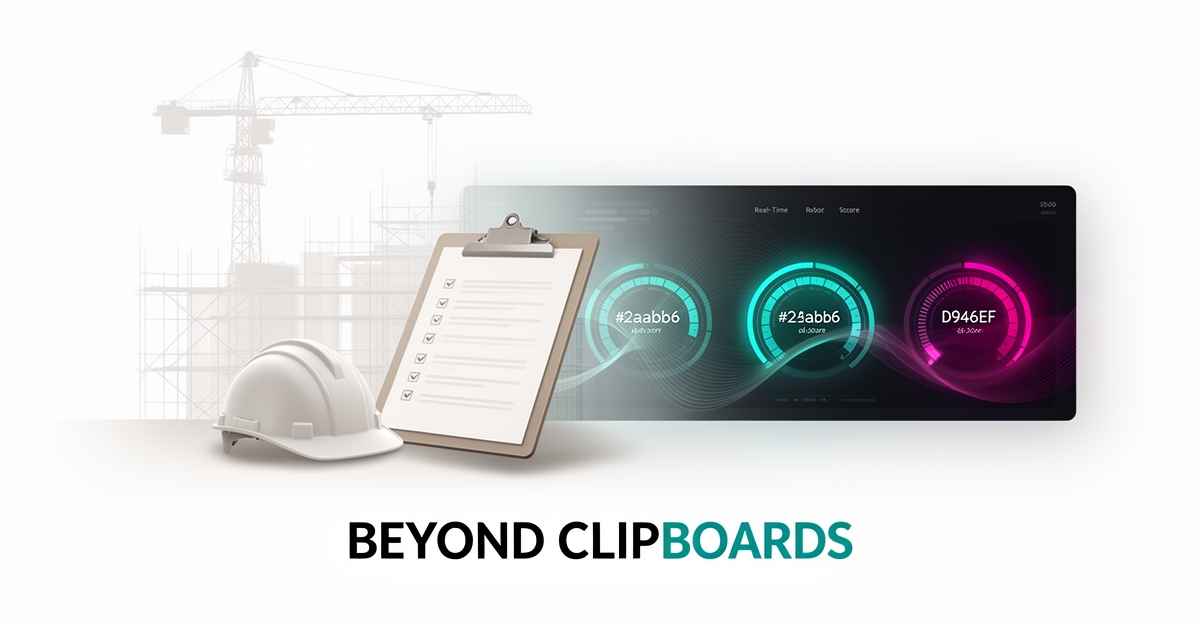
Why Most Construction Safety Consultants Still Rely on Manual Risk Assessments (And How to Fix It)
Key Facts
- Construction productivity has improved only marginally over the past two decades, a persistent industry challenge highlighted in industry analysis from Anil Sawhney
- The construction industry is a major contributor to global emissions, intensifying scrutiny on how projects are run Anil Sawhney's LinkedIn post
- Roughly 80% of work in modern construction is performed by subcontractors per Aura Safety's safety management guidance
- Automated risk scoring can significantly reduce variability in risk ratings compared to manual methods, per Atlantic Training's research
- Manual risk assessments are prone to human bias and delayed reporting, increasing accident risk on construction sites
- AI readiness assessments identify high-impact automation opportunities like real-time risk scoring and digital permit systems per AIQ Labs' methodology
- The four pillars of safety management are Safety Policy/Leadership, Risk Management, Safety Assurance/Monitoring, and Safety Promotion/Training per Aura Safety's framework
Hire a team member that works 24/7 — for less than a part-time wage.
AI receptionists, SDRs, dispatchers and 99+ roles. Trained on your business, fully managed.
Not sure where to start? Ask our AI planner
The Hidden Cost of Manual Risk Assessments on Site
Manual checklists still dominate site safety because they feel cheap, familiar, and fast to deploy. That familiarity masks a growing risk exposure as projects scale, supply chains fragment, and reporting delays turn near misses into incidents.
Human bias and delayed reporting are built into paper-based assessments. Consultants rely on memory, site walk timing, and subjective scoring, which creates inconsistent risk ratings across crews and shifts. The lag between observation and action means hazards persist longer, and subcontractor teams receive guidance too late to prevent exposure.
Fragmentation compounds the problem. Industry safety management guidance notes that roughly 80% of work in modern construction is performed by subcontractors. Each trade brings its own forms, terminology, and reporting cadence, so central teams lose visibility. Safety policy, risk management, safety assurance/monitoring, and safety promotion/training—the four pillars of safety management—become siloed rather than synchronized.
Productivity pressure makes the gap more costly. LinkedIn analysis from Anil Sawhney highlights how little construction productivity has improved over two decades, even as the sector carries a heavy environmental footprint. Slow gains and high impact intensify scrutiny on how risk is managed, not just how fast work gets done.
The hidden costs show up in three ways on site:
- Inconsistent scoring across inspectors leads to under-prioritized hazards and repeated findings.
- Delayed reporting slows corrective actions, extending exposure windows for workers and subcontractors.
- Fragmented data prevents trend detection, so systemic risks remain invisible until an incident occurs.
Consultants stay manual because the alternative feels complex and capital intensive for SMBs. Yet the real cost is operational: rework, downtime, compliance exposure, and reputational risk that erode margins on already tight projects.
This is where consistent, real-time insight changes the equation. AI-powered risk scoring can provide consistent, real-time risk scoring, reducing human error and surfacing patterns across subcontractor teams. AIQ Labs approaches this through AI Workflow Builds that map current data flows, tool integration points, and capability gaps before automation is designed.
An AI readiness assessment identifies where automation delivers the most impact, not where technology is flashiest. It evaluates data infrastructure, existing safety workflows, and adoption readiness so safety management evolves from reactive checklists to proactive, evidence-based control.
How AI-Powered Risk Scoring Creates Consistent Real-Time Safety
Construction safety consultants often face a critical gap between the potential of technology and the reality of on-site risk management. While advanced tools exist, many still depend on manual processes that introduce avoidable variability and delay.
Manual risk assessments are inherently inconsistent, varying significantly between assessors due to individual judgment, experience levels, and even fatigue. This subjectivity undermines the reliability of safety planning across projects and teams. In contrast, AI-powered risk scoring delivers uniform evaluation criteria every time, reducing the fluctuations that come with human interpretation. Research indicates automated systems can substantially reduce variability in risk ratings compared to manual methods, ensuring similar conditions receive similar scores regardless of who or when the assessment occurs industry research.
Beyond consistency, AI enables real-time risk scoring that updates continuously as site conditions change. Manual assessments, typically conducted periodically or after incidents, create dangerous blind spots where hazards emerge and evolve between reviews. AI systems can integrate live data from sensors, wearables, and site cameras to adjust risk scores as conditions shift—flagging emerging dangers like unstable scaffolding or elevated heat exposure before they lead to incidents. This shift from reactive to proactive safety means risks are identified and mitigated in the moment, not days later in a report industry research.
Perhaps most significantly, AI reduces human error—a leading cause of flawed risk assessments. Fatigue, distraction, and cognitive biases all compromise manual evaluations, especially during long shifts or high-pressure periods. AI operates without these limitations, applying the same rigorous logic across thousands of data points without decline in performance. By automating routine scoring tasks, consultants are freed to focus on high-value activities like interpreting trends, coaching teams, and refining safety protocols—effectively augmenting rather than replacing their expertise industry research.
AIQ Labs supports this transition through workflow builds that pinpoint where automation delivers the greatest safety impact. These evaluations examine current workflows, data availability, and team readiness to ensure AI implementation aligns with real operational needs—not just technological capability. The goal isn’t to replace human judgment but to enhance it with consistent, real-time insights that prevent harm before it occurs. When technology drives meaningful outcomes like fewer incidents and faster response times, it transforms safety from a compliance exercise into a core operational advantage.
AI Readiness Assessment for Construction Safety Teams
Adopting AI in construction safety is not about replacing human judgment; it is about strengthening it with tools that reduce risk and improve outcomes. As Jim Rogers notes in a recent analysis, "The real opportunity isn't adopting technology for its own sake, it's adopting technology that drives meaningful outcomes."
For safety consultants, this means identifying where AI can deliver the most value. AIQ Labs begins this process with an AI readiness assessment, which evaluates an organization’s current capabilities and pinpoints high-impact automation opportunities. This step is critical because manual risk assessments remain common in the industry, despite being prone to human bias and delayed reporting.
The assessment maps directly to the four pillars of safety management: Safety Policy/Leadership, Risk Management, Safety Assurance/Monitoring, and Safety Promotion/Training. For example, AI can enhance Risk Management by providing consistent, real-time risk scoring, while Safety Assurance benefits from automated monitoring and reporting. This structured approach ensures that automation supports, rather than disrupts, existing safety frameworks.
Small and medium-sized businesses (SMBs) often face unique challenges in adopting AI, including limited resources and expertise. According to industry research, roughly 80% of construction work is performed by subcontractors, many of whom operate as SMBs. AIQ Labs addresses these challenges by offering solutions that align with SMB budgets and operational needs, ensuring that even smaller firms can access enterprise-grade AI capabilities.
Key findings from AI readiness assessments include:
- Identification of high-impact automation opportunities, such as real-time risk scoring and digital permit systems.
- Evaluation of current AI capabilities, including data infrastructure and team readiness.
- Development of a phased implementation plan to minimize disruption and maximize ROI.
- Integration with existing safety management systems to ensure seamless adoption.
By focusing on practical, outcome-driven solutions, AIQ Labs helps construction safety teams move beyond manual processes and embrace AI as a tool for safer, more efficient operations. The result is not just compliance, but a proactive approach to risk management that protects workers and projects alike.
From Assessment to Action: Building an AI-Enabled Safety System
Knowing the risks of manual assessments is one thing—acting on them is another. For construction safety consultants, the path forward involves a structured, five-step approach that leverages AI to deliver consistent, real-time risk scoring and safer worksites.
First, conduct an AI readiness assessment to identify where automation delivers the most impact. This involves evaluating your current technology stack, data infrastructure, and team capabilities. AIQ Labs specializes in this, helping businesses pinpoint high-value automation targets and develop a clear roadmap.
Next, implement AI-powered risk scoring. Unlike manual assessments, which are prone to human bias and delayed reporting, AI provides consistent, real-time insights. According to industry experts, AI can help predict risks before they happen, automate compliance, and even augment the workforce with robotics.
Third, build a comprehensive safety management system. Effective safety management rests on four pillars: safety policy and leadership, risk management, safety assurance and monitoring, and safety promotion and training. Ensure your system addresses each of these areas.
Fourth, verify worker competency. With roughly 80% of work in modern construction performed by subcontractors, verifying that every worker is trained and qualified for their specific role is critical. Digital tools can automate this process, ensuring no one steps on-site unprepared.
Finally, deploy digital permits and reporting systems. These tools streamline safety management, reducing the risk of delayed reporting and ensuring compliance. As Jim Rogers notes, "The real opportunity isn't adopting technology for its own sake, it's adopting technology that drives meaningful outcomes."
For SMBs, the challenge often lies in resources and expertise. AIQ Labs builds systems in phases with fixed pricing, and you own what we build outright—no lock-in. Ready to see where AI can make the biggest impact? Start the Fit Check—a two-minute assessment that leads to a free, no-obligation strategy call. We’ll map your biggest bottleneck and identify high-ROI opportunities. If there isn’t a clear win, we’ll tell you that too.
Still paying for 10+ subscriptions that don’t talk to each other?
We build custom AI systems you own outright. No vendor lock-in. Full control.
Not sure where to start? Ask our AI planner
Frequently Asked Questions
Why do construction safety consultants still use manual risk assessments despite AI being available?
How does AI-powered risk scoring improve consistency compared to manual assessments?
What are the main hidden costs of relying on manual risk assessments on construction sites?
What does an AI readiness assessment involve for construction safety teams?
Is AI-powered risk scoring only for large construction firms, or can small and medium-sized businesses benefit too?
What steps should a construction safety team take to move from manual assessments to an AI-enabled safety system?
From Checklists to Confidence: Building a Safer, Smarter Site
Manual risk assessments may feel familiar, but their hidden costs—inconsistent scoring, delayed reporting, and fragmented data—undermine safety and productivity across construction sites. With roughly 80% of construction work performed by subcontractors, real-time, consistent risk visibility is not just beneficial, but essential for preventing incidents before they occur. AI-powered risk scoring addresses these gaps by delivering uniform, real-time insights that reduce human error and surface systemic risks early. The path forward starts with an AI readiness assessment to pinpoint where automation delivers the greatest impact, ensuring technology serves safety goals rather than complicating them. For construction safety consultants ready to move beyond reactive checklists, the next step is clear: evaluate your current workflows and discover where AI can strengthen your team’s expertise. Start the Fit Check—a two-minute assessment that leads to a free, no-obligation strategy call—to map your biggest bottleneck and identify high-ROI opportunities. If there isn’t a clear win, we’ll tell you that too.
Make AI your competitive advantage — not just another tool.
Strategy, implementation and ongoing optimization. One partner, end to end.
Not sure where to start? Ask our AI planner