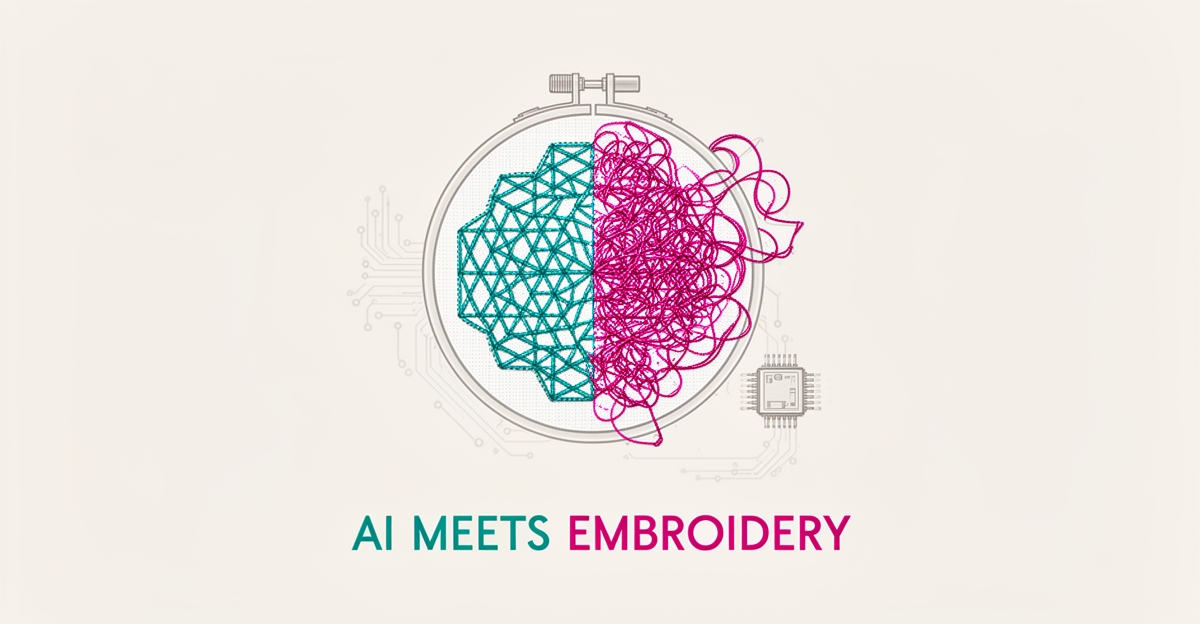
Why Most Custom Embroidery Shops Fail at AI Adoption (And How to Avoid It)
Key Facts
- AI digitizing achieves roughly 40-60% first-run success on complex designs vs 99%+ with manual digitizing, according to industry analysis
- Thread break rates can reach up to 60% on complex designs with AI digitizing, based on industry data
- Small text below 6mm fails consistently in auto-digitized files, making it the most common failure point, per production analysis
- AI digitizing typically costs $5-$10 per file while manual digitizing runs $15-$20 per file, per current service pricing
- Cloud-based design approvals can cut approval time by around 70%, per StitchAwayApplique research
- Connected manufacturing devices can increase efficiency by up to 30%, per McKinsey Global Institute data
- Omnichannel strategies are associated with meaningfully higher customer retention, per Shopify's retail reporting
Hire a team member that works 24/7 — for less than a part-time wage.
AI receptionists, SDRs, dispatchers and 99+ roles. Trained on your business, fully managed.
Not sure where to start? Ask our AI planner
The AI Digitizing Trap: Speed vs Production Reality
The promise of AI digitizing—speed, low cost, and automation—lures many custom embroidery shops into a costly trap. While AI can generate a file in minutes, the reality of production often tells a different story. Shops chasing fast turnaround frequently encounter thread breaks, puckering, and registration errors that halt production lines and damage customer trust. These aren't minor glitches; they are systemic failures rooted in how AI handles complex design requirements.
AI digitizing struggles most with stretch fabrics, small text, and intricate details where manual expertise is essential. Industry analysis suggests auto-digitized files achieve only a 40-60% first-run success rate on complex or stretch-fabric designs. In contrast, manual digitizing delivers 99%+ success due to precise control over pull compensation, stitch sequencing, and underlay settings. This gap isn't just about quality—it directly impacts machine uptime, labor costs, and delivery reliability.
The hidden cost of AI digitizing failures appears in wasted materials, machine downtime, and rushed revisions. When an AI-generated file fails on thin fabrics or detailed logos, shops face high thread break rates—up to 60% in some cases—requiring complete rework. Unlike manual digitizing, which typically includes free unlimited revisions, AI failures often trigger new order charges. This turns initial savings into long-term expenses, especially for shops handling high-volume or commercial orders.
- Thread break rates soar on complex designs with AI digitizing
- Puckering and registration errors disrupt stitch alignment
- Small text below 6mm fails consistently in auto-digitized files
- Incorrect pull compensation causes fabric distortion
- Stitch sequencing errors increase jump stitches and thread changes
Commercial embroidery operations still demand manual digitizing for production reliability. The ability to adjust stitch density, direction, and underlay based on fabric behavior isn't just a preference—it's a necessity for avoiding costly downtime. AI may assist with bulk workflows, but human judgment remains critical for fine-tuning intricate details and ensuring first-run success. Shops that overlook this balance risk undermining the very efficiency they sought to gain. For businesses navigating AI adoption, a strategic approach that respects both technological limits and production realities is essential—one that AIQ Labs helps define through tailored transformation roadmaps.
Three Fatal Pitfalls Killing AI Adoption in Embroidery
AI adoption in custom embroidery stalls not because the technology is useless, but because shops hit the same three friction points at once. The promise of faster digitizing collides with production reality when tools are layered on top of fragile workflows.
Poor integration with existing digitizing and machine workflows leaves AI as an isolated experiment. Many businesses face difficulties integrating new AI features with legacy digitizing software. Compatibility issues around the specific embroidery file formats required by different machines are a significant technical hurdle. Without seamless data flow between design approval, digitizing, and IoT-enabled machines for predictive maintenance, automation creates more handoffs than it removes.
Lack of design expertise in AI systems leads to mishandled pull compensation and stitch sequencing. Auto-digitizing software often fails to account for critical production factors such as pull compensation, stitch sequencing, and small text handling. Manual digitizers adjust stitch width to compensate for fabric tension during stitching on every element. In practice, AI-generated files often result in poor quality including thread breaks, puckering, and registration issues due to inaccuracies in stitch placement and settings. First-run production success for AI digitizing sits at roughly 40-60% on complex or stretch-fabric designs, compared to 99%+ success with manual digitizing due to precise settings. Small text below 6mm is the most common failure point in auto-digitized files.
Over-reliance on chatbots and automation without human-in-the-loop quality control compounds these errors. AI embroidery designs must maintain consistency across different production batches, yet digitizing errors can occur when AI misinterprets a pattern, leading to uneven stitches or improper thread density. AI may struggle to adapt complex embroidery patterns to various materials, as fabric textures, thickness, and stretchability all affect stitch quality. One of the biggest concerns with AI embroidery is its inability to detect all errors before production.
Shops that treat AI as a replacement rather than an augmentation see the cost gap widen. Typical cost per design shows AI digitizing ranges from $5-$10 per file with auto-processing and no human review, while manual digitizing costs $15-$20 per file. The hidden cost appears in rework: revisions for AI-digitized files after production failure are charged as a new order, while manual digitizing typically includes free and unlimited revisions.
The common failure patterns map directly to the three pitfalls:
- Integration friction with legacy digitizing software and machine file formats
- Design expertise gaps in pull compensation, stitch sequencing, and fabric-specific adaptation
- Missing human-in-the-loop quality control before production
A proven AI transformation strategy avoids these mistakes by anchoring automation to existing workflows, keeping skilled digitizers in the loop for fine-tuning, and building governance for quality. AIQ Labs works with embroidery operators to design roadmaps that start with a single workflow, measure results, and scale what works, rather than attempting to replace the art of embroidery entirely.
A Proven AI Transformation Roadmap for Embroidery Shops
Most shops don't fail at AI adoption because the technology doesn't work—they fail because they treat it as a binary switch instead of a phased capability build. The data is clear: auto-digitizing produces a 40–60% first-run success rate on complex or stretch fabrics compared to 99%+ with manual expertise, while small text below 6mm remains the most common failure point in AI-generated files. A smarter path starts with honesty about where each approach earns its keep.
- Phase 1 — Hybrid Digitizing Model: Route simple, high-volume bulk work (large-fill logos, basic monograms) through AI tools that deliver files in about a minute, while reserving skilled manual digitizing for complex designs, photo-realistic work, and any job on stretch or delicate fabrics where pull compensation and stitch sequencing determine production success.
- Phase 2 — Strategic Workflow Automation: Deploy custom AI agents to eliminate the administrative drag around design approvals, inventory forecasting, and IoT-enabled predictive maintenance on machines—areas where McKinsey research suggests connected manufacturing devices can increase efficiency by up to 30%.
- Phase 3 — Omnichannel Customer Experience: Layer AR design previews and an AI-powered chat agent that handles instant quotes, order status, and file prep questions across web, social, and messaging channels—capabilities Shopify data links to meaningfully higher customer retention for omnichannel retailers.
This phased approach mirrors the maturity curve AIQ Labs guides clients through: move from isolated pilots to department-level scaling, then embed governance and cross-functional integration so AI becomes a durable operating advantage rather than a stalled experiment. Shops that start with a single high-ROI workflow—often cloud-based design approvals that can cut approval time by around 70%—build the confidence and data foundation to expand intelligently. The goal isn't to replace the art of embroidery; it's to remove the friction that keeps your best digitizers stuck on repetitive files and your best customers waiting on quotes.
Implementation Playbook: From Pilot to Production-Ready AI
Start by fixing one broken workflow that's costing you time and quality—like order intake or digitizing file prep—where AI can deliver immediate relief without disrupting craft standards. This is exactly what AIQ Labs' AI Workflow Builds are designed for: rebuild the one workflow that costs you the most, at a fixed price, in phases, with your existing CRM, e-commerce platform, and digitizing software connected via API. This focused approach avoids the trap of overhauling everything at once, which often leads to poor adoption and integration friction.
For example, automating design intake with an AI Employee removes the manual data entry around order intake while ensuring files are routed correctly for digitizing, cutting the errors that cause thread breaks or puckering on complex builds. This isn't about replacing your digitizers—it's about freeing them from repetitive tasks so they can focus on high-value work like adjusting pull compensation or stitch sequencing for stretch fabrics, where manual expertise still delivers 99%+ first-run success. AI handles the predictable; humans handle the nuanced.
Next, layer in governance and reskilling so your team trusts and operates the AI-augmented workflow. Train staff to oversee AI outputs, intervene when designs need manual refinement, and use audit trails to track improvements. This human-in-the-loop control ensures quality doesn't slip—especially for small text under 6mm or curved surfaces where AI often fails—while building confidence in the technology. As one workflow stabilizes, replicate the model elsewhere: scale AI Employees for scheduling or dispatch, and when you're ready to connect everything into one operating layer you own outright, move toward an AI Operating System built in phases.
Still paying for 10+ subscriptions that don’t talk to each other?
We build custom AI systems you own outright. No vendor lock-in. Full control.
Not sure where to start? Ask our AI planner
Frequently Asked Questions
Is AI digitizing actually faster and cheaper than manual digitizing?
Why do my AI-digitized files keep failing on stretch fabrics and small text?
What's the real cost of AI digitizing failures in production?
Can I just use AI and skip manual digitizing altogether?
What's the most common failure point with auto-digitized embroidery?
How should I start adopting AI without hurting quality?
Protect Your Production While You Scale With AI
AI isn't the problem for embroidery shops — the trap is treating it as a replacement instead of a tool. Speed-first adoption fails because auto-digitized files deliver only a 40-60% first-run success rate on complex or stretch fabrics versus 99%+ with manual expertise, and hidden costs pile up through thread breaks, puckering, registration errors, and rework charged as new orders. The three fatal pitfalls — poor integration with legacy digitizing and machine workflows, design expertise gaps in pull compensation and stitch sequencing, and missing human-in-the-loop quality control — are avoidable with a phased, craft-first approach. Route simple high-volume work to AI, keep skilled digitizers on complex designs and delicate fabrics, and automate the administrative drag around approvals, forecasting and predictive maintenance first. AIQ Labs helps embroidery operators build that balance, starting with one high-ROI workflow and scaling what works. Take the 2-minute Fit Check at aiqlabs.ai/apply, then book a free 30-minute strategy call at aiqlabs.ai/book to map your biggest bottleneck and identify a safe, production-ready AI path — we'll tell you straight if there isn't a clear win.
Make AI your competitive advantage — not just another tool.
Strategy, implementation and ongoing optimization. One partner, end to end.
Not sure where to start? Ask our AI planner