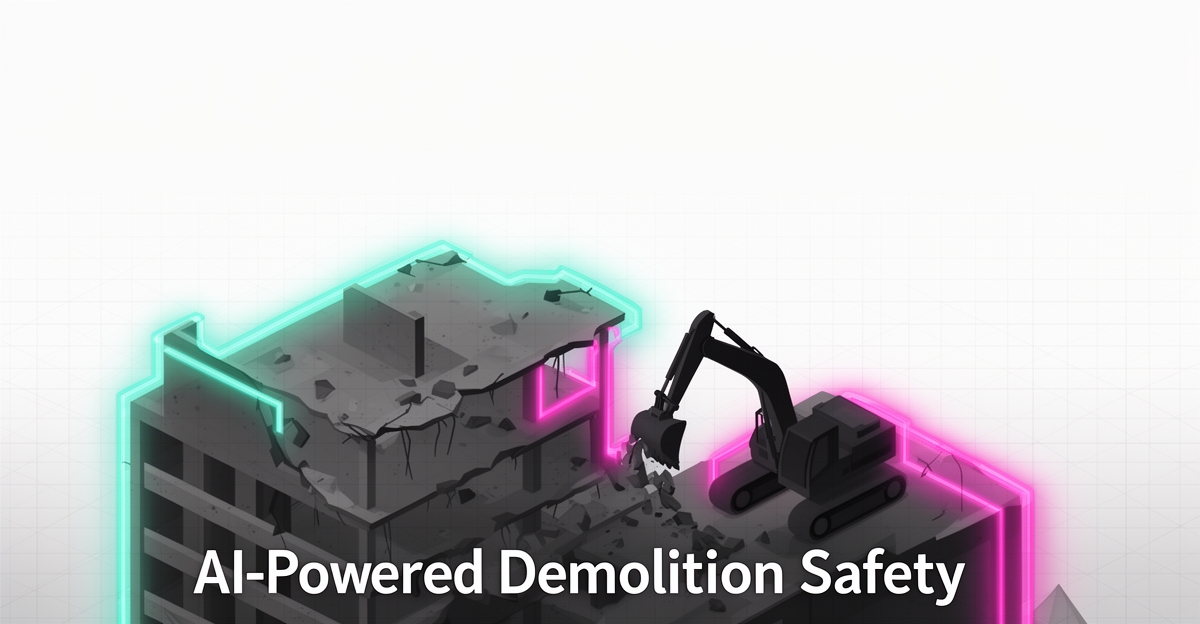
Why Most Demolition Contractors Still Rely on Manual Site Inspections (And How AI Fixes It)
Key Facts
- Construction productivity has stagnated for decades, and outdated processes like manual inspections are a contributing factor, according to widely cited industry research.
- Manual inspections create inconsistent documentation due to varying inspector expertise and time-consuming data entry.
- AI-powered tools that sync with job management software can dramatically reduce data-entry errors through automated data sync.
- Construction is a major contributor to global emissions, making efficient, accurate inspections an environmental as well as a safety concern.
- Poor documentation practices are a common weak point in construction firms' security posture, per government cyber-security surveys.
- Labor shortages persist across construction, pushing firms to stretch limited staff across manual tasks despite the drawbacks.
Hire a team member that works 24/7 — for less than a part-time wage.
AI receptionists, SDRs, dispatchers and 99+ roles. Trained on your business, fully managed.
Not sure where to start? Ask our AI planner
The Manual Inspection Trap in Demolition
Most demolition contractors don't realize how deeply manual inspections have shaped their daily operations. Yet the reliance on paper checklists and walkthroughs persists, creating a cycle of inefficiency that's hard to break. Widely cited industry research has long noted that construction productivity has barely moved over the past two decades—a stagnation partly attributed to outdated processes like manual inspections.
Manual inspections are time-consuming, often requiring teams to spend hours documenting hazards, checking compliance, and verifying site conditions. This inefficiency compounds when labor shortages force contractors to stretch limited staff across multiple tasks. Industry reporting consistently identifies labor shortages as a persistent challenge in construction, pushing firms to lean on manual processes despite their drawbacks.
The risks of manual inspections extend beyond inefficiency. Human error is a constant threat, with missed hazards or incomplete documentation leading to compliance violations or safety incidents. Poor documentation practices are also a known weak point in construction firms' security posture—government cyber-security surveys have repeatedly found that around half of businesses report breaches or attacks in a given year, and disorganized paper records make both prevention and recovery harder. Manual systems also struggle to scale, making it difficult to maintain consistency across multiple sites.
Here's how manual inspections typically fall short:
- Inconsistent documentation due to varying inspector expertise
- Time-consuming data entry and report generation
- Higher risk of missed hazards or compliance gaps
- Difficulty tracking trends or recurring issues across projects
The result? Contractors face mounting pressure to do more with less while navigating regulatory scrutiny and safety risks. AI-powered tools offer a way out, automating inspections, flagging hazards in real time, and generating reports instantly. By integrating with job management systems, these solutions eliminate the manual inspection trap, saving hours per week and improving accuracy. For demolition contractors, the shift isn't just about efficiency—it's about survival in an industry where margins are tight and risks are high.
How AI Changes Site Inspections from Reactive to Real-Time
AI-powered tools are transforming site inspections from periodic checks into continuous, real-time safety monitoring. By integrating with sensors, drones, and wearable devices, AI systems analyze live data streams to detect hazards like structural instability, unsafe equipment positioning, or worker proximity to danger zones the moment they arise. This shift enables immediate intervention, preventing incidents before they occur rather than reacting after the fact.
Automation streamlines the entire inspection workflow. AI-driven platforms auto-generate checklists based on project phase, weather conditions, and historical risk data, then guide workers through standardized procedures via mobile interfaces. As data is collected, the system instantly flags deviations—such as missing guardrails or improper material storage—and triggers alerts to supervisors. These capabilities reduce reliance on subjective judgment and minimize the variability that plagues manual inspections, where oversight rates climb during fatigue or high-workload periods.
Beyond real-time detection, AI compiles inspection findings into comprehensive reports without manual data entry. By syncing with job management tools, these systems auto-populate safety logs, track corrective actions, and generate compliance documentation for regulators. This end-to-end automation cuts administrative burden significantly—freeing up supervisors to focus on site leadership rather than paperwork. For demolition contractors, where site conditions evolve rapidly hour by hour, this transition from reactive to real-time inspection isn't just an upgrade; it's a fundamental shift toward proactive risk management grounded in continuous, AI-verified situational awareness. AIQ Labs supports this transformation through AI Workflow Builds that rebuild the inspection workflow that costs you the most—fixed price, delivered in phases—so inspection data flows into actionable insights without manual bottlenecks. To explore how AI can automate your site inspection workflows, start the 2-minute Fit Check and schedule a free 30-minute strategy call.
From Paper to Production: Implementing AI Inspections Without Disruption
Demolition contractors know that manual site inspections drain time and increase risk, yet many still rely on paper checklists and subjective assessments. Industry studies consistently point to AI-powered tools as a clear path forward for construction productivity. The shift begins with practical data capture—using drones and sensors to gather consistent, high-resolution site imagery and environmental readings without putting personnel in harm's way.
This raw data feeds directly into AI models trained to detect structural weaknesses, hazardous materials, or safety violations far faster than human eyes can. Integration with existing job management tools like Procore or Buildertrend ensures inspection results automatically update work orders, trigger compliance alerts, and populate digital logs—eliminating duplicate entry and sharply reducing data-entry errors. For firms wary of disruption, a phased rollout minimizes risk: start with a single high-risk workflow, such as pre-demolition asbestos surveys, then expand to daily progress tracking and post-demolition site clearance verification.
AIQ Labs supports this transition through AI Workflow Builds that turn unstructured inspection data into actionable insights, and, for firms ready to go further, an AI Operating System that connects inspections with scheduling, compliance, and reporting in one layer you own outright. With the Build in Milestones model, firms approve and pay for each phase as it ships—keeping everything built so far if priorities shift. This approach aligns with the industry's need for measurable outcomes, especially given construction's significant share of global emissions, which makes efficient, accurate inspections not just a safety issue but an environmental imperative. By grounding AI adoption in existing workflows, demolition teams gain real-time visibility without overhauling their operations.
Still paying for 10+ subscriptions that don’t talk to each other?
We build custom AI systems you own outright. No vendor lock-in. Full control.
Not sure where to start? Ask our AI planner
Frequently Asked Questions
Why do most demolition contractors still rely on manual site inspections despite the known inefficiencies?
How does AI actually change site inspections from reactive to real-time monitoring?
What are the biggest risks of sticking with manual inspections in demolition?
Can AI inspection tools integrate with the job management software we already use like Procore or Buildertrend?
Is implementing AI inspections disruptive to ongoing demolition projects?
How does automating inspections help with environmental compliance and emissions goals?
From Manual Checks to AI-Powered Safety: The Future of Demolition Inspections
The shift from manual to AI-powered site inspections isn't just about adopting new technology—it's about solving real, costly problems that demolition contractors face every day. Manual inspections drain time, increase the risk of human error, and struggle to keep pace with evolving site conditions and regulatory demands. AI transforms this process by enabling real-time hazard detection, automating report generation, and integrating with the job management tools you already use—freeing up teams to focus on safety and execution rather than paperwork. For contractors operating in high-risk environments with tight margins, this means fewer compliance gaps, faster incident prevention, and measurable gains in operational efficiency. The path forward doesn't require a complete overhaul; it starts with identifying your highest-impact workflow and applying AI where it matters most. To see how this could work for your business—without guesswork or pressure—take the next step with a free, no-obligation strategy session. Start the 2-minute Fit Check and schedule your free 30-minute strategy call to explore where AI can deliver the fastest, safest return on your inspection process.
Make AI your competitive advantage — not just another tool.
Strategy, implementation and ongoing optimization. One partner, end to end.
Not sure where to start? Ask our AI planner