Why Most Electrical Contractors Still Use Paper Logs (And How AI Fixes It)
Key Facts
- Industry research has indicated that roughly half of electrical contractors still rely on paper-based job logs, according to Simpro
- The average electrical contractor spends a significant portion of their week, commonly cited around 20%, on administrative tasks per Raken data
- A majority of frontline employees report being burned out at work, per Microsoft's Work Trend Index
- AI-powered field service management has been associated with fewer service delays and higher first-time fix rates per Microsoft findings
- AI-powered systems can meaningfully reduce administrative workload for electrical contractors, some industry research suggests by up to half per Simpro research
- Manual data entry from paper logs increases the risk of transcription errors, leading to invoicing disputes and rework
- Real-time synchronization of field notes eliminates delays in visibility between office and field teams
Hire a team member that works 24/7 — for less than a part-time wage.
AI receptionists, SDRs, dispatchers and 99+ roles. Trained on your business, fully managed.
Not sure where to start? Ask our AI planner
The Hidden Cost of Paper Logs in Electrical Contracting
Walk onto any commercial job site in North America and you'll likely find an electrician jotting notes into a paper logbook at the end of a shift. It's a habit that has survived decades of technological change, and it's quietly costing contractors time, money, and people.
Despite the availability of digital tools, research from Simpro has indicated that roughly half of electrical contractors still rely on paper-based job logs. The reasons are familiar: paper is cheap, familiar, and requires no training. But those low upfront costs come with hidden expenses that compound every single day.
The biggest cost is time. According to data from Raken, the average electrical contractor spends a significant share of their week on administrative tasks, commonly cited around 20%, much of it the manual transcription, filing, and reconciliation of handwritten field notes. On a 40-hour week, that's close to a full day lost to paperwork instead of billable work.
Then there's the error problem. Paper logs are often incomplete, inaccurate, or difficult to access, which leads directly to delays and mistakes downstream. Manual data entry into office systems compounds the risk: information gets transcribed wrong, misfiled, or lost entirely, and by the time anyone notices, the job has already moved on.
The human toll may be the most serious of all. Microsoft's Work Trend Index found that a majority of frontline employees report being burned out at work. When skilled electricians spend their evenings deciphering scribbled notes and chasing missing paperwork, burnout isn't surprising, it's the predictable result of a workflow that treats administrative burden as someone else's problem.
The hidden costs of paper logs stack up in predictable ways:
- Lost billable hours, a meaningful slice of every working week consumed by admin instead of revenue-generating work
- Transcription errors that ripple into invoicing disputes, compliance gaps, and rework
- Delayed visibility, since paper notes can't sync across office and field teams in real time
- Increased burnout among frontline electricians already reporting fatigue at high rates
What makes this frustrating is that the fix already exists. Modern AI document processing can digitize field notes as they're written, auto-categorize tasks, flag potential safety issues, and sync everything across teams instantly, eliminating the manual entry step entirely. It's the kind of capability AIQ Labs builds into production-ready workflow builds for contractors, turning a stack of handwritten logs into searchable, structured data the moment it's captured.
Paper logs persist because they feel free. But between lost labor hours, error-driven rework, and the burnout driving skilled tradespeople out of the industry, the real price of that clipboard is far higher than most contractors realize.
How AI Transforms Field Notes into Real-Time Operational Intelligence
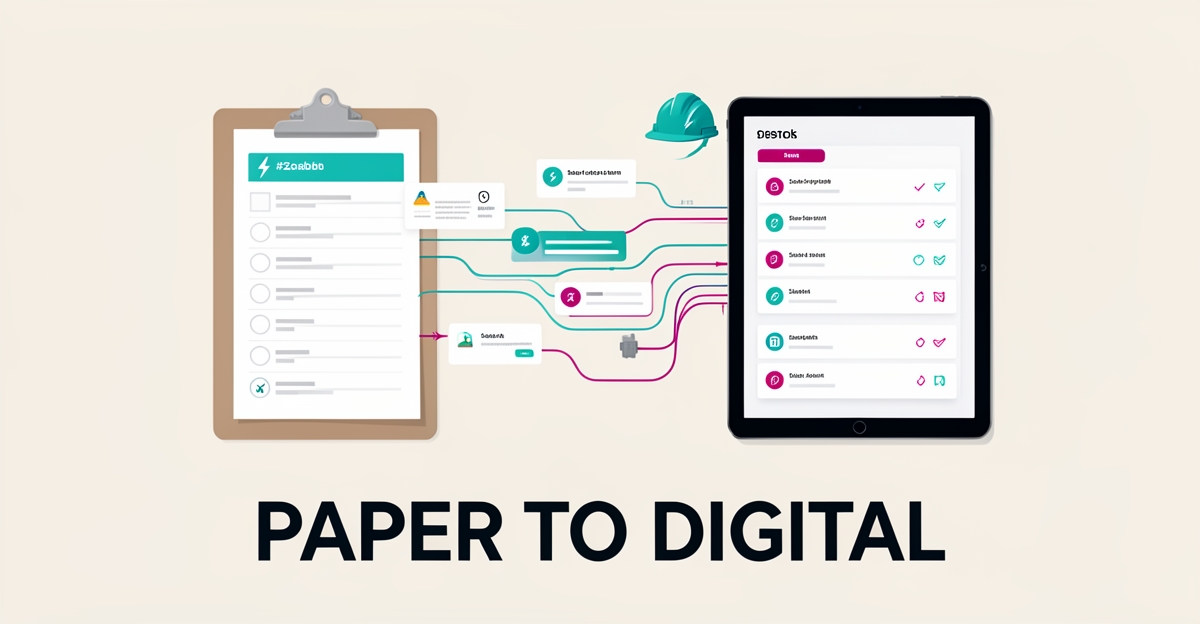
The shift from paper to digital transforms static logs into living operational data. AI-powered systems automatically capture, categorize, and analyze field notes as they are generated, turning handwritten observations into structured, searchable intelligence. This eliminates the lag between field activity and office awareness, enabling instant visibility into job progress, resource allocation, and emerging issues. With real-time synchronization across teams, dispatchers, supervisors, and clients all access the same updated information, reducing miscommunication and duplicate efforts. Simpro research suggests electrical contractors using AI-driven field management can cut administrative workload substantially, in some cases by up to half, freeing technicians to focus on skilled work rather than paperwork.
AI doesn't just store data, it interprets it. Natural language processing scans field notes for keywords, patterns, and anomalies, automatically flagging safety concerns, code compliance risks, or equipment faults before they escalate. For example, a technician's note about "flickering lights in panel B" might trigger an immediate alert for potential arc fault risks, prompting a preventive inspection. Simultaneously, AI correlates this data across jobs to identify recurring issues, like a specific transformer model failing in multiple locations, enabling predictive maintenance and informed inventory decisions. Microsoft findings associate AI-powered field service with higher first-time fix rates and fewer service delays, directly improving customer satisfaction and reducing costly repeat visits.
- Auto-categorizes tasks by type, urgency, and required skill set
- Flags safety hazards and compliance issues in real time
- Syncs data across field crews, dispatch, and accounting teams
- Cuts manual data entry substantially
- Enables predictive insights from historical field note trends
By converting unstructured field notes into actionable insights, AI creates a continuous feedback loop that improves both daily operations and long-term planning. Supervisors gain instant visibility into crew performance and job profitability, while estimators use historical data to refine future bids. AIQ Labs builds these capabilities into AI operating systems that electrical contractors own outright, ensuring the intelligence generated stays within the business, powering smarter decisions without ongoing subscription dependencies. As field notes evolve from afterthoughts to strategic assets, contractors move beyond reactive fixes to proactive, data-driven service delivery.
From Paper to AI: A Practical Implementation Path for Contractors
Electrical contractors are at a turning point where paper logs no longer serve their growing operational demands. Shifting to AI-driven systems starts with understanding exactly where time is being lost and how automation can reclaim it.
Begin by assessing current workflows: track how much time crews spend on manual log entries, searching for past job details, or correcting errors from illegible notes. Industry benchmarks suggest the average electrical contractor spends a significant share of their time on administrative tasks, many of which are ripe for automation according to Raken data. This audit reveals pain points like delayed invoicing, missed safety flags, or duplicated effort across teams, issues AI can resolve by capturing and organizing field data in real time.
Next, choose an approach that integrates with existing systems like QuickBooks or job management platforms to avoid disrupting established processes. The goal is seamless data flow: when a technician completes a job, AI auto-categorizes tasks, extracts key details from voice or text notes, and syncs with accounting and scheduling tools without manual intervention. AIQ Labs' Workflow Builds are designed exactly this way, a fixed-price rebuild of the one workflow that costs you the most, delivered in phases so the system works within your current tech stack rather than requiring a full overhaul. For lighter lifting, AI Employees can take over dispatching, scheduling, and log processing at a fraction of the cost of a human hire.
Deploy the solution with targeted training focused on role-specific use cases, dispatchers learn to monitor real-time job status, while field crews practice voice-to-log features that reduce paperwork. Start with a pilot group to gather feedback, then scale based on adoption metrics. Continuous optimization follows: monitor time saved per job, error reduction in logs, and improvements in first-time fix rates, which AI-powered field service management has been shown to improve per Microsoft's findings. Refine the system monthly to align with evolving project types and team needs, turning AI from a tool into a sustainable operational advantage.
Still paying for 10+ subscriptions that don’t talk to each other?
We build custom AI systems you own outright. No vendor lock-in. Full control.
Not sure where to start? Ask our AI planner
Frequently Asked Questions
Why do so many electrical contractors still use paper logs if digital tools exist?
How much time are we really losing to paper logs?
Do paper logs actually cause more mistakes on the job?
Is burnout really connected to paperwork for electricians?
Can AI actually reduce the admin work from field notes?
What does AI do with field notes beyond just digitizing them?
From Clipboard to Competitive Edge: Reclaiming Time for What Truly Matters
Paper logs may feel familiar, but their hidden costs, lost billable hours, transcription errors, delayed visibility, and technician burnout, are eroding profitability and morale across electrical contracting businesses. As this article outlined, AI-powered document processing transforms those handwritten notes into real-time operational intelligence: auto-categorizing tasks, flagging safety issues, syncing data across teams, and cutting administrative workload substantially. This isn't about replacing skilled electricians with technology; it's about freeing them to focus on the high-value, billable work they were trained to do. The path forward starts with assessing where time is truly lost in your current workflow, then choosing an AI solution that integrates with your existing tools, like QuickBooks or job management platforms, without disruption. AIQ Labs helps contractors make this shift through three entry points: AI Employees for managed AI staff, Workflow Builds to rebuild the one workflow that costs the most, and AI Operating Systems for a connected operating layer you own outright. If you're ready to turn field notes from an afterthought into a strategic asset, start with the two-minute Fit Check and book a free 30-minute strategy call to explore where AI can deliver the fastest impact for your business.
Make AI your competitive advantage — not just another tool.
Strategy, implementation and ongoing optimization. One partner, end to end.
Not sure where to start? Ask our AI planner