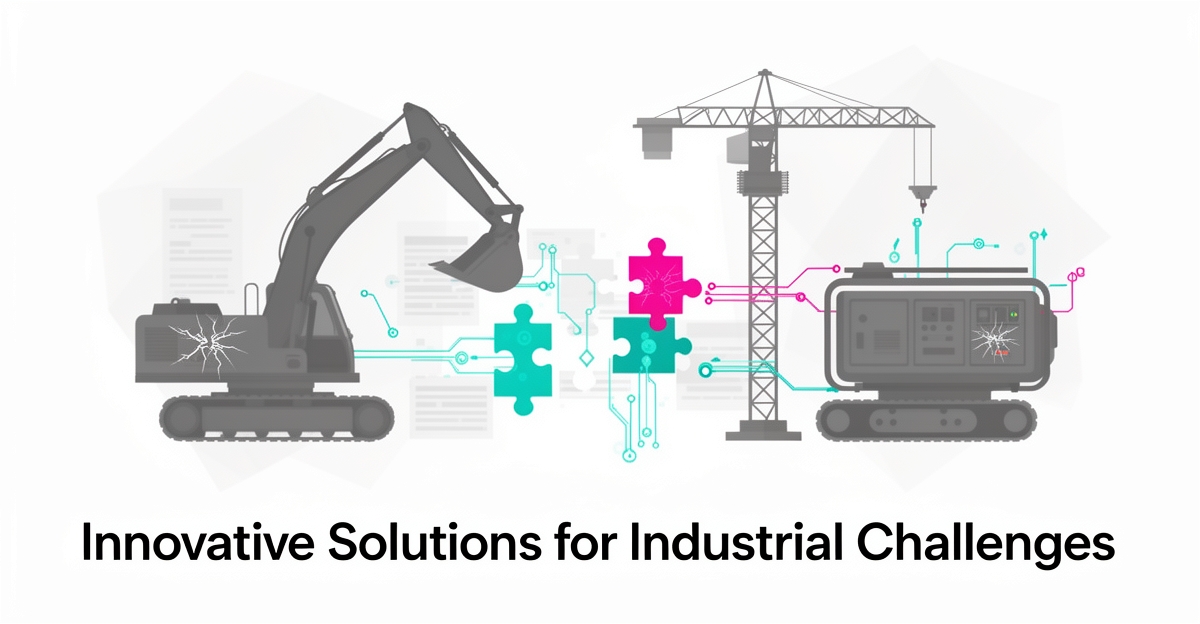
Why Most Equipment Rental Businesses Fail at AI Adoption (And How to Avoid It)
Key Facts
- A large share of AI initiatives fail across industries, and rental operations are especially exposed due to poor data quality and unstructured collection practices according to industry discussion
- Companies adopting AI with clear use cases typically see stronger customer-facing outcomes than non-adopters per industry statistics
- Predictive maintenance remains one of the highest-ROI AI use cases for equipment-heavy operations per industry statistics
- AI is not a project — it's a practice, requiring ongoing operational integration as emphasized by Scott Cannon, CEO of BigRentz
- Starting with API-driven integrations typically delivers faster ROI and lower risk than complex AI agents per market analysis
Hire a team member that works 24/7 — for less than a part-time wage.
AI receptionists, SDRs, dispatchers and 99+ roles. Trained on your business, fully managed.
Not sure where to start? Ask our AI planner
The Failure Pattern and the Real Reason Rental AI Stalls
Equipment rental leaders are pouring budget into AI while watching initiatives stall out before they deliver value. The industry pattern is familiar: excitement, a pilot, then silence.
Industry research consistently finds that a large share of AI initiatives fail, and rental operations are especially exposed. The vulnerability comes from fragmented systems, seasonal demand swings, and asset data that lives in spreadsheets, work orders, and field notes rather than structured pipelines.
The core problem is not model capability. It is foundations. Many teams rush to deploy agents and chatbots without first establishing clean, connected data. The "garbage in, garbage out" principle applies directly: poor data quality produces unreliable predictions for maintenance, utilization, and pricing.
Scott Cannon, CEO of BigRentz, frames the mindset shift clearly: AI is not a project — it's a practice in a recent podcast discussion. Success requires treating AI as an ongoing operational capability that augments workflows, not a one-off technology purchase.
Rental companies also overestimate immediate AI capability and underestimate change management. Unclear objectives, lack of leadership buy-in, and misaligned goals turn promising pilots into shelfware. Experts note the problem isn't the technology — it's the lack of structured data and clear deliverables according to rental industry analysis.
The stall pattern repeats across three interlocking gaps:
- Foundational data infrastructure is missing, with asset, customer, and transaction data siloed and inconsistent.
- Objectives are vague, such as "use AI" instead of "reduce unplanned downtime by X%" or "improve inventory turns."
- Teams expect autonomous agents to deliver value without integrations, APIs, and human oversight to guide decisions.
When data is unstructured and goals are undefined, even capable models produce noise. The result is wasted spend, eroded trust, and a retreat to status quo.
Practical adoption starts with readiness, not hype. Companies adopting AI with clear use cases typically see stronger customer-facing outcomes than non-adopters per industry statistics. That gap widens when implementation is grounded in real workflows.
AIQ Labs approaches this through structured readiness work — mapping current technology stacks, data infrastructure, and team capabilities before any build begins. The focus is on defining measurable business outcomes, prioritizing integrations over complex agents, and establishing governance so AI becomes a sustained practice rather than a failed pilot. For teams that want a managed starting point, AI Employees put production-ready AI staff — receptionists, SDRs, dispatchers — into daily operations without a build project.
The Three Fatal Pitfalls Rental Companies Repeat
Most equipment rental businesses approach AI adoption with enthusiasm but overlook critical foundations, leading to repeated failures. The core issue isn't the technology itself — it's the lack of structured data and clear deliverables that doom initiatives from the start. Industry research points to poor data quality and unstructured collection practices as the primary culprits. Companies often skip building reliable data pipelines, feeding AI systems inconsistent or incomplete information that produces unreliable outputs.
A second fatal pitfall is the absence of leadership buy-in and misaligned goals across teams. When executives view AI as a standalone project rather than a practice to augment workflows, initiatives lose momentum and resources. Scott Cannon, CEO of BigRentz, emphasizes that AI requires a mindset shift focused on solving specific business problems, not chasing trendy technology. Without executive sponsorship tying AI to measurable outcomes like predictive maintenance or inventory optimization, teams lack direction and accountability.
Finally, many rental companies rush into complex AI agents instead of starting with practical integrations. Experts recommend prioritizing APIs and existing tool connections to achieve faster ROI and lower risk. Market analysis suggests companies focusing on integrations see stronger customer-facing outcomes than those running isolated experiments. Starting small — such as linking AI to CRM or accounting systems via APIs — builds confidence and creates a foundation for scaling, rather than attempting ambitious agent-based systems prematurely.
- Establish structured data collection before AI implementation
- Secure leadership commitment tied to specific business objectives
- Begin with API-driven integrations, not complex AI agents
- Maintain human oversight for critical decisions and context
- Measure progress against defined ROI metrics
AIQ Labs helps rental businesses avoid these pitfalls through AI Workflow Builds — rebuilding the one workflow that costs the most, at a fixed price, in phases. By focusing on practical applications like predictive maintenance workflows or automated customer support, enhanced by human-AI collaboration, companies build sustainable AI capabilities that scale with their operations. This approach transforms AI from a risky experiment into a reliable practice that augments existing workflows and drives measurable efficiency gains.
A Practical AI Readiness Framework for Rental Operations
Many equipment rental businesses jump into AI projects without first evaluating whether they have the data, strategy, and operational readiness to support them — a leading reason initiatives stall across the industry according to industry research. A structured AI readiness assessment helps avoid this pitfall by focusing on three foundational elements: data infrastructure, clear business outcomes, and practical applications with measurable ROI. This approach ensures AI initiatives are grounded in reality, not hype, and aligned with where the business can actually gain traction.
The first step is assessing data quality and accessibility — because AI is only as good as the data it learns from. Rental companies must evaluate whether equipment usage, maintenance logs, inventory levels, and customer interactions are consistently captured, stored in structured formats, and free of silos. Without this foundation, even the most advanced models will produce unreliable insights, falling victim to the "garbage in, garbage out" problem widely cited in industry discussions as noted by experts. Once data readiness is established, the next step is defining specific, high-impact use cases such as predictive maintenance to reduce downtime or inventory optimization to minimize stockouts and overstock — both areas where AI has demonstrated strong potential for ROI in equipment rental per industry statistics.
Finally, businesses should prioritize applications that integrate smoothly with existing systems via APIs or middleware, enabling faster deployment and quicker wins. This might include automating reservation confirmations, flagging equipment needing service based on usage patterns, or dynamically adjusting rental rates using demand forecasts. By starting small, measuring results, and scaling only what works, rental operators can build confidence and capability over time. AIQ Labs supports this journey through its AI Operating Systems — one connected operating layer built in phases and owned outright — with readiness assessments, roadmap design, and implementation guidance tailored to the unique constraints and opportunities of rental operations. This structured approach turns AI from a risky experiment into a sustainable competitive advantage.
From Pilot to Scale: Implementation That Sticks
The gap between a promising pilot and a scaled AI capability is where most rental businesses stall. A large share of AI initiatives fail, often because companies treat implementation as a one-time project rather than an ongoing practice. As Scott Cannon, CEO of BigRentz, emphasizes, "AI is not a project — it's a practice," requiring a fundamental shift from experimentation to operational integration.
An integration-first strategy anchors AI directly into the rental software already running daily operations — CRM, dispatch, telematics, and accounting platforms. Rather than layering standalone agents on top of fragmented systems, this approach uses APIs and protocols like the Model Context Protocol to create a unified data layer where AI can read real-time utilization, write maintenance triggers, and update financial records in a single transaction. Companies adopting this embedded model typically see stronger customer-facing outcomes than those running isolated pilots.
- Map every pilot to a specific workflow in the existing rental stack before writing code
- Design human-in-the-loop checkpoints for high-stakes decisions like fleet purchasing or contract approvals
- Instrument continuous monitoring dashboards that track model drift, data quality, and ROI per workflow
- Establish a quarterly review cadence to retire, expand, or re-architect agents based on performance data
This hybrid human-centered model keeps dispatchers, service managers, and counter staff in control while AI handles the repetitive pattern recognition — predicting which assets need service before they fail, optimizing re-rent pricing, and surfacing utilization anomalies across yards. The payoff compounds over time, and rental firms with structured data pipelines are positioned to capture it first.
AIQ Labs structures engagements around this exact maturity curve — moving clients from assessment through integration, governance, and continuous optimization under a single accountable partner. Whether the starting point is a Start Monthly AI Employee for after-hours dispatch, a Build in Milestones workflow rebuild for the service department, or a phased Own It Outright operating system for the whole operation, each phase ships production code the client owns — no vendor lock-in and a clear path toward data-driven fleet management.
Still paying for 10+ subscriptions that don’t talk to each other?
We build custom AI systems you own outright. No vendor lock-in. Full control.
Not sure where to start? Ask our AI planner
Frequently Asked Questions
Why do so many AI projects fail in equipment rental?
Is AI just a one-time project we can buy?
Do we need perfect data before starting AI?
What's the biggest mistake rental companies make with AI?
Should we start with AI agents or integrations?
How do we know if our rental business is ready for AI?
Build the Practice, Not the Pilot
The difference between rental companies that capture AI's value and those that stall isn't budget or technology — it's readiness. As Scott Cannon puts it, AI is not a project but a practice: structured data first, clear business objectives second, practical API-driven integrations third, and human oversight throughout. Companies that ground AI in real workflows are already pulling ahead of those waiting on the sidelines. Your next step is simple: audit your data infrastructure, pick one measurable use case like predictive maintenance or inventory optimization, and resist the urge to deploy complex agents before your foundations can support them. If you're not sure where your gaps are, take the two-minute Fit Check at aiqlabs.ai/apply and then book a free 30-minute strategy call — a real working session with an AI engineer to map your biggest bottleneck and identify high-ROI opportunities, with an honest answer if there isn't a clear win. The rental businesses that win the next decade won't be the ones that experimented with AI first — they'll be the ones that built it right.
Make AI your competitive advantage — not just another tool.
Strategy, implementation and ongoing optimization. One partner, end to end.
Not sure where to start? Ask our AI planner