Why Most Framing Shops Fail at AI Adoption (And How to Avoid It)
Key Facts
- Industry analyses consistently report that the large majority of AI pilots never make it to production
- Most organizations deploying generative AI see little to no measurable return in the first six months
- Organizations that invest in people and capability building before deploying tools convert pilots to production at far higher rates
- Large enterprises typically take 9+ months to move AI from pilot to production, while smaller, focused teams often do it in around 90 days
- Abandonment of AI initiatives has climbed year over year as pilots without adoption plans get shelved
- Technical accuracy alone doesn't create value—predictions and outputs must connect to real interventions
Hire a team member that works 24/7 — for less than a part-time wage.
AI receptionists, SDRs, dispatchers and 99+ roles. Trained on your business, fully managed.
Not sure where to start? Ask our AI planner
The Pilot Trap Framing Shops Can’t Escape
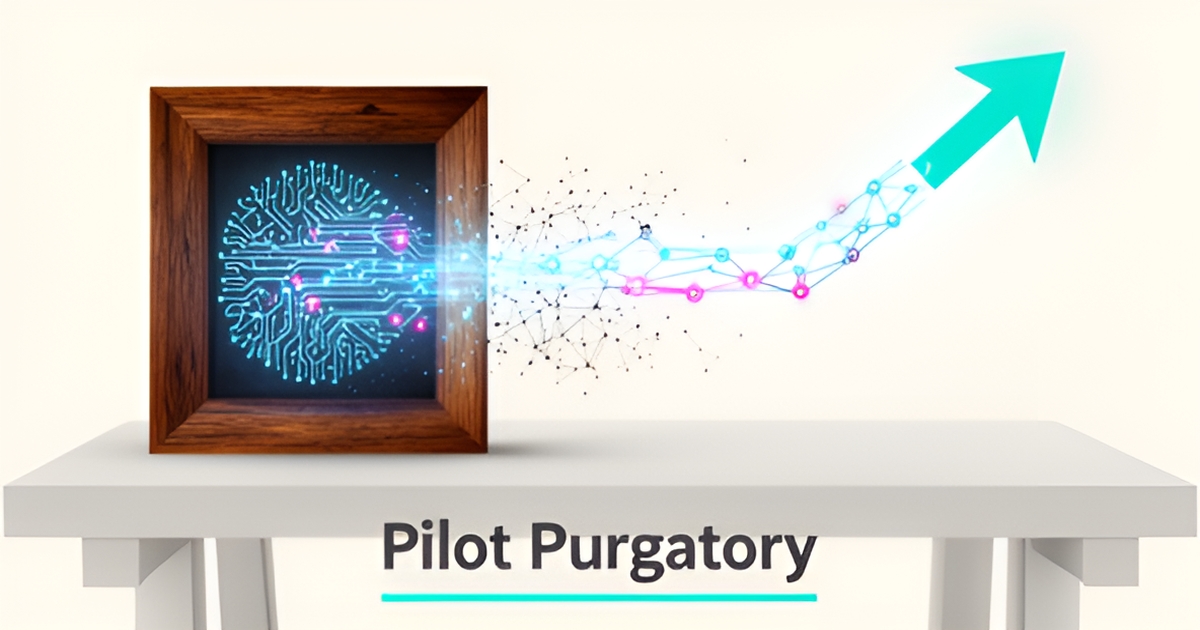
Framing shops don’t fail at AI because the models aren’t good enough. They fail because the pilot never ends.
The pattern is familiar across construction SMBs: a chatbot for estimates, a generative tool for quotes, a quick pilot tied to a single workflow. Teams celebrate a working demo, then wait for adoption to happen on its own. That assumption is expensive. Industry analyses as of late 2026 consistently find that the large majority of AI pilots never make it to production, and most organizations deploying generative AI see little measurable return within the first six months.
The root cause isn’t technology; it’s that organizations treat adoption as the last step instead of the first deliverable. Deployment puts a system into an environment. Adoption means people actually use it to change how work gets done. Framing and construction SMBs get stuck in the gap between those two words.
Pilots become permanent science projects because success is defined by output, not outcome. A chatbot that answers questions is shipped. Whether estimators use it daily, whether it cuts rework, whether it reduces labor shortages, is never measured. Construction technology commentary highlights the same risk: focusing on the solution instead of meaningful business outcomes like labor shortages, safety, and rework reduction.
The trap is reinforced by how pilots are scoped:
- No kill criteria or production plan at the start
- Chatbot-first experiments with no integration to CRM, estimating, or job costing
- Adoption assumed after deployment instead of designed before it
- No shared business knowledge built to compound future use cases
In construction, the adoption gap widens between larger GCs and small contractors. Without deliberate change management and training, tools sit unused while field operations stay manual. The result is pilots that demonstrate capability but deliver no measurable value.
Breaking the cycle requires inverting the model. Successful organizations prove business value in 30 days, then scale. That means defining the outcome first — fewer missed calls, faster lead qualification, less rework — and making adoption the first deliverable, not an afterthought.
AIQ Labs approaches AI strategy with this adoption-first lens. Whether it's managed AI staff that handle calls and lead qualification from day one, or a rebuild of the one workflow that costs you the most, change management and training are treated as core to delivery, not add-ons.
When adoption is designed up front, pilots stop being traps and start being the first step toward a system that actually gets used.
Outcome-First Alignment Beats Tool-First Hype
The framing industry chases tools like they're magic wands—new estimating software, automated cutters, AI design assistants—then wonders why the shop floor still runs on chaos. The pattern repeats across every trade: technology lands, adoption stalls, and the real problems—labor gaps, rework, burnout—keep compounding.
Construction leaders who've cracked the code share a counterintuitive insight: focus on the outcome, not the solution. The firms gaining ground aren't buying AI for its own sake; they're targeting labor shortages, safety incidents, and rework reduction with precision.
- Offload repetitive layout and measurement tasks that drive veteran burnout
- Catch design conflicts before they become expensive field changes
- Give apprentices digital guidance that accelerates skill development
- Turn tribal knowledge into searchable, scalable operational intelligence
The alternative is expensive theater. Across industries, companies have burned millions on AI platforms that lacked strategic clarity and pilot discipline—accurate models that were never connected to the interventions that would make them valuable. Technical excellence without business alignment isn't just waste; it erodes organizational trust and makes the next initiative harder to sell internally.
The gap isn't technical—it's architectural. AIQ Labs structures every engagement around outcome-first alignment: discovery that maps bottlenecks to ROI, milestone-based builds that prove value before scaling, and adoption programs that turn AI from experiment into operating muscle. The shops that win don't ask "what AI tool should we buy?" They ask "which outcome, if solved, changes everything?"
Build Capability and Human-AI Collaboration Before Deployment
Framing shops often buy AI tools hoping for instant efficiency, then wonder why crews ignore them. The failure point is rarely the model; it is the absence of people readiness before deployment.
Capability building must precede tool deployment because adoption determines value, not installation. Documented adoption patterns show successful organizations invested in people and capability building before deploying AI tools, while failures occurred when organizations bought tools without building necessary capabilities.
Organizations that sequence this way—building internal expertise and governance before rolling out tools—consistently report higher pilot-to-production success rates and faster time to value. That contrast is stark against the common pattern where most pilots quietly die after the demo.
The cost of skipping readiness shows up in human-AI collaboration. Expensive platforms get shelved when the people expected to use them were never trained, consulted, or given a reason to trust them. Technical accuracy can exist while organizational readiness does not—and the tool loses.
Human-AI collaboration is essential because projects that focused solely on technology without addressing human collaboration and organizational readiness consistently fail. The pattern repeats across sectors: leadership alignment determines outcomes, and integration with business goals is non-negotiable.
For framing operations, that means capability work is not soft work. It is the structural foundation for deployment.
- Map roles and workflows before selecting tools, so AI augments rather than disrupts field processes
- Build internal skills with change management and training aligned to real job tasks
- Run disciplined pilots with clear kill criteria and measurable adoption metrics, not just accuracy metrics
- Design human-in-the-loop controls and feedback loops so crews shape the system they will use
AIQ Labs approaches every engagement with this sequencing in mind, aligning AI with business goals and managing human-AI collaboration through training and governance rather than tool-first rollouts. When capability leads deployment, pilots convert to production and teams use the system to change how work gets done.
An Adoption-First Playbook for Framing Shops
The gap between deploying AI and actually adopting it accounts for enormous unrealized value. Research consistently shows most AI pilots never reach production, and enterprises take nine-plus months to move a single use case from pilot to production while smaller, focused teams often do it in around 90 days. Most framing shops stall because they treat adoption as a final step rather than the first deliverable.
- Assessment & Strategy: Map high-ROI workflows, model ROI, and design a phased roadmap before writing code
- Custom AI Agent Development: Build multi-agent systems that own outcomes end-to-end
- Integration: Connect agents to your CRM, accounting, scheduling, and communication stack
- Governance & Compliance: Embed audit trails, human-in-the-loop controls, and data privacy from day one
- Adoption & Change Management: Role-based training, feedback loops, and performance metrics that prove value
This mirrors the phased approach AIQ Labs uses to move clients up the AI maturity curve—from exploration to transformation—without the pilot purgatory that traps most initiatives. AIQ Labs offers three entry points that de-risk the first step: Start Monthly with a single managed AI Employee like a receptionist or SDR, Build in Milestones to rebuild the one workflow that costs the most at a fixed price, or Own It Outright with a connected operating layer built in phases and owned completely. Each includes build, training, integrations, and ongoing optimization so adoption isn't an afterthought.
Still paying for 10+ subscriptions that don’t talk to each other?
We build custom AI systems you own outright. No vendor lock-in. Full control.
Not sure where to start? Ask our AI planner
Frequently Asked Questions
Why do framing shops get stuck in AI pilots that never go live?
What’s the pilot trap and how do I avoid it?
Should I buy an AI tool first or define an outcome first?
Why does capability building need to come before deployment?
What does a successful pilot-to-production path look like?
How long does it really take to move an AI use case from pilot to production?
Turning AI Experiments into Real Shop Floor Impact
Most framing shops don’t fail at AI because the technology falls short—they fail because they treat adoption as an afterthought instead of the first deliverable. As we’ve seen, most AI pilots never reach production, not because the models are weak, but because success was measured by output, not outcome. The shops that break this cycle start by defining the business result they want—fewer missed calls, faster estimating, less rework—and then build capability, train teams, and design human-AI collaboration before any tool is deployed. When adoption is engineered from the start, pilots stop being science projects and become the foundation of real operational change. If you’re ready to move beyond AI experiments and start seeing measurable impact on your framing business, the first step is a clear-eyed look at where AI can actually move the needle. Start the Fit Check to identify your highest-ROI automation opportunity in just two minutes—then let’s talk on a free 30-minute strategy call about what a real working session could uncover.
Make AI your competitive advantage — not just another tool.
Strategy, implementation and ongoing optimization. One partner, end to end.
Not sure where to start? Ask our AI planner