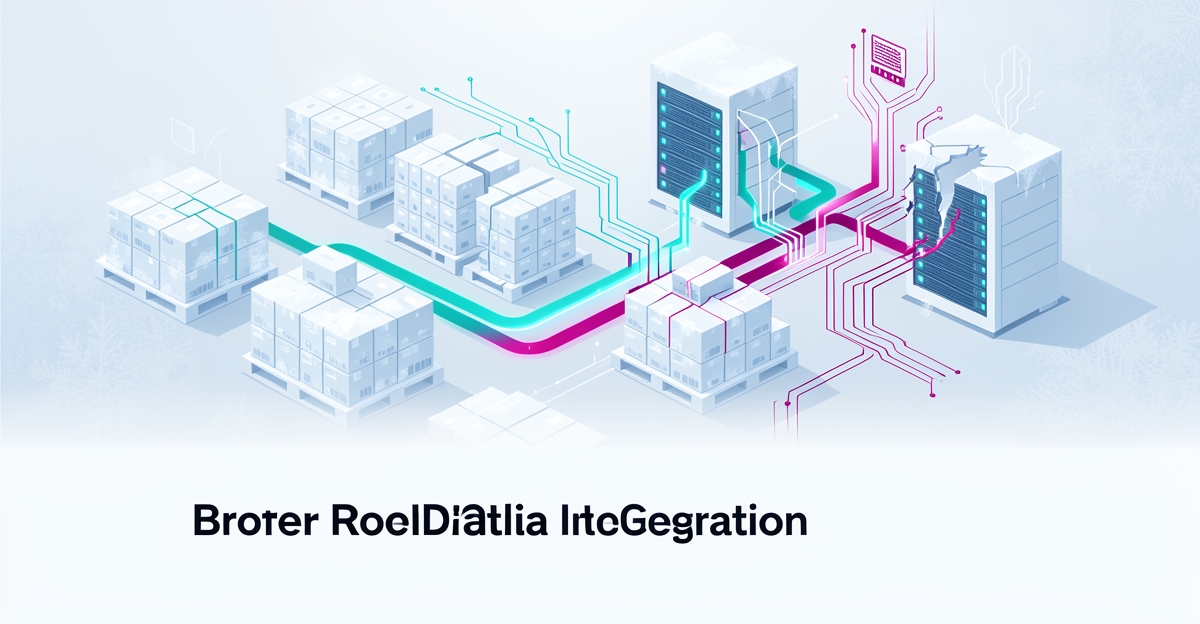
Why Most Frozen Food Companies Fail at AI: The Hidden Pitfalls of Poor Data Integration
Key Facts
- Industry analysis commonly cites 60–70% of AI initiatives in the food industry stalling before reaching production
- Surveys in recent years have found a majority of frozen food executives planning to expand AI investments
- AI adoption in frozen food manufacturing has accelerated sharply, with double-digit annual growth widely projected through 2030
- Inventory management remains one of the most common first AI use cases among frozen food companies
- Widely cited industry figures include ~25% efficiency gains on frozen pizza lines and ~40% labor cost reductions in frozen packing
- Stockout reductions of up to 70% are frequently reported where forecasting acts on unified data
Hire a team member that works 24/7 — for less than a part-time wage.
AI receptionists, SDRs, dispatchers and 99+ roles. Trained on your business, fully managed.
Not sure where to start? Ask our AI planner
The Stalled Majority: Why 60-70% of Food Industry AI Projects Never Reach Production
There's a strange tension running through the frozen food industry right now. On one side, ambition: industry surveys in recent years have consistently found a majority of frozen food executives planning to expand their AI investments, and analysts project strong double-digit growth for AI-driven operations in the sector through 2030. On the other side, reality: industry analysis commonly estimates that 60–70% of AI initiatives in the food industry stall before they ever reach production.
That gap between ambition and execution isn't a small leak, it's a hemorrhage. Companies are funding pilots, hiring vendors, and running proofs-of-concept, then watching those projects quietly die in a folder somewhere between "demo" and "deployed." The money doesn't disappear in the model. It disappears in the plumbing underneath it.
Here's the thesis this article will keep returning to: the AI isn't what fails, the data infrastructure underneath it is. A demand forecasting model is only as good as the inventory feeds it can actually read. A quality-control system is only as sharp as the production data it receives. When those inputs are trapped in silos or locked inside legacy ERPs, even the most sophisticated algorithm produces garbage.
The failure pattern looks remarkably consistent across companies:
- Production, inventory, and sales data live in disconnected systems that were never designed to talk to each other
- Legacy ERP platforms can't support the real-time data exchange modern AI requires
- Poor data hygiene, duplicates, gaps, stale records, corrupts model inputs before training even begins
- Pilots run on clean, manually prepared data that no production environment can replicate
The stakes are real. Where AI works in frozen food operations, widely cited industry figures include efficiency gains of roughly 25% on frozen pizza lines and labor cost reductions of around 40% in frozen packing. These aren't marginal improvements, they're the difference between competitive and obsolete. And with industry analysts calling AI "table stakes" in food manufacturing, the companies that stall aren't just missing an opportunity; they're falling behind peers who fixed their foundations first.
This is precisely the problem AIQ Labs sees most often when working with mid-sized manufacturers: the gap between a promising pilot and a production system almost always traces back to integration between production, inventory, and sales systems, not the intelligence layer on top. Fix the plumbing, and the AI finally has something to work with.
The sections that follow break down exactly where that plumbing breaks, and how to fix it before your next seven-figure AI investment joins the stalled majority.
Four Silent Killers: Siloed Data, Legacy ERPs, Poor Data Hygiene, and Change-Management Gaps
When AI projects fail in frozen food manufacturing, they rarely fail loudly. They fail quietly, in the gaps between systems, in stale spreadsheets, and in training sessions nobody attended. Industry analysis consistently attributes the 60–70% stall rate to four failure modes.
Killer #1: Siloed Data. AI models are only as good as the data flowing into them. When production lines, inventory management, and sales systems operate in disconnected silos, AI has no unified view of the operation. A demand forecast built on sales data alone can't account for real-time production capacity, and an inventory model blind to order pipelines is guessing, not predicting. Inventory management has become one of the most common first AI use cases in frozen food, and the winners are the companies whose systems actually talk to each other.
Killer #2: Legacy ERP Constraints. Many frozen food manufacturers run on ERP systems designed decades before AI existed. These platforms often lack modern APIs and can't support the real-time data exchange AI requires. The result is batch exports, manual re-keying, and models trained on yesterday's data. This is why implementation guidance for food companies increasingly recommends composable architecture, modular, integration-friendly systems that scale with AI rather than resist it.
Killer #3: Poor Data Hygiene. AI requires high-quality data to function effectively, yet most manufacturers discover this only after a model produces nonsense. Duplicate SKUs, inconsistent temperature log formats, and uncleaned historical records poison predictions before they're ever made. The fix is unglamorous: audit and clean data sources before a single model is trained. Companies that skip this step are building on sand.
Killer #4: Change-Management Gaps. Even technically successful deployments die when the floor team ignores them. If line supervisors don't trust a forecast, they'll override it. If planners weren't trained on new workflows, they'll revert to spreadsheets. Human-centric rollout, comprehensive training, clear communication, and feedback loops, is what separates adopted systems from shelfware.
The pattern across all four killers is the same: AI failure is usually an integration failure, not an algorithm failure. That's why firms like AIQ Labs focus on building robust, enterprise-grade pipelines that connect production, inventory, and sales systems into a single source of truth before any AI is layered on top. Address the plumbing first, and the models finally have something worth predicting with.
- Disconnected production, inventory, and sales systems starve models of clean, unified data
- Legacy ERPs without modern APIs block the real-time exchange AI depends on
- Uncleaned, inconsistent data corrupts predictions before models even launch
- Missing training and change management turn working systems into ignored ones
The Composable Architecture Fix: Connecting Production, Inventory, and Sales Into One Data Pipeline
Siloed production logs, inventory spreadsheets, and sales forecasts are the reason most frozen food AI projects stall. Industry analysis points to data that never flows between systems as the dominant cause of the 60–70% stall rate.
The fix starts with the data foundation, not the model. A strong pipeline begins with auditing and cleaning sources across production, inventory, and sales to remove the poor data hygiene that undermines AI accuracy. Companies that build this foundation first can then connect systems with real-time exchange instead of manual exports.
Composable architecture replaces brittle point solutions with modular, API-first integration. Rather than quick-fix tools that promise fast deployment but can't scale, a composable approach enables deep two-way API integrations that keep production schedules, inventory levels, and sales demand in sync continuously.
This architecture delivers the outcomes frozen food leaders are chasing. Widely cited industry figures include a ~25% efficiency gain from AI on frozen pizza lines and a ~40% labor cost reduction via AI in frozen packing, and as more companies adopt AI for inventory management, the pressure to scale is intensifying.
A connected pipeline makes those gains repeatable:
- Audit and clean production, inventory, and sales data sources to create a single source of truth
- Design composable architecture with deep two-way API integrations for real-time data exchange
- Unify demand forecasting, lot tracking, and replenishment into one operational workflow
- Monitor data quality continuously to prevent model drift and compliance risk
The contrast with point solutions is stark. Traditional implementations offer fast deployment and low upfront costs but carry limited scalability and high maintenance. Composable architecture requires higher upfront investment but delivers scalable, flexible, and adaptable systems that grow with the business.
AIQ Labs works in this category by specializing in seamless integration between production, inventory, and sales systems using robust, enterprise-grade pipelines. For teams that want to start smaller, managed options like AI Employees can take over the manual data entry and reporting work that silos create today, while a phased rebuild connects the underlying systems. The approach mirrors best practices for AI adoption: building strong data foundations and adopting composable architecture to enable real-time exchange and integration.
When production, inventory, and sales speak the same language in real time, AI stops being a pilot and starts driving measurable efficiency, waste reduction, and demand responsiveness across the frozen food value chain.
Your 90-Day Integration Roadmap: From Data Audit to Production AI That Actually Ships
Most frozen food companies jump into AI without understanding the state of their data, which dooms projects before they begin. A solid 90-day roadmap starts with a clear-eyed assessment of your current infrastructure and ends with a production-ready use case that delivers measurable value.
Begin by auditing your data sources, systems, and integration points to uncover silos, inconsistencies, and gaps that undermine AI reliability. This foundational step is critical because poor data hygiene remains a leading cause of stalled initiatives, with the commonly cited 60–70% stall rate in food manufacturing traced largely to preventable data issues. Once you've mapped your landscape, select one high-impact use case, inventory forecasting is a frequent choice among frozen food companies, to focus your initial effort and build momentum.
Next, prepare your data layer by cleaning, standardizing, and connecting key systems like ERP, WMS, and sales platforms through robust, enterprise-grade pipelines. This ensures your AI model receives accurate, timely inputs for reliable predictions. After development, rigorously test the solution in a controlled environment, validate its accuracy, and quantify ROI using metrics like reduced stockouts or lower excess inventory. Finally, scale with a human-centric rollout that includes role-specific training, clear communication, and feedback loops to drive adoption and minimize disruption. This phased approach turns AI from a risky experiment into a repeatable capability that ships real results. Start the Fit Check to assess your readiness and identify your highest-ROI automation opportunity.
What Winning Looks Like: The Payoff of Getting Integration Right
When frozen food companies finally connect their data streams, production, inventory, and sales, the payoff isn't incremental; it's transformative. AI-powered integration unlocks measurable gains that reshape operations from the factory floor to the freezer aisle. Widely cited industry figures include a ~25% efficiency gain on frozen pizza lines and a ~40% reduction in labor costs in packing when AI models act on unified, real-time data. These aren't theoretical improvements, they're the result of eliminating manual handoffs and enabling predictive adjustments across synchronized systems.
The ripple effects extend beyond the line. With accurate, integrated forecasting, industry reporting frequently cites stockout reductions of up to 70%, reducing lost sales and emergency rush orders. Inventory carrying costs fall as AI optimizes reorder points based on actual consumption patterns, not guesswork. Meanwhile, sales and marketing teams gain access to demand signals that fuel smarter promotions and new product development, setting the stage for the industry-wide shift toward personalization, as consumer insight flows seamlessly into production scheduling.
This is where AIQ Labs' approach to enterprise integration delivers outsized value. By building deep, two-way API connections between ERP, MES, and CRM platforms, we ensure AI doesn't just analyze data, it acts on it. Our custom workflow automation eliminates 20+ hours weekly of manual data entry, while predictive inventory models reduce excess stock by 40% and improve cash flow. These capabilities aren't add-ons; they're foundational to turning AI potential into persistent advantage.
The path forward starts with clarity, not commitment. A free 30-minute strategy call reveals where your data silos are costing you most, and where integrated AI can deliver the fastest, highest-impact wins. There's no pitch, just a working session to map your biggest bottleneck and quantify the upside. If there isn't a clear path to ROI, we'll say so. Take the first step: Start the Fit Check to unlock your strategy session.
Still paying for 10+ subscriptions that don’t talk to each other?
We build custom AI systems you own outright. No vendor lock-in. Full control.
Not sure where to start? Ask our AI planner
Frequently Asked Questions
Why do most AI projects in the frozen food industry fail before reaching production?
What is composable architecture and why is it recommended for AI in food manufacturing?
How can poor data hygiene ruin an AI model before it even starts?
What measurable results have frozen food companies seen from successful AI integration?
Is AI becoming necessary to stay competitive in frozen food manufacturing?
What should a frozen food company do first before starting an AI project?
Fix the Plumbing Before You Buy the Brain
The gap between AI ambition and production results in frozen food isn't a modeling problem, it's an integration problem. Pilots stall because production, inventory, and sales data remain siloed, legacy ERPs block real-time exchange, poor data hygiene poisons inputs, and teams aren't brought along for the change. When those foundations are fixed with a clean data audit, composable API-first architecture, and human-centric rollout, AI stops being shelfware and starts delivering measurable gains like efficiency and waste reduction. That's the pattern AIQ Labs sees repeatedly with mid-sized manufacturers: the fastest path to value is connecting systems into a single source of truth before layering intelligence on top. If you're planning your next AI investment, start with integration readiness, not model selection. Start the Fit Check at https://aiqlabs.ai/apply for a free 30-minute strategy session to map your biggest data bottleneck and quantify the highest-ROI opportunity. If there isn't a clear win, we'll say so.
Make AI your competitive advantage — not just another tool.
Strategy, implementation and ongoing optimization. One partner, end to end.
Not sure where to start? Ask our AI planner