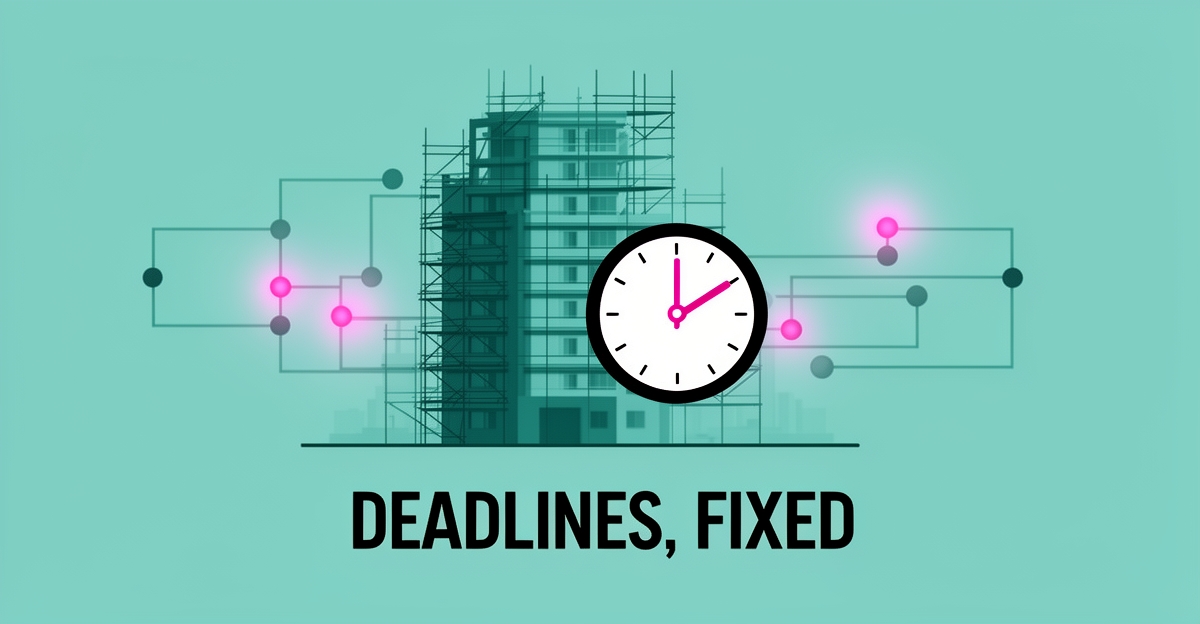
Why Most General Contractors Still Miss Project Deadlines (And How AI Can Fix It)
Key Facts
- Deadline overruns are typically caused by compounding small breakdowns—fragmented task tracking, unanswered RFIs, and manual permit checks—not one big failure
- AI workflow automation can monitor timelines continuously and flag risks before they become delays, instead of waiting for problems to surface
- Industry analyses from recent years suggest AI-driven cost estimation and procurement can meaningfully reduce budget overruns and material costs
- As of the mid-2020s, most construction firms were still piloting AI rather than fully implementing it—meaning the proactive advantage remains wide open
- The global AI in construction market has been projected to grow roughly tenfold between 2023 and 2030, reflecting sustained investment momentum
- AIQ Labs has deployed 200+ multi-agent systems and runs 4 live SaaS products daily—automation is production work, not experimentation
Hire a team member that works 24/7 — for less than a part-time wage.
AI receptionists, SDRs, dispatchers and 99+ roles. Trained on your business, fully managed.
Not sure where to start? Ask our AI planner
The Deadline Crisis: Why Communication Breakdowns Derail Construction Projects
Missed deadlines have become the norm on construction sites, and the cost is measured in lost margin, strained subcontractor relationships, and reputational damage. Poor visibility across a project is rarely one big failure; it is a chain of small breakdowns that compound until the schedule collapses.
Fragmented task tracking creates the first crack. When schedules live in spreadsheets, field notes, and separate PM tools, no one has a single source of truth. AI-powered project management tools are increasingly used to automate routine tasks and improve planning, yet as of the mid-2020s most construction companies were still piloting AI rather than fully implementing it.
Delayed subcontractor communication accelerates the drift. RFIs sit unanswered, change orders move by email, and site updates arrive days late. AI-powered tools are now being used to track permits, organize job site photos, and automate subcontractor communication—saving time and preventing costly delays. Without that automation, teams chase information instead of executing work.
Manual permit management adds another bottleneck. Permit status is checked by phone or portal, approvals are missed, and inspections are scheduled late. The result is idle crews and cascading resequencing that pushes every downstream milestone.
Poor visibility creates predictable financial pain. Industry analyses from recent years suggest AI cost estimation tools can meaningfully reduce budget overruns, and AI-driven procurement optimization can trim material costs through predictive bidding. When tracking is manual, those savings are lost to rework and overtime.
The industry is waking up to the risk. Surveys through 2023 and 2024 showed a majority of construction executives already using or evaluating AI for risk management, with a substantial share of firms planning to increase AI investment. Adoption is growing because traditional methods cannot keep pace with modern timelines.
Common breakdown points that derail schedules include:
- Disjointed task tracking across spreadsheets, field apps, and PM platforms
- Delayed subcontractor communication and unanswered RFIs
- Manual permit tracking and inspection scheduling
- Lack of real-time visibility into budget and resource constraints
These gaps make proactive management impossible. Teams react to problems after they have already cost days.
AI-powered workflow automation can proactively manage timelines by syncing with project management tools, assigning tasks automatically, and sending real-time updates to owners, subs, and field crews. AIQ Labs builds AI Workflow Builds that integrate with existing PM stacks to ensure on-time delivery without forcing teams to change how they work.
The AI Advantage in Construction Project Management
The gap between construction's AI ambitions and actual results is where deadlines continue to die. Surveys in recent years found most construction executives already using or evaluating AI for risk management, yet only a small minority of companies had fully implemented these technologies. That means most firms are getting a fraction of the benefit while projects still slip.
The difference comes down to proactive versus reactive management. Traditional project management waits for problems to surface—a missed permit, a delayed subcontractor, a budget overrun—before anyone intervenes. AI-powered workflow automation flips that model by monitoring timelines continuously and flagging risks before they become delays. Current work on AI agents in project management shows these tools automate routine tasks, track permits, organize job site photos, and handle subcontractor communication, saving time and preventing costly schedule impacts.
Intelligent task assignment is one of the most immediate wins. Instead of a project manager manually distributing work orders and hoping nothing falls through the cracks, AI systems assign tasks based on availability, skill sets, and current project status. Automated reminders and escalation rules ensure that when a task stalls, the right person knows within minutes—not days later during a site walk.
Permit tracking is another area where automation removes a common deadline killer. Permit delays are notoriously difficult to manage manually because approvals sit with external agencies and status information is scattered. AI systems can monitor permit status continuously, automatically chase follow-ups, and alert project teams the moment an approval or rejection comes in, keeping the schedule moving.
Real-time subcontractor updates close the communication loop that email chains and voicemails leave open. AI agents can send automated status requests, confirm material deliveries, and sync updates directly into project management platforms, giving every stakeholder a single, current view of the job. Firms that automate this coordination also see financial benefits: industry reports suggest AI procurement optimization can save on material costs through predictive bidding, while automated invoicing cuts billing errors and administrative overhead. AI cost estimation tools have been shown to reduce budget overruns—overruns that frequently trigger schedule extensions.
The adoption curve is accelerating. Through 2023 and 2024, roughly half of construction companies were piloting AI technologies, and a substantial share of firms planned to increase AI investment by double digits. Market forecasts project the global AI in construction market to grow roughly tenfold between 2023 and 2030.
For contractors ready to move beyond piloting, the key is custom integration with the tools they already use. This is the approach AIQ Labs takes—deploying AI workflow systems that sync directly with existing project management platforms, automating task assignment, permit tracking, and subcontractor communication so timelines are managed proactively rather than repaired after the fact.
- Automated permit tracking that flags approvals and delays the moment they occur
- Intelligent task assignment based on availability, skills, and live project status
- Real-time subcontractor updates synced directly into project management tools
- Cost estimation and invoicing automation that keeps budgets and billing aligned
The evidence is clear: AI won't fix missed deadlines on its own, but contractors who fully implement it gain the proactive control that reactive scheduling never provides. The firms that have crossed that line are already building the advantage the rest will spend the next decade chasing.
Beyond Deadlines: Safety, Sustainability, and the Cost of Waiting
Missed deadlines rarely stay isolated. Once schedules slip, safety exposure rises, material waste compounds, and carbon costs accumulate across the entire project.
AI is shifting the focus beyond on-time delivery to measurable gains in safety and sustainability. Industry analysis shows AI improving safety by detecting unsafe behaviors such as missing helmets or harnesses and sending real-time alerts to supervisors. AI-powered wearables and CCTV analytics monitor sites continuously, turning reactive incident response into proactive prevention.
Sustainability benefits run parallel. Technology research notes AI helps reduce waste and lower carbon emissions by optimizing material use, simulating energy efficiency in buildings, and predicting potential environmental impacts. Procurement optimization driven by AI is already trimming material costs through predictive bidding, while cost estimation tools help keep budget overruns in check.
The market momentum reflects this broader value. The global AI in construction market was valued at roughly USD 1.09 billion in 2023 and has been projected to reach around USD 10.37 billion by 2030. Surveys through 2023 also showed most construction executives using or evaluating AI for risk management, with a substantial share of firms planning to increase AI investment.
Adoption is not frictionless. The cost of implementing AI-powered tools and systems remains a barrier, alongside limited availability of skilled workers to implement and maintain them. As of the mid-2020s, only a minority of construction companies had fully implemented AI technologies, while roughly half were piloting them.
Where workflow automation is applied, the secondary gains compound quickly:
- Real-time safety monitoring via wearables and CCTV analytics that flag at-risk behavior instantly
- Material optimization that reduces waste, lowers carbon emissions, and improves budget accuracy
- Automated permit tracking, photo organization, and subcontractor communication that prevent costly delays
These outcomes align with how AI-powered workflow automation manages timelines by proactively assigning tasks and sending real-time updates. At AIQ Labs, custom AI systems sync with project management tools to ensure on-time delivery while embedding safety and sustainability controls into daily operations. The result is fewer delays, lower risk, and measurable environmental impact without adding headcount.
Implementing AI Workflow Automation: From Pilot to Production
AIQ Labs helps construction firms move beyond pilot projects with AI Workflow Builds—rebuilding the one workflow that costs the most, at a fixed price, in phases. Starting with high-impact areas like subcontractor communication and permit tracking ensures quick wins and measurable timeline improvements. The approach focuses on practical implementation—fixing one broken workflow at a time—without requiring businesses to overhaul their entire tech stack or commit to vendor lock-in.
Many general contractors still struggle with delayed communication and manual task tracking, which directly contribute to missed deadlines. AI-powered workflow automation addresses these gaps by automatically assigning tasks, sending real-time updates, and flagging potential delays before they escalate. AI tools are already being used to track permits, organize job site photos, and automate subcontractor communication—saving time and preventing costly delays. This targeted automation reduces the administrative burden that pulls teams off critical path activities.
The process begins with a deep dive into a contractor's current workflows to identify the single highest-impact area for AI intervention. Whether it's automating permit status checks across municipal portals or triggering subcontractor alerts when dependencies shift, each solution is built to sync seamlessly with platforms like Procore, Autodesk Construction Cloud, or Buildertrend. The system operates in the background, ensuring no disruption to ongoing projects while delivering immediate operational clarity.
Implementation follows a phased, milestone-based model—discovery and architecture, development and integration, then deployment and training. Contractors can start with a single workflow fix, such as AI-driven permit tracking, and expand toward a full AI Operating System—one connected operating layer, built in phases and owned outright—as confidence grows. Throughout, AIQ Labs provides transparent progress checks, performance monitoring, and the flexibility to pause or adjust engagement at any phase. Payment follows the same logic: Start Monthly, Build in Milestones, or Own It Outright—no fake prices, no surprises.
This approach eliminates the risk of large upfront investments while delivering production-ready AI that contractors truly own. By focusing on specific pain points first—like reducing delays in approval chains or eliminating manual data entry between field teams and offices—firms see faster ROI and build internal momentum for broader AI adoption. The result is a scalable, self-owned automation system that evolves with the business, not a black-box subscription that creates dependency.
For contractors ready to move from AI experimentation to reliable, on-time project delivery, AIQ Labs offers a clear path forward: start with the 2-minute Fit Check at aiqlabs.ai/apply, then book a free 30-minute strategy call to map your highest-ROI workflow and build automation on your own terms.
Still paying for 10+ subscriptions that don’t talk to each other?
We build custom AI systems you own outright. No vendor lock-in. Full control.
Not sure where to start? Ask our AI planner
Frequently Asked Questions
Why do general contractors keep missing deadlines even with project management software?
Is AI actually being used in construction, or is it just hype?
Can AI really save money on construction projects, not just time?
What's the biggest bottleneck AI fixes for missed deadlines?
Will AI replace my project managers?
How fast is the construction AI market growing?
From Reactive Repairs to Proactive Delivery
Missed deadlines in construction rarely stem from one failure; they compound from fragmented tracking, delayed subcontractor communication, manual permit management, and poor real-time visibility. The result is lost margin, strained relationships, and schedules that are repaired instead of managed. AI-powered workflow automation changes that pattern by syncing with existing project management tools to assign tasks intelligently, track permits continuously, and push real-time updates to owners, subs, and crews before delays escalate. Contractors who move beyond pilots are already seeing proactive control, lower risk, and gains in safety and sustainability alongside on-time delivery. And the market is accelerating, with the global AI in construction market projected to grow roughly tenfold between 2023 and 2030. If you want to identify where automation will have the fastest impact on your projects, start the 2-minute Fit Check at aiqlabs.ai/apply, then book a free 30-minute strategy call to map your highest-ROI workflow without changing how your teams work.
Make AI your competitive advantage — not just another tool.
Strategy, implementation and ongoing optimization. One partner, end to end.
Not sure where to start? Ask our AI planner