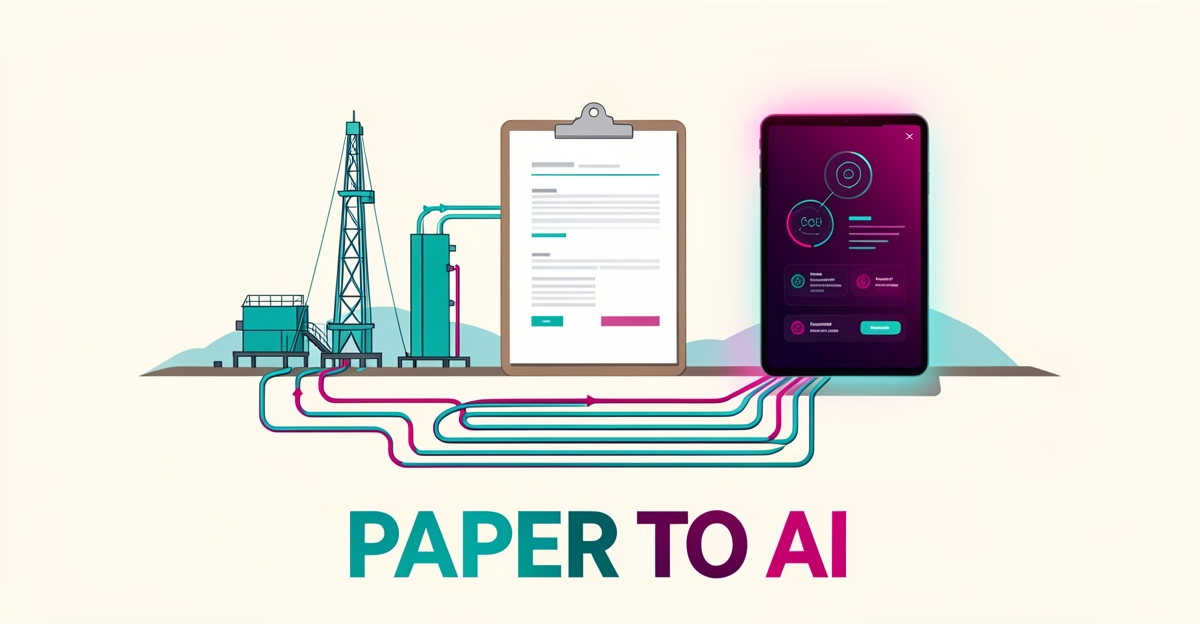
Why Most Geothermal Installers Still Rely on Paper Estimates (And How AI Fixes It)
Key Facts
- Global geothermal power capacity has been growing steadily, with roughly 16 gigawatts installed worldwide as of 2025 according to Wikipedia.
- The United States has thousands of megawatts of installed geothermal capacity and is among the world leaders per Geothermal Rising.
- US geothermal capacity could grow substantially by 2050 under favorable policy and market conditions according to Geothermal Rising.
- Long-range projections point to tens of millions of geothermal heat pumps serving US homes by 2050 from Geothermal Rising.
- Paper-based estimates cause lost data and delayed quotes per Carnegie Endowment research.
- Inconsistent pricing from manual estimates hinders geothermal scaling according to Carnegie Endowment.
Hire a team member that works 24/7 — for less than a part-time wage.
AI receptionists, SDRs, dispatchers and 99+ roles. Trained on your business, fully managed.
Not sure where to start? Ask our AI planner
The Hidden Cost of Paper-Based Estimates in Geothermal Workflows
Geothermal installers using paper estimates often face significant workflow disruptions that directly impact customer trust and project timelines. A Carnegie Endowment for International Peace study confirms that paper-based systems frequently result in lost data and delayed quotes, creating bottlenecks before work even begins. These delays not only frustrate homeowners waiting for pricing but also reduce the number of jobs installers can realistically take on in a given week.
Inconsistent pricing further compounds the problem, as field technicians may apply different assumptions or overlook site-specific variables when calculating costs manually. Without standardized inputs like real-time soil conditions, local utility rates, or precise loop length measurements, quotes can vary widely for similar installations. This variability erodes confidence in the installer’s expertise and makes it difficult for customers to compare offers fairly. The same research highlights how these inefficiencies hinder broader adoption of geothermal systems, even as demand for efficient heating and cooling grows.
AI-powered estimate generation addresses these gaps by integrating field data directly into the quoting process, ensuring accuracy and consistency from the first customer interaction. By automating calculations based on actual site conditions and regional energy costs, AI eliminates guesswork and reduces turnaround time from days to minutes. This shift not only improves operational efficiency but also strengthens customer trust through transparent, reliable pricing, critical factors in scaling geothermal HVAC installations sustainably.
How AI-Powered Estimation Eliminates Manual Bottlenecks
Paper estimates slow geothermal installers down at the exact moment speed wins jobs. Manual quoting creates lost data, delayed quotes, and inconsistent pricing that makes scaling geothermal energy difficult, according to Carnegie Endowment research.
AI-powered estimation replaces clipboard math with real-time field data, site conditions, and local energy costs. The automated process improves accuracy and consistency while removing manual data entry and calculation errors, an approach AIQ Labs has applied across 200+ deployed multi-agent systems in field services automation.
Field teams capture site measurements once and the system builds the estimate instantly. Drilling depth, loop configuration, soil thermal conductivity, and access constraints feed into a model that prices labor, materials, and equipment in real time. Local energy costs and utility incentives are pulled automatically so quotes reflect true payback for the homeowner.
The result is a consistent quote experience across crews and territories. Real-time field data eliminates rework from incomplete notes, and automated calculation removes transcription mistakes that drive margin erosion. Installers can respond to leads while the customer is still on site.
With global geothermal capacity around 16 gigawatts as of 2025 and the US among the world leaders in installed capacity, demand for ground-source heat pumps is growing. Long-range projections point to substantial growth in US geothermal capacity and heat pump installations by 2050, which means more estimates, more crews, and more pressure on quoting workflows that were never designed to scale.
AIQ Labs builds tailored AI systems to replace outdated paper processes with reliable digital workflows. If estimating is the one workflow costing you the most, AI Workflow Builds rebuild it at a fixed price, in phases. The approach mirrors how geothermal itself works: absorb heat from rocks and draw it up through wells to the surface, then convert it to useful output.
Automated estimation removes the bottlenecks that keep installers paper-bound:
- Lost data and delayed quotes are eliminated as field inputs sync directly to the estimate engine
- Inconsistent pricing is standardized across crews using site conditions and local energy costs
- Manual data entry and calculation errors drop as AI validates inputs and applies pricing rules
- Quote turnaround shortens from days to minutes, improving close rates in competitive markets
The system also creates an audit trail for every assumption. Site photos, soil reports, and energy rate inputs are attached to the quote, so sales and installation teams work from the same source of truth. That transparency reduces disputes and accelerates permitting.
For a growing industry where operational consistency is a real growth lever, AI-powered estimate generation turns a fragmented manual step into a repeatable, data-driven workflow that supports expansion without adding headcount.
From Paper to AI: Implementing Smart Estimation in Your Geothermal Business
Transitioning from paper-based estimates to AI-powered systems requires a clear, actionable plan that addresses immediate pain points while building long-term efficiency. Geothermal installers can begin by digitizing their current workflow, scanning existing paper forms, standardizing data fields, and identifying integration points with tools like CRM or scheduling software. This foundational step ensures AI systems have clean, structured inputs to work with, reducing errors from manual transcription and enabling real-time data capture in the field. Research shows that lost data and delayed quotes are among the top inefficiencies in paper-based estimating, making this phase critical for recovery.
Next, implement AI-driven estimation in phases, starting with high-volume or error-prone workflows like residential loop sizing or commercial feasibility checks. AIQ Labs’ AI Workflow Builds service specializes in rebuilding the one workflow that costs the most, allowing businesses to automate estimate generation using real-time inputs such as soil thermal conductivity, local utility rates, and site-specific load calculations. By integrating with field tools like GPS-enabled tablets or IoT sensors, AI systems can pull live site conditions and adjust quotes instantly, eliminating guesswork and improving consistency across teams. Inconsistent pricing, another major drawback of paper methods, is directly addressed through standardized AI models that apply uniform logic every time.
Finally, measure ROI by tracking quote turnaround time, revision rates, and closed-won deals before and after implementation. Businesses using AI-powered estimation typically report faster response times and higher accuracy, directly impacting customer trust and project velocity. With AI handling data synthesis and pricing logic, estimators can focus on complex site assessments and client consultation, shifting from administrative overhead to value-driven activities. This workflow redesign not only cuts operational delays but also scales with business growth, turning a historical bottleneck into a competitive advantage. Geothermal energy’s potential to serve millions of homes in the coming decades depends on installers adopting smarter, faster estimating, making AI integration not just an upgrade, but a necessity for industry readiness. If you are ready to see what this looks like for your operation, start with the 2-minute Fit Check or review the payment models, Start Monthly, Build in Milestones, or Own It Outright.
Still paying for 10+ subscriptions that don’t talk to each other?
We build custom AI systems you own outright. No vendor lock-in. Full control.
Not sure where to start? Ask our AI planner
Frequently Asked Questions
Why do most geothermal installers still use paper estimates despite the drawbacks?
How does AI-powered estimation improve accuracy and consistency in geothermal quotes?
What specific inefficiencies does AI eliminate in the geothermal estimating workflow?
Can AI-powered estimation help geothermal businesses scale without hiring more staff?
What steps should a geothermal installer take to transition from paper to AI-powered estimates?
Is there real-world data showing how much geothermal capacity exists or is projected, to justify investing in better estimating tools?
Key Takeaways
The Ground Beneath Us Is Ready, Are You?
Paper estimates don't just slow geothermal installers down, they cap the industry's ability to scale. Lost data, inconsistent pricing, and week-long quote turnarounds aren't operational quirks; they're the reason promising leads go cold before the first shovel hits the ground. AI-powered estimation replaces clipboard math with real-time field data, standardized pricing logic, and quotes delivered in minutes instead of days. If estimating is the workflow costing your business the most, AIQ Labs can rebuild it, fixed price, in phases, owned outright. Start with the 2-minute Fit Check and see what a connected estimating workflow looks like for your operation.
Make AI your competitive advantage — not just another tool.
Strategy, implementation and ongoing optimization. One partner, end to end.
Not sure where to start? Ask our AI planner