Why Most Hardscape Design Firms Fail at AI Adoption, And How to Avoid It
Key Facts
- Industry analysts consistently identify poor-quality data as a leading cause of AI project failure, often cited at around 30% of failed initiatives
- Firms with structured, well-governed data are far more likely to achieve meaningful ROI from AI initiatives
- The generative AI in design market is projected to grow rapidly through the 2030s, based on current industry forecasts
- Construction sector analysts project a significant shortfall of skilled workers by 2030, intensifying pressure to automate manual bottlenecks
- AI won't replace creativity, but it can free your team to focus on the more strategic aspects of your work
- Poor-quality data is widely cited as the number one reason AI initiatives don't meet expectations
Hire a team member that works 24/7 — for less than a part-time wage.
AI receptionists, SDRs, dispatchers and 99+ roles. Trained on your business, fully managed.
Not sure where to start? Ask our AI planner
The Workflow Trap: Why Adding AI to Broken Processes Fails
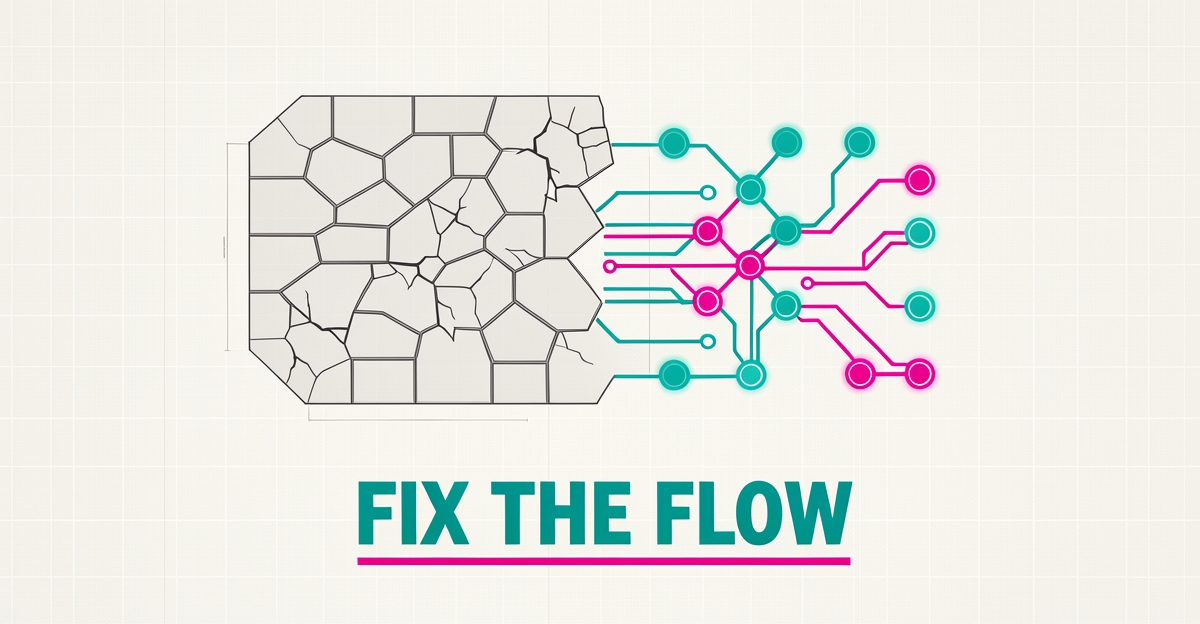
Most hardscape design firms don't fail at AI because the technology is weak. They fail because they layer AI onto workflows that were already broken.
The impulse is understandable. Teams facing manual takeoffs, disconnected estimating tools, and siloed client communication reach for automation as a quick fix. But simply adding AI to a broken process doesn't yield significant value. When the underlying process is inefficient, AI just accelerates waste instead of eliminating it.
In design and construction, this shows up as tools that sit unused. A generative model is bolted onto a takeoff process that still relies on scattered spreadsheets. An estimating chatbot is connected to a CRM that no one updates. The result is more friction, not less, and teams revert to manual work.
The data reinforces the risk. Industry analysts, including Gartner, have repeatedly identified poor-quality data as a leading cause of AI project failure, with figures around 30% commonly cited as of recent years. Poor data is a symptom of poor workflow design. Without a single source of truth for materials, pricing, and client approvals, any AI output is unreliable and quickly distrusted.
Successful adoption starts with workflow redesign, not tool selection. AI won't replace creativity, but it will free you up to focus on the more strategic aspects of your work, and that freedom only comes after repetitive, error-prone steps are mapped, consolidated, and standardized.
Firms that skip this step pay for it in adoption and ROI. Research from consultancies like McKinsey suggests companies with structured, well-managed data are several times more likely to achieve meaningful returns from AI. The multiplier reflects what happens when AI is designed around how teams actually work, not how software vendors imagine they work.
A workflow-first approach looks like this:
- Map the real process from site visit to proposal to change order, not the documented process
- Consolidate data sources so takeoffs, pricing, and client history live in one operational flow
- Identify repetitive decision points where AI can augment, not replace, designer judgment
- Design the AI system to the workflow, then measure time saved and error reduction
This is why a contrarian change management view matters. AIQ Labs avoids the bolt-on trap by starting with the workflow that costs you the most and building AI around how your team actually operates. Workflow optimization must precede automation, otherwise firms automate inefficiency at scale.
The generative AI in design market is projected to grow rapidly through the 2030s, but growth does not guarantee value. Value comes from redesigning the handoff points between design, estimating, and client communication so AI can operate on clean, connected data.
When AI is rooted in redesigned workflows, it stops being a novelty and becomes infrastructure.
The Data Quality Blind Spot: Why Many AI Projects Fail Before They Start
Many hardscape design firms jump into AI adoption with high expectations, only to see their projects stall before delivering value. A critical reason for this early failure lies not in the AI technology itself, but in the quality of the data feeding it. Analysts have consistently flagged poor-quality data as a top reason AI initiatives fall short, a pattern that hits especially hard in design businesses where information is fragmented and inconsistently recorded.
In hardscape firms, data issues are deeply embedded in daily operations. Project histories may vary wildly in format and detail across years, making it impossible for AI to detect reliable patterns. Material specifications are frequently captured as free-form notes or scattered across spreadsheets, lacking the structure AI needs to interpret them accurately. Client preferences, vital for personalized design recommendations, are often buried in email threads or handwritten meeting notes, inaccessible to automated systems. Even cost databases, essential for accurate takeoffs and material ordering, are frequently stale or filled with regional pricing inconsistencies that distort AI-generated estimates.
When AI systems are fed this "dirty data," the outputs become unreliable: material takeoffs miscalculate quantities, design suggestions ignore regional availability, and cost projections drift far from reality. These aren't minor glitches, they erode trust in the technology and undermine adoption efforts before they gain traction. Research consistently shows that organizations with properly structured and managed data are far more likely to achieve significant ROI from AI initiatives.
This is why data readiness must be treated as a prerequisite, not an afterthought. Firms that assess and improve their data foundations, standardizing project logs, structuring material specs, centralizing client insights, and updating cost references, position their AI investments for success. Without this groundwork, even the most advanced AI tools will struggle to deliver meaningful results in real-world design workflows. For hardscape businesses aiming to avoid the common failure pattern, the journey begins not with algorithms, but with clean, consistent, and well-governed data.
From Generic Tools to Purpose-Built Systems: How AIQ Labs Avoids the Pitfalls
Off-the-shelf AI looks fast but creates friction in hardscape design firms. Generic chatbots and image generators add another tab, another subscription, and another place where data lives. The result is tool sprawl, broken handoffs, and little measurable ROI.
The pattern is well documented. Industry analysis consistently finds poor-quality data to be the number one reason AI initiatives don't meet expectations, and firms with structured, managed data are significantly more likely to see a return on their AI investment.
Hardscape workflows amplify the problem. Site assessment, material takeoff, and client proposal generation depend on drawings, site photos, supplier pricing, and field notes that rarely live in one system. Adding a generic tool without fixing those gaps simply automates chaos.
AIQ Labs avoids the pitfalls by starting with workflow, not widgets. The approach begins by identifying the one workflow that costs your firm the most, then rebuilding it with AI in phases, through [AI Workflow Builds](/workflow-builds) at a fixed price. For firms ready to go further, [AI Operating Systems](/ai-operating-systems) connect design, estimating, and client communication into one operating layer you own outright. And for immediate capacity, [AI Employees](/ai-employees) add managed AI staff, from receptionists to dispatchers, at roughly 80% less cost than a human hire.
Assessment comes first. A Fit Check identifies high-impact automation targets across site assessment automation, material takeoff optimization, and client proposal generation. The team evaluates data quality, integration points, and where human judgment must stay in the loop.
From that assessment, custom AI systems are built rather than configured. True ownership means you own the system outright, no vendor lock-in, no tool sprawl. Development focuses on production-ready, scalable applications with deep two-way integrations, and payment models flex with your stage: Start Monthly, Build in Milestones, or Own It Outright. See [pricing](/pricing) for how each model works.
Purpose-built systems align to specific hardscape operations:
- Site assessment automation that ingests photos, plans, and notes to flag conditions and generate scope drafts
- Material takeoff optimization that reconciles designs with supplier catalogs and pricing
- Client proposal generation that assembles visuals, specs, and pricing from approved templates
The generative AI in design market is expanding fast, with strong projected growth through the 2030s. Growth intensifies pressure to adopt, but also raises the cost of choosing the wrong tool.
With construction sector analysts projecting a significant skilled-worker shortfall by 2030, firms cannot afford manual bottlenecks. AI should free designers to focus on strategic aspects of work, not add more software to manage.
AIQ Labs has deployed 200+ multi-agent systems and runs four live SaaS products daily, proof the builds work in production, not just in demos. Strategy, build, and ongoing optimization happen together under one accountable partner, so the system evolves with the business instead of becoming another abandoned pilot.
Still paying for 10+ subscriptions that don’t talk to each other?
We build custom AI systems you own outright. No vendor lock-in. Full control.
Not sure where to start? Ask our AI planner
Frequently Asked Questions
Why do hardscape design firms fail at AI even when the tech is good?
Is bad data really why AI projects stall in design?
Does cleaning up data actually improve AI ROI?
Should we buy a generic AI tool or build something custom?
Will AI replace designers in hardscape firms?
Is now a good time to invest in AI for design and construction?
Why Workflow-First AI Wins in Hardscape Design
Most hardscape design firms stumble with AI not because the technology falls short, but because they layer automation onto fragmented workflows and unreliable data. True success begins with mapping real processes, consolidating data sources, and identifying where AI can augment, not replace, designer judgment. Firms that skip this foundation risk accelerating inefficiency instead of eliminating it, leading to low adoption and poor ROI. The path forward is clear: assess your current operations, clean and structure your data, then build AI systems designed around how your team actually works. When AI is rooted in redesigned workflows, it stops being a novelty and becomes infrastructure that frees your team to focus on strategic, creative work. To start this shift with a clear, no-obligation view of your highest-impact opportunities, take the two-minute Fit Check and schedule your free 30-minute strategy call with an AIQ Labs engineer.
Make AI your competitive advantage — not just another tool.
Strategy, implementation and ongoing optimization. One partner, end to end.
Not sure where to start? Ask our AI planner