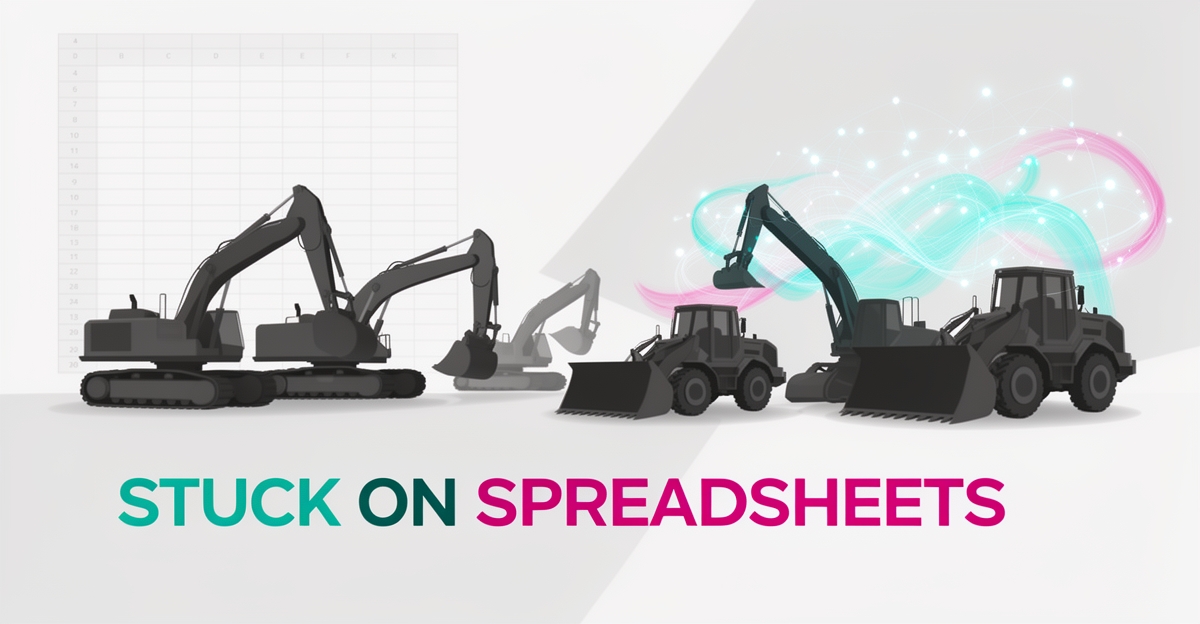
Why Most Heavy Equipment Rental Firms Still Use Manual Equipment Inventory Management
Key Facts
- AI-powered inventory management is reported to reduce operational costs by 15-20% for rental companies according to industry statistics
- Industry reports suggest AI-powered inventory management improves equipment utilization by 15-25% for rental companies according to industry statistics
- Predictive maintenance with AI is reported to reduce unexpected downtime by 30-50% for rental fleets according to industry statistics
- Industry surveys report 82% of renters are more satisfied with AI-enabled real-time equipment tracking according to industry statistics
- 42% of equipment rental companies now use AI for predictive maintenance according to industry statistics
- Legacy system dependencies and limited technical expertise keep many rental firms on manual spreadsheets, as noted in AIQ Labs' work with rental operators
- AI inventory systems can integrate with dispatch and service tools to create real-time availability dashboards without rip-and-replace
Hire a team member that works 24/7 — for less than a part-time wage.
AI receptionists, SDRs, dispatchers and 99+ roles. Trained on your business, fully managed.
Not sure where to start? Ask our AI planner
The Persistence of Spreadsheets in Equipment Rental Operations
Spreadsheets feel safe until a skid steer disappears for three days and a customer is left waiting. In heavy equipment rental, manual inventory tracking persists not because teams prefer it, but because the cost of changing feels higher than the cost of staying.
Legacy system dependencies lock many operations in place. Rental firms often run on aging rental management software and custom spreadsheets built over years, with data spread across dispatch logs, service records, and paper check-out sheets. The lack of standardization in AI-powered inventory systems can make integration with existing tools difficult, which reinforces the status quo. Limited technical expertise inside small and medium teams adds friction to any evaluation.
Perceived complexity shapes decisions more than capability. Owners worry about retraining yard staff, migrating historical asset data, and keeping equipment moving during a rollout. Concerns about implementation costs dominate budget conversations, even as manual processes quietly erode margins through idle assets and misplaced inventory.
Short-term cost concerns outweigh long-term gains in the moment. A familiar spreadsheet is free to run today, while an AI system requires upfront assessment, integration, and change management. That mindset persists despite industry reports that AI-powered inventory management can reduce operational costs by 15-20% and improve asset utilization by 15-25%. The gap between perceived risk and reported return keeps manual methods in use.
The operational pain is measurable. Rental companies using AI for predictive maintenance show how automation changes outcomes, with 42% of equipment rental companies now using AI for predictive maintenance. Where inventory is automated, utilization improves and downtime falls. 82% of renters report higher satisfaction with AI-enabled real-time equipment tracking, a direct customer benefit that manual sheets cannot deliver.
Common reasons manual tracking endures include:
- Legacy rental management and accounting systems that resist API-level integration
- Limited in-house technical expertise to evaluate and oversee AI inventory solutions
- Upfront implementation cost concerns versus visible daily spreadsheet costs
- Fear of operational disruption during peak rental seasons
These constraints are real, but they are also solvable with the right architecture. AIQ Labs builds AI inventory systems that integrate with dispatch and service tools, creating real-time availability dashboards without forcing a rip-and-replace of existing software. The goal is accuracy, fewer equipment losses, and faster customer fulfillment built on owned infrastructure rather than subscription sprawl.
When inventory visibility becomes continuous, teams stop reacting to shortages and start optimizing fleet deployment. That shift from manual reconciliation to automated intelligence is what separates firms still chasing equipment from those delivering it on time.
How AI-Powered Inventory Management Delivers Measurable Operational Gains
Manual spreadsheets still track most rental fleets, but the operational cost of that habit is measurable. AI-powered inventory management is shifting the economics of heavy equipment rental from reactive tracking to predictive control.
Rental companies using AI-powered inventory management report 15-20% lower operational costs alongside improved asset utilization. According to industry statistics, the same systems deliver 15-25% improvement in equipment utilization by matching supply to demand in real time. That gain comes from eliminating idle time and reducing manual dispatch errors.
Predictive maintenance is the core driver of downtime reduction. Machine learning models analyze sensor data, usage patterns, and maintenance history to forecast failures before they occur. Industry analysis notes predictive maintenance can reduce unexpected downtime by 30-50% and extend equipment life by 15-20%. Fewer surprise failures mean more billable hours and better customer commitments.
Real-time tracking also changes the customer experience. Industry statistics report 82% of renters are more satisfied with AI-enabled real-time equipment tracking. Availability dashboards remove phone tag and provide instant visibility into location, condition, and return status.
The measurable gains cluster around three operational levers:
- Cost efficiency from 15-20% lower operational costs through automated reconciliation and reduced manual admin
- Utilization lift of 15-25% via demand forecasting and dynamic allocation across yards and jobsites
- Reliability gains with 30-50% reductions in unexpected downtime from condition monitoring and predictive maintenance
These outcomes are amplified when inventory systems integrate with dispatch and service workflows. Connecting real-time availability to scheduling, maintenance, and billing creates a single source of truth instead of fragmented spreadsheets. That connected layer is exactly what AIQ Labs' Workflow Builds are designed for: rebuild the one workflow that costs you the most, at a fixed price, in phases.
AIQ Labs builds AI inventory solutions that integrate with dispatch and service systems, replacing subscription chaos with owned assets that rental teams can control. The result is accuracy, reduced equipment loss, and real-time availability dashboards without vendor lock-in.
Adoption is still uneven because legacy systems and limited technical expertise slow change. For firms ready to move, the reported operational payoff is immediate and compounding.
Overcoming Barriers to AI Adoption in Equipment Rental Businesses
Despite the clear advantages of AI-powered inventory systems, many heavy equipment rental firms remain hesitant to adopt them due to real-world implementation barriers. Legacy dispatch systems often lack modern APIs, making seamless integration a technical hurdle that requires custom development rather than off-the-shelf solutions. At the same time, limited in-house technical expertise means businesses fear disruption during transition, especially when spreadsheets and manual logs have "worked well enough" for years. These concerns are amplified by uncertainty around implementation timelines and costs, leading many to delay action even as competitors gain efficiency.
AIQ Labs addresses these barriers with a managed AI Employees model and a custom development approach designed for minimal disruption. By building AI inventory agents that integrate directly with existing dispatch, maintenance, and billing systems via deep API connections, we eliminate the need for rip-and-replace overhauls. AI employees handle data synchronization, real-time availability updates, and predictive reordering while working alongside human teams, requiring no new interfaces or retraining. This lets rental firms pursue the reported 15-20% cost reductions and 15-25% utilization improvements without altering their core workflows or investing in unfamiliar technology stacks. AI staff typically run at roughly 80% less cost than an equivalent human hire.
For businesses wary of long-term commitments, flexible payment models reduce risk. Companies can start monthly with a single AI employee, such as an inventory or dispatch agent, build in milestones on a fixed-price workflow, or own their system outright. Start Monthly engagements include build, training, tool integration, monitoring, and continuous optimization, with the ability to pause or adjust anytime. As confidence grows, organizations can scale toward a full AI Operating System, one connected operating layer, built in phases and owned outright, while maintaining control over their data and customizations. The result is a path to AI adoption that respects operational realities while delivering gains in accuracy, asset availability, and customer satisfaction.
From Manual Tracking to Real-Time Availability: A Practical Implementation Path
Transitioning from manual spreadsheets to AI-powered inventory management doesn't require a complete operational overhaul. In fact, many successful implementations begin with a phased approach that allows rental businesses to realize immediate benefits and scale gradually.
One effective starting point is automating inventory tracking and availability updates. AI systems can analyze equipment data to provide real-time dashboards showing current location, status, and usage patterns. According to industry research, companies using AI-powered inventory management report 15-25% improvement in equipment utilization and 15-20% lower operational costs.
The next phase typically involves integrating predictive maintenance capabilities. By analyzing historical usage patterns and sensor data, AI can forecast equipment failures before they happen, reducing unexpected downtime by 30-50% and extending equipment life by 15-20%, as documented by industry analysis.
Key implementation steps include:
- Start with a pilot program focusing on one equipment category or location to demonstrate value before scaling.
- Integrate AI inventory tracking with existing dispatch and service systems for seamless data flow.
- Train staff on new workflows and dashboards to ensure adoption and maximize benefits.
- Continuously monitor performance metrics to refine AI models and improve accuracy over time.
AIQ Labs supports rental companies through the Build in Milestones model, allowing firms to begin with inventory workflows and expand into full dispatch integration as their AI maturity grows. This approach helps mitigate common barriers such as legacy system constraints and implementation costs, while delivering measurable improvements in operational efficiency and customer satisfaction.
By adopting AI-powered inventory management, rental businesses can reduce equipment loss, optimize asset utilization, and provide renters with real-time availability updates, transforming manual processes into strategic advantages.
Still paying for 10+ subscriptions that don’t talk to each other?
We build custom AI systems you own outright. No vendor lock-in. Full control.
Not sure where to start? Ask our AI planner
Frequently Asked Questions
Why do most heavy equipment rental firms still use spreadsheets for inventory management?
What are the main barriers preventing rental companies from adopting AI-powered inventory systems?
How much can AI-powered inventory management reduce operational costs for equipment rental companies?
What improvement in equipment utilization can rental companies expect from using AI inventory systems?
Does AI-enabled real-time tracking actually improve customer satisfaction in equipment rental?
Can AI inventory systems be integrated with existing dispatch and service software without replacing current tools?
From Spreadsheet Scramble to Real-Time Control
Manual inventory persists in heavy equipment rental because the pain feels familiar and the change feels risky, legacy systems, limited technical bandwidth, and fear of disruption during peak season keep spreadsheets in place. Yet the cost of staying manual is measurable in idle assets, misplaced equipment, and lost customer trust. AI-powered inventory management flips that equation, with industry reports of 15-20% lower operational costs, 15-25% improvement in equipment utilization, 30-50% less unexpected downtime, and 82% of renters reporting higher satisfaction with real-time tracking (industry statistics). The shift doesn't require a rip-and-replace. A phased pilot on one depot or equipment class, integrated with existing dispatch and service systems, lets teams prove value before scaling. AIQ Labs builds AI inventory solutions that create real-time availability dashboards without forcing subscription sprawl, so firms can move from reactive chasing to proactive deployment. Start the 2-minute Fit Check at https://aiqlabs.ai/apply for a free 30-minute strategy call to map your biggest bottleneck and see if there's a clear, low-risk win.
Make AI your competitive advantage — not just another tool.
Strategy, implementation and ongoing optimization. One partner, end to end.
Not sure where to start? Ask our AI planner