Why Most Historic Preservation Firms Fail at AI Implementation (And How to Avoid It)
Key Facts
- AI-powered photogrammetry has been reported to identify damage types on unreinforced masonry with high accuracy on unseen photos according to a 2025 review
- The Archaeological Park of Pompeii spans 44 hectares and contains 1,221 buildings with a maximum daily visitor capacity of 20,000 as reported by conservation staff
- AI is best utilized for specific, well-defined tasks that augment rather than replace professional judgment per consensus at the 2026 Center for Heritage Conservation symposium
- Human intelligence remains essential for processing meaning, values, and morality in preservation decisions as emphasized by Philip Chen of Annum Architects
- AI acts as a "yes-sayer"—it flags potential issues but cannot diagnose underlying causes or recommend repairs per discussion at the 2026 Center for Heritage Conservation symposium
- Lack of stakeholder buy-in quietly kills more AI implementations than any software bug
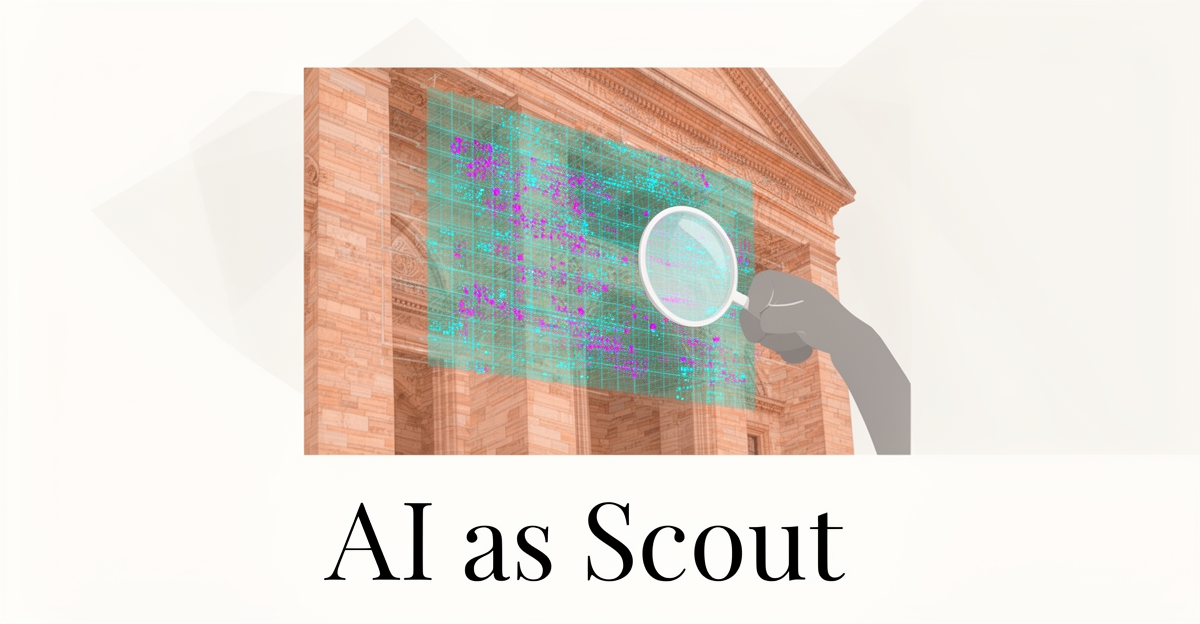
- AI is a scout that processes the haystack to find the needles—the heritage sites waiting for our professional attention per National Trust for Historic Preservation framing
Hire a team member that works 24/7 — for less than a part-time wage.
AI receptionists, SDRs, dispatchers and 99+ roles. Trained on your business, fully managed.
Not sure where to start? Ask our AI planner
The Preservation Paradox: Why AI Adoption Stalls in Heritage Firms
Preservation firms are buying AI tools and watching the pilots stall before they ever reach the field. The gap between promise and practice is not technical failure, it is a preservation paradox built into how heritage work is done.
AI adoption stalls when data is fragmented and inconsistent across sites and eras. A 2025 review on AI in heritage conservation notes that algorithms rely on large, high-quality datasets, yet preservation data can be fragmented, inconsistent, or simply unavailable for certain sites or periods. That scarcity forces teams to spend more time cleaning data than using insights, and pilots quietly lose momentum.
The “yes-sayer” limitation compounds the problem. AI can flag potential issues but often lacks the ability to diagnose underlying causes or recommend specific repairs. As discussed at the 2026 Center for Heritage Conservation symposium, the technology inherently is a yes-sayer, and preservationists want a brutally critical partner, not a confirmer. Without diagnostic depth, outputs feel risky to act on.
Professional resistance is equally real. Some preservation professionals hesitate to adopt new technologies, particularly if they perceive them as a threat to expertise or established workflows. Philip Chen of Annum Architects emphasized the importance of human intelligence in interpreting AI outputs, and the consensus is that AI augments rather than replaces professional judgment. Fear of de-skilling slows buy-in.
What stalls is not a lack of capability, it is misalignment with workflow, data, and trust. Firms often start with broad ambitions and hit three friction points:
- Fragmented site data that prevents reliable model training and consistent monitoring
- AI outputs that identify patterns but miss cultural context and meaning
- Stakeholder hesitation rooted in concerns about expertise, ethics, and interpretive limits
The stakes are visible at scale. The Archaeological Park of Pompeii spans 44 hectares and contains 1,221 buildings with a maximum daily visitor capacity of 20,000. Alessandra Zambrano of the park described a layered monitoring system using satellite analysis and drone surveys to track change over time and identify risks like ground movement or water infiltration. That is what is possible when AI is scoped to well-defined tasks and kept under professional oversight.
This is where realistic roadmaps matter. AIQ Labs works with small firms on [AI Workflow Builds](/workflow-builds) that rebuild the one workflow that costs the most, aligning tools with preservation standards and team workflows—starting with specific needs, assessing data availability and quality, and piloting small, bounded use cases. The goal is not wholesale automation, it is disciplined augmentation that preserves the enduring role of human expertise in contextual understanding, ethical judgment, and hands-on investigation.
The Three Failure Modes: Bad Data, No Buy-In, and Missing Human Judgment
Most AI implementations in historic preservation don't fail because the technology is flawed. They fail because firms underestimate three predictable pitfalls: bad data, organizational resistance, and misplaced expectations about what AI can actually do.
The first failure mode starts before a single algorithm runs. Machine learning models depend on large, well-labeled datasets, yet heritage data is often fragmented, inconsistent, or simply unavailable for certain sites and periods. When firms train tools on this patchwork, the outputs reflect it. The contrast is stark: a 2025 review of AI in heritage conservation documented a machine learning framework achieving high accuracy identifying damage types on unreinforced masonry—but only because it was trained on carefully labeled post-disaster imagery. The lesson is unforgiving: garbage in, garbage out, at scale.
The second failure mode is human, not technical. Lack of stakeholder buy-in quietly kills more implementations than any software bug. Preservation professionals who perceive AI as a threat to their expertise or established workflows will resist adoption, regardless of how capable the tool is. Firms that skip change management—training, communication, and early wins—watch their investments stall in pilot purgatory. This is precisely why AIQ Labs builds adoption strategy into every [workflow build](/workflow-builds) rather than treating it as an afterthought.
The third failure mode is philosophical: treating AI as a replacement instead of an augmenter. The research is blunt about AI's limits:
- AI generates correct-sounding language but misses cultural context and meaning, as Philip Chen of Annum Architects cautioned at the Center for Heritage Conservation's symposium.
- AI acts as a "yes-sayer"—it flags potential issues but cannot diagnose underlying causes or recommend repairs.
- Human intelligence remains essential for processing meaning, values, and morality in preservation decisions.
As one framing from Saving Places puts it, AI is not a replacement for preservationists—it is a scout that processes the haystack to find the needles. Firms that grasp this distinction deploy AI where it excels: rapid documentation, continuous monitoring, pattern detection across thousands of images. Firms that don't end up with confident, fluent, and wrong outputs guiding decisions about irreplaceable heritage.
The pattern across all three failure modes is the same. Success requires clean data, aligned stakeholders, and human judgment at the center—not as a fallback, but as the operating model.
The Augmentation Blueprint: AI as Scout, Human as Interpreter
The most effective preservation teams aren't replacing their experts with AI — they're deploying AI as a tireless scout that combs through the haystack so preservationists can focus on the needles. This division of labor is where implementation succeeds or fails.
The scout role is where AI delivers measurable value today. A 2025 review of machine learning in heritage conservation found that a framework trained on post-disaster imagery identified damage types on unreinforced masonry with high accuracy on photos it had never seen. That kind of speed matters: after the February 2023 earthquakes in Turkey, the Preserve AI project analyzed historical aerial photographs to surface previously undocumented heritage in areas where formal records barely existed — work that would have taken human teams months.
Site monitoring shows the same pattern. At the Archaeological Park of Pompeii — 1,221 buildings across 44 hectares welcoming up to 20,000 visitors daily — conservation staff layer satellite analysis with drone surveys to track ground movement and water infiltration continuously. No team of inspectors could physically cover that ground at that frequency.
The needles, however, remain firmly human territory:
- Context and meaning — AI can generate correct-sounding language while missing cultural significance entirely, as architect Philip Chen cautions: human intelligence is still essential for "processing meaning, processing values, processing morality."
- Diagnosis and repair decisions — AI flags potential issues but rarely identifies underlying causes; Chen describes the technology as inherently a "yes-sayer," which is why hands-on investigation and brutal critique of outputs remain non-negotiable.
- Ethical judgment — Deciding what gets preserved, restored, or reconstructed involves values no model can hold.
This is the blueprint: let AI process the haystack — damage documentation, continuous monitoring, pattern detection across thousands of images — while preservationists interpret, contextualize, and decide. As the National Trust for Historic Preservation frames it, AI is "a scout that processes the haystack to find the needles, the heritage sites waiting for our professional attention."
The practical implication is that workflows should bend around this division, not around the software. Firms that succeed map AI onto existing assessment and documentation processes, keep human review checkpoints at every decision gate, and train teams to interrogate outputs rather than accept them. This is precisely the alignment work AIQ Labs builds into its [workflow builds](/workflow-builds) — fitting tools to preservation standards and team workflows, never the reverse. When the scout handles the searching and your experts handle the meaning, adoption stops feeling like a threat and starts feeling like relief.
Your Implementation Roadmap: From First Pilot to Firm-Wide Adoption
Most preservation firms stall at pilot because they try to automate the whole practice at once instead of proving value on one painful workflow.
Start with a high-value, well-defined task where speed matters. Disaster damage documentation is a proven entry point, where AI-powered photogrammetry and machine learning can rapidly document damage to enable quicker assessment and stabilization. Machine learning frameworks trained on post-disaster imagery have been reported to identify damage types on unreinforced masonry with high accuracy when tested on unseen photos.
Before any tool is chosen, audit data availability and quality first. AI algorithms rely on large, high-quality datasets for training, yet preservation data can be fragmented, inconsistent, or unavailable for certain sites or periods. Map what exists, where gaps are, and what collection is realistic without creating new risk for the resource.
Run a small pilot with human-in-the-loop review. The consensus at the Center for Heritage Conservation's 27th Annual Historic Preservation Symposium in 2026 is that AI is best utilized for specific, well-defined tasks that augment rather than replace professional judgment. Keep preservation staff in the loop to interpret outputs, check for bias, and ensure cultural context is not lost.
Train staff per role, not as a generic workshop. Resistance often comes from perceived threat to expertise. Philip Chen of Annum Architects emphasizes the importance of human intelligence in interpreting AI outputs, and the enduring need for contextual understanding and ethical judgment. Role-based training builds trust and shows how AI acts as a scout that processes the haystack to find the needles.
Scale with governance, not just more models. Define when escalation happens, how decisions are logged, and how data is protected. This mirrors a phased roadmap approach where readiness assessment, phased implementation, and change management are sequenced together.
A practical first roadmap looks like this:
- Identify one workflow, such as damage documentation after events like the February 2023 earthquakes in Turkey that prompted the Preserve AI project
- Audit data quality and availability, and label a small, representative set for testing
- Pilot with human review, measure time saved and error rates, then refine
- Train teams by role and document governance for escalation and ethics
- Scale to adjacent workflows with clear ownership and metrics
AIQ Labs approaches this through phased [workflow builds](/workflow-builds) — one costly workflow rebuilt at a time, with the option to grow into a connected [AI operating system](/ai-operating-systems) you own outright. Firms that start narrow, prove value with human oversight, and scale with governance avoid the common pitfalls of poor data, lack of buy-in, and resistance to change.
If you want a clear view of where AI fits first, start the [Fit Check](/apply) for a free 30-minute strategy call to map your biggest bottleneck and identify high-ROI automation opportunities.
Still paying for 10+ subscriptions that don’t talk to each other?
We build custom AI systems you own outright. No vendor lock-in. Full control.
Not sure where to start? Ask our AI planner
Frequently Asked Questions
Why do most AI pilots stall in historic preservation firms?
Can AI actually replace preservation professionals?
What's a real example of AI working well in heritage conservation?
How accurate is AI for damage detection on historic buildings?
Where should a preservation firm start with AI implementation?
Why do preservation professionals resist adopting AI tools?
Let the Scout Search, Keep the Interpreter in Charge
AI stalls in historic preservation not because the tools are weak, but because firms try to automate the practice instead of augmenting it. The pattern is clear: fragmented, inconsistent site data slows pilots, AI outputs that flag patterns without cultural context erode trust, and professional hesitation grows when expertise feels threatened. Success comes from treating AI as a scout and humans as interpreters — letting machines process the haystack of images and monitoring data while preservationists retain diagnosis, ethical judgment, and hands-on investigation. That means starting narrow with a well-defined, high-value workflow, auditing data quality before choosing tools, running small human-in-the-loop pilots, and scaling with governance and role-based training. When scoped to specific tasks like damage documentation, AI can deliver real speed, with machine learning frameworks reported to identify damage types on unreinforced masonry with high accuracy on unseen photos. If you want a clear view of where AI fits first in your firm, start the [Fit Check](/apply) for a free 30-minute strategy call to map your biggest bottleneck and identify high-ROI opportunities. Questions first? Reach the team at [email protected].
Make AI your competitive advantage — not just another tool.
Strategy, implementation and ongoing optimization. One partner, end to end.
Not sure where to start? Ask our AI planner