Why Most HVAC Businesses Still Rely on Manual Work Orders (And How to Fix It)
Key Facts
- A majority of trade business owners identify workflow optimization as AI's biggest impact area, according to Simpro's Trades Outlook research.
- HVAC operating margins typically sit in the single digits to low teens for most contractors, per industry analysis, leaving little room for waste.
- Technicians commonly lose one to two-plus hours per day to suboptimal routing and backtracking, according to Simpro research.
- A 20% fuel reduction for 10 vans at $5,000 monthly would save roughly $12,000 per year through smarter AI routing.
- Improving first-time fix rate from 75% to 85% eliminates roughly three return trips daily for a company running 30 jobs per day.
- Capturing two to three missed calls weekly can add tens of thousands of dollars in annual revenue for an 8-12 technician residential HVAC company.
- AI-assisted estimating can cut quote generation from hours to minutes by pulling live pricing automatically.
Hire a team member that works 24/7 — for less than a part-time wage.
AI receptionists, SDRs, dispatchers and 99+ roles. Trained on your business, fully managed.
Not sure where to start? Ask our AI planner
The Hidden Cost of Paper Work Orders in HVAC Operations
Manual work orders silently erode HVAC profitability through avoidable inefficiencies that compound daily. Technicians commonly lose one to two-plus hours each day to poor routing, backtracking, and suboptimal job sequencing, directly cutting into billable time and fuel budgets. Paper-based systems also delay critical information flow, increasing the likelihood of missed parts and unnecessary return visits that further drain already thin margins.
These inefficiencies hit hardest where HVAC businesses can least afford it, operating margins typically run in the single digits to low teens, leaving little room for waste. Every poorly routed technician, every return trip for a forgotten part, and every delayed quote chips away at profitability. When margins are this slim, operational friction isn't just inconvenient, it's a threat to sustainability.
The financial impact becomes clear when examining specific pain points. A 20% reduction in fuel costs from smarter AI routing, in an operation running 10 vans at $5,000 per month in fuel, translates to roughly $12,000 recovered annually. More strikingly, improving first-time fix rates from 75% to 85% for a company handling 30 jobs per day eliminates roughly three return trips daily. At $200–$300 in fully loaded cost per return visit, that's $600–$900 per day, or well into six figures yearly in recovered margin.
Beyond direct costs, manual work orders create hidden revenue leaks through missed opportunities. After-hours calls often go to voicemail, representing lost jobs that never enter the pipeline. For a residential HVAC company with 8–12 technicians, capturing just two or three additional missed calls per week can add tens of thousands of dollars in annual revenue. This isn't speculative, it's income already being left on the table due to outdated intake processes.
These losses aren't isolated; they create a cascading effect across operations. Downtime from poor routing reduces technician utilization, which lowers daily job completion rates. More return visits mean fewer new jobs can be squeezed into the schedule. Delayed quoting slows the sales cycle, allowing competitors to win business. Together, these factors trap HVAC businesses in a cycle where reactive firefighting replaces proactive growth.
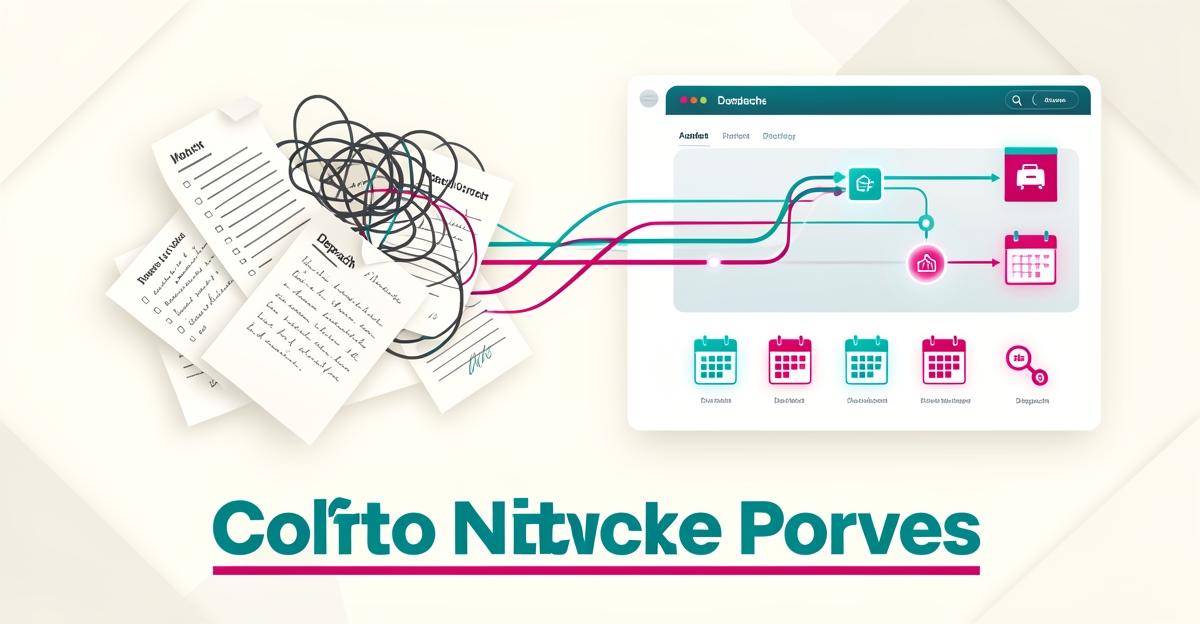
AI-powered work order systems directly address these leaks by automating intake, optimizing routing in real time, and ensuring technicians arrive with the right information and parts. By replacing paper with intelligent workflows, companies reclaim technician hours, reduce fuel waste, cut return visits, and capture revenue from previously missed calls, turning operational friction into measurable profit.
How AI Transforms the HVAC Job Lifecycle from Lead to Invoice
AI-powered systems are reshaping every stage of the HVAC job lifecycle, turning slow, manual processes into streamlined, intelligent workflows. From the moment a customer reaches out to the final invoice, AI eliminates delays and guesswork that erode profitability. For example, AI receptionists and chat tools capture leads 24/7, ensuring no after-hours inquiry goes unanswered, a critical advantage when missed calls represent lost revenue. These systems qualify job types, collect essential details, and schedule service windows without human intervention, which is why most trade business owners point to workflow optimization as AI's biggest impact area, according to industry research.
Once a lead is captured, AI enhances dispatching by analyzing technician certifications, real-time location, availability, and parts inventory to recommend optimal assignments. This moves beyond manual matching, which becomes unsustainable as teams grow past five technicians. Paired with route optimization, AI reduces drive time by using live traffic data, job duration estimates, and customer service windows, addressing the one to two-plus hours technicians commonly lose daily to inefficient routing. For a fleet of 10 vans spending $5,000 monthly on fuel, a 20% reduction from smarter routing recovers roughly $12,000 annually, money that stays in the business rather than evaporating at the pump.
Estimating, once a multi-hour manual task involving spreadsheets and price lookups, can now take minutes with AI-assisted tools that pull live pricing, labor rates, and job templates automatically. This speed win means more quotes sent, more jobs won, and less time spent on administrative overhead. Predictive maintenance and AI-driven diagnostics further protect margins by catching system degradation early and giving technicians real-time fault code databases and guided troubleshooting, tools that help improve first-time fix rates. Improving that rate from 75% to 85% for a company handling 30 jobs daily eliminates roughly three return trips each day, recovering $600–$900 in fully loaded costs per day.
After service completion, AI automates customer follow-ups, review requests, and seasonal reminders, strengthening retention without adding to staff workload. Behind the scenes, AI-powered reporting delivers real-time visibility into job profitability, technician performance, and service line margins, replacing blended summaries that hide financial weak points. For HVAC businesses still reliant on paper, these AI-driven improvements aren't futuristic concepts; they're operational necessities in an industry where thin margins leave little room for inefficiency. AIQ Labs helps bridge this gap with AI Employees that handle intake and dispatch around the clock, and AI Workflow Builds that rebuild the one workflow costing you the most, turning unstructured calls and emails into actionable work orders in real time.
Implementing AI Work Orders Without Disrupting Your Existing Systems
The biggest risk in AI implementation isn't the technology failing, it's your team quietly reverting to paper because the new system disrupted their rhythm. Successful HVAC businesses avoid this by treating integration as an operational challenge, not an IT project.
Start by mapping your existing stack before evaluating any vendors. According to facility management research, most operations run disconnected systems that generate data but not operational truth. Document every platform your dispatchers and technicians touch daily, from your CRM to your scheduling software, then identify where manual work orders create bottlenecks.
When evaluating AI solutions, prioritize systems that layer into your current infrastructure rather than demanding hardware replacement. Integration depth matters more than feature lists. The fastest ROI comes from platform-native AI that accesses real job data immediately. Ask vendors to demonstrate practical dashboards your team will actually use daily, not impressive demos, but the specific reports dispatchers need at 7 AM when emergency calls flood in.
Pressure-test the onboarding process with realistic scenarios. How does the system handle a technician calling in sick when AI has already optimized the day's routes? Can your office manager override AI dispatch recommendations without breaking the workflow? Ensure training accounts for staff turnover; new hires should achieve proficiency within days, not weeks.
A phased rollout minimizes disruption while proving value:
- Start with after-hours call capture to stop revenue leakage immediately without changing daily workflows
- Add AI dispatch assistance once data quality stabilizes, keeping human oversight for final decisions
- Implement route optimization for fleets running five or more vehicles to reclaim lost drive time
- Activate automated customer follow-ups only after core operations stabilize
AIQ Labs structures implementations around these adoption realities. You can start small with a single Workflow Build at a fixed price, or go further with an AI Operating System that connects intake, dispatch, and reporting into one layer you own outright. Either way, the goal is consistent: technology that adapts to your business, not the reverse.
Define success metrics before going live. If you're targeting a reduction in return visits, establish your current first-time fix rate baseline. For a company running 30 jobs daily, improving from 75% to 85% first-time fixes eliminates roughly three return trips per day, recovering $600–$900 in daily margin according to industry analysis.
Remember that most trade business owners identify workflow optimization as AI's primary value, yet implementation fails when teams feel surveilled rather than supported. Position AI as a dispatcher's assistant that handles transcription and data entry, freeing your staff for customer relationships and complex problem-solving. When your team trusts the system, adoption follows naturally.
Still paying for 10+ subscriptions that don’t talk to each other?
We build custom AI systems you own outright. No vendor lock-in. Full control.
Not sure where to start? Ask our AI planner
Frequently Asked Questions
Why do HVAC companies still use paper work orders when it seems so inefficient?
How much money am I actually losing from missed after-hours calls?
Can AI really reduce the number of return trips my techs make?
Will AI dispatching replace my dispatcher or just help them?
How fast can AI help me get quotes out to customers?
What's the first step to move off paper without disrupting my team?
Turn Paper Trails Into Profit Margins
Manual work orders aren't just slowing your HVAC business down, they're actively draining margin you can't afford to lose. With operating margins typically running thin, every lost hour to poor routing, every return trip for a missed part, and every after-hours call that goes to voicemail compounds into serious revenue leakage. AI-powered work order systems reverse this by capturing leads 24/7, optimizing dispatch and routing in real time, and turning unstructured calls and emails into actionable work orders. The result isn't hype; it's recovered technician hours, fewer return visits, and revenue reclaimed from processes you already have. If you're ready to stop bleeding margin through paper-based workflows, start with the two-minute Fit Check at https://aiqlabs.ai/apply, then book a free 30-minute strategy call at https://aiqlabs.ai/book. We'll map your biggest bottleneck and identify high-ROI automation opportunities, or tell you honestly if there isn't a clear win.
Make AI your competitive advantage — not just another tool.
Strategy, implementation and ongoing optimization. One partner, end to end.
Not sure where to start? Ask our AI planner