Why Most Hydroponic Farms Fail at AI Adoption — And How to Avoid It
Key Facts
- The hydroponic forage market is a multi-billion-dollar category according to industry research
- Smart greenhouse adoption in the U.S. has grown sharply in recent years, driven by AI growth analytics
- Fully automated nutrient and climate control has been linked to double-digit yield gains at indoor lettuce operations per reported case studies
- Automated humidity management has been reported to cut crop loss dramatically for controlled-environment producers per case study
- The majority of AI problems in farming trace back to data collection pipelines according to adoption analysis
- Image-based datasets and sensor data are the two most critical ag AI inputs per data strategy research
Hire a team member that works 24/7 — for less than a part-time wage.
AI receptionists, SDRs, dispatchers and 99+ roles. Trained on your business, fully managed.
Not sure where to start? Ask our AI planner
The AI Adoption Trap in Hydroponics
Most hydroponic farms don’t fail at AI because the technology is immature. They stall because the foundation for adoption was never built.
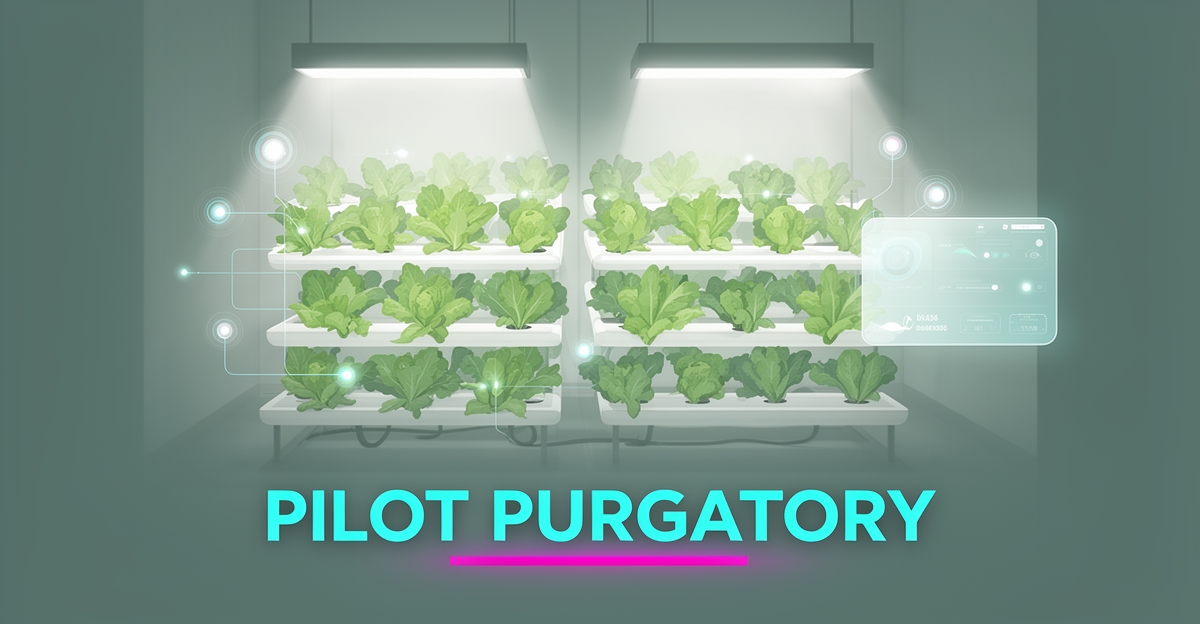
The AI Adoption Trap in Hydroponics is a pattern of pilots that launch with promise and then quietly die. Farms invest in sensors and dashboards, see an initial spike of interest, and then get stuck at Stage 2 of AI maturity — Pilots — where limited trials never scale into operational change.
Poor data collection and inconsistent data quality is the first failure point. AI in agriculture doesn't fail because the algorithms are bad. It fails because the data is incomplete, inconsistent, or irrelevant. The data value chain of capture, storage, transformation, analysis, interpretation and feedback shows why AI and big data analytics can improve hydroponic cultivation, but only when data is reliable. Adoption analysis suggests the large majority of AI problems in farming can be fixed by improving data collection pipelines, with image-based datasets and sensor data being the most important inputs.
Lack of staff training and change management is the second trap. Automation can transform daily workflow so growers focus on strategy rather than repetitive manual corrections, yet teams are often left to interpret new systems without guidance. Sensor integration and AI feedback loops are at the heart of automated cultivation, but adoption stalls when staff do not trust or understand the outputs. The hydroponic forage market is already substantial, and smart greenhouse adoption in the U.S. has grown sharply in recent years, driven by platforms integrating AI-based growth analytics.
Unrealistic expectations about immediate ROI is the third core failure point. Farms expect instant yield gains while underinvesting in readiness. In practice, automated hydroponics can measure, correct, and predict water quality variations, eliminating human missteps, but results accrue after integration. One Nevada indoor lettuce farm reported a significant yield increase after implementing fully automated nutrient and climate control systems, and automated humidity management has been credited with cutting crop loss by nearly half for a cannabis producer.
Getting stuck at Pilots carries a real cost. Teams lose confidence, data silos harden, and the farm remains labor-intensive while competitors move to scaling and optimization. AIQ Labs works with SMBs to avoid this trap with structured readiness assessment.
Common signs a farm is trapped at Stage 2 include:
- Sensors are installed but data is not cleaned, labeled, or connected to decisions
- Staff revert to manual logs because the AI output feels opaque or unreliable
- Pilots are judged on week-one ROI instead of data quality and adoption milestones
Breaking the cycle starts with treating readiness as a prerequisite, not an afterthought.
Data First, Algorithms Second
Many hydroponic farms invest in sophisticated AI algorithms only to find their systems underperform or fail entirely—not because the technology is flawed, but because the data feeding it is unreliable. As noted in industry analysis, AI in agriculture doesn't fail because the algorithms are bad; it fails because the data is incomplete, inconsistent, or irrelevant. This disconnect often stems from overlooking the foundational steps of the data value chain: capture, storage, transformation, analysis, interpretation, and feedback. When any link in this chain breaks—such as sporadic sensor readings or uncalibrated imaging systems—the entire AI pipeline becomes compromised, leading to inaccurate predictions and eroded trust in the technology.
Data consistency proves far more valuable than sheer volume in hydroponic AI applications. Research consistently shows that most AI problems in farming can be resolved by improving data collection pipelines, emphasizing that reliable, routine data gathering outperforms occasional large datasets. Image-based datasets and sensor readings make up the bulk of critical agricultural AI inputs, highlighting the need for strategic focus on these modalities. Farms that prioritize consistent EC and pH sensor logging, coupled with scheduled crop imaging, create the stable foundation AI models require to detect subtle trends in nutrient uptake or plant stress—insights that drive meaningful automation.
Closed-loop systems exemplify how disciplined data practices prevent failure. By integrating automated nutrient dosing with real-time EC/pH sensors, farms establish a feedback loop where measurements trigger immediate corrections, minimizing human error and maintaining optimal growing conditions. This approach transforms data from a passive record into an active control mechanism, ensuring that every analysis step informs a timely action. As one expert observed, farmers who use AI will outgrow those who do not—not because the tools are more advanced, but because they are built on data that is accurate, timely, and actionable from the ground up.
A Practical Readiness Assessment Framework
Most hydroponic farms don’t fail at AI because the technology is weak. They fail because they try to scale before they’re ready.
The fix is not “buy better AI.” It’s a practical readiness assessment that tells you whether your farm can capture clean data, act on insights, and support adoption across people and process. According to Cutter Consortium research on smart hydroponic farming, AI and big data only deliver value when they sit on a working data value chain: capture, storage, transformation, analysis, interpretation, and feedback.
Start with your technology stack and IoT sensor coverage. Map what you actually measure today: pH, EC, temperature, humidity, light, nutrient dosing, water flow, and camera or vision inputs. Many farms already use sensor-based monitoring, automated dosing, environmental controls, AI vision, and farm management software, but the real question is whether those tools create a closed-loop system instead of disconnected dashboards, as outlined in this overview of hydroponic AI and automation tools.
Next, audit your data infrastructure and quality routines. This is where many AI projects quietly die. As one agriculture AI adoption discussion puts it, AI fails when data is incomplete, inconsistent, or irrelevant — and most AI problems in farming can be fixed by improving data collection pipelines. For hydroponics, that means consistent sensor calibration, standardized crop logs, reliable timestamps, and clear ownership of data hygiene.
Then assess team capabilities. AI adoption is not just an engineering project; it is an operating change. If growers don’t trust alerts, don’t understand recommendations, or fall back to manual overrides, the system stalls. That matters even more as labor-intensive operations shift toward smart farming models that demand stronger technical and data management skills.
Finally, build the business case with ROI modeling. Tie AI to measurable outcomes: fewer crop losses, tighter nutrient control, lower labor waste, better yield consistency, and faster intervention. The payoff is real — automated cultivation systems have been linked to major gains, including a reported double-digit yield increase at a Nevada indoor lettuce farm after full nutrient and climate automation.
A simple readiness framework looks like this:
- Technology stack: sensors, dosing, climate controls, vision systems, integrations
- Data readiness: accuracy, consistency, storage, accessibility, feedback loops
- People readiness: grower trust, training needs, escalation paths, accountability
- Business readiness: ROI model, risk tolerance, implementation budget, scaling plan
This is where the AI Maturity Curve becomes useful. Farms in Exploration run small experiments. Farms in Pilots test one use case. The farms that succeed move into Scaling only after the foundation is solid. That is also where AIQ Labs fits naturally: assess readiness, model ROI, identify the one workflow that costs the most, and rebuild it as an operational system — see AI Workflow Builds.
If you want a clear read on where your farm stands, start with the two-minute Fit Check and then book a free 30-minute strategy call. You’ll get a practical view of your biggest bottleneck, your best first AI use case, and whether the numbers justify moving forward.
From Assessment to Production with AIQ Labs
Most hydroponic farms don’t fail at AI because the technology is too advanced. They fail because they try to automate before they can measure.
A proven path starts with affordable sensing and ends with intelligent operations. Practical tool guides show AI and automation in hydroponics enable real-time monitoring, climate control, and predictive crop management, improving consistency, reducing labor costs, and increasing profitability. Tools range from affordable Wi-Fi/Bluetooth kits for small farms to advanced IoT/cloud systems for commercial setups.
The first step is an honest readiness check. Data consistency beats data volume for agricultural AI, and adoption analysis notes AI in agriculture doesn’t fail because the algorithms are bad. It fails because the data is incomplete, inconsistent, or irrelevant — and most AI problems in farming can be fixed by improving data collection pipelines.
A step-by-step assessment framework helps farms avoid common pitfalls like poor data collection, lack of staff training, and unrealistic expectations. AIQ Labs supports this with a readiness evaluation of your current technology stack, data infrastructure, and team capabilities, plus business case development and roadmap design.
Once readiness is clear, implementation scales with maturity:
- Sensor-based monitoring and automated nutrient dosing for closed-loop EC/pH control
- Environmental control systems with AI feedback loops for real-time adjustments
- AI-based vision monitoring and farm management software for predictive crop management
The market pressure is real. The hydroponic forage market, which includes crops like barley, wheat, and maize, is experiencing significant growth according to industry research on smart farming. Smart greenhouse adoption in the U.S. has grown sharply in recent years, driven by automation platforms integrating AI-based growth analytics and precision irrigation systems.
Results follow disciplined rollout. A Nevada indoor lettuce farm reported a significant yield increase after implementing fully automated nutrient and climate control systems, and automated humidity management has been credited with cutting crop loss by nearly half for a cannabis producer. These gains come from systems that measure, correct, and predict water quality variations, eliminating human missteps.
AIQ Labs supports farms from assessment to production across three entry points: AI Employees for managed AI staff that handle calls, follow-ups, and dispatch at a fraction of a human hire’s cost; AI Workflow Builds to rebuild the one workflow that costs you the most; and AI Operating Systems for a connected operating layer built in phases and owned outright. Engagement can start with Start Monthly for an affordable pilot, Build in Milestones for phased systems, or Own It Outright when you want the asset on your balance sheet.
Still paying for 10+ subscriptions that don’t talk to each other?
We build custom AI systems you own outright. No vendor lock-in. Full control.
Not sure where to start? Ask our AI planner
Frequently Asked Questions
Why do most hydroponic farms fail when trying to adopt AI, even after investing in sensors and dashboards?
What are the common signs that a hydroponic farm is stuck at the pilot stage of AI adoption?
How can hydroponic farms improve their chances of successful AI adoption?
Is it true that AI in hydroponics fails because the algorithms are too weak or not advanced enough?
What kind of ROI can hydroponic farms expect from successful AI automation, and how long does it take to see results?
What does AIQ Labs offer to help hydroponic farms avoid common AI adoption pitfalls?
From Pilot to Profit: Your AI Readiness Roadmap
Most hydroponic farms don’t fail at AI because the technology is flawed—they stall because they skip the foundation. Poor data quality, unprepared teams, and unrealistic expectations keep pilots from scaling, turning promising investments into quiet losses. The path forward isn’t about chasing the latest algorithm; it’s about building readiness first. Start by auditing your sensors, cleaning your data pipelines, and training your team to trust and act on AI insights. Tie every step to measurable outcomes like yield consistency, labor savings, or reduced crop loss—because AI only delivers value when it’s woven into your operations, not bolt by bolt. If you’re ready to see where your farm truly stands and what your first high-impact AI use case should be, take the two-minute Fit Check to uncover your biggest bottleneck and whether the numbers justify moving forward. Start your free Fit Check and let’s build your AI advantage—on solid ground.
Make AI your competitive advantage — not just another tool.
Strategy, implementation and ongoing optimization. One partner, end to end.
Not sure where to start? Ask our AI planner