Why Most Industrial Electricians Miss Out on AI for Equipment Inventory Tracking
Key Facts
- Solislux catalogs list over 3,000 electrical tools, testers, and detector products that electricians must track.
- AI-powered inventory tracking automates updates, usage tracking, and low-stock alerts to reduce downtime according to Microsoft Dynamics 365 research.
- Manual tracking methods like spreadsheets and paper logs increase downtime and reduce asset utilization compared to AI-powered systems per Microsoft's agentic AI analysis.
- Data quality and integration issues can undermine even the smartest AI inventory platform, industry experts warn.
- AI inventory tracking monitors usage cycles to flag equipment due for service, reducing surprise failures and improving job site safety.
- Electricians can adopt AI tracking without ripping out existing tools, since modern solutions sync with accounting and project management software through standard APIs.
- Successful AI adoption starts with mapping job-cycle friction points, then piloting with trusted technicians before scaling across the crew.
Hire a team member that works 24/7 — for less than a part-time wage.
AI receptionists, SDRs, dispatchers and 99+ roles. Trained on your business, fully managed.
Not sure where to start? Ask our AI planner
The Manual Tracking Trap: Time Lost, Equipment Misplaced, Risk Increased
A missing multimeter on a job site doesn’t just delay the day, it puts crews, clients, and compliance on the line. For many industrial electricians, that risk is built into how tools are tracked.
Manual methods still dominate the trade. Spreadsheets, paper logs, and memory are the default for checking what’s on the truck, what’s in the shop, and what’s been checked out. That approach creates blind spots that compound every week.
Industrial electricians work with a vast equipment universe. Catalogs like Solislux list 3,000+ products across electrical tools, testers, and detectors, with thousands more in related categories. Tracking that variety by hand invites errors.
The manual tracking trap shows up as:
- Lost or misplaced tools leading to duplicate purchases and budget creep
- Unplanned downtime when critical equipment isn’t available on site
- Delayed maintenance because usage hours and service dates are not logged
- Increased safety risk from using undocumented or overdue gear
With manual updates, inventory is always yesterday’s picture. Teams spend hours reconciling logs instead of installing, testing, or servicing. Downtime rises while asset utilization falls, because the right tool isn’t where it should be when it’s needed.
Research on inventory-to-deliver processes notes that when customers place an order, they expect speed, accuracy, and reliability. Behind the scenes, inventory-to-deliver processes are what make that promise possible, helping ensure the right products are available at the right time to meet customer expectations while controlling costs. Microsoft Dynamics 365 analysis highlights the same principle for field operations.
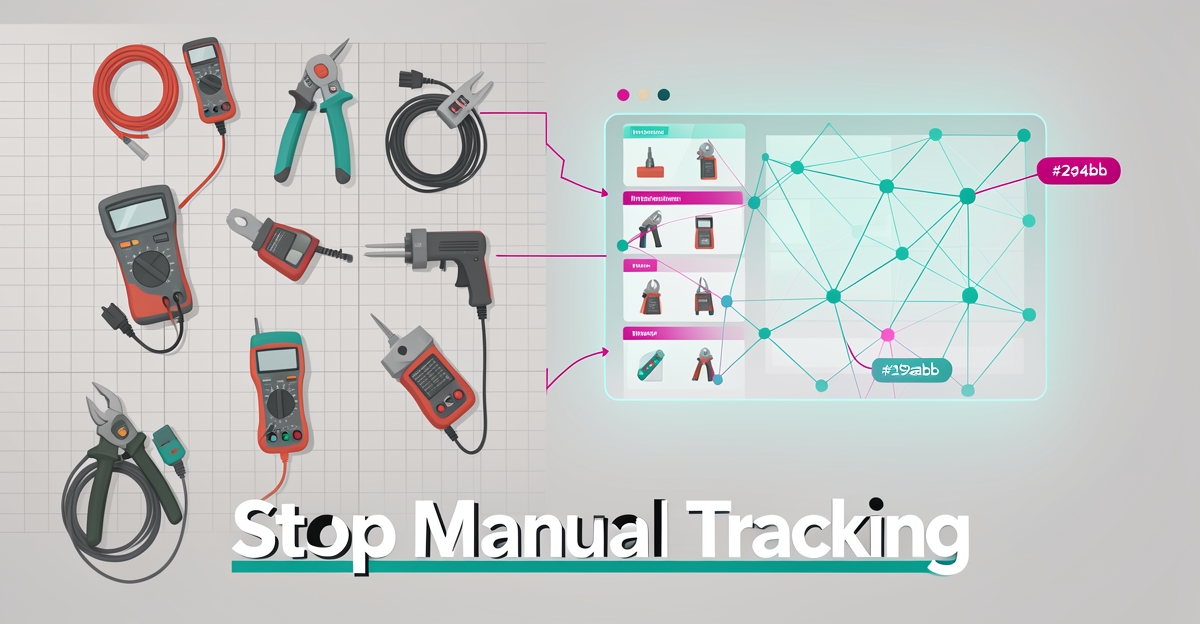
AI-powered inventory tracking can automate inventory updates, track usage, and alert on low stock, reducing downtime and improving asset utilization. Agentic AI for inventory also helps industrial electricians stay on top of equipment maintenance and reduce the risk of equipment failure.
The contrast is stark. Manual tracking means manual updates, tracking, and monitoring, which increases downtime and reduces asset utilization. AI-powered tracking delivers automated inventory updates, usage tracking, and low-stock alerts that reduce the risk of equipment failure and improve safety.
AIQ Labs works in this space through its AI Workflow Builds and AI Employees offerings, building systems that automatically update inventory levels, track usage, and alert on low stock. The goal is reducing downtime and improving asset utilization without forcing crews to change how they work in the field.
What AI Inventory Tracking Actually Does (and What It Doesn’t)
Forget the sci-fi hype. AI inventory tracking is not a robot counting your conduit benders. It is a practical layer of software that watches your stock so you do not have to.
Think of it as a digital assistant that never sleeps. It logs what comes in, what goes out, and when you are running low on critical parts. According to Microsoft’s research on agentic AI for inventory, these systems automate updates, track usage patterns, and fire alerts before you hit empty.
Here is what the core capabilities look like on a real job site:
- Automated updates: The moment a tech pulls a breaker or a spool of wire from the truck, the system deducts it. No clipboard, no end-of-day data entry.
- Usage tracking: You see which tools sit idle and which ones earn their keep, helping you allocate budget where it actually matters.
- Low-stock alerts: The system pings you when inventory dips below a threshold you set, not when you are already on-site and missing a part.
- Maintenance scheduling: By monitoring usage cycles, the same platforms flag equipment due for service, reducing surprise failures.
The payoff is measurable. Research shows that reducing downtime and improving asset utilization are the primary drivers for adoption. When your team stops hunting for tools and starts trusting the data, jobs finish faster and margins breathe easier.
But let us be clear about what AI does not do. It does not magically fix bad data. If your team scans the wrong barcode or skips a check-out, the system learns the wrong lesson. As noted in the same Microsoft analysis, data quality and integration issues can undermine even the smartest platform. You still need clean inputs and basic training to make it stick.
It also does not require ripping out your existing setup. Many modern solutions layer on top of the tools you already use, syncing with your accounting or project management software through standard APIs. The goal is augmentation, not replacement.
For electricians weighing the switch, the barrier is often lower than expected. You do not need a six-figure overhaul. You need a system that fits your workflow, whether that is a custom build from a partner like AIQ Labs or an off-the-shelf tool configured for field service. The technology is ready. The question is whether your process is.
Why Many Electricians Still Hesitate, and What They’re Missing
If the thought of adopting AI for inventory tracking conjures images of complex coding, massive budgets, and operational upheaval, you are not alone. Many industrial electricians hesitate to embrace these tools, fearing disruption more than they desire efficiency. Yet this hesitation often stems from outdated perceptions rather than current reality.
The most common objection centers on complexity, the assumption that AI requires a dedicated IT department or advanced technical skills to operate. However, modern AI-powered inventory systems are designed specifically for ease of use, featuring intuitive interfaces that integrate with the tools electricians already rely on. According to Microsoft's analysis of agentic AI in inventory management, these systems automate updates and track usage without requiring constant manual oversight, effectively working in the background while you focus on the job at hand.
Cost concerns present another significant barrier, particularly for small to mid-sized operations watching every dollar. While the research acknowledges that implementation may require investment in new technology and infrastructure, the return on investment typically shows up quickly through reduced downtime and improved asset utilization. By automatically alerting teams to low stock levels before critical shortages occur, these systems help prevent the expensive emergency orders and project delays that plague manual tracking methods.
Fear of change also keeps many electricians tethered to spreadsheets and paper logs, even when those methods create safety risks and inefficiencies. The data suggests that while training and support are necessary components of successful adoption, the learning curve is far gentler than most anticipate. Organizations that push past this initial resistance discover that AI handles the tedious counting and monitoring, freeing skilled tradespeople to focus on complex electrical work rather than administrative tasks.
What specifically are hesitant electricians missing out on? The advantages extend beyond simple convenience:
- Automated inventory updates that eliminate manual data entry errors
- Real-time usage tracking that identifies which tools sit idle and which need maintenance
- Proactive low-stock alerts that prevent work stoppages before they occur
- Improved equipment visibility across multiple job sites or service vehicles
- Enhanced safety through better maintenance scheduling and reduced equipment failure risks
The gap between early adopters and those clinging to manual methods continues to widen. While concerns about data quality and integration challenges are valid, industry experts note these issues can hinder effectiveness, they are solvable problems with proper planning and support. Companies like AIQ Labs specialize in building custom AI systems that address these specific integration hurdles, creating solutions that fit existing workflows rather than forcing disruptive overhauls.
The question is no longer whether AI belongs in industrial electrical work, but how quickly professionals can overcome their hesitation to capture its benefits. Those who continue relying on manual tracking methods risk falling behind competitors who leverage these tools for predictive maintenance and streamlined operations. The technology has matured; the only remaining barrier is the perception that it remains out of reach.
Getting Started: From Assessment to Automation
For industrial electricians still relying on clipboards and spreadsheets to track tools and equipment, the hidden costs add up quickly: lost time searching for missing gear, delayed jobs due to stockouts, and preventable equipment failures. Research shows that AI-powered inventory tracking can automate inventory updates, track usage, and alert on low stock, reducing downtime and improving asset utilization. Many teams don’t realize how much reactive firefighting stems from poor visibility into what they own, where it is, and when it needs maintenance or replacement.
The first step is a clear assessment of current pain points. Walk through a typical job cycle and note where delays occur: Is it waiting for a specific conduit bender to be located? Are technicians frequently making last-minute supply runs because reorder points aren’t tracked? These friction points reveal exactly where automation will deliver the fastest ROI. AIQ Labs’ AI Workflow Builds approach begins with this discovery phase, mapping existing workflows to identify high-impact opportunities for AI-driven tracking without overcomplicating the initial rollout.
Choosing the right solution means prioritizing seamless integration with how electricians already work. Look for systems that use simple data capture methods, like barcode scans at the tool crib or RFID tags on high-value items, to feed real-time updates into a central dashboard. The technology should alert supervisors when stock falls below thresholds or when calibration dates approach, turning reactive scrambles into proactive planning. As noted in industry research, addressing data quality and integration issues early is critical to ensuring the AI system delivers reliable, actionable insights rather than creating new administrative burdens.
Finally, successful adoption hinges on team training and change management. Start with a pilot group of trusted technicians to test the workflow, gather feedback, and refine the process before scaling. Keep training practical and role-specific, focus on how the system saves them time on each job, not on the underlying AI mechanics. When electricians see fewer stockout delays and less time spent hunting for equipment, buy-in follows naturally. From there, continuous monitoring and optimization ensure the system evolves with the business, turning inventory tracking from a chore into a competitive advantage. To begin this journey, start with the two-minute Fit Check at https://aiqlabs.ai/apply, then schedule a free 30-minute strategy call at https://aiqlabs.ai/book to assess your current systems and map out a clear path forward.
Still paying for 10+ subscriptions that don’t talk to each other?
We build custom AI systems you own outright. No vendor lock-in. Full control.
Not sure where to start? Ask our AI planner
Frequently Asked Questions
What does AI inventory tracking actually do for industrial electricians?
Why do most electricians still use spreadsheets instead of AI?
How much equipment variety are we talking about?
What are the biggest risks of sticking with manual tracking?
Do I need to replace my current software to use AI inventory tracking?
How do I get started with AI inventory tracking?
Turn Tool Chaos into Competitive Clarity
Industrial electricians lose time, money, and safety when they rely on spreadsheets and memory to track thousands of tools and testers. Manual methods create blind spots that lead to duplicate purchases, unplanned downtime, delayed maintenance, and increased risk from outdated equipment. AI-powered inventory tracking changes that by automating updates, monitoring usage, and sending proactive low-stock alerts, reducing downtime and improving asset utilization without disrupting how crews work in the field. The technology is ready, the barriers are lower than most expect, and the ROI shows up quickly in fewer stockouts and less time hunting for gear. If you're ready to move beyond the guesswork and let your tools work for you, start with a two-minute Fit Check to see where AI can make the biggest impact in your operation.
Make AI your competitive advantage — not just another tool.
Strategy, implementation and ongoing optimization. One partner, end to end.
Not sure where to start? Ask our AI planner