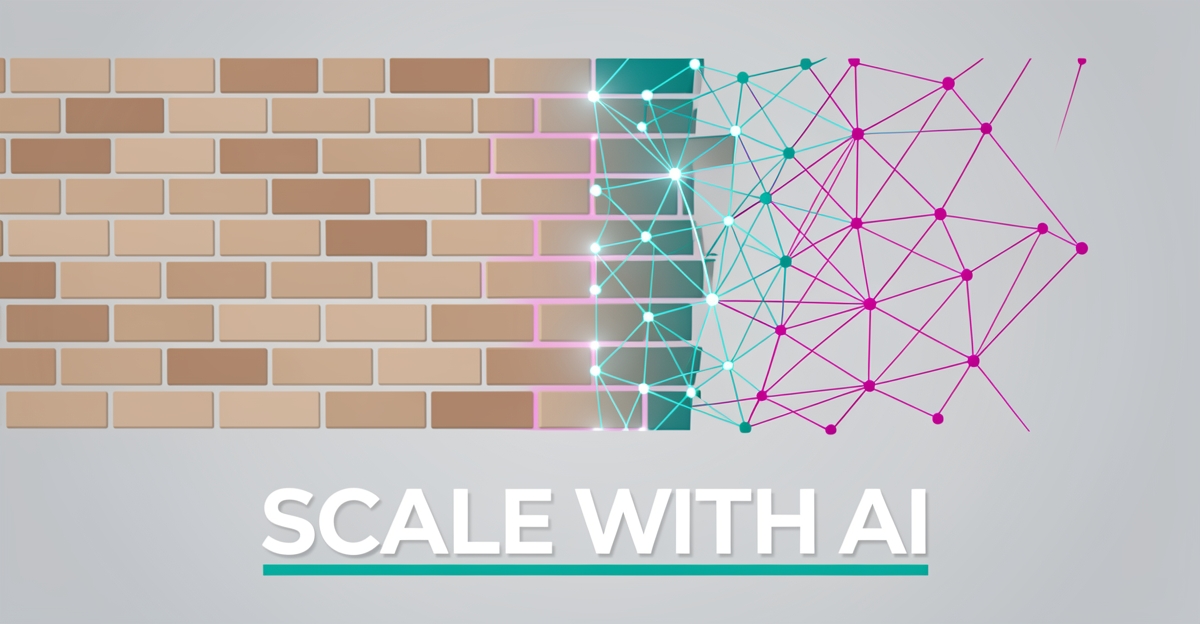
Why Most Masonry Firms Fail to Scale With AI, And How to Avoid It
Key Facts
- AI adoption across technical and trade industries has grown steadily through 2026, yet most organizations still struggle to move pilots into daily operations.
- Data quality issues and governance gaps are consistently cited as top challenges in AI adoption across industries.
- AI is shifting roles across knowledge work and the trades, from task execution to orchestrating automated systems.
- Fragmented workflows between estimating, scheduling, and field reporting are the most common reason AI pilots stall in masonry and field-service firms.
- Role-specific training is a decisive factor in whether AI tools get used or abandoned after launch.
Hire a team member that works 24/7 — for less than a part-time wage.
AI receptionists, SDRs, dispatchers and 99+ roles. Trained on your business, fully managed.
Not sure where to start? Ask our AI planner
The Hidden Barriers to AI Adoption in Masonry Operations
Many masonry firms begin their AI journey with enthusiasm, launching pilot projects that show promise but fail to gain traction across the organization. Interest in AI across construction and the trades has grown steadily through 2026, yet scaling these initiatives remains a persistent challenge. The gap between experimentation and firm-wide adoption often stems not from a lack of vision, but from overlooked operational friction points that undermine momentum.
Fragmented workflows are among the most significant barriers to scaling AI in masonry operations. When estimating, scheduling, and field reporting remain siloed, AI tools struggle to access the consistent, real-time data they need to deliver value. Without seamless integration between project management, accounting, and field communication systems, AI-generated insights become isolated artifacts rather than actionable intelligence. This disconnect prevents the kind of closed-loop learning that drives continuous improvement, leaving firms with tools that perform well in isolation but fail to transform core processes.
Poor data integration compounds these issues, turning potential advantages into sources of frustration. AI systems depend on clean, structured inputs, yet many masonry businesses still rely on handwritten logs, PDFs, or disparate spreadsheets that resist automation. Data quality issues and weak governance are consistently cited among the top challenges in AI adoption across industries. When AI receives inconsistent or incomplete data, its outputs lose credibility, leading teams to disregard recommendations and revert to manual methods.
Equally critical is the absence of role-specific training that prepares teams to work alongside AI. Introducing a new tool without clarifying how it changes daily responsibilities creates confusion and resistance. Foremen may not trust AI-generated scheduling suggestions if they don't understand how the system weighs weather delays or crew availability. Project managers might overlook predictive insights if they lack the training to interpret them. Effective adoption requires more than software deployment, it demands targeted upskilling that aligns AI capabilities with the realities of masonry work, from mix design to on-site sequencing.
- Fragmented workflows block data flow between estimating, scheduling, and field reporting
- Poor data quality undermines AI reliability and erodes team trust in automated outputs
- Lack of role-specific training leaves teams unprepared to interpret or act on AI-generated insights
- Without integration, AI remains a pilot experiment rather than a scalable operational asset
Overcoming these barriers requires a deliberate approach that treats AI not as a standalone tool, but as a component of a broader operational redesign. Firms that succeed in scaling AI do so by aligning technology with process, investing in integration, and preparing their teams to adapt, turning isolated experiments into sustainable advantage. AIQ Labs supports this transition through three entry points that address workflow fragmentation, data readiness, and change management as interconnected challenges rather than separate tasks. By focusing on system-wide coherence, masonry firms can move beyond pilots to build AI-powered operations that scale with confidence.
How AIQ Labs' Three Entry Points Solve Scaling Challenges
Scaling AI without a clear integration plan turns promise into chaos, especially for masonry and field-service teams where data lives on trucks, job sites, and spreadsheets.
Most firms hit the same wall: poor data flow between dispatch and accounting, workflows built for humans not agents, and teams with no training to work alongside AI. Adoption across industries has accelerated through 2026, but it still stalls when skills and governance are missing. Productivity gains from AI are real, but they require clear integration, not point tools bolted onto broken processes.
AIQ Labs' three entry points are built to remove those scaling pitfalls by aligning technology, people, and process from day one.
AI Employees provide immediate capacity without hiring friction. These are managed AI staff, receptionists, SDRs, dispatchers, and 99+ other roles, that communicate naturally by phone, email, and chat, work around the clock, and learn from performance data. They typically cost around 80% less than a human hire, and the Start Monthly model means you can pause or adjust anytime.
AI Workflow Builds replace subscription sprawl with owned systems. AIQ Labs rebuilds the one workflow that costs your firm the most, estimating, dispatch, scheduling, or field reporting, at a fixed price and in phases, so you see value before you commit further. Engineering teams architect production-ready workflows that integrate CRM, accounting, project management, and field tools with automated data synchronization, creating a single source of truth and eliminating the manual re-entry that slows masonry firms as they grow.
AI Operating Systems ensure adoption sticks at the firm level. When point solutions multiply and nothing connects, AIQ Labs builds one connected operating layer across the business, delivered in phases and owned outright. The engagement covers readiness assessment, roadmap design, governance, and continuous optimization so AI moves from pilots to operating model, with change management and training embedded rather than bolted on.
Field-service and trades implementations show the pattern:
- Field Services & Electrical Trades: full dispatch automation plus a rebuilt, SEO-optimized website automating scheduling, dispatch, and lead capture end-to-end
- Trades & Field Services roles in the AI Employee catalog include AI Dispatcher, AI Service Coordinator, AI Field Manager, and AI Work Order Manager
- Integration-first builds connect dispatch systems, accounting, and job management so data flows without manual handoffs
The result is phased, owned AI that scales with the business. Firms avoid vendor lock-in, reduce errors, and build sustainable competitive advantage through systems they control and teams that know how to use them. AIQ Labs has deployed 200+ multi-agent systems and runs four live SaaS products daily, proof that comes from operating its own business on the same technology it builds for clients.
A Phased Implementation Roadmap for Masonry Firms
For masonry firms looking to scale with AI, success begins with a clear, phased approach that aligns technology with real-world operations. AIQ Labs' implementation process starts with Discovery & Architecture, where workflows are analyzed, data infrastructure is assessed, and a tailored solution is designed. This foundational phase ensures that AI initiatives target high-impact areas like estimating, project scheduling, or material tracking, avoiding the common pitfall of automating ineffective processes. During Development & Integration, custom AI systems are built and connected to existing tools such as accounting software or field reporting platforms, with rigorous testing to ensure reliability. Deployment & Training follows, featuring role-specific user training and documentation delivery to drive adoption, critical, since many AI initiatives fail not on technology but on poor change management. Finally, Optimization & Scale becomes an ongoing effort, where performance is monitored, systems are refined, and AI capabilities expand as the business grows. Payment follows the same logic: Start Monthly for AI Employees, Build in Milestones for workflow rebuilds, or Own It Outright for a full operating system, no fake prices, no invented case-study numbers, just a clear scope and a clear cost at each phase. By grounding each phase in measurable outcomes, masonry businesses can turn AI from an experimental cost into a scalable operational advantage. Start the 2-minute Fit Check to begin your phased AI journey, then book a free 30-minute strategy call to map your highest-ROI opportunity.
Scale AI With Process, Not Just Pilots
Masonry firms don't fail at AI because the technology isn't ready, they stall when fragmented workflows, poor data quality, and missing role-specific training keep pilots from becoming operations. When estimating, scheduling, and field reporting stay siloed, AI outputs become isolated artifacts instead of actionable intelligence, and teams revert to manual methods they trust. Scaling requires treating AI as part of a broader operational redesign, not a point tool. Firms that succeed align technology with process, invest in integration for a single source of truth, and prepare crews to work alongside AI with clear training and governance. AIQ Labs supports this transition through its three entry points, AI Employees, AI Workflow Builds, and AI Operating Systems, addressing workflow fragmentation, data readiness, and change management as interconnected challenges. If you're ready to move beyond experiments, start the Fit Check at https://aiqlabs.ai/apply, then book a free 30-minute strategy call to map your highest-ROI automation opportunity. Prefer email? Reach the team at [email protected].
Make AI your competitive advantage — not just another tool.
Strategy, implementation and ongoing optimization. One partner, end to end.
Not sure where to start? Ask our AI planner