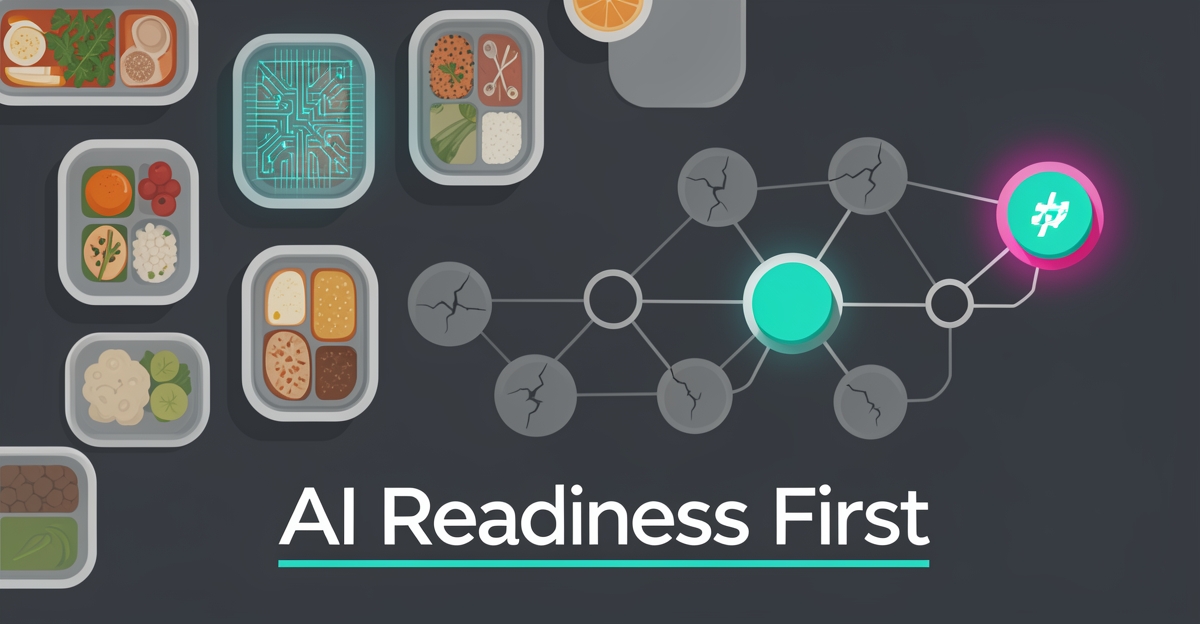
Why Most Meal Prep Services Fail at AI Adoption, And How to Avoid It
Key Facts
- Widely cited industry research suggests most AI projects fail due to organizational and workflow challenges, not technical shortcomings, according to LinkedIn's analysis.
- In one frequently cited case study, roughly 71% of employees embraced a crude AI system once they were listened to and their problems validated, one analysis found.
- AI-powered inventory forecasting can meaningfully reduce food waste compared to traditional spreadsheet methods, vendors in this space commonly report reductions of up to 40%.
- Meal prep at home is typically far cheaper than eating out, according to Wikipedia.
- Major food companies including McDonald's, Nestlé, and Domino's have deployed AI for demand forecasting and personalization, industry case studies reveal.
Hire a team member that works 24/7 — for less than a part-time wage.
AI receptionists, SDRs, dispatchers and 99+ roles. Trained on your business, fully managed.
Not sure where to start? Ask our AI planner
The AI Failure Trap in Meal Prep Operations
Most meal prep services hit a wall when they try to adopt AI, not because the technology doesn't work, but because they overlook the human and organizational factors that determine success. Industry analyses consistently point to organizational, cultural, and workflow challenges, not technical shortcomings, as the dominant reason AI projects fail according to LinkedIn research. For meal prep businesses, this often starts with data that's inconsistent, siloed, or poorly formatted, making it impossible for AI models to generate reliable insights about inventory, demand forecasting, or customer preferences.
Even when the tech is sound, many initiatives collapse because teams don't see how AI ties to real business outcomes. Without a clear connection to goals like reducing waste, lowering labor costs, or improving order accuracy, employees view AI as an extra burden rather than a tool that makes their work easier. Resistance grows when staff aren't involved early, lack proper training, or feel uncertain about how their roles will change, especially in fast-paced kitchen environments where trust and routine are critical. These aren't flaws in the algorithm; they're signs of a readiness gap that dooms adoption before it begins.
AIQ Labs helps meal prep services avoid this trap by starting with a readiness-first conversation that examines data quality, workflow alignment, team capacity, and change management readiness, ensuring AI is introduced at the right pace and with the right support. By addressing these foundational issues first, businesses can move beyond pilot purgatory and build AI capabilities that actually stick, scale, and deliver measurable value across meal planning, prep, and delivery operations.
What Successful AI Adoption Looks Like for Meal Prep
The gap between traditional meal prep operations and AI-powered workflows isn't theoretical, it's measurable. While conventional kitchens rely on spreadsheets and intuition, leading food companies are proving that intelligent automation delivers tangible returns across efficiency, accuracy, and customer experience.
According to industry case studies, major players like McDonald's, Nestlé, PepsiCo, Starbucks, and Domino's have deployed AI to optimize demand forecasting, personalize menu recommendations, and streamline kitchen operations. These implementations share a common thread: they started with a specific operational bottleneck rather than a vague innovation mandate. The research confirms that organizational, cultural, and workflow challenges, not technical limitations, are what sink most AI projects.
- Increased efficiency through automated inventory forecasting and production scheduling that can cut waste substantially compared to spreadsheet methods
- Improved accuracy in portion control, allergen tracking, and nutritional analysis, eliminating costly human error
- Enhanced customer experience via personalized meal recommendations and dynamic subscription management that adapts to preference changes in real time
The contrast is stark. Traditional meal prep struggles with the variability of perishable inventory, last-minute order changes, and dietary complexity. AI-powered operations turn these variables into structured data streams that enable predictive decision-making. But technology alone doesn't create this transformation. As one industry leader noted, "You cannot engineer your way out of a listening problem", successful adoption requires understanding the actual workflows of kitchen staff, delivery teams, and customer support before writing a single line of code.
This is where readiness assessment becomes critical. AIQ Labs maps your current operations, data infrastructure, and team capabilities against proven AI use cases, ensuring you invest in solutions that solve real problems rather than chasing capabilities that look impressive in demos but stall in production. The companies winning with AI today didn't start with the technology. They started with the problem.
A Readiness-First Approach to Avoiding Pitfalls
A readiness-first approach prevents the most common AI adoption failures by grounding decisions in measurable outcomes and human factors. Starting with a clear business case ensures AI initiatives are tied to specific goals like reducing operational costs or improving order accuracy, making it easier to track ROI and sustain organizational buy-in. Involving employees early in the design process helps surface real workflow challenges and builds ownership, increasing the likelihood of successful adoption, much like the frequently cited Ohio manufacturing case where roughly 71% of employees embraced a crude AI system after teams were listened to and problems were validated. Ensuring data quality and seamless workflow integration from the outset avoids the pitfalls of poor inputs and misaligned automation, which are cited as top reasons AI projects fail. By conducting a thorough needs assessment, developing an ROI-aligned business case, engaging staff in implementation, and providing targeted training, meal prep services can shift from AI experimentation to sustainable transformation. This methodical preparation addresses the cultural, organizational, and technical barriers that derail most AI initiatives. AIQ Labs supports this readiness phase directly, whether that's a single AI Workflow Build targeting your costliest workflow, or a phased AI Operating System that connects your whole operation.
From Assessment to Implementation with AIQ Labs
Most meal prep services stumble when adopting AI not because the technology fails, but because they skip foundational steps like assessing readiness or building a business case. LinkedIn's analysis found that most AI projects fail due to organizational, cultural, and workflow challenges, not technical limitations. AIQ Labs helps small and mid-sized businesses avoid this by starting with a structured readiness conversation that evaluates data quality, workflow complexity, and team capacity before any development begins.
The process begins with a needs assessment to pinpoint specific operational pain points, such as inefficient order routing or inventory waste, ensuring AI solves real problems. From there, AIQ Labs develops a clear business case tied to measurable goals like reducing labor costs or improving delivery accuracy, critical for securing buy-in and demonstrating ROI. Employee engagement follows, involving staff early to address resistance and highlight personal benefits, a strategy echoed by the Ohio manufacturing case where roughly 71% of employees adopted a crude AI system simply by being heard and having their input validated.
To reduce risk for resource-constrained meal prep businesses, AIQ Labs offers three clear entry points and payment models. Start Monthly puts managed AI Employees, receptionists, SDRs, dispatchers, and 99+ other roles, to work on repetitive tasks at roughly 80% less cost than a human hire. Build in Milestones rebuilds the one workflow that costs you the most, at a fixed price, in phases. Own It Outright gives you a full AI Operating System you own outright, built in phases. Each path includes training, monitoring, and iterative improvements, so teams gain confidence and competence without overextending budgets. This phased, people-first approach transforms AI adoption from a risky leap into a managed evolution, aligning technology with workflow, not the other way around.
Still paying for 10+ subscriptions that don’t talk to each other?
We build custom AI systems you own outright. No vendor lock-in. Full control.
Not sure where to start? Ask our AI planner
Frequently Asked Questions
Why do so many meal prep services fail when they try to use AI?
What's the first thing I should fix before buying AI for my kitchen?
Will my kitchen staff actually use AI, or will they resist it?
What real benefits can AI bring to a meal prep business?
How do I avoid getting stuck in pilot purgatory with AI?
Is AI only for big chains like McDonald's and Domino's?
Build AI That Actually Sticks in Your Kitchen
Meal prep services don't fail at AI because the technology doesn't work, they fail because adoption is treated as a tech project instead of an operational change. Inconsistent data, unclear business value, and teams left out of the process are why most AI projects stall on organizational and workflow challenges according to LinkedIn research. The services that win start with readiness: a clear business case tied to waste reduction, labor cost, and order accuracy; clean, usable data; and early involvement of kitchen and delivery staff so AI feels like support, not disruption. If you're evaluating AI, begin with an honest readiness check of your data, workflows, and team capacity before investing in tools. That disciplined foundation is what moves you from pilot purgatory to measurable gains in forecasting, prep efficiency, and customer experience. Start with the 2-minute Fit Check at aiqlabs.ai/apply, then book a free 30-minute strategy call to map your biggest bottleneck and identify high-ROI automation opportunities, with no obligation, just clarity on whether there's a clear win.
Make AI your competitive advantage — not just another tool.
Strategy, implementation and ongoing optimization. One partner, end to end.
Not sure where to start? Ask our AI planner