Why Most Mediterranean Restaurants Fail at AI Implementation, And How to Avoid It
Key Facts
- Generic AI treats a lamb kebab like a frozen patty, but AI built on POS data can meaningfully reduce food waste in Mediterranean restaurants according to Lavu's analysis
- Industry analyses suggest most restaurants waste a meaningful share of food, profit going straight to the dumpster, while labor costs commonly run 30-35% of revenue when scheduling is guesswork industry data shows
- A large majority of restaurant executives plan to increase AI investments, yet many feel their organizations lack readiness in strategy and technology infrastructure Deloitte research reveals
- AI operating systems typically cost a few hundred to a few thousand dollars monthly, with operators commonly reporting ROI within roughly 6 to 12 months according to implementation data
- A significant share of successful AI adoptions happen because the AI was integrated into software the team already used, not deployed as a standalone tool implementation guidance shows
- Early AI adopters report notable improvements in scheduling accuracy and demand forecasting compared to manual processes restaurant data indicates
- Mediterranean restaurants typically target food costs of 28-35%, but generic AI often recommends high-margin substitutions that erode cultural authenticity and guest trust Lavu's analysis notes
Hire a team member that works 24/7 — for less than a part-time wage.
AI receptionists, SDRs, dispatchers and 99+ roles. Trained on your business, fully managed.
Not sure where to start? Ask our AI planner
The Mediterranean AI Trap: Generic Tools vs Culinary Reality
Mediterranean kitchens live on freshness, not forecasts. Generic restaurant AI built for burgers and chains treats a lamb kebab the same as a frozen patty, and the mismatch shows up fast in spoilage, missed covers, and menu drift.
Off-the-shelf demand models are trained on stable, year-round SKUs. Mediterranean concepts run on perishable produce, specialty meats, and dairy with short shelf lives, plus seasonal menus that change with harvests and local events. Lavu’s analysis of Mediterranean operators notes that ingredient spoilage costs money because fresh produce, specialty meats, and dairy have limited shelf lives. Without precise demand prediction, operators over-order and waste product.
That waste is already a structural problem. Industry data suggests most restaurants waste a meaningful share of their food purchases, pure profit going to the dumpster. AI analytics built on POS data can help reduce that waste by reviewing sales for dishes like lamb kebabs or hummus and identifying purchasing patterns. The gap is that generic tools rarely ingest prep time, yield loss, or same-day market pricing, so forecasts miss the culinary reality.
Labor is the second trap. Mediterranean service is peak-heavy and prep-intensive. Labor costs are commonly cited as hitting 30-35% of revenue when scheduling is guesswork, and many restaurants aim for a labor cost between 25-35%. Generic scheduling AI predicts busy periods from transaction volume alone. It does not account for labor-intensive mise en place, slow-cooked braises, or the need for skilled cooks during service spikes.
Menu profitability also suffers. Tools like Lavu’s Marty AI analyze profitability by considering ingredient costs, preparation time, and sales volume, and many Mediterranean restaurants target a food cost percentage of 28-35%. Generic tools often optimize for sales velocity only, pushing high-margin but culturally off-brand substitutions that erode guest trust.
The failure pattern is consistent:
- Forecasts based on historical averages ignore seasonality and local events
- Inventory alerts do not factor perishability windows for fresh herbs, fish, and dairy
- Staffing models miss prep-heavy labor needs before service, not just during
- Menu pricing recommendations ignore dish complexity and tradition
Generic AI creates digital noise instead of operational relief when it does not mirror how managers actually work. AIQ Labs approaches this by mapping workflows to culinary constraints first, through AI Workflow Builds that rebuild the one workflow costing you the most, then building systems that respect ingredient lifecycles, seasonal menus, and prep realities. That context-aware design is what separates a dashboard from a decision system that Mediterranean operators will actually use.
Where AI Projects Actually Break in Food Service
AI projects in food service often stall not because of flawed technology, but due to overlooked operational realities. Deloitte’s research shows that while a large majority of restaurant executives expect AI investments to increase, most feel their organizations lack readiness in strategy, technology infrastructure, and data integration, creating a gap between ambition and execution. Fragmented systems for POS, payroll, and scheduling undermine AI reliability, as managers distrust insights that don’t align with their real-time workflows. Without clean, integrated data flowing from kitchen displays to labor tools, AI outputs become theoretical noise rather than actionable guidance.
This misalignment creates an insight vs. impact gap where tools generate forecasts but don’t enable decisions. Managers abandon systems that flag rising labor costs yet require manual spreadsheet rebuilding to act, adding steps instead of saving time. AIQ Labs addresses this by designing AI that mirrors how managers actually work, embedding recommendations directly into scheduling and inventory workflows so adjustments happen in the moment, not after the shift. When AI understands operational context, like precision staffing for peak cover times rather than blunt cost-cutting, it earns trust by protecting both service quality and labor budgets.
Ultimately, most pilots stall early because they skip foundational readiness. Success requires clean data, workflow alignment, explainability, and outcome measurement, not just dashboards. Restaurants that invest in connecting systems and training AI on their specific service rhythms see measurable improvements in schedule responsiveness and manager satisfaction, proving that AI delivers value only when it’s built for the work, not just the data.
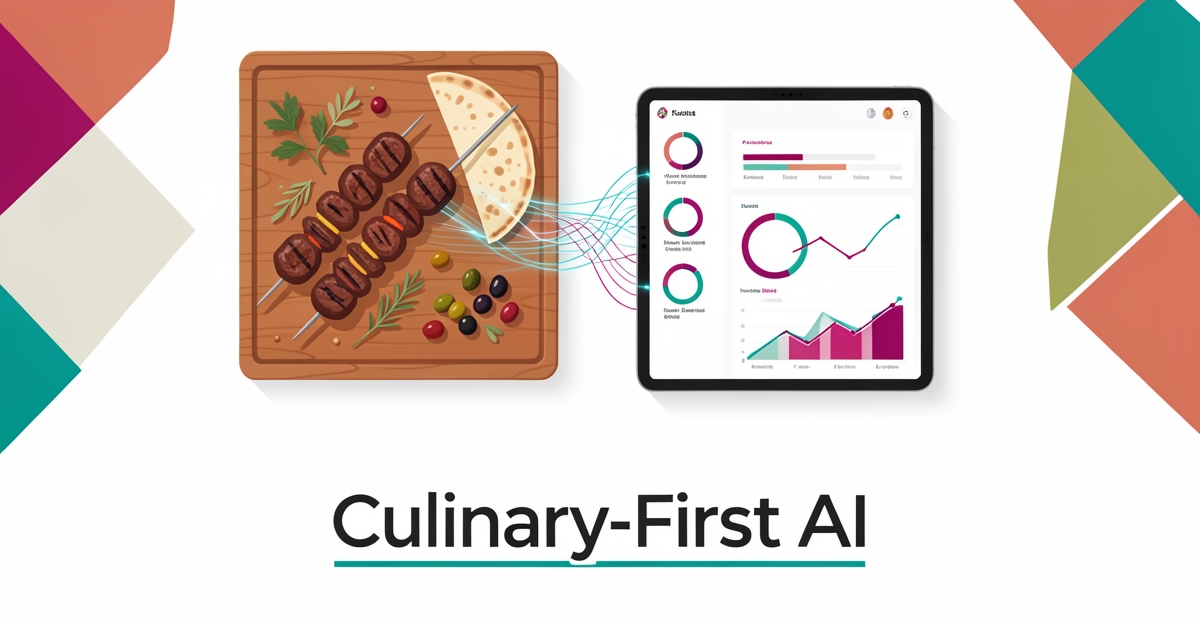
A Culinary-First AI Approach That Protects Tradition
AIQ Labs helps Mediterranean restaurants deploy AI that strengthens, rather than replaces, the human touch at the heart of their cuisine. By focusing AI on operational support, like forecasting demand for perishable ingredients or optimizing staff schedules, restaurants can preserve culinary traditions while reducing waste and labor inefficiencies. This approach ensures technology serves the kitchen, not the other way around.
For inventory management, AI analyzes historical sales, seasonal trends, and local events to forecast precise demand for fresh produce and specialty meats. Lavu’s analysis, for example, positions tools like Marty AI as helping Mediterranean restaurants reduce food waste by preventing over-ordering of perishable items like lamb, eggplant, and dairy. This directly lowers food cost percentages without compromising ingredient quality or menu authenticity.
Dynamic staffing powered by AI predicts peak hours using transaction data, allowing managers to align labor with actual customer flow. Industry research indicates AI-driven scheduling can meaningfully improve forecast accuracy, helping restaurants maintain service quality during rushes while avoiding overstaffing during lulls. This supports the traditional Mediterranean value of attentive, timely hospitality without inflating labor costs. Front-of-house coverage can also be handled by AI Employees, managed AI receptionists and dispatchers that answer every call and booking request at a fraction of the cost of an additional hire.
AI also enhances guest experiences through personalized profiles that remember dietary preferences, favorite dishes, and past orders, without replacing the warmth of human interaction. When a guest regularly orders hummus with extra za’atar, the system can flag this preference to staff, enabling a tailored welcome that feels personal, not automated. These insights deepen loyalty while keeping the focus on genuine connection.
Finally, AI provides menu margin insights by analyzing ingredient costs, preparation time, and sales volume per dish. Operators can identify high-popularity, low-margin items, like a labor-intensive stuffed grape leaf dish, and adjust pricing or portions to protect profitability. This data-driven approach helps maintain the 28-35% food cost target many Mediterranean restaurants aim for, ensuring traditional recipes remain viable without sacrificing margins.
From Pilot to Production: An Implementation Roadmap That Sticks
Most Mediterranean restaurants don’t fail at AI because the technology is weak. They fail because they try to automate everything at once with tools that don’t understand a menu-driven, seasonal business.
A practical rollout starts with the pain, not the platform. Audit high-impact pain points where waste and labor bleed margin. Lavu’s analysis for Mediterranean operators shows ingredient spoilage from fresh produce, specialty meats and dairy drives profit loss, and AI demand prediction can help reduce food waste. Map the cost of missed calls, over-ordering, and last-minute callouts before choosing software.
Select POS-integrated tools only. Generic AI creates data silos that managers abandon. Implementation guidance for restaurants notes that a significant share of successful AI adoptions happened because the AI was integrated into software the team already used. For Mediterranean kitchens, that means systems that read existing POS data for dishes like lamb kebabs or hummus and forecast purchasing patterns without ripping out the stack.
Deploy one high-ROI use case first. Inventory and scheduling deliver the fastest proof. A comparison of AI operating systems versus manual processes finds AI systems typically cost a few hundred to a few thousand dollars per month, with operators commonly reporting ROI within roughly 6 to 12 months through labor and food cost savings. Run the chosen use case in parallel for two weeks, track food cost %, labor %, and waste %, then switch over.
Train managers for adoption, not just staff. AI only sticks when the person on the floor can act on it in real time.
A Mediterranean-specific rollout looks like this:
- Audit demand volatility for perishable ingredients and peak-hour staffing gaps
- Validate POS integration so forecasts and schedules pull from live sales, not spreadsheets
- Pilot inventory forecasting or demand-based scheduling as the first use case
- Coach managers to review and override recommendations daily for the first 30 days
This is where the right build partner changes outcomes. AIQ Labs works with small and mid-sized businesses through AI Operating Systems, one connected operating layer built in phases and owned outright, designed to respect culinary traditions and workflow nuances. True ownership eliminates vendor lock-in and subscription sprawl while keeping models aligned to menu seasonality and service culture. You can start monthly, build in milestones, or own it outright, no lock-in either way.
Momentum builds once the first win is measurable. Restaurant implementation data shows most restaurant executives plan to increase their AI investment, with early adopters reporting notable improvements in scheduling accuracy and demand forecasting. With a single proven use case, managers trust the system, adoption spreads, and expansion becomes a choice not a gamble.
Still paying for 10+ subscriptions that don’t talk to each other?
We build custom AI systems you own outright. No vendor lock-in. Full control.
Not sure where to start? Ask our AI planner
Frequently Asked Questions
Why do generic AI tools struggle with Mediterranean restaurants specifically?
Can AI actually cut food waste in a kitchen that relies on fresh ingredients?
Will AI help me get labor costs back to a healthy range?
Do I need to rip out my POS to make AI work?
How fast can a restaurant see ROI from AI, and what does it cost?
What’s the biggest reason restaurant AI projects stall?
Your Next Move: From Generic AI to Culinary Intelligence
Mediterranean restaurants don't need to choose between tradition and technology, they need AI that respects both. The path forward starts with a single high-impact use case: demand forecasting that understands perishability, or scheduling that accounts for prep-intensive service. Skip the generic tools that treat your lamb kebabs like frozen patties. Instead, audit where waste and labor bleed margin, validate POS integration, and pilot one focused solution. When a large share of successful AI adoptions happen because tools integrate into existing workflows, the message is clear: context beats capability. AIQ Labs builds AI systems that honor culinary traditions while eliminating operational chaos, 200+ multi-agent systems deployed, built in phases, owned outright, with no vendor lock-in. Ready to see what AI built for your kitchen actually looks like? Start with the two-minute Fit Check to map your biggest bottleneck, then book a free 30-minute strategy call to identify your highest-ROI opportunity. If there isn't a clear win, we'll tell you that too.
Make AI your competitive advantage — not just another tool.
Strategy, implementation and ongoing optimization. One partner, end to end.
Not sure where to start? Ask our AI planner