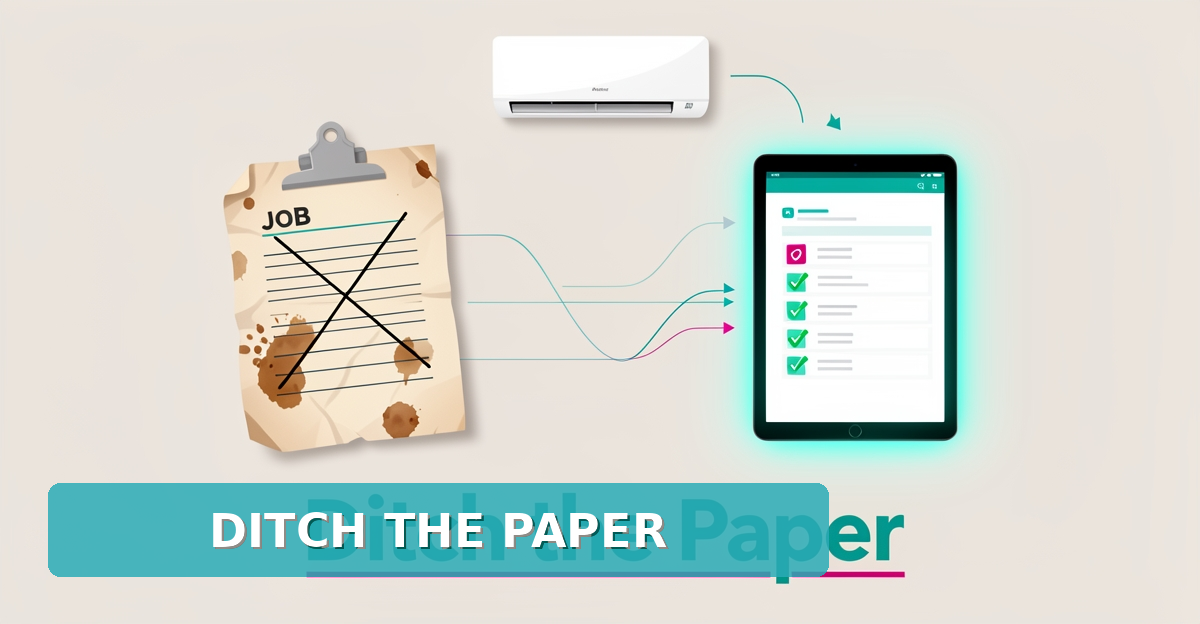
Why Most Mini-Split Installers Still Use Paper-Based Job Logs (And How to Fix It)
Key Facts
- Transcription errors on critical commissioning data can void warranties and trigger callbacks that often exceed the original install margin
- Days-long lag between job completion and office visibility delays invoicing and impacts cash flow
- Paper logs containing customer addresses and payment details in unlocked vehicles create security risks with no audit trail
- AI-powered document systems capture installation steps in real time, enabling instant data flow to performance dashboards
- Digitizing one workflow at a time lets mini-split installers modernize without disrupting ongoing installations
- Proper mini-split sizing depends on room features like high ceilings and open doorways, not just square footage according to Consumer Reports
- AI analysis of logged installation data can reveal patterns, such as certain high-ceiling installs consistently taking longer, prompting targeted training or tool adjustments
Hire a team member that works 24/7 — for less than a part-time wage.
AI receptionists, SDRs, dispatchers and 99+ roles. Trained on your business, fully managed.
Not sure where to start? Ask our AI planner
The Hidden Costs of Paper-Based Job Logs in Mini-Split Installation
Paper job logs persist in mini-split installation not because they work well, but because they're familiar. Crews clip them to clipboards, scribble readings between refrigerant line brazes, and file them in truck cabinets where they stay until a warranty claim forces a frantic search.
The cost of that familiarity shows up in three places. First, accuracy. A Consumer Reports analysis notes that proper sizing depends on "what goes on in that space", room features, high ceilings, open doorways, not just square footage. When technicians transcribe pressure readings, torque values, and commissioning notes by hand, transcription errors compound. A single digit mistake on a refrigerant charge can void a warranty and trigger a callback that can cost several times the original install margin.
Second, speed. Handwritten logs create a lag between field completion and office visibility. Project managers wait days for paperwork to arrive before they can invoice, schedule follow-ups, or update customers. That delay ripples into cash flow and crew utilization.
Third, security. Paper logs containing customer addresses, system specifications, and payment details ride in unlocked vehicles and sit on shared desks. No audit trail exists. No encryption protects them. A lost clipboard is a data breach waiting for a regulator.
- Transcription errors on critical commissioning data
- Days-long lag between job completion and office visibility
- Zero audit trail for sensitive customer and system data
- Inability to analyze installation patterns across crews
- Manual re-entry required for any reporting or warranty lookup
These aren't hypothetical risks. They're the daily friction that AIQ Labs sees when auditing field service operations. AI-powered document systems capture, categorize, and store every installation step, pressure readings, photos, customer sign-offs, at the moment of creation. The data flows instantly to dashboards where managers track crew performance, identify training gaps, and generate client reports without chasing paperwork. Installers get back the hours they spent deciphering handwriting. Customers get the documentation they deserve.
How AI-Powered Document Systems Transform Installation Tracking
Manual job logs create blind spots in mini-split installation tracking, making it difficult to verify work quality or identify recurring issues across projects. Installers often rely on handwritten notes that are prone to transcription errors, illegible entries, or lost documentation, especially in fast-paced field environments. These gaps not only delay invoicing and client follow-ups but also prevent teams from spotting patterns that could improve efficiency or prevent callbacks. Without a centralized, searchable record, performance trends remain hidden, and opportunities for predictive maintenance go unnoticed.
AI-powered document systems eliminate these limitations by capturing every installation detail in real time through smart forms, voice-to-text transcription, or photo-based data entry. Once captured, AI automatically categorizes and structures the information, tagging equipment models, labor hours, refrigerant levels, and customer-specific notes, turning chaotic paper trails into clean, analyzable datasets. This shift enables installers to move beyond reactive logging and toward proactive service optimization, where every job contributes to a growing knowledge base that informs better decision-making.
With structured data in place, AIQ Labs' document processing tools unlock performance tracking that was previously impossible with manual logs. Teams can measure average installation times per unit type, track warranty-related issues by model, and correlate technician performance with customer feedback, all updated continuously as new jobs are logged. For example, analysis might reveal that certain high-ceiling installations consistently take longer than average, prompting targeted training or tool adjustments. These insights don't just improve internal operations; they feed directly into automated client reports that showcase transparency, build trust, and reduce post-installation inquiries.
Beyond tracking, AI-driven analysis transforms installation data into a predictive asset. By identifying early warning signs, such as repeated pressure test failures or drainage adjustments across similar setups, the system can flag potential issues before they lead to callbacks or customer dissatisfaction. This capability supports smarter scheduling, smarter inventory planning, and smarter communication with homeowners about what to expect post-installation. When every step is digitized and intelligently processed, mini-split installers gain not just a record of what was done, but a roadmap for how to do it better next time. To see how AI-powered document systems can transform your field service workflows, start the Fit Check, then schedule a free 30-minute strategy call.
From Paper to AI: A Practical Implementation Path for HVAC Contractors
The hardest part of going digital isn't the technology, it's the fear that switching mid-season will grind installations to a halt. The good news: it doesn't have to. A phased approach lets mini-split installers digitize job logs gradually, keeping crews on schedule while the paper habit is retired one step at a time.
The risk of standing still is real. Manual job logs introduce errors, delays, and security breaches, and they make performance tracking and client reporting far harder than they need to be. Meanwhile, customers expect documentation, especially given that proper sizing and installation matter enormously. As Consumer Reports expert Chris Regan puts it, "It's not just the square footage, but what goes on in that space", details like high ceilings and open doorways that a digital log can capture and store reliably, unlike a crumpled paper form.
A practical path forward looks like this:
- Phase 1, Digitize one workflow. Start with a single critical process, such as capturing installation details and client sign-offs, rather than overhauling everything at once. This is the core of AIQ Labs' Workflow Builds approach: rebuild the one workflow that costs you the most, at a fixed price, in phases.
- Phase 2, Integrate existing tools. Connect the new document system to the scheduling, CRM, and accounting tools already in use, so data flows instead of duplicating.
- Phase 3, Train the team by role. Crew-level training focused on each technician's actual tasks drives adoption far better than a single all-hands demo.
- Phase 4, Measure and expand. Track error rates, reporting time, and client satisfaction, then extend the system to additional workflows once the numbers justify it.
This is where structure matters. AIQ Labs offers two engagement models built for exactly this kind of low-risk modernization. With Start Monthly, contractors get setup plus a flat monthly plan, less than a part-time hire, that includes the build, training on the business, tool integrations, monitoring, and ongoing improvements, with the option to pause or adjust anytime. For a larger system, Build in Milestones splits the project into phases: each phase is approved and paid for as it ships, and if a contractor stops at any point, they keep everything built so far.
The result of either path is an AI-powered document system that captures, categorizes, and stores every job detail automatically, enabling the performance tracking and client reporting that paper logs simply cannot support. And because the client owns what's built, there's no vendor lock-in holding the business back later.
For installers weighing the move, the first step costs nothing but a few minutes. Start the two-minute Fit Check at aiqlabs.ai/apply, then book a free 30-minute strategy call at aiqlabs.ai/book, a working session with an AI engineer to map your biggest bottleneck and identify high-ROI automation opportunities. If there isn't a clear win, they'll say so. Questions in the meantime? Reach the team at [email protected].
Still paying for 10+ subscriptions that don’t talk to each other?
We build custom AI systems you own outright. No vendor lock-in. Full control.
Not sure where to start? Ask our AI planner
Frequently Asked Questions
Why do mini-split installers still use paper job logs if they're so risky?
What's the real cost of a handwritten commissioning note?
How does paper slow down cash flow and reporting?
Do digital logs actually help with proper sizing and installation details?
Can we switch to AI document systems mid-season without stopping installs?
What changes once job details are captured digitally?
From Clipboard to Cloud: Your Next Step Toward Smarter Installations
Paper job logs may feel familiar, but they're quietly eroding your margins through transcription errors, delayed invoicing, and security risks, especially when a single misrecorded refrigerant charge can trigger costly callbacks. As we've seen, AI-powered document systems eliminate these blind spots by capturing every installation detail in real time, turning chaotic paper trails into structured data that fuels performance tracking, predictive insights, and transparent client reporting. The good news? You don't need to overhaul everything at once. Start small: digitize one critical workflow, integrate with your existing tools, and let measurable results guide your next steps. AIQ Labs helps mini-split installers make this shift with low-risk, phased implementation, owning what's built, pausing anytime, and scaling only when the ROI is clear. If you're ready to see where your biggest bottleneck lies and how to fix it with AI, take the two-minute Fit Check to map your opportunity, then book a free 30-minute strategy call to explore your path forward, no obligation required.
Make AI your competitive advantage — not just another tool.
Strategy, implementation and ongoing optimization. One partner, end to end.
Not sure where to start? Ask our AI planner