Why Most Mobile Fleet Repair Businesses Fail at AI Implementation
Key Facts
- Poor workflow mapping is consistently cited as a leading cause of AI project failure — tools get deployed on top of processes nobody documented
- Weak data infrastructure starves even the best AI models; the technology rarely fails first, the foundations do
- Change management determines adoption: technically sound implementations still fail when the human element is ignored
- AIQ Labs has deployed 200+ multi-agent systems and runs 4 live SaaS products daily
- Mission-level orchestration beats isolated, task-level automation in mixed fleet operations
Hire a team member that works 24/7 — for less than a part-time wage.
AI receptionists, SDRs, dispatchers and 99+ roles. Trained on your business, fully managed.
Not sure where to start? Ask our AI planner
The Workflow Mapping Trap: Why Skipping Process Analysis Dooms AI Projects
The fastest way to kill an AI project in mobile fleet repair is to skip the boring part: mapping how work actually gets done. Businesses that rush to deploy AI without understanding their real workflows end up with tools that fight their processes instead of supporting them.
Research on AI implementation failures consistently identifies poor workflow mapping as a primary cause of misaligned solutions, friction, and low adoption rates. When a business deploys AI on top of processes it hasn't documented, the technology optimizes a version of operations that doesn't actually exist. Technicians work around the system, dispatchers revert to phone calls, and the investment quietly dies.
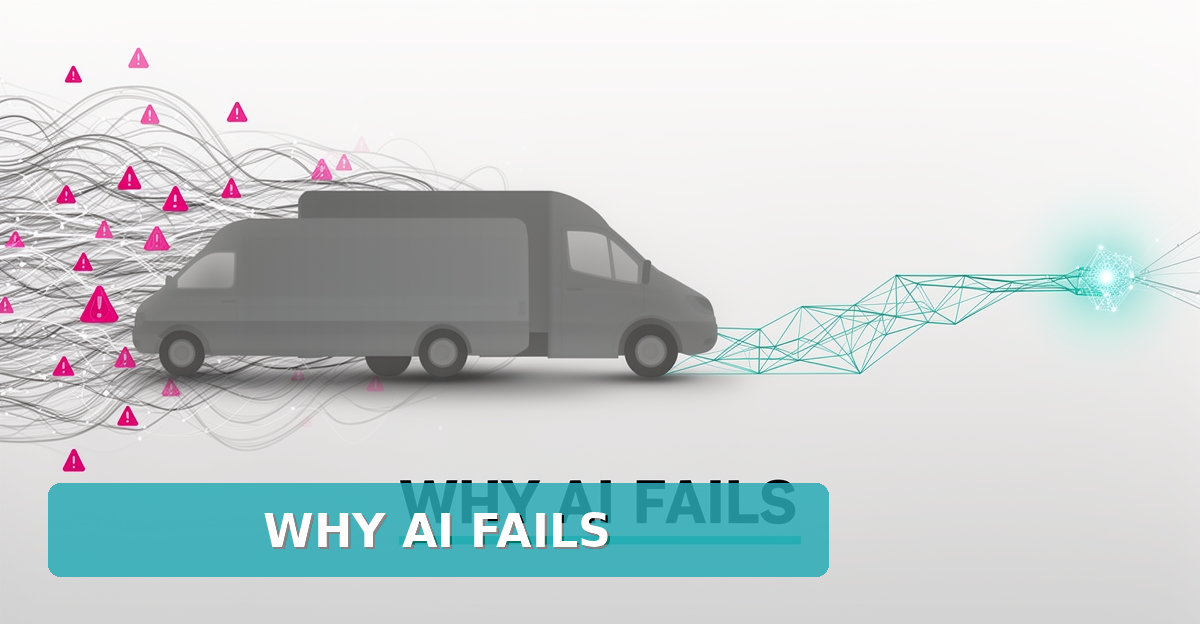
The fleet industry offers a stark warning about what happens when coordination and process understanding are treated as afterthoughts. Poorly coordinated automated systems produce alert fatigue: operators get flooded with notifications they can't act on, stop trusting the technology, and start ignoring it entirely. That's the failure mode you should fear — not the AI making a bad prediction, but the AI making so many interruptions that your team tunes it out. In operations with unattended equipment, constant false alarms don't just waste time; they degrade human performance and safety.
Workflow mapping matters for three reasons:
- It reveals the actual sequence of steps — who calls whom, what gets logged where, and where handoffs break down
- It identifies which steps generate usable data and which rely on tribal knowledge
- It exposes the integration points where AI must connect with dispatch software, CRMs, and scheduling tools
- It surfaces human-machine friction before deployment, not after
That last point deserves emphasis. The bottleneck in most automated operations isn't the speed of the machines — it's the interface between automated and human-driven work. The same principle applies to mobile fleet repair: the failure point is rarely the AI model itself. It's the moment a technician and an automated system collide at the same workflow junction with no shared understanding of who does what.
This is why process analysis must precede technology selection, not follow it. AIQ Labs begins every engagement with a structured readiness assessment that includes business process analysis, technology stack evaluation, and data infrastructure review before any solution is proposed. The goal is to design around real constraints — the actual dispatch flow, the actual technician behavior — rather than theoretical capabilities. For businesses that want to fix one high-cost workflow first, a scoped AI Workflow Build is often the right entry point.
There's a broader lesson here that fleet operators learn the hard way: systems don't scale the way spreadsheets suggest. Buying the technology is not the same as getting the payback. For a mobile fleet repair business, that means the map comes before the machine — every time.
Data Infrastructure Gaps: The Silent Killer of AI Initiatives in Fleet Repair
Many mobile fleet repair businesses launch AI initiatives with high expectations, only to see them stall or fail due to a foundational weakness they overlook: data infrastructure. Without reliable systems to collect, store, and process operational data, even the most advanced AI tools cannot function effectively. This gap is not just a technical shortfall—it's a strategic blind spot that undermines the entire transformation effort.
Unstructured, noisy data flows are the typical symptom. When alerts, work orders, and technician notes live in disconnected systems with no validation or context, AI has nothing trustworthy to learn from — and the noise it produces overwhelms the people it's supposed to help. These issues stem not from AI limitations, but from missing infrastructure to clean, contextualize, and route data at scale.
AIQ Labs addresses this critical gap during its readiness assessment phase, where technology and data infrastructure are evaluated before any model is built. This step identifies whether existing systems can support AI-driven workflows—such as predictive maintenance, automated dispatch, or parts inventory forecasting—or if foundational upgrades are needed. Without this assessment, businesses risk building AI on sand, investing in capabilities that lack the data to sustain them.
A robust data infrastructure enables AI to move beyond isolated automation and support mission-level orchestration—the coordination of tasks across vehicles, technicians, and service centers based on real-time conditions. You can have a fleet of perfectly capable automated tools, each one performing its individual job well, but if they can't coordinate and share information, you're operating at just a fraction of the potential. In fleet repair, this means AI must not only diagnose issues but also align repairs with technician availability, parts logistics, and customer SLAs—all of which depend on unified, trustworthy data.
Building this foundation requires more than sensors or software; it demands intentional design around data governance, integration points, and scalability. Businesses must establish standardized data formats, ensure timely synchronization across tools like CRM, accounting, and shop management systems, and implement validation layers to catch errors before they propagate. Only then can AI models learn from accurate historical patterns and deliver reliable recommendations in production.
The absence of such infrastructure is often silent but deadly—AI appears to fail not because the technology is flawed, but because it was never given the fuel it needs to run. By prioritizing data readiness early, mobile fleet repair businesses can avoid this pitfall and create the conditions for AI to deliver measurable, lasting value. This is where AIQ Labs' assessment phase becomes essential: it transforms guesswork into a clear, actionable path forward.
Overcoming Resistance: Change Management Strategies That Drive AI Adoption
Organizational resistance remains one of the most significant barriers to AI adoption in mobile fleet repair businesses. Even technically sound implementations fail without proper change management. Industry analysis consistently shows that resistance to new technologies and processes significantly impacts AI adoption success, particularly when businesses overlook the human element of transformation. This challenge is especially pronounced in fleet operations where long-standing manual workflows and technician expertise create natural hesitancy toward automation.
Effective change management begins with transparent communication that connects AI initiatives to tangible operational improvements rather than abstract technological promises. AIQ Labs' adoption and change management approach emphasizes team training customized to each role, ensuring mechanics, dispatchers, and managers understand how AI tools will reduce repetitive tasks like manual data entry or scheduling conflicts. Successful implementations focus on mission-level orchestration rather than isolated automation, which requires coordinated effort across departments — and reduces the alert fatigue that comes from uncoordinated systems.
- Develop role-specific training that demonstrates immediate time savings in daily workflows
- Create feedback loops where technicians can report pain points and suggest improvements during pilot phases
- Track and share adoption metrics visibly, such as reduced invoice processing time or fewer missed service appointments
- Celebrate quick wins that reinforce how AI supports—not replaces—human expertise in complex diagnostics
- Align change management with business case validation showing clear payback periods technicians can understand
Performance tracking and continuous improvement form the final critical component of sustainable AI adoption. By establishing clear success metrics tied to operational goals—fewer stockouts, faster invoicing, fewer missed appointments—businesses create accountability while demonstrating value. This approach transforms AI from a perceived threat to job security into a tool that enhances technician effectiveness. The bottleneck in mixed human-and-machine operations is rarely the speed of the automation; it's the interface between the two. When change management addresses these human factors systematically, resistance transforms into organizational buy-in that drives long-term AI success.
From Isolation to Orchestration: Why Mission-Level AI Beats Vehicle-Level Automation
A fleet of individually smart tools can still fail as a fleet. The difference between businesses that scale AI and those that stall comes down to one design decision: optimizing each vehicle or task in isolation versus orchestrating the entire mission.
The core problem is coordination. You can have a fleet of perfectly capable automated systems, each one performing its job safely and efficiently, but if they can't coordinate and share information, you're operating at just a fraction of the potential. Vehicle-level automation solves the wrong problem when the real bottleneck is coordination.
The consequences of automation without orchestration are predictable: every system fires independently, the result is noise rather than intelligence, and the people running the operation stop trusting it. Mixed fleets fail at the seams, not at the sensors — the moment an automated process and a human process converge at the same junction with no shared understanding of what the other will do.
Mission-level orchestration sits above the individual automation stack and reasons about the whole operation. It handles the questions isolated systems cannot:
- Which vehicle handles which task, given real-time constraints
- How to rebalance work when a vehicle errors or goes offline
- What to prioritize when resources—technicians, parts, time slots—are constrained
- How human and automated assets coordinate in shared operational space
That last point matters more than most operators realize. The failure point in most automated operations isn't the speed of the machines — it's the interface between autonomous and human-driven work, the moment two processes approach the same decision from different directions and neither knows what the other will do.
There's also a strategic error to avoid: assuming that once the technology is ready, scale will follow. It won't. The fleet operator doesn't buy technology — he buys a payback period he can show his CFO. Systems don't scale the way spreadsheets suggest, which is why business case validation must precede deployment.
This is precisely why AIQ Labs builds on multi-agent architectures rather than single-task automations. With 200+ multi-agent systems deployed and 4 live SaaS products the company runs daily, AIQ Labs designs systems where specialized agents collaborate—research, communication, dispatch, decision-making—under one orchestration layer optimizing for the mission, not the individual task. Its readiness assessments evaluate whether a business's workflows and data infrastructure can support that coordination layer before any code is written. For businesses ready to connect every workflow into one owned system, AI Operating Systems provide that orchestration layer in phases — or managed AI Employees can handle high-volume roles like dispatch and scheduling at a fraction of a human hire's cost.
The direction of the industry is clear: leaner teams coordinating larger operations through orchestration. Isolated automation gets you a smarter vehicle; orchestration gets you a smarter business.
Still paying for 10+ subscriptions that don’t talk to each other?
We build custom AI systems you own outright. No vendor lock-in. Full control.
Not sure where to start? Ask our AI planner
Frequently Asked Questions
Why do so many mobile fleet repair businesses fail when they try AI?
Do we really need to map our workflows before buying AI software?
Is poor data infrastructure a common reason AI stalls in fleet repair?
How does alert fatigue relate to AI adoption in fleet operations?
Is mission-level orchestration better than vehicle-level automation?
What's the biggest human factor that blocks AI adoption?
Your AI Journey Starts with a Map, Not a Model
The path to successful AI in mobile fleet repair isn't about chasing the latest technology—it's about understanding your workflows, fixing your data foundations, and bringing your team along for the ride. Skipping process analysis leads to tools that fight your operations, weak data infrastructure starves even the smartest models, and ignoring change management turns innovation into resistance. The businesses that win don't automate tasks in isolation—they orchestrate missions, align humans and machines, and build AI around real constraints, not hypothetical capabilities. If you're ready to move beyond pilot purgatory and create AI that actually sticks, the first step is clarity. Start with a free strategy call to see where your biggest bottleneck lies and whether there's a clear, high-ROI path forward—no obligation, just insight. Book your 30-minute strategy call and find out if AIQ Labs can help you turn AI potential into measurable business value.
Make AI your competitive advantage — not just another tool.
Strategy, implementation and ongoing optimization. One partner, end to end.
Not sure where to start? Ask our AI planner