Why Most Orchard Farms Fail at AI Adoption (And How to Succeed)
Key Facts
- Poor data quality — not flawed algorithms — is typically the leading driver of AI failures in agriculture, according to widely cited industry analysis.
- Image-based datasets typically make up the largest share of AI inputs in agriculture, with sensors and farmer logs accounting for most of the rest, per agricultural AI research.
- Fixing data collection pipelines can resolve the majority of AI problems in agriculture before model tuning begins, research suggests.
- Multi-season, multi-location datasets are generally the most valuable for training robust agricultural AI models, experts emphasize.
- Resistance to change, training gaps, integration complexity, and poor data pipelines are the four key non-technical blockers to AI adoption in orchards.
- AI agricultural systems typically integrate satellite imagery, soil sensors, weather stations, and equipment telemetry to support decision-making.
- Successful orchard AI adoption starts with a rigorous data audit, controlled pilot, iterative staff training, and phased scaling — not algorithm selection.
Hire a team member that works 24/7 — for less than a part-time wage.
AI receptionists, SDRs, dispatchers and 99+ roles. Trained on your business, fully managed.
Not sure where to start? Ask our AI planner
The Data Quality Trap: Why Good Intentions Fail in Orchard AI
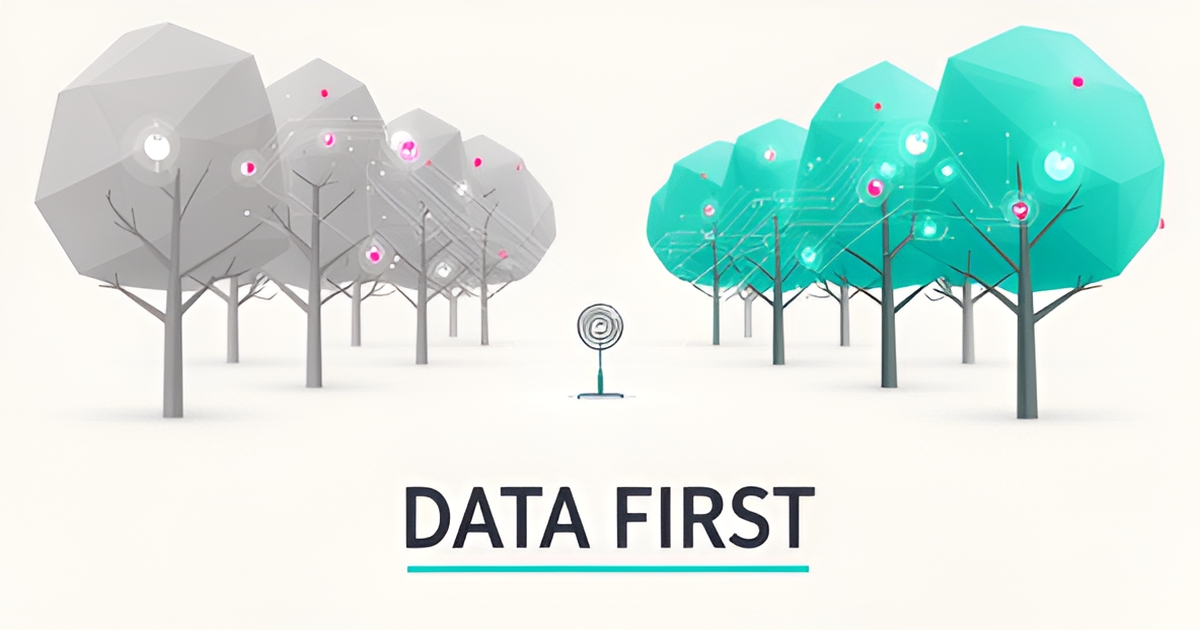
Orchard farms often launch AI initiatives with enthusiasm, only to see projects stall or fail despite investing in sophisticated algorithms. The root cause rarely lies in the technology itself but in the foundation it's built on: data quality. Industry analysis consistently points to poor data practices — not flawed models — as the leading cause of AI failures in agriculture.
This problem manifests in three common ways. First, farmer logs and handwritten notes — often used to track pest outbreaks or irrigation schedules — are inconsistent, incomplete, or recorded in varying formats, making them unreliable for training AI models. Second, sensor inputs from soil moisture or temperature devices frequently suffer from calibration drift, connectivity gaps, or placement errors, introducing noise that degrades model accuracy. Third, image datasets used for fruit counting or disease detection are frequently fragmented, captured under inconsistent lighting, or lack multi-seasonal coverage, limiting their usefulness for robust predictions.
Across agricultural AI research, image-based data typically represents the largest share of AI inputs, with sensors second and farmer logs a distant third — meaning weaknesses in any of these areas directly undermine system performance. Crucially, the same body of research suggests that fixing data collection pipelines can resolve the majority of AI problems, shifting focus from algorithmic tuning to practical, on-the-ground data hygiene.
For orchard operations, this means prioritizing standardized logging protocols, regular sensor validation, and systematic image collection across varying conditions. Without this groundwork, even the most advanced AI will deliver flawed insights, eroding trust and stalling adoption. AIQ Labs' AI Workflow Builds approach starts here: rebuild the one workflow that costs the most, beginning with a data quality assessment so the system is trained on reliable, actionable inputs from day one.
Successful examples show that farms achieving AI maturity begin not with complex models, but with simple, consistent data practices — like daily photo logs from fixed points or automated sensor feeds with built-in alerts for anomalies. These small, disciplined steps create the data richness needed for AI to move beyond pilot projects and deliver sustained value in orchard management.
The path forward isn't about chasing the latest algorithm — it's about treating data collection as a core operational discipline, as essential as pruning or pollination. When orchards invest in clean, consistent, and contextual data, they unlock AI's real potential: not as a promise, but as a predictable tool for better decisions, healthier trees, and more resilient harvests.
Start the Fit Check — https://aiqlabs.ai/apply — leading to a free 30-minute strategy call — https://aiqlabs.ai/book
Beyond Technology: Overcoming Human and Organizational Barriers to AI Adoption
The technology is rarely the first thing to break. In orchards, AI projects stall long after the sensors are installed because people, processes, and legacy systems are left out of the plan.
Resistance to change rooted in traditional knowledge is a persistent blocker. Manual processes rely on experienced operators making decisions based on visual inspection, historical knowledge, and established routines, and that reliance creates inertia against AI-driven decisions. Operational comparisons of AI versus manual farming consistently highlight resistance to change as a core adoption barrier, alongside integration complexity and training overhead.
Training gaps turn promising insights into unused dashboards. Staff must be trained to interpret AI insights and manage automated systems, yet many orchards deploy models without building the capability to act on them. Without practical interpretation skills, teams revert to instinct and the system becomes shelfware. This is where change management and training move from optional to essential.
Integration complexity compounds the human side. AI agricultural systems typically integrate multiple data sources — satellite imagery, soil sensors, weather stations, and equipment telemetry — to support decision-making and optimize operations. Comparative analyses note that integration requires compatibility with existing tools and significant upskilling of staff.
Data quality is the hidden organizational barrier. Agricultural AI adoption research argues that AI fails because the data is incomplete, inconsistent, or irrelevant — not because algorithms are bad. Image-based datasets typically dominate AI inputs in agriculture, with sensor data and farmer logs making up the remainder. If those streams are fragmented, models learn noise.
Fixing the human and organizational layer requires deliberate design. Successful adoption starts with tools that fit existing routines and clear ownership for change.
Key non-technical blockers to address early:
- Reliance on traditional knowledge and skepticism toward AI-driven decisions
- Insufficient training for staff to interpret AI insights and manage automated systems
- Integration complexity with legacy farm management and machinery platforms
- Poor data collection pipelines that deliver incomplete, inconsistent inputs
When data collection pipelines improve, impact follows. Research on AI adoption strategies for agriculture suggests that fixing data pipelines resolves the majority of AI problems in agriculture. That shift demands leadership involvement, role-specific training, and iterative field validation rather than a one-time tech rollout.
AIQ Labs builds these safeguards into every engagement. For operations ready to connect data, people, and decisions in one place, an AI Operating System provides a single connected layer built in phases and owned outright — with adoption and training treated as part of the system, not an afterthought. Orchards that approach it this way are the ones that move from pilots to sustained value.
A Step-by-Step Roadmap to Sustainable AI Adoption in Orchard Farming
Successful AI adoption in orchard farming hinges not on the sophistication of algorithms, but on a disciplined, phased approach that addresses data integrity and human factors from day one. As industry analysis reveals, AI initiatives fail primarily because data is incomplete, inconsistent, or irrelevant — not due to technological shortcomings.
Phase one begins with a rigorous data audit. Before deploying any sensors or predictive models, orchard managers must evaluate their current information architecture. Image-based datasets typically represent the largest share of AI inputs in agriculture, yet many operations still rely on handwritten logs or fragmented digital records. This transition from manual documentation to structured data collection is critical; fixing your data pipeline resolves most AI implementation problems before they start.
Next, launch a controlled pilot program targeting a single high-value workflow, such as irrigation scheduling or pest detection. Rather than attempting orchard-wide automation immediately, select a specific block or variety to test your AI systems. This iterative approach allows for field validation — real-world testing that is non-negotiable for success. According to comparative research, AI platforms excel at continuous monitoring and data-driven optimization, but they require training overhead and integration compatibility that must be proven at a small scale before expanding.
Leadership must drive change management throughout this process. Resistance to AI often stems from reliance on traditional intuition and skepticism toward automated decisions. Successful transformations pair technology deployment with comprehensive staff training, ensuring teams understand how to interpret AI insights rather than simply following outputs. Adoption sticks only when workers view AI as a tool that augments their expertise, not replaces it.
To implement this roadmap effectively, follow these sequential steps:
- Assess data maturity and establish consistent collection protocols across all blocks
- Deploy a limited pilot focusing on one measurable outcome, such as water usage or disease detection accuracy
- Train staff iteratively, incorporating their feedback to refine both the technology and workflows
- Scale gradually to additional varieties or operations only after the pilot demonstrates clear ROI
Finally, establish governance frameworks that maintain data quality as you expand. Agricultural AI research shows that multi-season, multi-location datasets are the most valuable for model training, requiring ongoing commitment to data hygiene rather than one-time collection efforts. By treating AI adoption as a continuous improvement cycle — assessment, pilot, training, scaling, and optimization — orchard operations can move beyond the pilot phase that traps many agricultural businesses. If you want a fixed-price, phased rebuild of your costliest workflow, start with a Fit Check and AIQ Labs will map the highest-ROI path.
Still paying for 10+ subscriptions that don’t talk to each other?
We build custom AI systems you own outright. No vendor lock-in. Full control.
Not sure where to start? Ask our AI planner
Frequently Asked Questions
Why do most orchard AI projects fail despite having good technology?
What's the biggest data mistake orchards make when starting with AI?
How do we overcome staff resistance to AI-driven decisions?
Should we automate the entire orchard at once or start small?
How does AIQ Labs' approach differ from standard tech consulting?
What immediate steps can we take to prepare our orchard for AI?
From Pilot Pains to Orchard Gains
Orchard AI doesn't fail because the models aren't smart enough — it fails because the foundation isn't ready. Data quality gaps in logs, sensors, and images, combined with resistance to change, training gaps, and integration complexity, keep most farms stuck in pilot mode. The farms that succeed treat data collection as core operations, start with a single high-value workflow, and pair technology with leadership-driven change management and iterative field validation. When data pipelines improve, impact follows — and fixing those pipelines resolves the majority of AI problems in agriculture, as adoption research shows. If you're ready to move from experimentation to sustained value, start with a clear fit check. Start the Fit Check at https://aiqlabs.ai/apply for a free 30-minute strategy call at https://aiqlabs.ai/book to map your biggest bottleneck and identify a high-ROI AI path built on reliable data and adoption that sticks.
Make AI your competitive advantage — not just another tool.
Strategy, implementation and ongoing optimization. One partner, end to end.
Not sure where to start? Ask our AI planner