Why Most Pesticide Services Fail to Scale with Manual Field Operations
Key Facts
- Conventional pest management typically relies on labor-intensive manual inspections and subjective visual assessments that cannot scale with demand, according to recent IPM research.
- Labor shortages and inconsistent scheduling are widely cited as primary bottlenecks preventing pesticide services from scaling.
- As of late 2026, leading pest and disease control platforms are built around computer vision, remote sensing, and predictive analytics.
- Commercial precision-spraying systems use real-time weed and crop detection to reduce chemical use through targeted, spot-based application.
- AI integration in pest management is best understood as a structural evolution—one that enables growth without proportional cost increases.
Hire a team member that works 24/7 — for less than a part-time wage.
AI receptionists, SDRs, dispatchers and 99+ roles. Trained on your business, fully managed.
Not sure where to start? Ask our AI planner
The Scaling Ceiling of Manual Field Operations
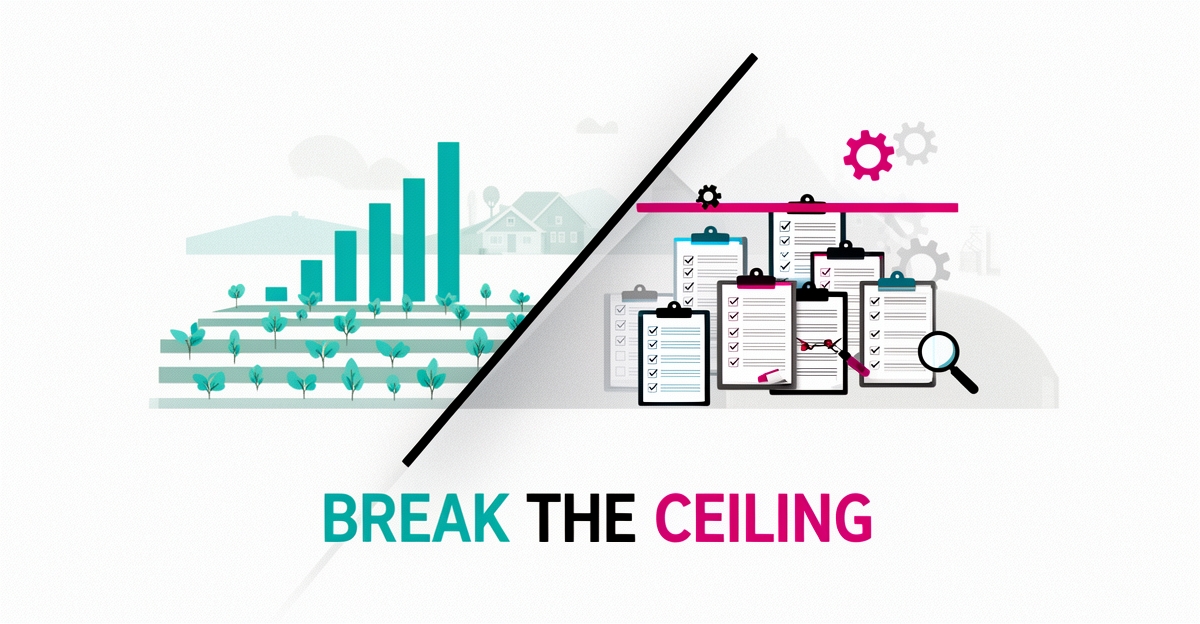
Every pest control business hits a wall where taking on more customers means hiring more technicians, buying more trucks, and watching profit margins shrink. This ceiling isn’t a market limit — it’s an operational one.
The core problem is structural. Recent systematic reviews of Integrated Pest Management describe conventional pest management as relying on “labor-intensive manual inspections, subjective visual assessments, and reactive workflows” that cannot keep pace with modern demand. When your entire model depends on a technician physically walking a property to spot a problem, your capacity is permanently capped by headcount.
Labor shortages make this worse. You can’t hire your way out of a bottleneck when qualified applicators are scarce and expensive. Industry analyses of pest and disease control operations consistently identify inconsistent scheduling and labor scarcity as primary scaling bottlenecks — and note that manual operations force costs to rise proportionally with every new customer you add.
The operational drag shows up in three places:
- Subjective assessments create inconsistency — two technicians evaluate the same property differently, leading to uneven service quality and repeat visits.
- Reactive workflows mean you’re always responding to infestations after they’ve spread, instead of catching them early when treatment is faster and cheaper.
- Manual scheduling collapses under volume — dispatchers juggle routes, cancellations, and seasonal surges with spreadsheets and phone calls.
Each of these compounds the others. A reactive model generates emergency calls, which wreck the schedule, which forces overtime, which inflates labor costs — and the cycle repeats at a larger scale with every growth spurt.
The alternative isn’t working harder. It’s removing the manual dependency entirely. The same research stream describes AI integration as “a structural evolution rather than a mere technological upgrade,” shifting operations from reactive to data-driven. As of late 2026, leading platforms in this space use computer vision, IoT sensors, and predictive analytics to detect infestations early and automate targeted interventions — work that previously required boots on the ground.
For pest control businesses ready to break through this ceiling, the path forward starts with an honest operational audit. AIQ Labs rebuilds the one workflow that costs the most through Workflow Builds — dispatch, scheduling, intake, follow-up — at a fixed price, in phases, so you can see exactly which constraints are capping growth before committing to a full build-out.
How AI Changes Pest and Disease Control Economics
Manual field operations force pesticide services to add headcount for every new acre. That linear cost model breaks when demand spikes and crews are already thin.
AI breaks the link between growth and proportional cost by automating the detection, monitoring and intervention loop that currently relies on people in the field. Current rankings of pest and disease control tools consistently show the top performers built around computer vision, remote sensing and predictive analytics — systems that monitor crop conditions, recognize early signs of infestations or infections, and recommend targeted interventions.
The shift is structural, not incremental. A systematic review of IPM literature describes the integration of AI, remote sensing and robotics into Integrated Pest Management as a structural evolution rather than a mere technological upgrade. Conventional monitoring methods, constrained by labor-intensive manual inspections, subjective visual assessments and reactive workflows, become increasingly inadequate to catch the speed of modern epidemics.
In practice that means detection moves from scheduled scouting to continuous sensing. Drones and IoT networks capture leaf-level imagery while edge models flag anomalies before symptoms are visible to the human eye. Predictive analytics then prioritize where crews should go, instead of blanket coverage.
Targeted intervention replaces broadcast spraying. Commercial platforms in this category typically follow a few recognizable patterns:
- AI-powered precision sprayers that reduce chemical use via real-time weed and crop detection
- Retrofit selective spraying systems that cut herbicide use through AI weed detection
- Integrated smart farming ecosystems combining autonomous drones, IoT and mobile-managed operations
- Leaf-level crop intelligence platforms using drone imagery and generative AI
These capabilities compress labor demand and stabilize scheduling. Scouting, a historically labor-intensive task, is increasingly automated by robotics and remote sensing. Spraying becomes spot-based, which industry research links to reduced pesticide usage and support for sustainable practices through timely, data-driven decision-making.
For service providers, the economics change because coverage scales with sensors and software, not just crews. Analyses of scaling bottlenecks in this sector note labor shortages and inconsistent scheduling as common barriers, and that AI can enable growth without proportional cost increases by automating detection, monitoring and targeted interventions.
That is where the right build partner matters. AIQ Labs maps high-value automation targets, designs phased roadmaps, and integrates AI across operations so growth does not require proportional headcount. The result is consistent operations at scale with less reliance on manual field labor.
When detection is continuous, interventions are targeted and scheduling is data-driven, pesticide services can expand territory and revenue while holding cost per acre flat.
From Reactive Scouting to Data-Driven IPM
The shift from manual field operations to intelligent pest management begins with how problems are identified and addressed. Traditional approaches rely on reactive scouting—technicians walking fields, visually inspecting plants, and responding only after damage is visible. This experience-based method is inherently limited by human capacity, subjective judgment, and delayed detection, making consistent, timely intervention nearly impossible at scale. As a result, pesticide services struggle to grow without linearly increasing labor and costs, a core constraint highlighted in industry analyses of field service scalability.
Modern Integrated Pest Management (IPM) is evolving through a structural leap into high-dimensional, data-driven inference. AI systems now integrate remote sensing, computer vision, and predictive analytics to detect infestations earlier than manual scouting typically allows, often identifying stress signals before symptoms appear to the naked eye. These tools enable higher diagnostic precision by distinguishing between pest types, disease stages, and environmental stressors through multi-modal data fusion—combining imagery, spectral reflectance, and historical patterns. Consequently, interventions become highly targeted, reducing unnecessary chemical applications while improving efficacy, a capability demonstrated by leading AI-driven precision agriculture platforms.
- AI-powered detection systems typically identify pest threats days earlier than visual scouting methods alone.
- Targeted spraying guided by AI is widely reported to reduce pesticide use meaningfully without compromising crop protection.
- Automated monitoring cuts labor-intensive scouting time substantially, freeing technicians for higher-value work.
Despite these advances, real-world deployment faces persistent barriers. Environmental heterogeneity—variations in soil, canopy density, microclimate, and pest behavior across landscapes—challenges model generalization. Limited computing infrastructure in rural areas restricts real-time data processing at the edge, while inconsistent connectivity disrupts data flow from field to cloud. Furthermore, the lack of standardized intervention protocols means even accurate AI recommendations may not translate into uniform action across teams or regions. These factors create a well-documented gap between experimental success and operational reliability in field conditions.
AIQ Labs supports this transition by helping pesticide services assess readiness, design scalable AI-integrated workflows, and overcome implementation hurdles. By aligning technology with operational realities—such as variable field conditions and workforce constraints—organizations can move beyond reactive practices toward predictive, precision-based pest management. This evolution isn’t merely about adopting new tools; it’s about redefining how decisions are made, actions are triggered, and resources are allocated across the growing season.
Building a Scalable AI Operations Model
Manual field operations create a hard ceiling for pesticide services because growth demands more crews, not better systems. Labor shortages and inconsistent scheduling are common barriers to scaling pesticide services, and manual operations force proportional cost increases as demand grows.
Scaling requires moving from reactive crews to a repeatable operating model. Conventional monitoring methods, constrained by labor-intensive manual inspections, subjective visual assessments, and reactive workflows, become increasingly inadequate to catch the speed of modern epidemics. That friction shows up as missed windows, duplicated routes, and overtime that erodes margin.
AI changes the cost curve by automating detection, coordination, and execution without adding headcount. AI enables growth in pest and disease control without proportional cost increases by automating detection, monitoring, and targeted interventions. The shift is from experience-based dispatch to data-driven inference that supports earlier detection and higher diagnostic precision.
Building a scalable AI operations model starts with readiness, not tools. An assessment maps your current technology stack, data infrastructure, team capabilities, and the specific bottlenecks in dispatch, scheduling, and field coordination. This creates a clear business case and a prioritized roadmap before any build begins.
From assessment, a custom AI workflow and integration design connects field data to back-office systems. Integration ties CRM, scheduling, and work order platforms into a single source of truth with automated data synchronization. The design focuses on three operational levers:
- Dispatch automation that matches crew skill, location, and equipment to jobs in real time
- Scheduling that balances routes, weather windows, and regulatory compliance without manual rework
- Field coordination with mobile updates, proof of service, and exception handling that reduces callbacks
Managed AI Employees can then run these workflows continuously — across 99+ roles, at roughly 80% less cost than a comparable human hire. An AI Dispatcher can qualify incoming requests, check inventory and compliance, and assign technicians. An AI Service Coordinator can confirm appointments, send reminders, and reschedule automatically. An AI Field Manager can ingest field notes and sensor data to trigger follow-ups.
This approach is proven in adjacent pest and disease control. Current tool rankings in this category consistently show top performers using computer vision, remote sensing, and predictive analytics to monitor crop conditions and recommend targeted interventions — with commercial leaders demonstrating autonomous drones, precision sprayers, and IoT-based monitoring at scale.
For operators who want the whole business connected rather than one workflow at a time, AI Operating Systems provide one connected operating layer, built in phases and owned outright. AIQ Labs has deployed 200+ multi-agent systems and runs four live SaaS products daily, so the model is assessment, custom build, and managed operation under one partner — letting pesticide services grow revenue without proportional headcount increases and maintain consistent service quality across regions.
Still paying for 10+ subscriptions that don’t talk to each other?
We build custom AI systems you own outright. No vendor lock-in. Full control.
Not sure where to start? Ask our AI planner
Frequently Asked Questions
Why do pesticide services hit a scaling ceiling with manual field operations?
What are the biggest operational drags in manual pest control?
How does AI change the economics of pest and disease control?
Can AI really reduce pesticide use and labor time?
Is AI just a tech upgrade or a structural shift for IPM?
What bottlenecks should we fix first when scaling with AI?
Break the Headcount Trap and Scale with Data
Manual field operations create a hard ceiling: subjective assessments, reactive workflows, and spreadsheet scheduling force costs to rise in lockstep with every new customer, while labor shortages make hiring your way out impossible. The research is clear that conventional monitoring constrained by labor-intensive inspections and reactive workflows is increasingly inadequate to catch modern epidemics, and that AI integration is a structural evolution rather than a mere upgrade. When detection moves from scheduled scouting to continuous sensing and interventions become targeted, coverage scales with sensors and software instead of crews, stabilizing margins and service quality. Breaking through requires an honest operational audit of where dispatch, scheduling, intake and follow-up create the hardest growth constraints, then building repeatable, data-driven workflows that let revenue climb without headcount following it. AIQ Labs works with field service companies to map those bottlenecks and build the systems that fix them — one workflow at a time or as a full operating layer you own outright. Start the 2-minute Fit Check at aiqlabs.ai/apply to book a free 30-minute strategy call and map your biggest bottleneck, or reach us directly at [email protected].
Make AI your competitive advantage — not just another tool.
Strategy, implementation and ongoing optimization. One partner, end to end.
Not sure where to start? Ask our AI planner