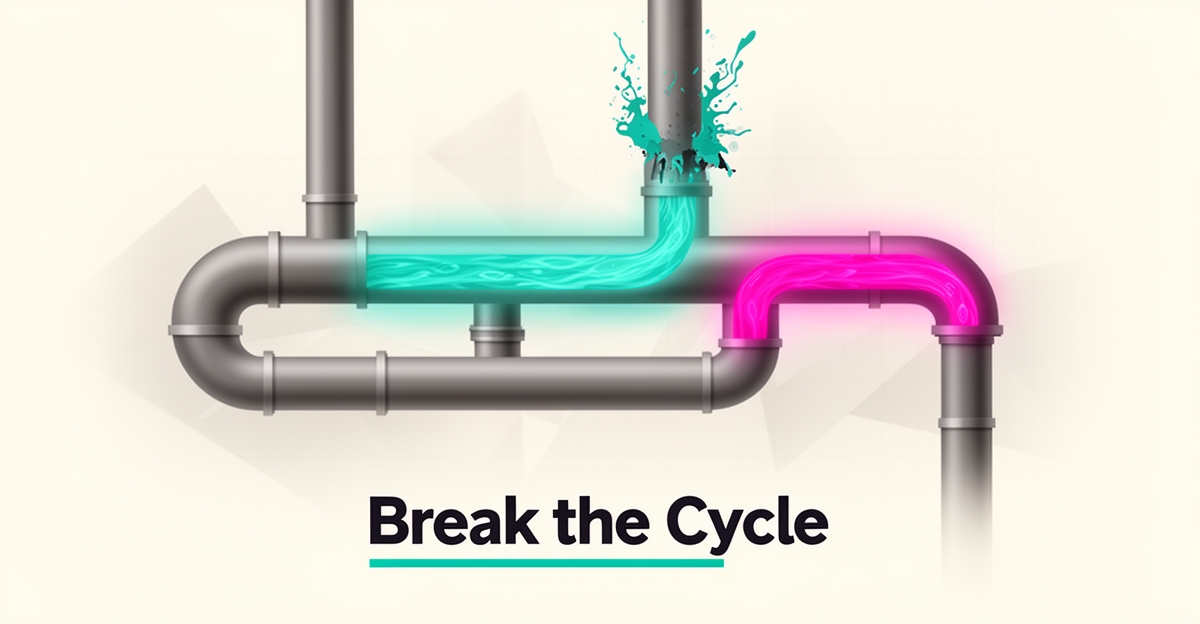
Why Most Plumbing Companies Fail at AI Implementation (And How to Succeed)
Key Facts
- A large share of AI projects fail to deliver their intended outcomes, a pattern widely reported across industries as of late 2026
- A small minority of companies captures the majority of AI-driven value, typically those with strong operational foundations
- Agentic AI adoption often outpaces governance, especially in regulated industries
- Many organizations neglect to evaluate whether they have the operating models and governance to control AI
- AI initiatives fail when employees don't see personal benefits like reduced stress or new skills
- Every AI project needs a designated owner to ensure accountability and responsibility
- AI performs best when integrated into daily workflows, not layered on top
Hire a team member that works 24/7 — for less than a part-time wage.
AI receptionists, SDRs, dispatchers and 99+ roles. Trained on your business, fully managed.
Not sure where to start? Ask our AI planner
The Failure Pattern: Why Plumbing AI Projects Collapse
The stark reality is that a large share of AI projects fail to deliver their intended outcomes, creating a dangerous gap between aspiration and achievement. Industry reporting as of late 2026 consistently shows that a small minority of companies captures the majority of AI-driven value, while most struggle to move beyond experimentation. This isn't a technology problem, it's an organizational one. Plumbing companies often invest in AI capabilities without first evaluating whether they have the operating models, governance frameworks, or human oversight capacity to control what AI does.
The root cause of failure lies in skipping foundational work. Many plumbing teams jump straight to tool selection or off-the-shelf solutions without conducting workflow audits or validating real problems. They focus on what AI can do, not whether their organization is ready to sustain it. The same failure pattern repeats across industries: different budgets, different sectors, but identical organizational gaps in planning and readiness.
Without a strong operational foundation, AI initiatives collapse under their own weight. Scalability suffers when systems aren't integrated into daily workflows. Reliability erodes when there's no designated owner accountable for outcomes. And adoption stalls when employees don't see personal benefits, like reduced stress, new skills, or more time for creative problem-solving.
- Listen to employees to uncover frustrations and bottlenecks
- Designate clear ownership for every AI project
- Integrate AI into existing workflows, not alongside them
- Connect AI initiatives to measurable business outcomes
- Establish governance with both business and technical representation
AI transformation requires more than technology, it demands strategic planning, industry-specific design, and a commitment to organizational readiness. Companies that neglect these elements don't just fail to capture value; they waste resources on solutions that never deliver sustainable impact. Success begins not with algorithms, but with alignment.
The Three Fatal Mistakes: Why Plumbing Companies Get Stuck
When plumbing companies dive into AI without a clear strategy, they often find themselves stuck in a cycle of failed implementations and wasted investments. This pattern is not unique to the plumbing industry; it's a common pitfall across various sectors. Industry research on AI adoption consistently finds that most initiatives fail to deliver their intended outcomes.
The first fatal mistake plumbing companies make is skipping the strategic workflow audit. Without a thorough understanding of existing workflows, it's impossible to identify where AI can genuinely add value. This oversight leads to solutions that don't address real problems, resulting in low adoption rates and wasted resources. Analysts covering enterprise AI repeatedly emphasize the importance of a strong operational foundation, noting that many organizations lack the necessary infrastructure to support AI initiatives effectively.
The second critical error is opting for generic, off-the-shelf AI tools instead of industry-specific solutions. Plumbing companies have unique operational challenges that generic tools often fail to address. For instance, a generic scheduling tool might not integrate seamlessly with a plumbing company's dispatch system, leading to inefficiencies and frustration. Industry-specific design is crucial for ensuring that AI solutions are effective and scalable. Reporting on agentic AI also shows adoption often outpaces governance, underscoring the need for tailored, well-governed solutions.
The third mistake is attempting to scale AI initiatives without a strong operational foundation. Many plumbing companies rush to implement AI across multiple departments without ensuring that their existing systems can support these new technologies. This lack of foundation leads to scalability issues and unreliable performance. The companies capturing most of the AI-driven value today are typically those that built a strong operational base first.
To avoid these pitfalls, plumbing companies should consider the following steps:
- Conduct a thorough workflow audit to identify areas where AI can add real value.
- Invest in industry-specific AI solutions that integrate seamlessly with existing systems.
- Build a strong operational foundation before scaling AI initiatives.
By addressing these common mistakes, plumbing companies can set themselves up for successful AI implementation. AIQ Labs specializes in helping businesses navigate these challenges, whether that's placing AI employees like receptionists and dispatchers into your daily operations, or rebuilding the one workflow that costs you the most. This approach ensures that AI initiatives are aligned with business goals and operational capabilities, paving the way for sustainable success.
The Human Factor: Why Your Team Rejects AI (And How to Fix It)
The biggest barrier to AI adoption isn't the technology, it's your team. Even the most advanced AI tools fail when employees see them as threats to their jobs or sources of added complexity. Many failed AI projects share a common trait: companies focus solely on ROI metrics while ignoring the human side of change. For plumbing companies, this means dispatchers fearing automation will replace their expertise, technicians worrying about new reporting burdens, and office staff overwhelmed by yet another system to learn. Without addressing these concerns, even well-designed AI solutions gather dust.
Employees need to understand how AI benefits them personally, not just the bottom line. When staff see AI as a tool that reduces repetitive tasks, provides new skills, increases autonomy, and lowers stress, adoption follows naturally. For example, AI handling after-hours emergency call triage lets dispatchers focus on complex problem-solving during peak hours. Technicians using AI-powered work order prioritization spend less time on paperwork and more time on-site. Office staff gain time for customer relationship building when AI automates invoice routing and appointment confirmation. These personal wins create the motivation needed to learn and use new systems effectively.
To build genuine buy-in, plumbing companies must design AI implementation around employee experience from day one. Start by involving technicians and dispatchers in workflow audits to identify their biggest frustrations, whether it's unclear job details, inefficient routing, or constant phone interruptions. Then, frame AI solutions as direct answers to those pain points: AI that suggests optimal parts based on historical repair data reduces guesswork, voice-to-text call logging eliminates manual note-taking, and predictive maintenance alerts prevent emergency scrambles. When employees help shape the solution and see immediate relief in their daily work, resistance transforms into ownership. This human-first approach doesn't just improve adoption, it turns your team into your strongest AI advocates.
A Strategic Framework for Plumbing AI Success
Most plumbing companies don't need more AI tools, they need a smarter sequence for adopting them. The difference between AI projects that fail and the small group capturing most of the value usually comes down to execution discipline, not ambition.
Start by validating the real problem before you buy or build anything. That means listening to dispatchers, office staff, and technicians to uncover where work actually breaks down, missed calls, scheduling chaos, invoice delays, or repeated data entry. Research on why AI initiatives fail consistently points to the same root issue: companies skip the step where they identify workflow bottlenecks and employee frustrations.
Once the problem is clear, assign ownership. Every AI initiative needs a named leader who is responsible for outcomes, not just implementation. Without a designated owner, AI becomes everyone's side project and no one's priority. That owner should connect the project to a measurable business result, whether that is faster booking, fewer missed calls, or less admin time per job.
Next, integrate AI into the daily workflow instead of layering it on top. If your team has to leave their normal process to "use the AI," adoption will collapse fast. Industry analysis shows AI performs best when it is built on a strong operational foundation and embedded into the systems people already use.
A practical framework looks like this:
- Interview employees to identify bottlenecks, repetitive work, and daily frustrations
- Choose one workflow with a clear operational or revenue impact
- Assign a project owner with authority and accountability
- Define success metrics before deployment begins
- Review performance regularly and refine the system as workflows evolve
Governance is the final piece, and it is often the most ignored. Recent reporting warns that many organizations adopt AI faster than they build the oversight needed to manage it. For plumbing companies, that means creating simple guardrails for data use, customer communication, approvals, and escalation when AI should hand off to a human.
This is where a structured approach matters. AIQ Labs helps businesses move from scattered AI experiments to governed, workflow-specific systems, starting with a single workflow build at a fixed price, and scaling toward a full AI operating system your company owns outright. The goal is not to add AI everywhere, it is to make one part of the business work measurably better, then scale from there.
If you want help mapping that first high-ROI opportunity, start with the two-minute Fit Check and then book a free 30-minute strategy call. It's a practical working session to identify the bottleneck worth solving first, and whether AI is the right fix at all.
Still paying for 10+ subscriptions that don’t talk to each other?
We build custom AI systems you own outright. No vendor lock-in. Full control.
Not sure where to start? Ask our AI planner
Frequently Asked Questions
Why do most AI projects fail in plumbing companies?
How can plumbing companies avoid wasting money on AI tools that don't work?
What's the biggest reason employees resist AI in plumbing businesses?
Do I need to build a full AI system to see value, or can I start small?
How important is it to have someone own the AI project?
What role does governance play in successful AI implementation for plumbing companies?
From AI Experiments to Measurable Plumbing Wins
The gap between AI aspiration and results in plumbing isn't about ambition, it's about sequence. AI projects fail because companies skip workflow audits, buy generic tools, and scale without ownership or governance. Success starts with listening to dispatchers and technicians to find real bottlenecks, assigning a clear owner to each initiative, and embedding AI into the systems your team already uses rather than layering it on top. When employees see personal benefits, less repetitive admin, faster triage, more time for problem-solving, adoption follows, and measurable outcomes like faster booking and fewer missed calls become possible. A strategic, industry-specific approach turns AI from a cost center into a sustainable advantage. AIQ Labs helps plumbing companies move from scattered experiments to governed, workflow-specific systems, starting with AI employees, single workflow builds, or a full AI operating system you own outright. Start with the two-minute Fit Check at https://aiqlabs.ai/apply and book a free 30-minute strategy call at https://aiqlabs.ai/book to map your first high-ROI opportunity, and confirm whether AI is the right fix at all.
Make AI your competitive advantage — not just another tool.
Strategy, implementation and ongoing optimization. One partner, end to end.
Not sure where to start? Ask our AI planner