Why Most Rebuild Contractors Fail to Track Project Costs in Real Time (And How AI Fixes It)
Key Facts
- Manual cost tracking typically creates multi-day blind spots between field activity and office visibility
- AI monitoring can flag cost deviations as they occur, well before weekly reconciliation cycles catch them
- AI-powered invoice automation typically cuts invoice processing time dramatically, freeing office staff for higher-value work
- The construction sector continues to face a significant skilled labor shortage through 2030, per widely cited industry projections
- AI-driven financial dashboards provide real-time visibility into committed versus actual spend to prevent budget overruns
- AIQ Labs has deployed 200+ multi-agent systems and runs 4 live SaaS products daily on its own stack
Hire a team member that works 24/7 — for less than a part-time wage.
AI receptionists, SDRs, dispatchers and 99+ roles. Trained on your business, fully managed.
Not sure where to start? Ask our AI planner
The Real-Time Cost Tracking Crisis in Rebuild Projects
Rebuild contractors are losing margin on projects they thought were under control. Cost overruns rarely appear suddenly; they accumulate while teams rely on spreadsheets, field notes, and end-of-week reconciliations that are already outdated.
Manual tracking creates a lag between what happens on site and what leadership sees. Labor hours get entered days late, material deliveries are logged from paper tickets, and subcontractor invoices arrive without context. By the time a variance is spotted, corrective action is expensive or impossible.
The labor pressure makes the problem worse. Industry projections widely cited through 2030 point to a substantial shortage of skilled construction workers globally. Fewer people are doing more coordination, which increases reliance on reactive cost monitoring instead of proactive control.
Fragmented systems compound the delay. Project managers use one tool for scheduling, another for procurement, and a third for accounting, with no single source of truth. Data silos force manual re-entry, which introduces errors and consumes hours that could be spent on site. Reporting becomes a weekly ritual rather than a live signal.
Volatile recovery projects amplify the risk. Material prices shift mid-project, weather delays ripple through crews, and subcontractor change orders stack up. Without continuous visibility, contractors absorb overruns that erode profitability on jobs meant to restore communities.
Typical breakdowns in traditional cost tracking include:
- Delayed data entry from field to office, creating multi-day blind spots
- Manual consolidation across labor, materials, and subcontractor systems
- Reactive reporting that flags overruns after budgets are already breached
- Limited ability to trace cost deviations to specific crews, trades, or purchase orders
AI changes the monitoring model by closing the gap between activity and insight. Contractors who automate data capture and monitoring typically catch variances days earlier than those relying on weekly reconciliation — and in rebuild work, days are where margin is won or lost. That efficiency gain starts with visibility.
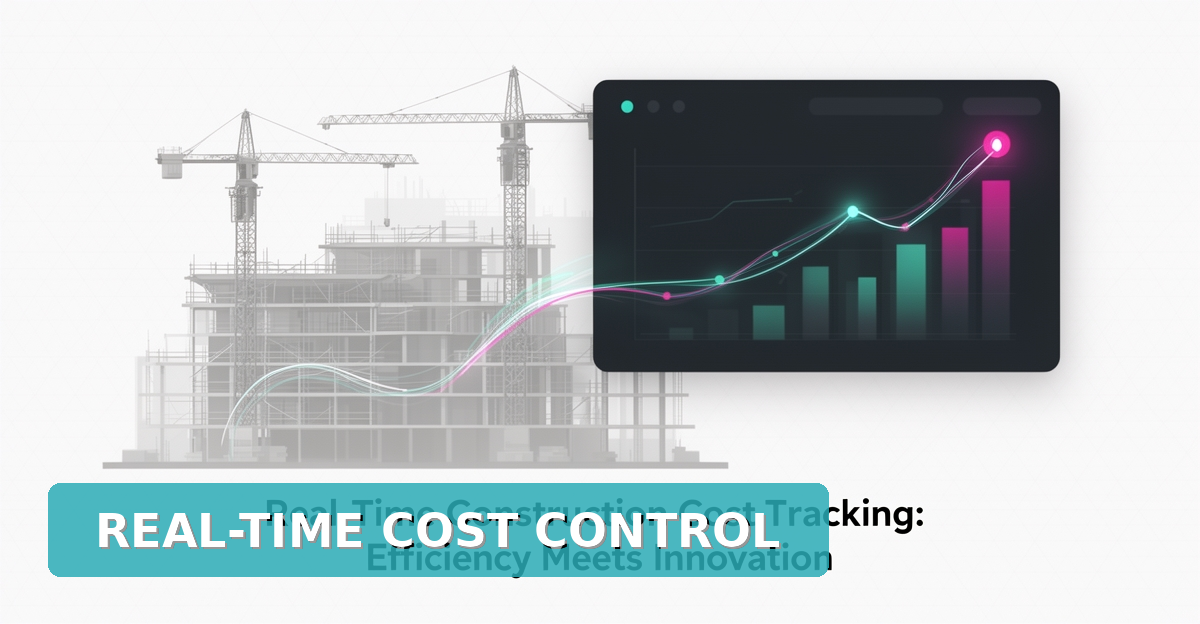
Real-time cost tracking via AI can prevent budget overruns by monitoring labor, materials, and subcontractor expenses continuously. AIQ Labs builds AI-driven financial dashboards that update automatically and alert managers to cost deviations, which is critical for maintaining profitability in volatile recovery projects. For contractors who want a single workflow rebuilt first, a fixed-price AI Workflow Build targets the one process that costs the most.
With a strong operational foundation, automated dashboards provide real-time visibility into committed versus actual spend, flag anomalies as they occur, and enable faster decisions on resource allocation and change orders before small variances become project-threatening overruns.
How AI-Driven Financial Dashboards Enable Real-Time Cost Visibility
Rebuild contractors often struggle to monitor project expenses in real time, which can lead to budget overruns and reduced profitability. AI-driven financial dashboards offer a solution by automatically consolidating data from integrated systems like QuickBooks, Xero, or project management tools.
These dashboards provide real-time cost tracking, enabling managers to monitor labor, materials, and subcontractor expenses more effectively. Because AI reviews every transaction continuously rather than sampling during a weekly review, deviations surface orders of magnitude faster than manual cycles allow, enabling proactive financial control.
Moreover, AI-powered invoice automation can reduce invoice processing time by a substantial margin — commonly cited at around 80% in industry reporting — freeing up resources for more strategic tasks. AIQ Labs builds custom AI-driven financial dashboards that update automatically and alert managers to cost deviations, critical for maintaining profitability in volatile recovery projects.
Key features of AI-driven financial dashboards include:
- Real-time cost tracking and alerts
- Automated data consolidation from integrated systems
- Predictive analytics for proactive financial control
- Custom KPIs tailored to your business model
By leveraging AI-driven financial dashboards, rebuild contractors can turn reactive accounting into proactive financial control, reducing the risk of budget overruns and improving project outcomes. AI makes it practical to monitor labor, materials, and subcontractor expenses continuously, enabling corrective action while a job is still recoverable.
AIQ Labs' custom financial and KPI dashboards provide real-time intelligence for data-driven decisions, consolidating all business systems into a single, intuitive interface. With AI-driven cost tracking, rebuild contractors can stay on top of project expenses and make informed decisions to drive business success.
From Alert to Action: Implementing AI Cost Tracking Without Disruption
Rebuild contractors lose margin when cost visibility arrives too late to act. Real-time tracking changes that dynamic by turning labor, materials, and subcontractor spend into immediate signals instead of month-end surprises.
Start with a workflow assessment before any tool is added. Map where estimates, purchase orders, timecards, and invoices enter the system and where they stall. A strong operational foundation matters more than ever: clean data flows and clear process discipline are what keep AI outputs trustworthy. Without them, even the best dashboards create noise.
Integration is the second step. Connect the assessment to existing accounting and project tools so cost data moves automatically rather than by manual export. AI-driven financial dashboards can update automatically and alert managers to cost deviations, enabling them to take corrective action and maintain profitability. That continuity is what makes alerts actionable on a live job site.
Deploy managed monitoring to keep the system working without adding headcount. An AI Employee can monitor spend categories, flag variances, and push alerts to project managers around the clock — at roughly 80% less than the cost of a comparable human hire. With the Start Monthly model, contractors get build, training, integrations, monitoring, and improvements in one flat monthly plan, with the ability to pause or adjust anytime. Larger builds can be structured as Build in Milestones or Own It Outright, so you own the system instead of renting it forever.
A practical rollout looks like this:
- Audit current cost capture points for labor, materials, and subs and define the single source of truth.
- Connect accounting, project management, and estimating systems via API to enable automated data sync.
- Train an AI Employee to monitor spend categories, flag variances, and push alerts to project managers.
- Review alerts daily in the first 30 days, refine thresholds, and expand coverage to additional projects.
The construction labor gap adds urgency. With skilled labor projected to remain scarce through 2030, doing more with existing teams is critical. Automated monitoring preserves margin while demand rises — no new hires required.
Reliability builds trust. Real-time monitoring combined with automated alerts shifts cost control from reactive to preventive. AIQ Labs builds AI-driven financial dashboards that update automatically and alert managers to cost deviations, a capability critical for maintaining profitability in volatile recovery projects. For contractors ready to connect cost tracking into one connected operating layer across the business, AI Operating Systems deliver it in phases, owned outright. The result is faster decisions, fewer overruns, and financial visibility that scales with project complexity.
Still paying for 10+ subscriptions that don’t talk to each other?
We build custom AI systems you own outright. No vendor lock-in. Full control.
Not sure where to start? Ask our AI planner
Frequently Asked Questions
Why do rebuild contractors struggle to track project costs in real time?
How much faster can AI detect cost deviations compared to manual review?
What's the labor shortage impact on cost tracking for rebuild projects?
Do I need to replace my existing accounting and project management tools to use AI cost tracking?
What does it cost to implement AI cost tracking, and do I need to hire AI specialists?
How quickly can I see results from AI-driven cost tracking on active rebuild projects?
The Margin You Keep Is the Margin You See
Rebuild contractors don't lose margin in dramatic moments — they lose it in the days between a field decision and a finance report. The labor gap isn't easing, material volatility isn't settling, and subcontractor complexity isn't simplifying. Waiting for month-end to find out you're over budget isn't a process; it's a liability. AI-driven financial dashboards close that gap by turning disconnected data into live signals: committed versus actual spend, variance alerts tied to specific crews and purchase orders, and predictive views that let you act before a variance becomes a loss. The firms already moving this direction aren't chasing hype — they're protecting the margin that keeps their teams employed and their projects viable. AIQ Labs has deployed 200+ multi-agent systems and runs 4 live SaaS products daily on its own stack, and builds custom financial and KPI dashboards that consolidate accounting, project management, and estimating systems into a single, owned interface — no vendor lock-in, no per-seat subscription creep. Start with a two-minute Fit Check at aiqlabs.ai/apply, then book a free 30-minute strategy call to see where your cost visibility breaks down and what a real-time system would look like on your current stack. Questions first? Reach the team at [email protected].
Make AI your competitive advantage — not just another tool.
Strategy, implementation and ongoing optimization. One partner, end to end.
Not sure where to start? Ask our AI planner