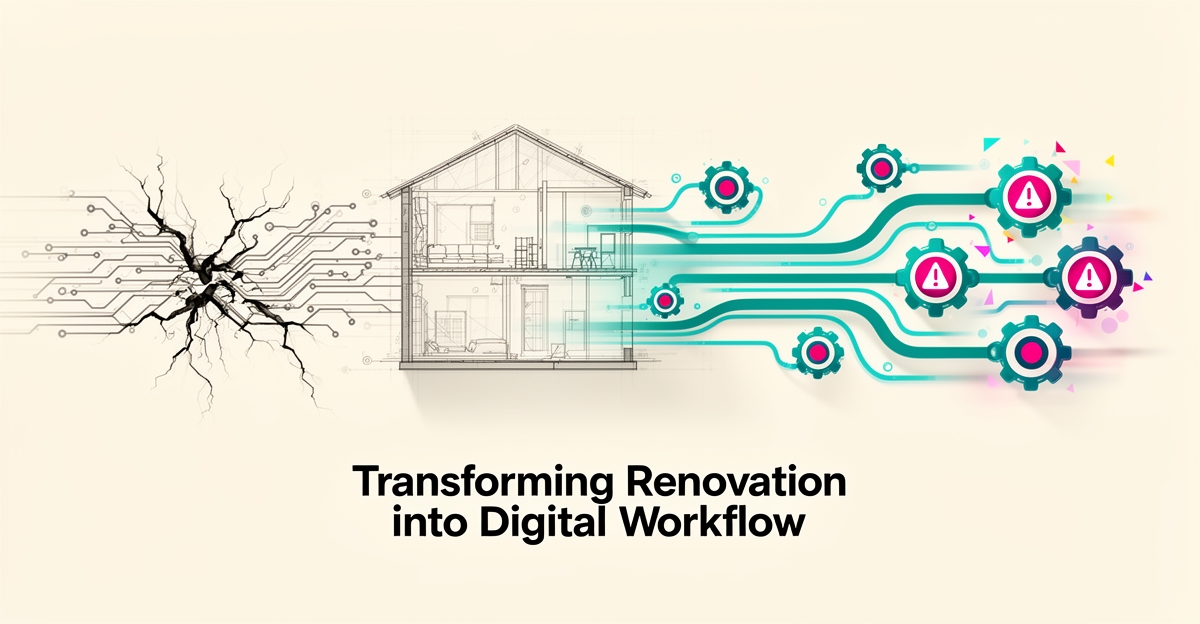
Why Most Remodeling Firms Fail at AI Implementation — And How to Avoid It
Key Facts
- Automation can free up 20-30% of managers' time, according to industry analysis.
- Germany's AI market is forecast to reach EUR 37 billion by 2031, growing over 26% annually per market forecasts.
- 70% of German companies plan to invest in AI for faster analytics and automation, according to industry data.
- Poor data quality is the leading cause of stalled AI projects in remodeling firms, where fragmented notes and disparate tools undermine AI outputs.
- Most remodeling firms fail at AI not because the technology is immature, but because they skip the discipline between idea and execution.
- AIQ Labs starts every engagement with a readiness assessment evaluating data, leadership alignment, and workflows before any code is written.
- "The biggest threat in AI + healthcare isn't bad algorithms. It's unintegrated deployment," warns physician futurist Harvey Castro.
Hire a team member that works 24/7 — for less than a part-time wage.
AI receptionists, SDRs, dispatchers and 99+ roles. Trained on your business, fully managed.
Not sure where to start? Ask our AI planner
The Hidden Barriers: Why AI Projects Stall in Remodeling Firms
Many remodeling firms launch AI initiatives with high hopes, only to see them stall before delivering value. These setbacks are rarely due to the technology itself but stem from foundational gaps that become magnified in an industry defined by custom projects, shifting timelines, and diverse stakeholder input. Understanding these hidden barriers is the first step toward building AI systems that actually work in practice.
Poor data quality remains the most frequent culprit behind stalled AI projects in remodeling. AI models depend on clean, consistent inputs—yet remodeling workflows often generate fragmented data across handwritten notes, disparate software tools, and verbal agreements. Without standardized data collection from the outset, AI systems produce unreliable outputs, eroding trust quickly. As noted in industry research, poor data quality directly limits AI effectiveness, particularly in environments where job-specific variables like material choices or structural conditions vary widely from one project to the next.
Lack of leadership buy-in compounds these technical challenges. When owners or project managers view AI as an IT experiment rather than a strategic lever, initiatives lack the resources and authority needed to integrate across teams. In remodeling, where job superintendents, designers, and clients all influence decisions, top-down support is essential to align workflows and overcome resistance. Research shows that AI adoption requires leadership support and investment to succeed—without it, even well-designed tools fail to gain traction in daily operations.
Misaligned goals further derail progress, especially when AI is pursued for its own sake rather than tied to clear business outcomes. Firms may automate tasks that save minutes but ignore larger bottlenecks like estimate delays or change order confusion. In a stakeholder-heavy environment, this misalignment creates friction: field teams see AI as adding steps, while leadership wonders why efficiency gains aren’t materializing. Successful implementations begin by mapping AI leverage points in workflows to target high-impact areas—such as scheduling, material tracking, or client communication—where automation frees up time for skilled work that truly requires human judgment.
AIQ Labs begins every engagement with an AI readiness assessment to help contractors identify these barriers early and build a realistic, actionable plan before development starts. By addressing data foundations, securing leadership alignment, and tying AI to measurable goals, remodeling firms can avoid common pitfalls and move beyond pilot projects into sustainable, scalable transformation.
Start the Fit Check — a free, no-obligation working session to map your biggest bottleneck and identify high-ROI AI automation opportunities. If there isn't a clear win, we'll say so. Not a sales pitch — a real working session with an AI engineer.
Start the Fit Check leading to a Free 30-Minute Strategy Call.
The Readiness-First Approach: How AIQ Labs Prevents Failure Before It Starts
Many remodeling firms rush into AI implementation without first assessing whether their operations are ready to support it—leading to stalled pilots, wasted investment, and frustrated teams. AIQ Labs prevents this by starting every engagement with a comprehensive readiness assessment that evaluates data infrastructure, leadership alignment, and workflow complexity before any code is written. This upfront evaluation ensures AI initiatives are grounded in reality, targeting only those opportunities with clear ROI and feasible execution paths.
Research shows that poor data quality is a primary barrier to AI effectiveness, with 70% of companies in Germany citing faster data analytics as a key motivation for AI investment—yet many lack the clean, integrated data needed to achieve it. Similarly, 20-30% of managers’ time can be freed through automation, but only when goals are aligned and systems are prepared to scale. AIQ Labs’ readiness assessment directly addresses these gaps by auditing data sources, validating integration points with tools like CRM and scheduling platforms, and confirming leadership commitment to change.
The assessment identifies high-impact use cases—such as automating dispatch workflows, enhancing lead scoring, or streamlining invoice processing—while flagging risks like siloed systems or insufficient change management capacity. By mapping AI leverage points in existing workflows and modeling potential time savings, AIQ Labs builds a prioritized roadmap that sequences quick wins with long-term transformation. This approach transforms AI from a speculative experiment into a structured, measurable journey.
- Evaluates data quality, tool integration, and team readiness for AI adoption
- Identifies high-ROI automation targets aligned with business objectives
- Validates leadership buy-in and change management capacity before development
- Creates a phased implementation plan with clear milestones and success metrics
Unlike vendors who jump straight to building tools, AIQ Labs treats readiness as the foundation of sustainable AI transformation—ensuring contractors don’t just deploy AI, but deploy it successfully. This disciplined start prevents the most common pitfalls: misaligned goals, unreliable data, and low team adoption. By anchoring every step in proven capabilities from our own production AI platforms, we deliver not just recommendations, but a executable path forward—owned, optimized, and built to scale.
To begin your readiness assessment and discover where AI can deliver the greatest impact in your remodeling business, Start the Fit Check—a two-minute evaluation that leads to a free 30-minute strategy call with our AI transformation team. We’ll identify your highest-value automation opportunity—or tell you if there isn’t one—no obligation, just clarity.
From Assessment to Action: A Practical Roadmap for Sustainable AI Adoption
Most remodeling firms don’t fail at AI because the technology is immature. They fail because they skip the discipline between idea and execution.
A practical roadmap turns AI from a risky experiment into a sustainable capability. It starts with honest assessment, moves through controlled pilots, and scales only when data, people, and processes are aligned.
Discovery begins with readiness, not tools. Poor data quality, lack of leadership buy-in, and misaligned goals are the common pitfalls that derail AI adoption. An AI readiness assessment evaluates current technology stack, data infrastructure, and team capabilities before any build begins. This ensures contractors start with a realistic, actionable plan rather than a prototype that stalls.
Development focuses on high-leverage workflows, not wholesale automation. Mapping AI leverage points in your workflow identifies areas for automation where human expertise remains essential. For remodeling, that often means lead qualification, estimate drafting, scheduling, and follow-up — repetitive jobs that AI tools can automate while freeing up managers for strategic work. According to industry analysis, 20-30% of managers’ time can be freed up through automation, improving accuracy and efficiency.
Integration is where pilots either stick or die. AI must connect to CRMs, scheduling software, and project management systems with automated data synchronization. A phased approach prevents disruption:
- Pilot a single workflow with clear success metrics
- Integrate with existing tools for a single source of truth
- Train teams on AI-human collaboration and verification systems
- Establish governance for data security, compliance, and human-in-the-loop controls
Optimization turns usage into advantage. Measure and optimize AI impact by tracking concrete metrics such as lead response time, estimate turnaround, and close rates. Sustainable adoption requires change management that builds trust and demonstrates value quickly. As business efficiency research notes, AI tools can automate repetitive jobs, analyze data, and support decision-making, helping businesses work faster and smarter.
Market momentum makes the discipline urgent. Germany’s AI market is forecast to grow to EUR 37 billion in 2031, with an annual growth rate of more than 26% according to market forecasts, and 70% of companies in Germany are seeking to invest in AI for faster data analytics, process automation, new products, and business models per industry data. Firms that build readiness first are the ones that scale without the pilot stall.
AIQ Labs approaches transformation through assessment, development, integration, and governance under one roof. With a clear roadmap, remodeling firms can pilot AI Employees or workflow fixes, integrate them with core systems, and scale with governance that sticks.
Still paying for 10+ subscriptions that don’t talk to each other?
We build custom AI systems you own outright. No vendor lock-in. Full control.
Not sure where to start? Ask our AI planner
Frequently Asked Questions
Why do most remodeling firms’ AI projects stall before they deliver value?
Is bad data really the biggest reason AI fails in remodeling?
Do we need owner and project manager buy-in before starting AI?
Can AI actually free up time for managers in a remodeling business?
How do we avoid wasting money on a pilot that never scales?
Is now too late to get started with AI given how fast the market is moving?
Turning AI Ambition into Remodeling Reality
Most remodeling firms don’t fail at AI because the technology falls short—they stumble over overlooked foundations like fragmented data, unclear leadership alignment, or automation efforts disconnected from real business pain points. As we’ve seen, the path forward isn’t about chasing AI for its own sake, but starting with a disciplined readiness assessment to uncover where automation can truly move the needle—whether that’s streamlining estimate turnaround, reducing change order confusion, or freeing up managers for higher-value client work. AIQ Labs helps contractors avoid these pitfalls by beginning every engagement with a practical evaluation of data, workflows, and team readiness, ensuring any AI initiative is built on solid ground and tied to measurable outcomes. If you’re ready to see where AI could deliver real impact in your remodeling business—without the guesswork—take the first step with a free, no-obsession Fit Check. It’s a focused working session with an AI engineer to map your biggest bottleneck and identify high-ROI opportunities. If there isn’t a clear win, we’ll say so. Start the Fit Check.
Make AI your competitive advantage — not just another tool.
Strategy, implementation and ongoing optimization. One partner, end to end.
Not sure where to start? Ask our AI planner