# Why Most Septic Tank Businesses Still Use Paper Forms (And How AI Fixes It)
**Quick Answer:** Thousands of U.S. septic businesses still run on paper forms, causing billing delays and data loss. AI digitizes field notes in real time, cutting errors, speeding invoices, and unlocking growth in a multi-billion-dollar industry. Start the Fit Check.
## Key Facts
- The U.S. septic, drain & sewer cleaning services industry is a multi-billion-dollar market, with continued growth projected through the late 2020s.
- Roughly one in five U.S. households relies on a septic system for wastewater treatment, per EPA estimates.
- Industry analyses suggest that maintaining service records and scheduling appointments are among the most automatable tasks in septic service work.
- Field septic work itself carries low automation risk, the physical job stays human while the paperwork does not.
- The EPA's SepticSmart program generally recommends a 3–5 year interval between residential tank pump-outs.
## Table of Contents
- [The Paper Trap: Delays, Errors and Data Loss in Septic Service](#the-paper-trap-delays-errors-and-data-loss-in-septic-service)
- [AI Document Processing: Digitizing Intake Forms and Field Notes](#ai-document-processing-digitizing-intake-forms-and-field-notes)
- [From Paper to Real-Time Records: Faster Billing and Compliance](#from-paper-to-real-time-records-faster-billing-and-compliance)
- [Implementation Roadmap for Septic Teams](#implementation-roadmap-for-septic-teams)
## The Paper Trap: Delays, Errors and Data Loss in Septic Service
The septic service industry processes millions of jobs annually, yet thousands of businesses still hand-write service notes on paper forms, creating avoidable friction in daily operations. This reliance on manual processes persists in a large and growing market, with thousands of U.S. septic, drain & sewer cleaning businesses depending on paper-based workflows that slow everything from field reporting to invoicing.
Manual data entry from handwritten notes introduces significant error rates. Field technicians often rush to complete forms between jobs, leading to illegible writing, missed details, or incorrect service codes that later require costly corrections. Lost or damaged paper forms in trucks or at job sites mean critical observations, like tank levels, drain field conditions, or repair recommendations, vanish before they reach the office, creating gaps in service history and compliance records.
These delays compound when office staff spend hours deciphering notes and re-entering data into billing systems, pushing invoicing cycles from days to weeks and straining cash flow for small operators. As businesses attempt to grow, paper systems hit hard scaling limits: adding technicians means more forms to track, more data to re-enter, and higher risks of lost information or inconsistent reporting across teams.
Automation-risk analyses help explain why this bottleneck persists, maintaining service records and scheduling appointments are typically rated among the most automatable tasks in septic service work, indicating these workflows are both highly manual and prime targets for intelligent digitization. Meanwhile, the physical servicing work itself carries low automation risk, showing that field work remains inherently human while administrative processes lag behind.
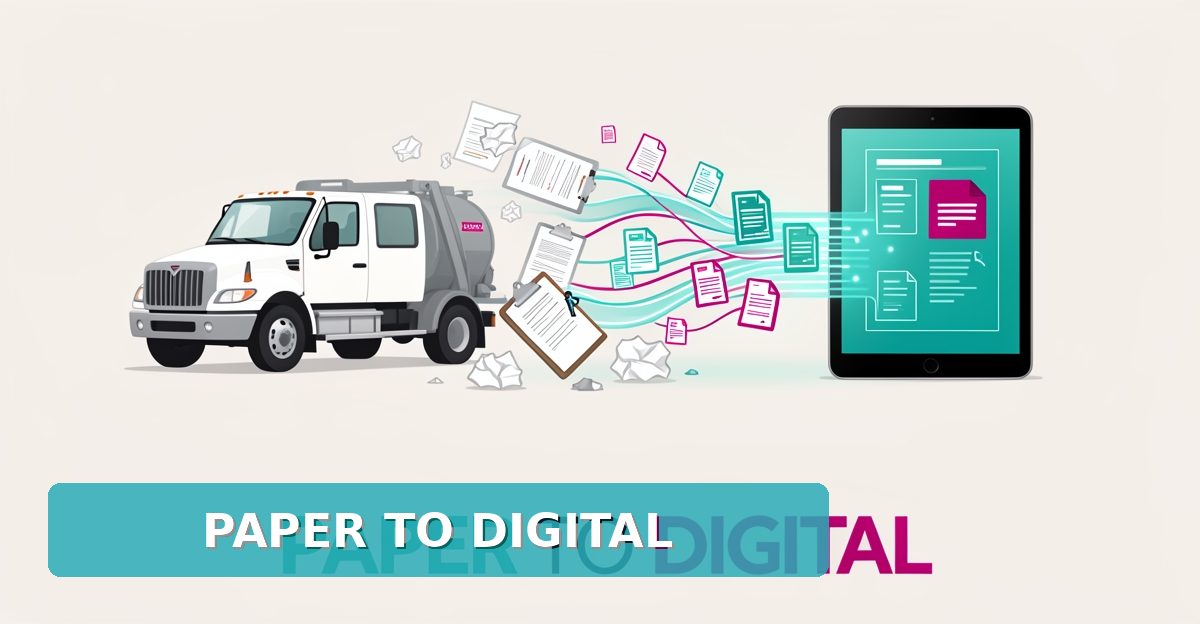
By converting paper intake forms into structured digital records through AI-powered document processing, septic businesses can eliminate re-entry delays, preserve field insights in real time, and trigger instant billing upon job completion, turning a costly administrative burden into a streamlined, auditable operation.
AIQ Labs builds custom AI systems that transform handwritten service notes into accurate, searchable records, automatically populating service histories and reducing the manual workload that keeps septic businesses tied to clipboards instead of growth.
Start the Fit Check to see how AI document processing can eliminate paper delays in your septic service operations.
## AI Document Processing: Digitizing Intake Forms and Field Notes
Handwritten intake forms and truck-side notes still create bottlenecks for septic crews. Paper travels back to the office, sits in a pile, and gets keyed in days later, if it isn't lost first.
AI document processing changes that cycle by converting handwritten or scanned intake forms and field notes into structured data in real time. A technician snaps a photo at the job site and the system extracts tank size, pump-out volume, condition notes, and compliance observations without manual re-entry. The data flows directly into service records, scheduling, and billing.
Extraction accuracy is the foundation. Modern AI reads messy handwriting, checks boxes, and parses free-text notes, then maps them to the correct fields in the customer record. That reduces the delays and errors that paper-based systems create and supports the workflows most exposed to automation.
Industry analyses consistently rate record-keeping and scheduling as the most automatable steps in septic service work, alongside compliance testing documentation. Those are the exact paper-heavy steps
AI Employees
Hire a team member that works 24/7 — for less than a part-time wage.
AI receptionists, SDRs, dispatchers and 99+ roles. Trained on your business, fully managed.
See If You’re a Fit — AI Employees from $700/mo
Not sure where to start? Ask our AI planner
where digitization delivers immediate value.
In practice, the process looks like this:
- **Capture:** Forms and notes are photographed or scanned on site, no typing required.
- **Extract:** AI identifies fields, quantities, dates, signatures, and compliance flags from handwriting and print.
- **Populate:** Structured data auto-fills service records, work orders, and customer histories in real time.
- **Route:** Scheduling updates and compliance documentation are generated automatically for dispatch and reporting.
The result is faster billing and **real-time compliance documentation**. Service records stay complete, appointment history is accurate, and environmental tests are logged consistently for audits. Crews spend time on service, not paperwork.
AIQ Labs builds custom systems that convert handwritten or scanned data into actionable, real-time records within the tools septic businesses already use. The approach fits naturally into an AI Workflow Build, where extraction, validation, and workflow routing are designed as an owned system rather than a subscription widget.
For an industry where many businesses still rely on paper forms, this shift removes the data-loss risk and gives owners visibility into operations as work happens.
## From Paper to Real-Time Records: Faster Billing and Compliance
Paper forms still travel in truck cabs across the U.S. septic industry, and the cost shows up in late invoices and missed pump-outs. With thousands of septic, drain & sewer cleaning businesses operating in the U.S. and roughly one in five U.S. households relying on a septic system, the operational drag compounds fast.
Digitizing intake and field notes removes the manual re-entry that creates errors and delays. AI can read handwritten forms and photos, extract tank size, condition, and service notes, and automatically populate service records for billing and compliance. **Real-time records mean faster invoicing** instead of waiting for paperwork to return to the office.
The impact is measurable across dispatch and maintenance cycles. Record-keeping and scheduling are largely routine data handling, which is exactly why they respond so well to automation. With AI document processing, crews update jobs on site and the office sees them instantly, reducing lost forms and duplicate calls.
Pump-out intervals drive recurring revenue, and visibility improves customer satisfaction. The EPA's SepticSmart program generally recommends a 3–5 year interval between residential tank pump-outs. Real-time records let dispatchers track last service dates, flag upcoming due dates, and proactively schedule customers instead of reacting to backups.
Subscription CRMs are the common stopgap. Platforms like Jobber, Housecall Pro, and similar field-service tools typically run from tens to hundreds of dollars per month depending on tier. They add features but keep data inside a vendor platform and limit custom workflows for field notes and compliance reporting.
Owned AI systems change the ownership equation. AIQ Labs builds custom AI document processing that converts handwritten or scanned intake forms into actionable, real-time records, with true ownership and no vendor lock-in. That approach aligns with AI Operating Systems, where businesses control the code, integrations, and data.
Operational gains from digitization include:
- Reduced errors from manual transcription of field notes and service details
- Faster invoicing as completed jobs flow straight to billing without office re-entry
- Real-time dispatch insights for routing, capacity, and pump-out interval tracking
- Improved customer satisfaction through accurate records and proactive service reminders
The U.S. septic, drain & sewer cleaning services industry continues to grow. Businesses that move from paper to real-time records capture more of that growth with fewer errors, cleaner compliance files, and customers who feel looked after.
## Implementation Roadmap for Septic Teams
Paper forms still clog septic trucks because crews are busy, not because paper is better. The result is delayed billing, lost field notes, and compliance gaps that hurt growth in a large, competitive market.
Moving from paper to AI is a workflow change, not a software purchase. A practical roadmap keeps crews in the field while data becomes real-time and owned.
Start with an honest audit of current forms. Map every intake sheet, pump-out checklist, and handwritten field note that feeds billing or compliance. Identify where manual entry creates errors and where **service records and scheduling** stall. Industry analyses consistently point to record-keeping and scheduling as the most automatable tasks in septic service, the exact pain points paper creates.
Select an owned AI system tailored to septic workflows. Generic CRMs force workarounds; a custom system digitizes intake forms, extracts field notes from photos or scans, and auto-populates service records for faster billing. AIQ Labs builds custom systems that convert handwritten or scanned data into actionable, real-time records, with ownership and no vendor lock-in.
Train crews on capture, not data entry. The goal
AI Development
Still paying for 10+ subscriptions that don’t talk to each other?
We build custom AI systems you own outright. No vendor lock-in. Full control.
See If You’re a Fit — AI Employees from $700/mo
Not sure where to start? Ask our AI planner
is one photo or voice note at the tank, not a desk later. Brief, role-based training on how to capture forms in the field reduces resistance and improves adoption. With roughly one in five U.S. households relying on a septic system, consistent capture protects recurring revenue.
Integrate with the tools teams already use. Connect the AI layer to dispatch, accounting, and compliance logs so data flows without retyping. This eliminates duplicate entry and creates a single source of truth across operations.
Monitor performance and refine. Track time-to-bill, error rates, and compliance completion after go-live. Continuous improvement keeps the system aligned as routes and regulations change.
- Audit current forms and data handoffs to find delay points
- Select an owned AI system built for septic intake and field notes
- Train crews on mobile capture and simple validation
- Integrate with dispatch, billing, and compliance tools
- Monitor KPIs and iterate on workflows
Teams can fund the shift in ways that match risk tolerance. **Start Monthly** delivers a managed AI employee, build, training, integrations and monitoring included, at a fraction of the cost of a human hire. **Build in Milestones** rebuilds the one workflow that costs you the most in approved phases at a fixed price, and **Own It Outright** delivers a full AI operating system with complete code and data ownership. See pricing for how each model works.
## Frequently Asked Questions
**Why do so many septic service companies still use paper forms?**
Most crews are simply busy, and paper has been the default for decades, but it creates real costs: illegible notes, lost forms, and hours of office re-entry that push invoicing from days to weeks. Across thousands of U.S. septic, drain & sewer cleaning businesses, the drag compounds fast.
**How does AI actually handle messy handwriting on field notes?**
Modern AI document processing reads messy handwriting, checkboxes, and free-text notes, then maps them to the correct fields in the customer record. A technician snaps a photo at the job site, and the system extracts tank size, pump-out volume, condition notes, and compliance observations, no typing required.
**Will AI replace septic technicians?**
No, field work remains inherently human. The physical servicing role carries low automation risk, while administrative tasks like maintaining service records and scheduling are highly automatable, meaning AI targets the paperwork, not the people.
**Can AI help with compliance documentation and pump-out tracking?**
Yes. Real-time digital records log environmental tests consistently for audits, and dispatchers can track last service dates to flag upcoming pump-outs, important since the EPA's SepticSmart program generally recommends a 3–5 year interval between residential pump-outs. That lets you proactively schedule customers instead of reacting to backups.
**Why not just use a CRM like Jobber or Housecall Pro instead of a custom AI system?**
Subscription CRMs add features but keep your data inside a vendor platform and force workarounds for field notes and compliance reporting, with monthly fees that scale up as you grow. AIQ Labs builds owned systems with no vendor lock-in, so you control the code, integrations, and data.
**What does getting started with AI document processing look like?**
It's a workflow change, not a software purchase: audit your current forms, digitize intake with mobile capture, integrate with your existing dispatch and billing tools, and track KPIs like time-to-bill and error rates. Start the Fit Check, then book a free 30-minute strategy call to map your specific opportunities for automation and growth.
## From Clipboards to Competitive Edge: Your Next Step in Septic Service Innovation
The septic service industry stands at a pivotal moment where paper-based workflows are no longer just inconvenient, they're actively limiting growth in a large, expanding market. Manual forms create costly delays, introduce errors, and drain cash flow through slow invoicing, while field technicians spend valuable time on paperwork instead of service. AI document processing offers a clear path forward: converting handwritten notes into real-time, structured data that eliminates re-entry, accelerates billing, and ensures compliance records are always complete and accessible. For septic businesses ready to move beyond clipboards, the next step is simple. Start the Fit Check to see how AI can transform your service records and scheduling workflows, then book a free 30-minute strategy call to map your specific opportunities for automation and growth.
AI Transformation Partner
Make AI your competitive advantage — not just another tool.
Strategy, implementation and ongoing optimization. One partner, end to end.
See If You’re a Fit — AI Employees from $700/mo
Not sure where to start? Ask our AI planner